Any Given Sunday
Al Pacino's coach anchors the chaos of a film about football turned into product — loud, messy and oddly persuasive.
// The setup
PLAYBACK STARTED
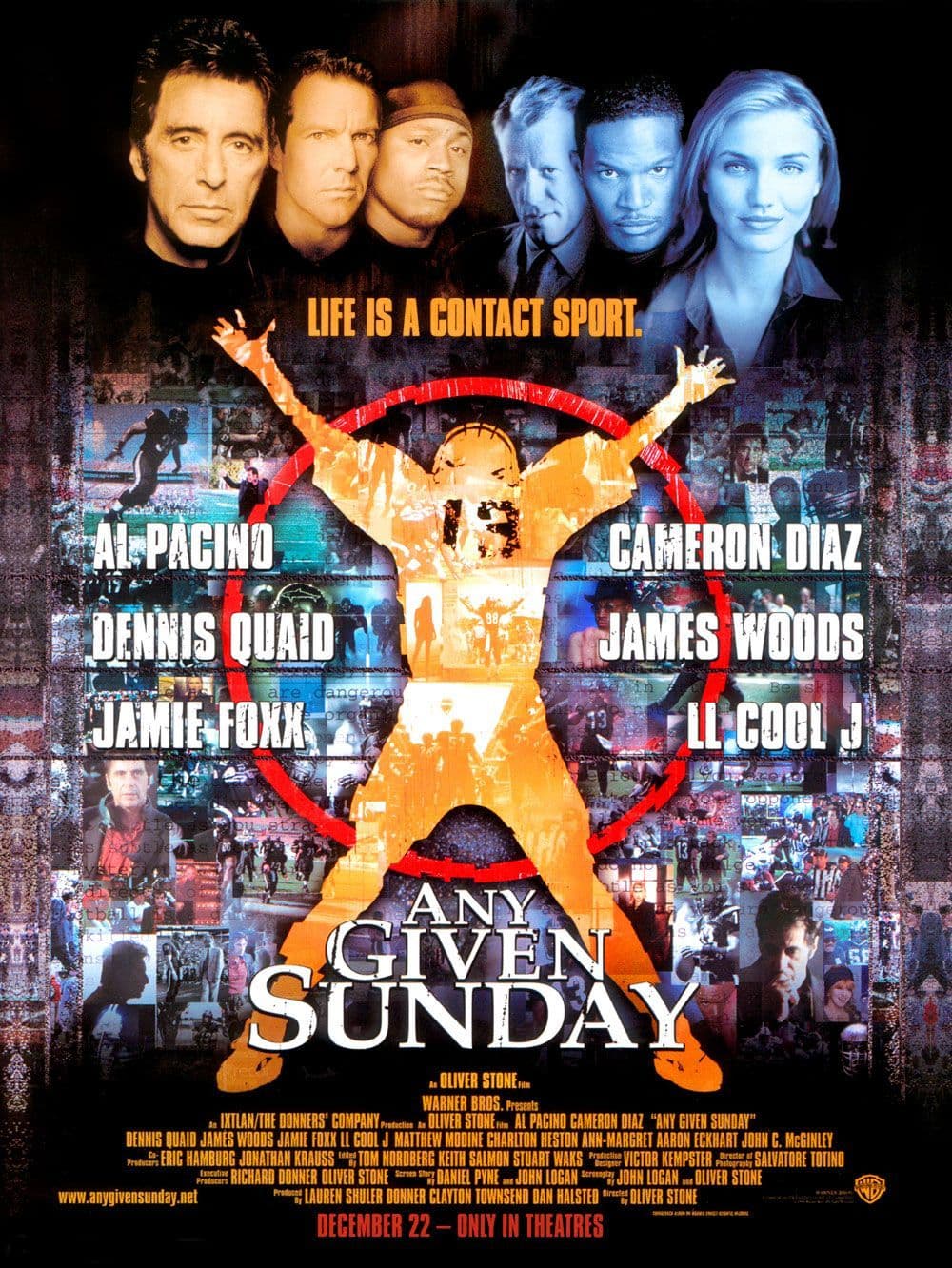
Any Given Sunday is less a neat sports movie and more a racket: helmets, cameras, PR and real human bodies all colliding. Oliver Stone throws every element into the mixer — on-field violence, boardroom manoeuvres and locker-room breakdowns — and the person who keeps it from tipping into nonsense is Tony D'Amato.
THE MOVIE
Tony D'Amato is still the reason this movie works
Any Given Sunday arrives at you like a stadium sound system turned up too high. It follows the Miami Sharks and keeps cutting between full-contact game violence and the quieter, nastier arguments in offices, medical rooms and locker rooms.
The plot nudge everyone remembers — a serious injury to veteran quarterback Jack "Cap" Rooney that thrusts third-stringer Willie Beamen into the spotlight — gives Stone a way to test every corner of the organisation: coaches, doctors, owners, the media and the players themselves.
At the middle of all this is Tony D'Amato, a thirty-year veteran head coach whose loyalty to players and old-school values provide the film with a human anchor. That is probably why even through the film’s visual carnage people keep circling back to him.
THE SETUP
The idea that sets Any Given Sunday in motion
Stone and his co-writers stitch the film from an ensemble of collapses rather than a single through-line. The Miami Sharks are the machine; the film’s interest is in how different parts of that machine fail, argue and get repaired — or not.
The immediate dramatic engine is simple: an established starter is seriously hurt, and a previously invisible player must suddenly carry the team. That switch creates celebrity, rivalry and pressure — perfect fuel for the movie’s larger concerns.
What holds the structure together is the way Stone uses montage and sharp cutting: brutal, kinetic game sequences get smashed against close conversations in offices and showers. It isn’t a tidy narrative so much as a series of collisions that reveal institutional tension.
Because the film is ensemble-based, many institutional questions are left open. You leave knowing more about the fights inside the organisation than you do about neat resolutions — which is very much the point.
THE CHARACTER
Why Tony D'Amato matters
Tony D'Amato is written as the kind of coach who measures himself by players, not profit margins. He’s a thirty-year veteran, holding on to traditional coaching values while someone else tries to turn the team into a brand.
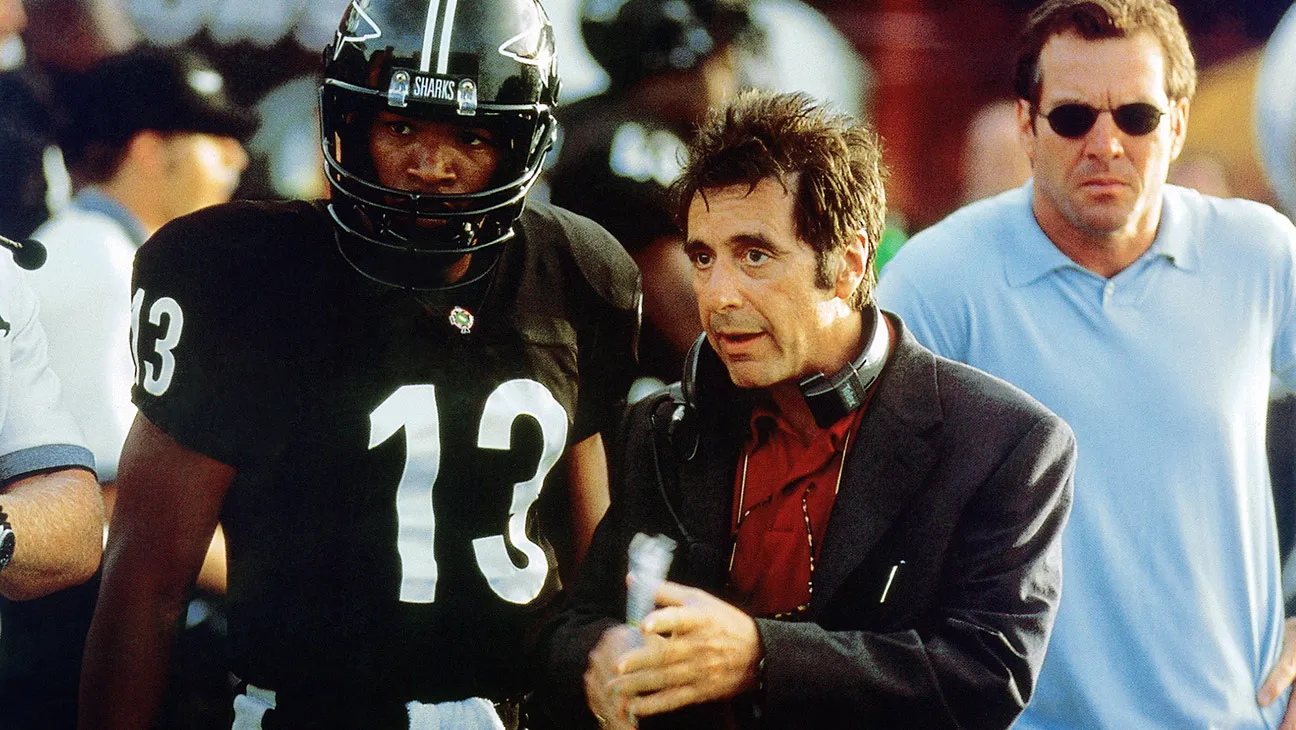
That loyalty gives the film its moral friction. When owners, marketers and celebrity culture push in one direction, D'Amato pushes back — not as an abstract hero but as someone trying to protect the people he’s responsible for.
Stone gives the movie a steady pole by keeping D'Amato central to the interpersonal conflicts. The coach’s relationships with his players and staff are where the film’s quieter, human arguments live.
Contemporary reviewers noticed it too: critics singled out scenes between Pacino’s coach and his co‑stars as some of the film’s most effective moments, which helps explain why the character is the part that lingers.
THE PERFORMANCE
Why Dennis Quaid's performance matters
Reviews of the film’s cast were a mixed bag. Contemporary critics treated the ensemble unevenly rather than crowning a single performance.
Part of that scatter comes from how the casting reads against the story mechanics: some reviewers questioned casting choices on age grounds — an observation that changed how people accepted the premise of a veteran star being suddenly sidelined.
So Quaid’s role matters less as a solitary triumph and more as a pivot: his character’s injury is the story’s detonator, and the way viewers respond to that detonator depends on how believable the casting feels.
In short: the performance plays a functional role in the film’s engines. How convincing it is was the subject of debate at the time — and that debate influenced how critics and audiences read the film’s stakes.
UNDER THE SURFACE
Any Given Sunday has more on its mind than the plot suggests
On the surface it’s about football. Underneath, it’s asking who profits when athletes become products. The tension between profit-driven marketing and what happens on the field threads through almost every scene.
There’s a second current about race and sudden stardom: the dynamics of a player who goes from invisible to celebrated expose how media and celebrity reshape identity and expectations.
Medical ethics is another recurring worry. The film keeps returning to conflicts among team doctors, the pressure to push injured players back into play and the institutional incentives that make risky choices look rational.
Layer all that with generational friction — an old-school coach against modern owners — and you have the movie’s moral geography: fights over control, care and the very idea of what the sport should be.
THE FILMMAKING
How Any Given Sunday was put together
Oliver Stone chose a deliberately aggressive visual approach. The film’s game sequences are hyperkinetic: rapid cutting, montage and an in‑your‑face sound design that throws you into the middle of collisions.
That style was explicit and not accidental — contemporary critics used the term 'hyperkinetic' to describe the visual attack, and the movie wears that editing choice on its sleeve.
On the crew side, Salvatore Totino is credited as director of photography, and the principal edit team included Stuart Levy and Thomas J. Nordberg, names that tell you this was a technically ambitious production.
Behind that ambition sits an industrial apparatus: established production companies and a major distributor were trying to shape the film into something that could feel both raw and theatrical.
PRACTICAL EFFECTS
The effects work that gives Any Given Sunday its physical personality
Stone didn’t fake the football. The production leaned on football coordinators and second-unit crews — the people who know how to stage a believable sequence of tackles, blocks and pile‑ups.
They also brought in real professionals: numerous players and coaches appear as cameos and consultants, which helps the action feel grounded even when the editing is breathless.
Key stadium sequences were filmed at actual venues such as the Miami Orange Bowl and Texas Stadium. That decision gives the game action a scale you can't entirely manufacture on a backlot.
Finally, trained stunt and football personnel handled the hard contact. When the film wants to convince you bodies are colliding for real, it mostly does so with experienced hands on deck.
PURE 80S
Any Given Sunday could not belong to any other decade
Released at the very end of 1999, the film sits in a late‑1990s moment when sports pictures started interrogating spectacle and commerce more bluntly. That timing matters: Stone’s approach feels like a last gasp of 90s testosterone fused with noisy modernity.
The aesthetic — quick edits and montage borrowed from music TV and advertising — reflects a broader tendency in the decade to speed everything up. It isn’t just style for style’s sake; the fractured editing mirrors the fractured institutions the film is inspecting.
Public conversations about owners, the media machine around athletes and the long-term health of players were becoming louder in the 1990s. Any Given Sunday plugged directly into those rising debates.
Because of that, the movie reads like a document of its moment: theatrical in scale but anxious about the commercial pressures reshaping sport as the century turned.
THE LEGACY
Why Any Given Sunday still matters
This wasn’t a niche art-house picture — it reached a broad audience, grossing roughly $100 million worldwide against a mid-to-high‑tens of millions budget, which kept it in circulation.
One tangible effect was how it changed careers and how some later sports films shot their game action. Contemporary and later coverage credit the movie with raising Jamie Foxx’s profile and nudging subsequent sports pictures toward a more kinetic on-field camera language.
Oliver Stone also released alternate cuts for home‑video, and the film has been repackaged in different editions that adjust its running time. That willingness to move the film around suggests there’s been continuing interest in shaping how it’s seen.
All of which means Any Given Sunday didn’t disappear after its initial run: it kept returning to audiences and filmmakers who wanted to work with its noisy blueprint.
THE VERDICT
Does Any Given Sunday still hold up?
Short answer: yes — but with caveats. The film is messy, undeniably theatrical and very long (the commonly cited running time sits at 162 minutes), yet much of what it argues — that sport is increasingly a business that can sacrifice bodies and traditions to branding — still lands.
If you’re watching for the spectacle, the film’s montage and rapid intercutting between brutal in‑game sequences and intimate confrontations still has bite. That approach was a conscious choice, and it’s the part of the picture most often remembered.
For those interested in character, Al Pacino’s Tony D'Amato remains central. Critics singled out the coach’s scenes with his co‑stars as highlights, and those quieter moments are where the movie actually says something worth hearing about loyalty and control.
At the same time, the film’s excesses are real: reviewers were divided over the performances, some critics questioned casting choices, and commentators called out the length and production bloat. If you accept the film on Stone’s terms — loud, partisan and occasionally overblown — it rewards attention. If you want tidy answers, you won’t find them here.
So should you watch it? Yes, if you want a film that treats football as a noisy institution worth interrogating and you don’t mind being shouted at while you think. Tony D'Amato keeps the heart beating through the noise — and that, more than any applause line or camera trick, is why the movie still matters.
Share this movie
// Keep watching
More movies from the 90s
If Any Given Sunday is your kind of movie, there's plenty more on the shelves worth rewinding.
1999 // VHS
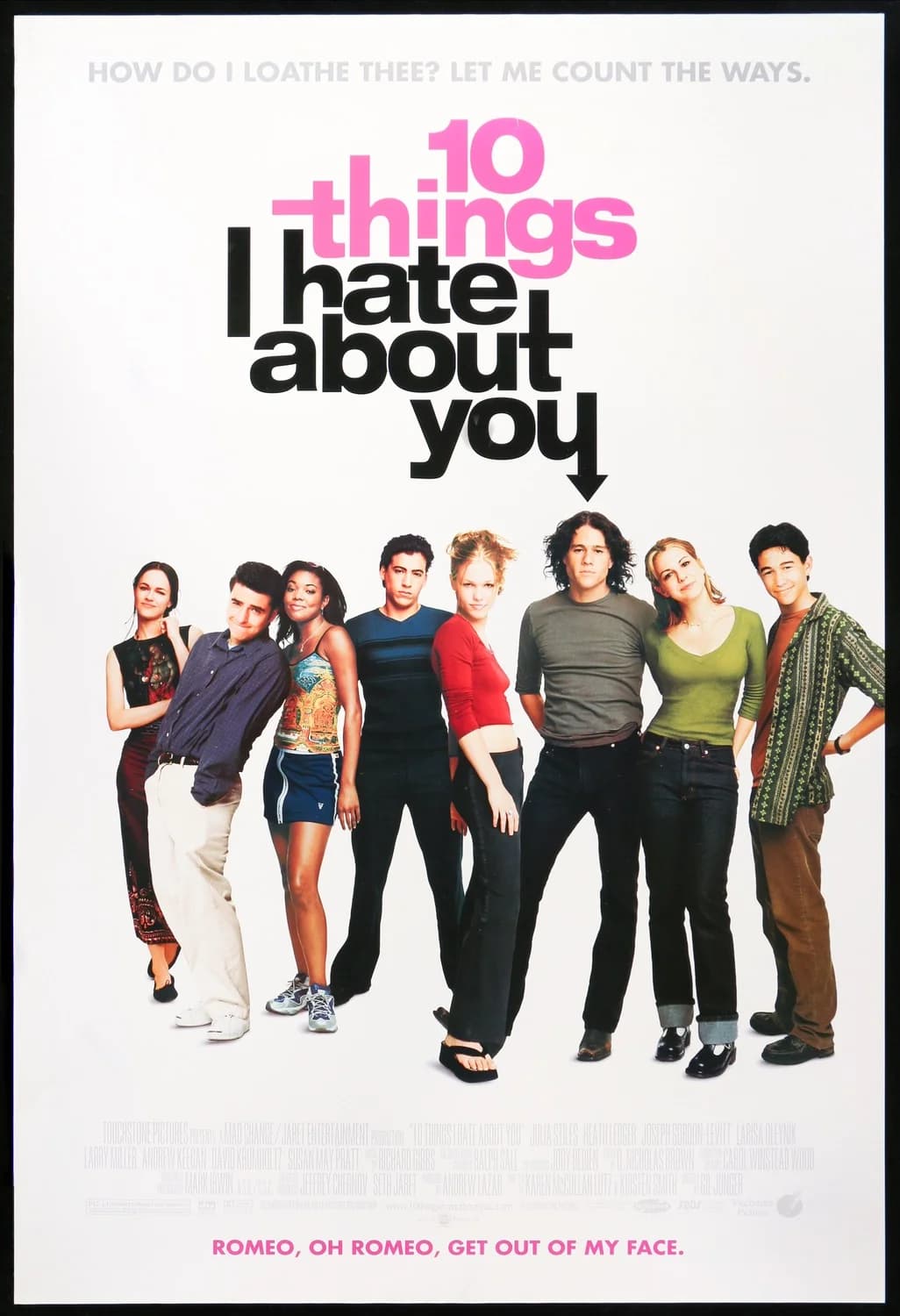
10 Things I Hate About You
Sibling rules, a rooftop serenade and one very stubborn Kat — Shakespeare in a school corridor.
1999 // VHS
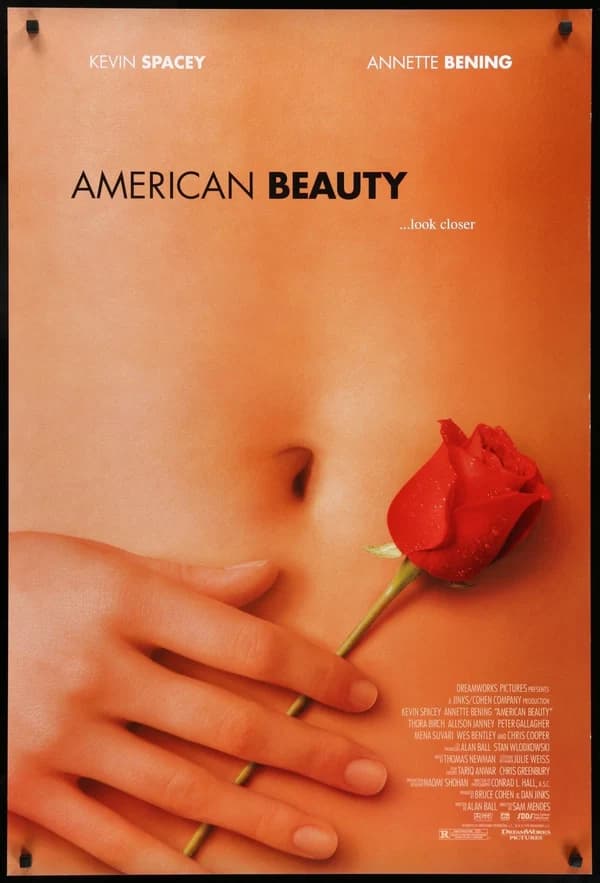
American Beauty
Lester Burnham, suburban rot and a midlife argument that still stings.
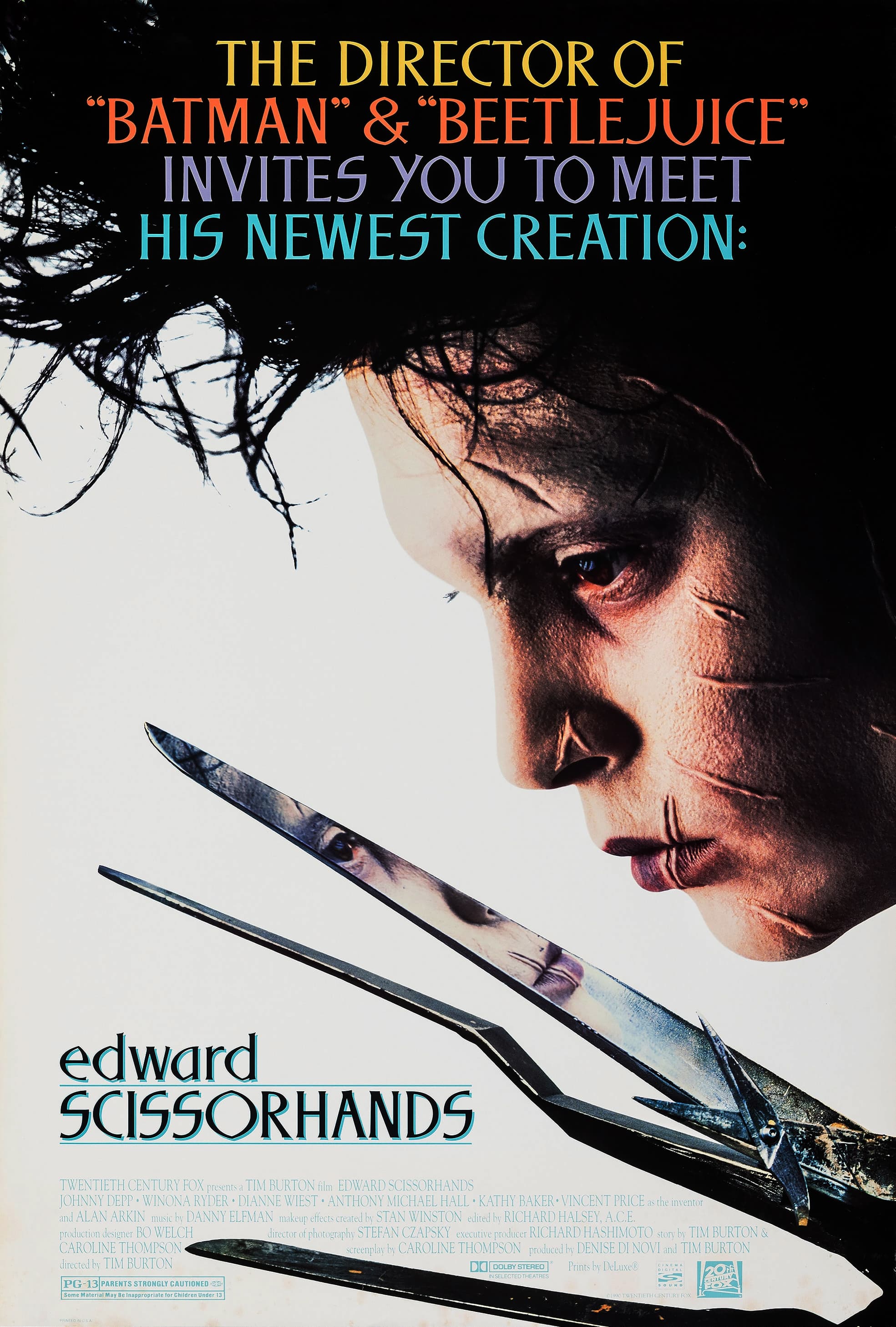
1990 // VHS
Edward Scissorhands
A fairy tale about a man who can’t quite touch the world — and the neighbourhood that can’t quite handle him.