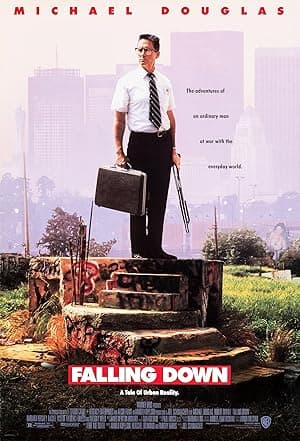
Falling Down
A heatwave, a traffic jam and a man who walks until something finally gives.
// The setup
PLAYBACK STARTED
You remember the image before the politics: a man abandons his car in a gridlock and simply starts walking. Joel Schumacher's 1993 drama follows William 'D‑Fens' Foster as a single, punishing day of frustration turns into a public unraveling — and a movie that still makes people argue.
THE MOVIE
William 'D-Fens' Foster is still the reason this movie works
At its simplest, Falling Down is brutally direct: an unemployed defence‑industry worker named William 'D‑Fens' Foster leaves his car after getting stuck in a heat‑soaked traffic jam and decides to walk across Los Angeles. That walk is not a pleasant stroll; it’s a one‑day odyssey in which frustration turns into a chain of increasingly violent run‑ins.
Why do people keep circling back to this film? Because everything is wired to that central figure. Foster is presented as a middle‑aged man hollowed out by job loss, a broken family and the small humiliations of modern life — and the movie lets us follow, step by step, the point where all that pressure becomes action.
Joel Schumacher directs with the film’s pulse in mind: it’s a 112‑minute sprint of anger and collision that landed in 1993 and landed with a thud in public debate, polarising viewers and critics over what it seemed to be saying about the city and the people in it.
THE SETUP
The idea that sets Falling Down in motion
It needs to be said plainly: the film is built around a single conceit that’s both simple and insistently specific. Foster abandons his car after getting trapped in gridlock during a heat wave and starts to walk. That moment is the match that lights the rest of the day.
From there the movie structures itself as a cross‑city journey. It’s roughly a single‑day odyssey through different neighbourhoods, and the narrative keeps nudging Foster toward a fixed destination — a family event that gives his movement purpose, however twisted that purpose becomes.
There are clear story mechanics: the man becomes publicly identifiable by his vanity plate, 'D‑FENS', which turns him from an anonymous figure into a name on the city’s radar. That identification changes the stakes; his private meltdown suddenly becomes a public problem.
And when his breakdown collides with law enforcement — embodied by LAPD sergeant Martin Prendergast tracking him across the city — Falling Down turns into a collision between two very different ways of facing what urban life is doing to ordinary people.
THE CHARACTER
Why William 'D-Fens' Foster matters
Foster isn’t mysterious. The film gives him an explainable set of losses: work gone, family broken, dignity eroded. That combination is what makes him feel like a recognisable character rather than an abstract symbol.
Because the screenplay ties his anger to ordinary grievances, he becomes memorable — not because he’s exceptional, but because he reads like a man many could imagine seeing on a bad day. The plot decision to have him leave his car and walk turns private irritation into a public spectacle.
Barbara Hershey’s character, Beth, functions as the domestic anchor for that story: she’s the estranged ex‑wife who represents the life Foster is trying, in his own way, to reach. Mentioning her keeps the film from being only about street set‑pieces; there are real personal stakes behind the fury.
Foster’s mother appears in the film as a further domestic touchpoint, which helps frame him as someone whose breakdown isn’t simply theatrical — it’s threaded into family and obligations, and that makes his unraveling feel grounded rather than cartoonish.
THE PERFORMANCE
Why Michael Douglas's performance matters
Contemporary critics made a central claim: Michael Douglas’s work as Foster is not a throwaway; it’s a reason the film lands as forcefully as it does. That’s an important piece of the movie’s impact.
The shorthand most reviewers used was to underline that Douglas gives the character nuance — not merely a loud, one‑note caricature — which is essential for a film that asks you to spend a long time watching a man become progressively more dangerous.
Put another way: the movie depends on you believing this is a man who could plausibly be pushed this far. The critical response suggested Douglas supplied that credibility, which is why the performance was singled out at the time.
UNDER THE SURFACE
Falling Down has more on its mind than the plot suggests
It would be easy to reduce the film to a series of confrontations. The reason it keeps coming back into conversation is that those encounters are built around wider anxieties: urban alienation sits at the heart of it.
Closely tied to that is a midlife crisis — identity loss dressed up as rage. Foster’s day is a desperate attempt to reclaim something that’s gone, and the movie makes that drive explicit rather than apologetic.
At the same time, the film sits uncomfortably with vigilantism. As Foster exacts his own form of justice, Falling Down forces viewers to squint at the line between understandable grievance and harmful action.
And none of these issues lives in a vacuum: the story is also threaded with race and class tensions specific to early‑1990s Los Angeles, which is part of why the film provoked such heated responses when it came out.
PURE 80S
Falling Down could not belong to any other decade
The film landed at a specific, uncomfortable moment. It was in production during the 1992 Los Angeles riots and arrived in cinemas in 1993, which meant its anxieties about urban disorder and job loss were being aired as real‑world events unfolded.
Because of that timing, the character of D‑FENS tapped into early‑1990s conversations about white male resentment and social change. The movie didn’t exist in a cultural vacuum; it was being discussed as part of those wider debates almost as soon as it screened.
That context helps explain both the intensity of reaction and why the film felt so charged: its ideas about economy, security and streets were being spoken about in newspaper headlines and local conversations at the same time.
So while Falling Down isn’t a period piece in the wardrobe sense, it’s very much of its moment — a film whose texture is shaped by the specific political and social anxieties of the early 1990s.
THE LEGACY
Why Falling Down still matters
Falling Down left a mixed but indelible mark. The screenplay won the 1994 Edgar Award for Best Motion Picture, which is a concrete recognition of the story’s craft.
It was also selected to play in competition at the 1993 Cannes Film Festival, a sign that the film was being taken seriously on the festival circuit as well as in mainstream discussion.
Perhaps most telling is that the film provoked public debate and protest from some groups over how it depicted race and violence. That controversy became part of its long‑term footprint — people didn’t just watch it, they argued about it.
Taken together, those threads explain why Falling Down remains a film people return to: it’s both an award‑winning piece of writing and a lightning rod for broader cultural arguments.
THE VERDICT
Does Falling Down still hold up?
Yes — but with a rider. Falling Down remains worth watching because it’s not merely a series of sensational moments; it’s an economical drama about a single man’s day that asks uncomfortable questions about who gets listened to when they snap. The film’s premise — a man abandoning his car in gridlock and walking across Los Angeles — still functions as a clean, relentless engine for the story.
Michael Douglas’s central presence and the counterpoint of Robert Duvall’s Martin Prendergast, an LAPD sergeant on the verge of retirement, give the movie its necessary balance: one viewpoint exploding in real time, the other tracing the cost of chasing that collapse. Barbara Hershey’s role as Foster’s estranged ex‑wife keeps one foot in a domestic reality that the walking odyssey keeps trying to reach.
The script’s focus — identity and loss, vigilantism, and the city’s fractious race and class tensions — is what makes it feel sharper than a simple action piece. It also explains why the film provoked protests when it first opened in 1993: these are knotty questions, and Schumacher’s picture pushes them into the open rather than smoothing them over.
If you sit down to watch it now, expect to be provoked. Falling Down isn’t comfortable company, but it’s a lean, 112‑minute provocation that still prompts argument: that, in itself, is a kind of success.
Share this movie
// Keep watching
More movies from the 90s
If Falling Down is your kind of movie, there's plenty more on the shelves worth rewinding.
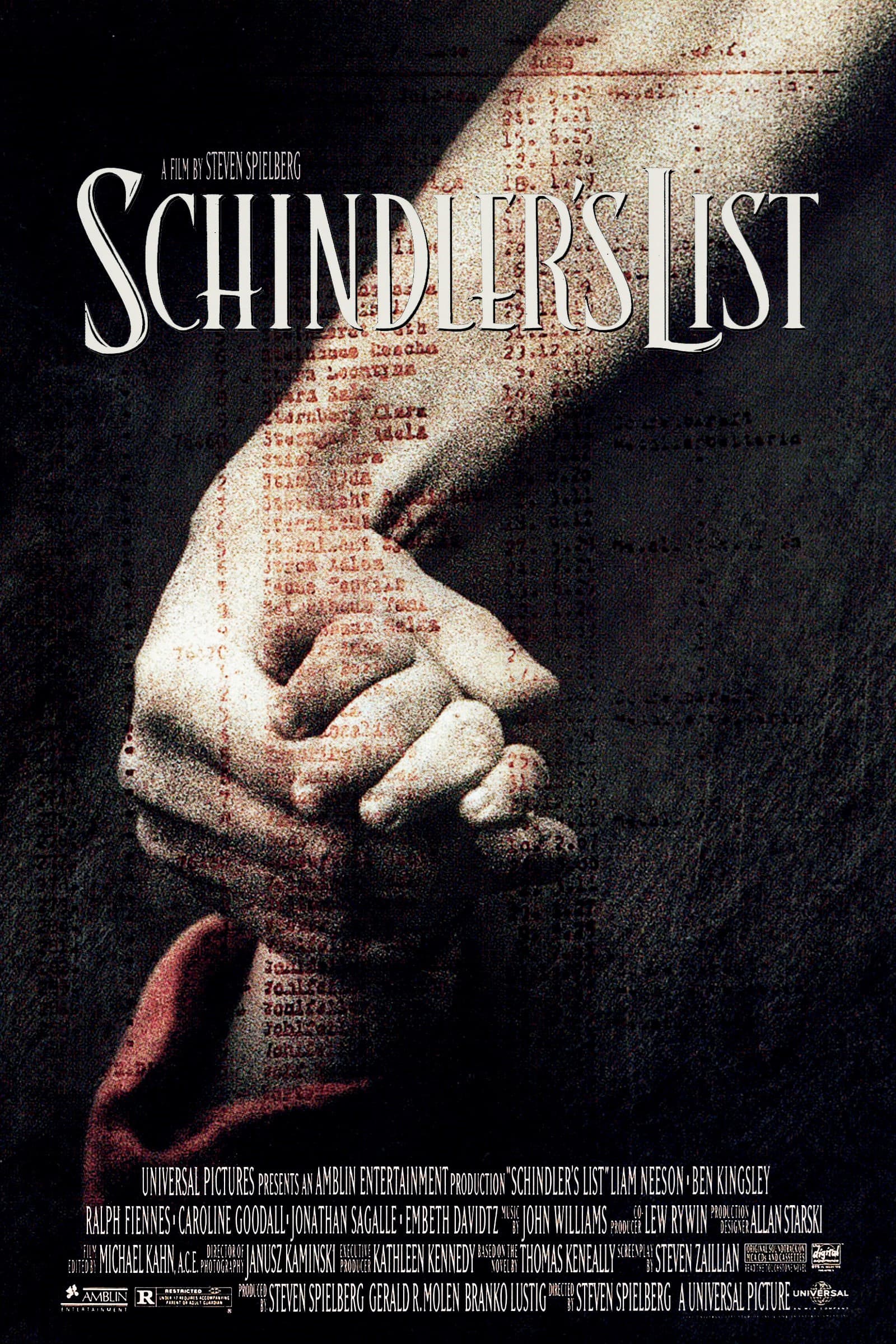
1993 // VHS
Schindler's List
A businessman who keeps a list — and keeps changing the kind of man he is.
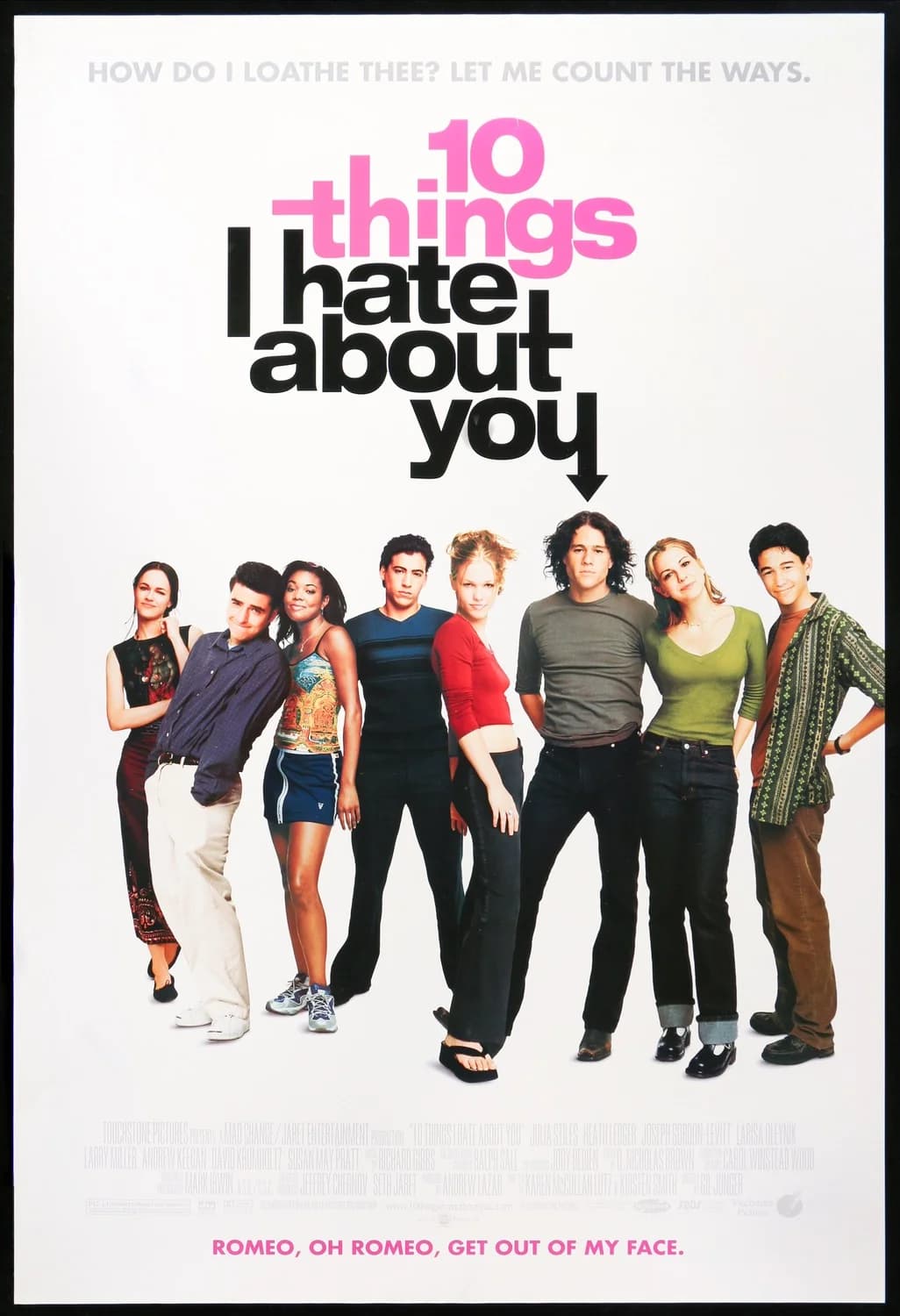
1999 // VHS
10 Things I Hate About You
Sibling rules, a rooftop serenade and one very stubborn Kat — Shakespeare in a school corridor.
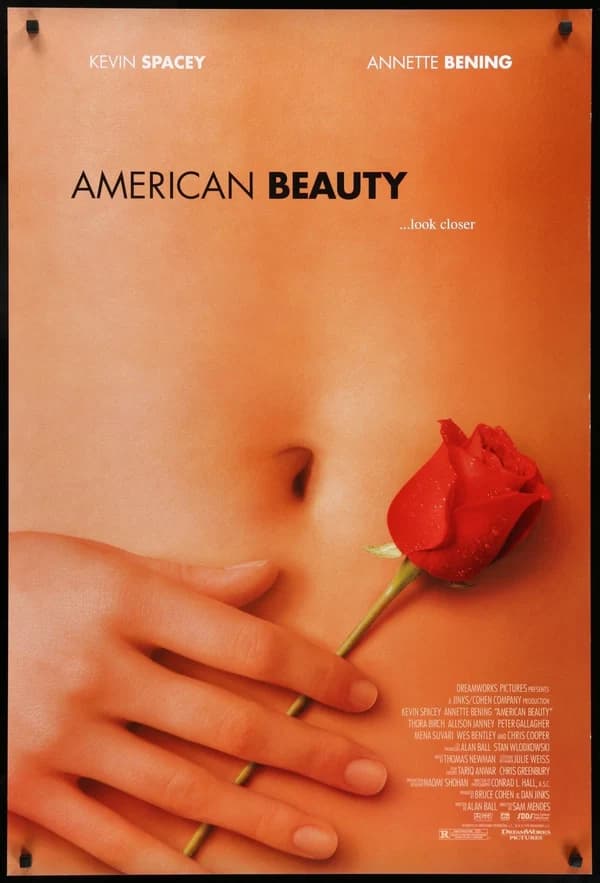
1999 // VHS
American Beauty
Lester Burnham, suburban rot and a midlife argument that still stings.