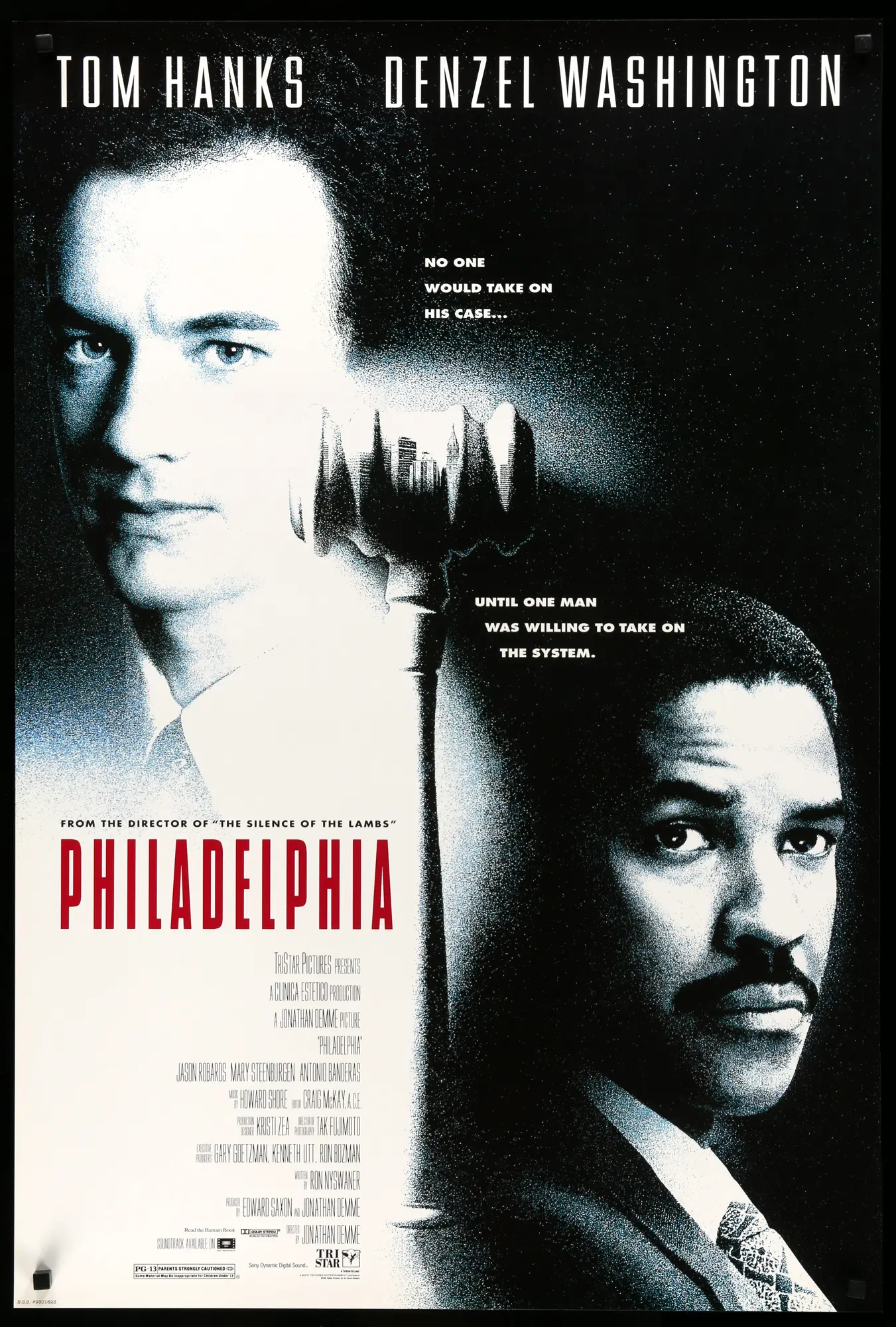
Philadelphia
A courtroom battle about shame, work and what it means to be seen.
// The setup
PLAYBACK STARTED
Philadelphia is the kind of film that still asks a simple, blunt question: what happens to a man’s life when colleagues turn a disease into a firing offence? Jonathan Demme’s film puts that question in a courtroom, but it keeps its attention on the person at the centre — Andrew "Andy" Beckett — and the messy human cost of discrimination.
THE MOVIE
Andrew "Andy" Beckett is still the reason this movie works
Walk into a conversation about Philadelphia and people will start talking about a courtroom. They remember depositions, testimony and the slow unpicking of a firm’s excuses. But what gives the film its pull is quieter: a successful lawyer — Andrew "Andy" Beckett — whose career is erased when partners discover he has AIDS, and the way that loss reframes everything around him.
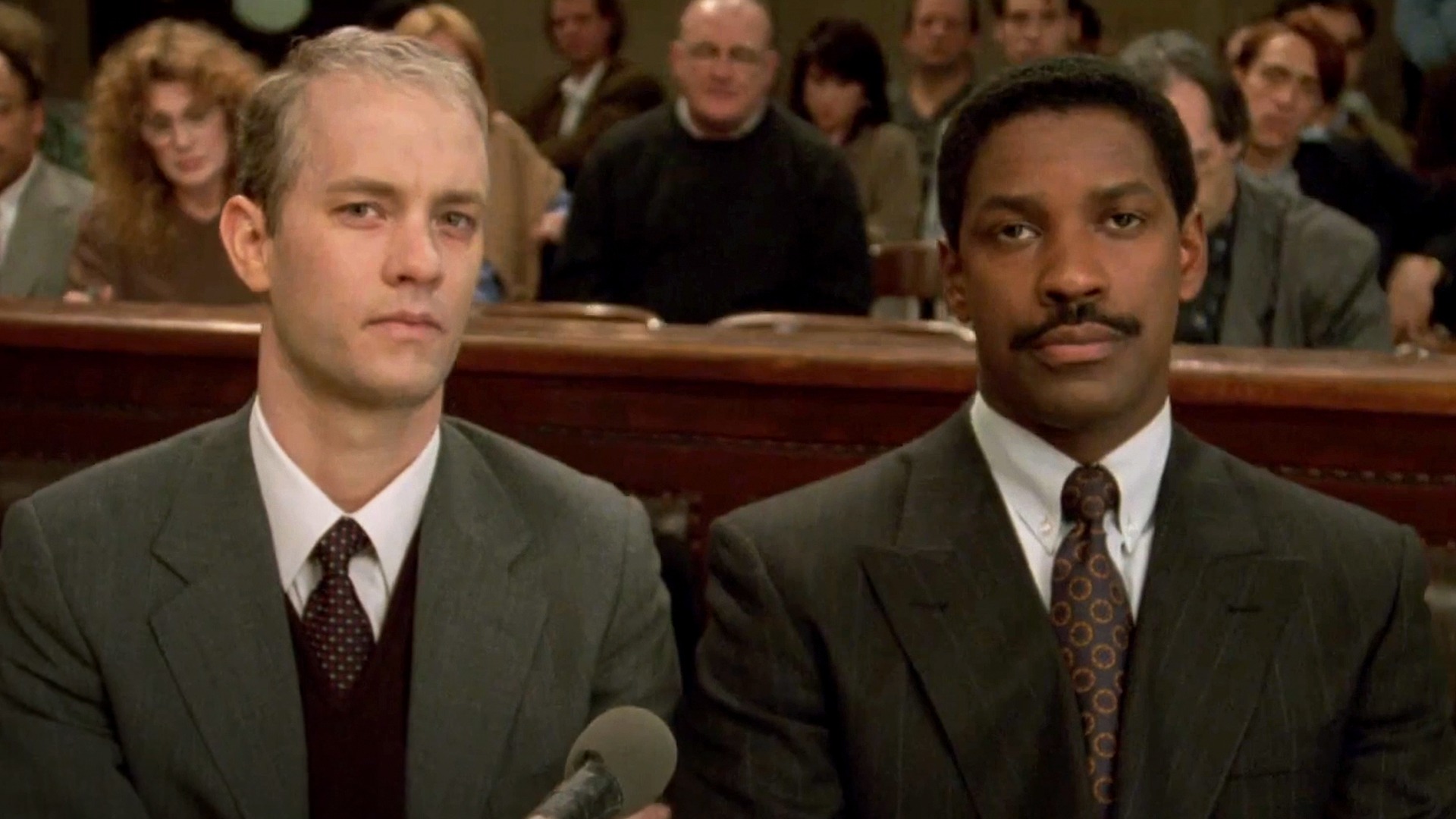
That’s the engine. Andy hires Joe Miller, a small‑firm lawyer who begins the suit against Andy’s former employers. The legal action is the plot’s visible spine, but the scenes away from the courtroom are where the film keeps dragging our attention back to what’s actually at stake: reputation, dignity and the practical violences of stigma.
Jonathan Demme directs with an insistence that this is a human story as much as a legal one. The film runs for just over two hours, and it uses that time to balance procedure with private moments — which is why the character at the centre remains what people remember long after the trial scenes have been described.
THE SETUP
The idea that sets Philadelphia in motion
The premise is straightforward without being simplistic: a successful corporate lawyer is dismissed from his firm once partners learn he has AIDS, and he sues for wrongful termination. That framing gives the film an obvious dramatic problem — prove discrimination — and a less obvious one: how do you prove motive when the reason offered is the candidate’s health?
Demme and Ron Nyswaner set the story up to move between two registers. On one side are the mechanics of law — depositions, on‑the‑record testimony and courtroom strategy. On the other are hospital corridors, family visits and private conversations that refuse to let the legalese dominate the human cost.
That alternation is not padding. It’s the movie’s way of insisting the case isn’t merely about a job lost, but about a life reframed by public misperception. The trial hinges on establishing discriminatory motive rather than simply documenting dismissal, which keeps the legal scenes tense in a moral sense as well as a procedural one.
Because the setup keeps one eye on procedure and the other on intimacy, the film can make the courtroom feel consequential without turning every scene into a lecture on law. The stakes are practical and moral, and both need to be made visible.
THE CHARACTER
Why Andrew "Andy" Beckett matters
Andy Beckett matters because he keeps the story human. He isn’t a symbol wrapped in a legal brief; he’s a professional whose identity — reputation, relationships, work — is up for grabs. The film makes sure we see the parts of his life that the legal documents would flatten: his mother, his partner Miguel and the few friends who refuse to reduce him to a diagnosis.
Those personal connections provide the emotional counterpoint to the courtroom mechanics. When the trial reduces events to dates and memos, the scenes with Andy’s family and friends drag the audience back to the fact that this is a life being argued over.
The screenplay and the production notes also make clear the story drew on real cases of health‑status discrimination, which is why Andy’s situation feels specific rather than schematic. The narrative is using a particular man’s experience to say something wider about workplace prejudice and how institutions can weaponise fear.
Finally, Andy matters because the film lets the audience measure the legal argument against the visible costs: not just lost work, but the erosion of normalcy and the fight to be seen as a whole person while illness progresses.
THE PERFORMANCE
Why Tom Hanks's performance matters
Contemporary critics made Hanks’s portrayal one of the film’s central talking points. The awards recognition that followed — notably the Academy Award for Best Actor — is part of what locked the performance into public memory.
That external recognition matters because Philadelphia is a movie that flits between procedure and intimacy; it needed a figure who could anchor both registers. The fact that critics singled the performance out suggests the role supplied that anchor.
Because the film relies on human detail as a corrective to dry legal argument, the central performance plays a tactical role: it keeps the audience attentive to the person rather than the paperwork.
Put simply, the performance is a hinge. It’s where the emotional and the procedural meet, and where the viewer is asked to care.
UNDER THE SURFACE
Philadelphia has more on its mind than the plot suggests
On the surface it's a wrongful‑termination suit. Underneath, the movie is doing something subtler: it’s cataloguing how stigma and fear around HIV/AIDS translate into institutional cruelty. That translation — from private fear to public consequence — is the film’s recurring motion.
The movie also stages allyship as something someone learns. Joe Miller begins the case reluctant; over time he changes. That movement lets the film interrogate not only overt bigotry but the quieter things that keep people from stepping up: discomfort, ignorance, self‑interest.
Mortality and dignity are never far from the centre. The private scenes — medical moments, family visits — tether the legal abstractions to a body and a life that’s running out of time, which skews the courtroom stakes in a way a purely procedural film wouldn’t achieve.
Finally, the film’s grounding in real discrimination cases gives the themes a concrete angle. This isn’t a parable about justice; it’s a filmed argument that legal accountability matters when workplaces weaponise health.
THE FILMMAKING
How Philadelphia was put together
One clear production choice was balance: Demme and his collaborators deliberately mixed courtroom procedure with intimate, medical and family scenes. That pacing decision keeps the film from becoming a dry legal procedural; it stretches the viewer’s attention between argument and consequence.
Production notes reveal another editorial choice that speaks to the film’s tone: several intimate domestic scenes between Beckett and his partner were cut during editing. The result is a movie that leans towards broad human detail while also avoiding certain intimacies — a compromise that shaped how openly the film showed the central gay relationship.
Those cuts matter because they altered the film’s emotional texture. The filmmaking choices made the trial accessible to a mainstream audience, but they also softened some personal edges that might have made the story feel more private and immediate.
In short, the film’s construction favours clarity and reach; it trades certain intimate moments for a narrative that keeps the courtroom legible and the broader themes visible.
PURE 80S
Philadelphia could not belong to any other decade
Philadelphia arrived at a particular moment. In the early 1990s, Hollywood was starting to put HIV/AIDS on screen in ways that reached mainstream audiences, and this film was one of the first major studio pictures to foreground those legal and social questions.
That timing gave the movie a different purpose than a smaller indie project might have had. It wasn’t just telling a story about one man; it was staging a public conversation about employment, health and the visibility of a disease that was still widely misunderstood.
Being a 1993 film shapes some of its choices: Demme makes the courtroom comprehensible for a broad audience and softens certain intimacies, because the picture is trying to speak to people who might not have seen an HIV story before on a commercial scale.
Put another way, Philadelphia exists where mainstream visibility and urgent social debate meet — a product of its decade’s readiness to ask uncomfortable public questions on a large screen.
WATCHING IT NOW
What has aged — and what hasn't
If you watch Philadelphia today you’ll notice two things immediately. First, the film’s emotional power leans heavily on its central performances and the human details it chooses to foreground. Contemporary commentary has emphasised that the star work is one of the film’s main engines.
Second, modern viewers are more likely to notice what the film leaves out. Critics and later commentators have pointed to the movie’s relatively conservative handling of the central gay relationship and the fact that several intimate domestic scenes were cut. That absence changes how personal the story feels by modern standards.
The movie’s link to real discrimination cases also gives it an enduring seriousness: the screenplay and end credits acknowledge its inspiration in part from documented lawsuits. That grounding keeps the film from feeling purely fictionalised or sensational.
So what ages well? The legal questions and the insistence on dignity stay relevant. What feels more dated is the degree to which the film sidestepped showing the private life in full, a choice that contemporary audiences may read as cautious.
THE LEGACY
Why Philadelphia still matters
Part of Philadelphia’s afterlife is plainly institutional: Tom Hanks’s work was recognised with an Academy Award for Best Actor, and the film’s song — Bruce Springsteen’s 'Streets of Philadelphia' — won an Oscar for Best Original Song. Those prizes amplified the movie’s visibility in the moment.
But there’s also a more complicated legacy. The film’s end credits and press materials acknowledge inspiration from real‑world discrimination cases, and that connection led to public legal debate — the family of Geoffrey Bowers brought suit claiming the film drew on his situation, and that matter was later settled.
That legal conversation matters because it made the film part of the same public argument it dramatised: not just a depiction of discrimination, but a piece of media caught up in questions about how real stories are adapted for dramatic use.
Finally, the film’s selection for preservation in the United States National Film Registry in 2025 cements its status as a work considered culturally or historically significant — a formal recognition that the movie has a continuing place in the record of American cinema.
THE VERDICT
Does Philadelphia still hold up?
Yes—if you watch Philadelphia as a deliberate, human‑centred courtroom drama about discrimination, it still holds up. The film’s core is straightforward: a successful lawyer is dismissed after partners learn he has AIDS, and he hires Joe Miller to test whether that dismissal was unlawful. That clarity keeps the movie focused.
What keeps it watchable is the way it alternates trial mechanics with the private, medical and family moments that give those mechanics weight. The legal scenes matter because they’re tethered to a life in decline and a man determined to clear his reputation and hold his firm to account.
There are caveats. Modern viewers will notice the film’s cautious moves around the central relationship — choices in editing removed several intimate domestic scenes — and that narrower emotional palette can feel conservative by today’s standards. But those choices don’t erase the film’s argument about workplace discrimination and dignity.
In short: Philadelphia remains worth watching for its focused moral case, its rooted human detail and the way it stages law as a battleground for recognition. It’s a film that reminds you a trial can settle legal questions and still fail to settle the human ones; and the latter are the ones you keep thinking about.
Share this movie
// Keep watching
More movies from the 90s
If Philadelphia is your kind of movie, there's plenty more on the shelves worth rewinding.
1993 // VHS
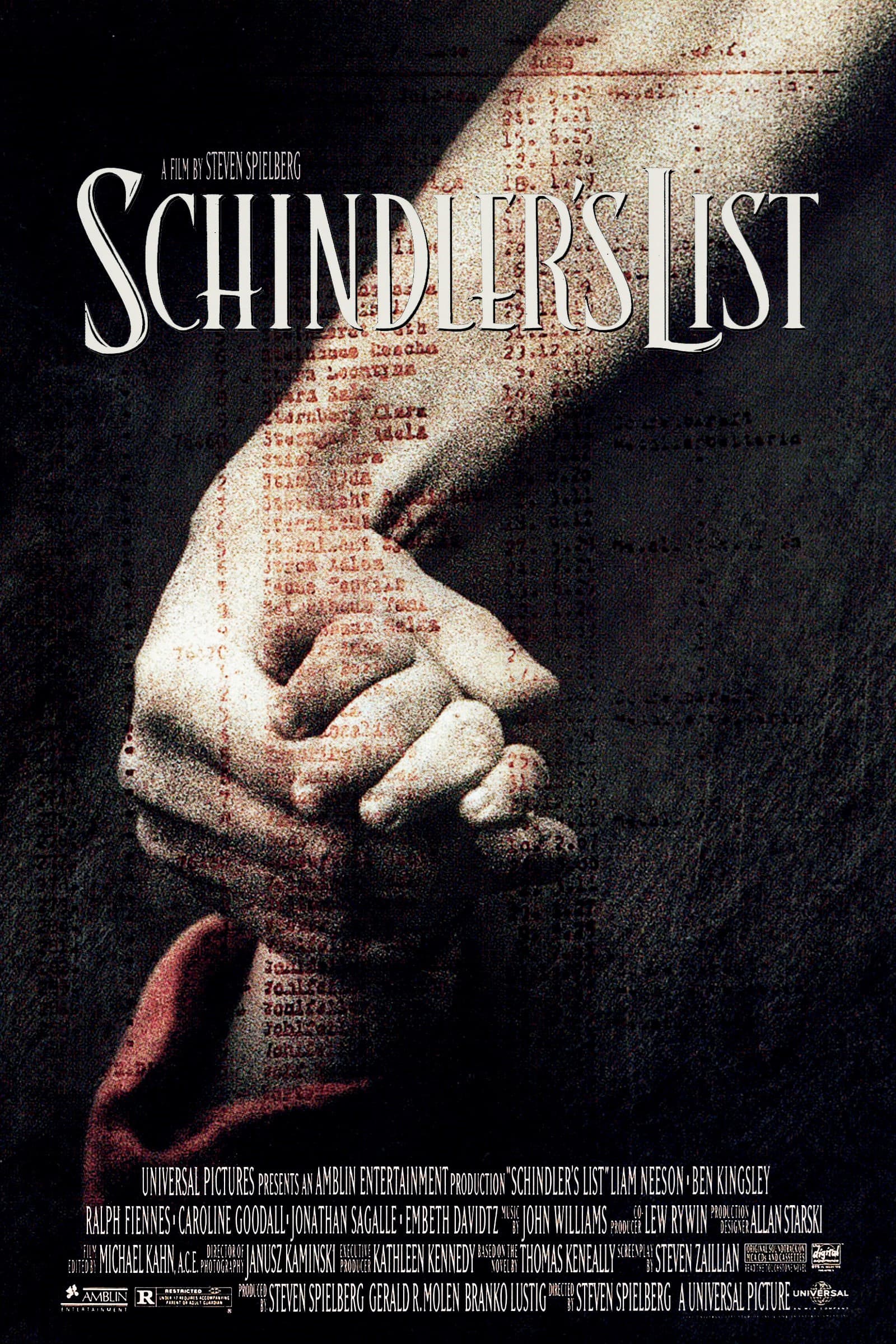
Schindler's List
A businessman who keeps a list — and keeps changing the kind of man he is.
1999 // VHS
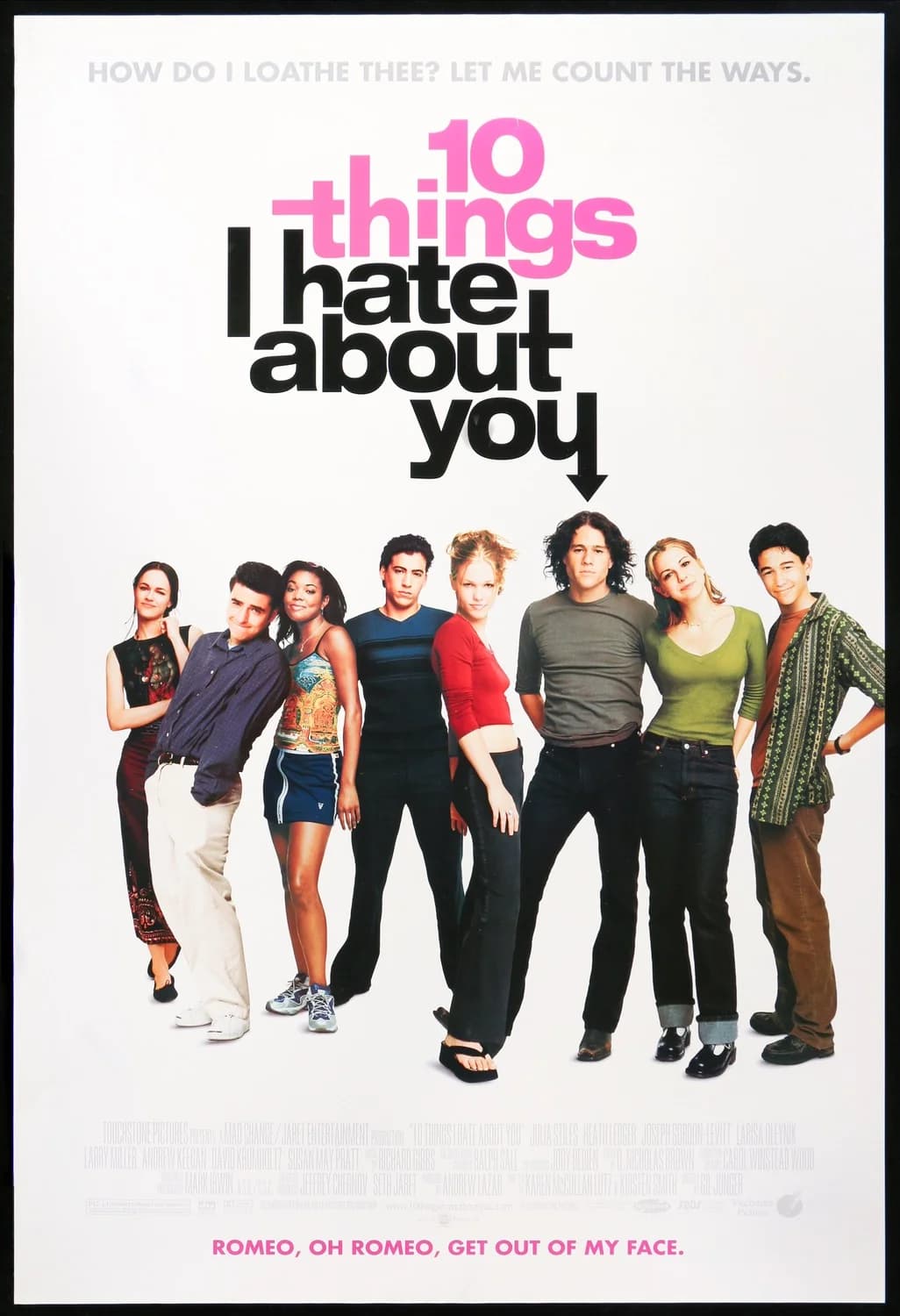
10 Things I Hate About You
Sibling rules, a rooftop serenade and one very stubborn Kat — Shakespeare in a school corridor.
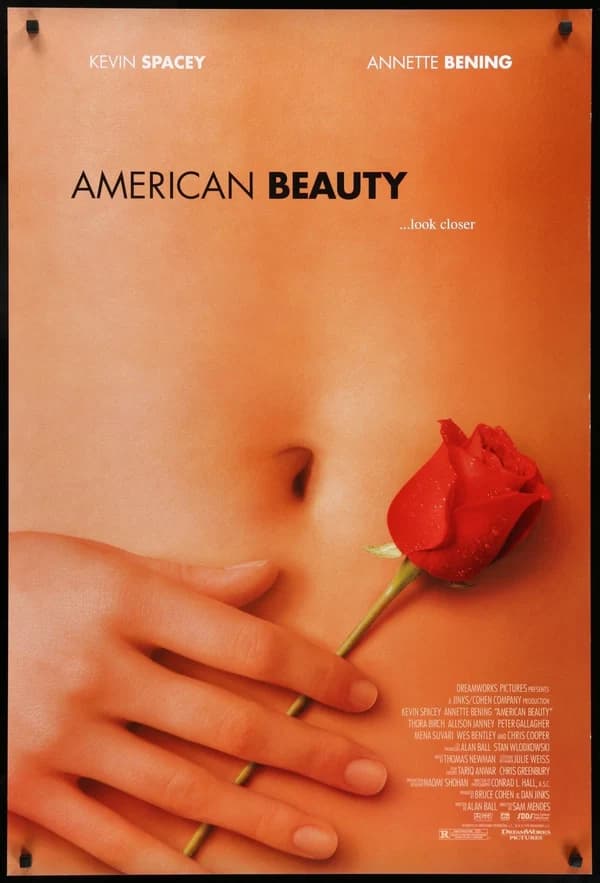
1999 // VHS
American Beauty
Lester Burnham, suburban rot and a midlife argument that still stings.