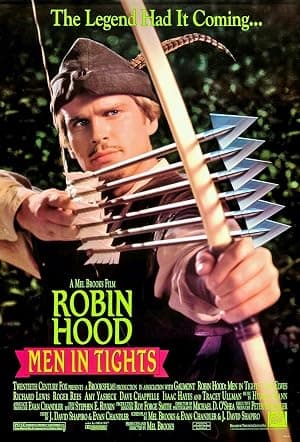
Robin Hood: Men in Tights
Mel Brooks having a laugh at Robin Hood — loud, silly and anchored by one sensible outlaw.
// The setup
PLAYBACK STARTED
If you remember one image from Robin Hood: Men in Tights it's probably a joke that shouldn't fit in a medieval forest but somehow does: a costume-adventure being deliberately interrupted by modern gags and a rap. That's the point. Mel Brooks built a whole film around taking the familiar Robin Hood machinery, poking it, and then letting Cary Elwes play the straight-laced centre everyone else can bounce off.
THE MOVIE
Robin Hood is still the reason this movie works
Robin Hood: Men in Tights isn't subtle. It never meant to be. From the first gag the film announces itself as a deliberate send-up of the Robin Hood stories Hollywood made over and over — with plenty of direct jabs at the Kevin Costner picture that arrived a couple of years earlier.
What keeps the film from collapsing under its own slapstick is a simple trick: Cary Elwes's Robin plays everything mostly straight. He has a recognisable objective — to reclaim his home and rescue Marian — and that sensible centre lets Mel Brooks and his cast fling anachronistic jokes, musical numbers and cameo interruptions around him like confetti.
Directed by Mel Brooks and running at just over an hour and a half, Men in Tights is exactly what the credits promise: a broad parody that deliberately mixes medieval set pieces with modern comic beats, including original songs — yes, even a ‘Sherwood Forest Rap’ — and a late cascade of cameos that underline the film's appetite for showbiz self-mockery.
THE SETUP
The idea that sets Robin Hood: Men in Tights in motion
The engine of the film is straightforward: Robin of Loxley comes back from the Crusades to discover his estate in ruins and decides to put things right. It’s a familiar instigator, which is precisely the point — it's recognisable material to be deliberately skewered.
Once Robin notices the local oppression and the absence of King Richard, he moves into direct conflict with Prince John and the Sheriff of Rottingham. That plot spur is simple but effective; it gives the film an honest-sounding reason to stage its spoofs.
Brooks structures the movie as a run of set pieces rather than a slow-burn drama. Archery contests, bridge squabbles, spring fairs and a clutch of musical numbers become the framework for jokes rather than obstacles on a realistic arc.
In short: the story supplies the familiar beats so the parody can do what it does best — riff, interrupt and undercut the conventions of the costume-adventure film.
THE CHARACTER
Why Robin Hood matters
Cary Elwes's Robin is the film’s anchor. He turns the familiar Robin of Loxley shape into a useful foil: brave enough to be heroic, steady enough to be believable, and therefore the ideal target for Brooks's comic barrage.
Because the movie is explicitly a parody of cinematic Robin Hood adaptations, the character's recognisable motives — getting his land back and rescuing Marian — let audiences follow a normal emotional map even when the jokes swerve off into anachronism or pure silliness.
That balance is crucial. If the hero weren't readable and reasonably sincere, the film's gags would float free with nothing to hit against. Robin's narrative purpose gives the parody purchase; he’s the sensible centre everyone else plays off.
So Robin matters less as a reinvention and more as a stabiliser: a straight reference point in a movie designed to mock the very idea of reverent period adventure.
THE PERFORMANCE
Why Cary Elwes's performance matters
Contemporary reviews tended to point to Cary Elwes as the movie’s centre — the calm at the middle of the storm. That observation matters because the film’s comedy relies on someone believable enough to take the plot seriously.
Critics noted that Elwes largely plays the role straight amid a cast that often revels in broad silliness. Having that reliable centre prevents the film from becoming a stream of disconnected sketches.
There were mixed notes about on-screen chemistry with Amy Yasbeck, which is worth mentioning because the emotional beats depend on the audience buying their relationship at least a little.
Put simply: Elwes's role isn’t played as a big, showy turn. It’s the kind of steadying performance that allows the film’s louder choices to register.
UNDER THE SURFACE
Robin Hood: Men in Tights has more on its mind than the plot suggests
On the surface it's a gag-a-minute parody of Robin Hood stories. Underneath, it’s also a small-picture satire of how Hollywood packages historical adventure — the bombast, the earnest romance, the obligatory heroics — all of which Brooks gleefully deflates.
The film is self-reflexive: it knows it's movie-making and uses that awareness for jokes that wink at other films and at industry clichés. Cameos and meta-jokes underline the idea that the story exists inside Hollywood’s machinery.
A deliberate mix of anachronism and musical comedy keeps the tone joltingly modern. Songs and out-of-time references work not as period mistakes but as comic devices that short-circuit the audience’s expectation of historical fidelity.
Lastly, broad slapstick and ribald humour are not accidental; they’re the chosen language. The movie leans into lowbrow delights because that style best serves the parody Brooks intends.
THE FILMMAKING
How Robin Hood: Men in Tights was put together
Behind the jokes there’s a conventional crew: Michael D. O'Shea handled cinematography, Stephen E. Rivkin edited the picture, and Roy Forge Smith is credited as production designer. Those names remind you this is a studio picture with the usual crafts shaping the look and pace.
That combination matters because Brooks's approach depends on clear setups and comedic timing — the kind of things that fall to camera, cutting and design even when the content is deliberately silly.
Knowing those jobs were filled by experienced hands helps explain why the film can shift between broad physical comedy and sharp comedic interrupts without losing coherence.
In short: the filmmaking team provided a tidy framework for Brooks’s comic chaos, keeping the nonsense legible.
PURE 80S
Robin Hood: Men in Tights could not belong to any other decade
Though released in 1993, the film sits squarely in a late-20th-century pattern: mainstream studio comedies that used aggressive parody, star cameos and pop-culture references to get laughs from viewers who recognised the targets.
That era’s comedies liked to be topical and referential; Men in Tights follows that playbook by trading on viewers’ familiarity with recent big-budget Robin Hood pictures and the broader genre clichés they embodied.
Brooks had long made his name doing that kind of broad, referential satire, and this picture adapts the same method to a familiar medieval tale while leaning into contemporary jokes.
Seen this way, the film is a product of its moment — competitive, referencing, and keen to wring laughs from shared cultural touchstones.
THE LEGACY
Why Robin Hood: Men in Tights still matters
The film opened modestly and went on to deliver a solid commercial return for Brooks; it never vanished. It has kept a presence through multiple home-video reissues, including a Blu-ray release, which helps explain why people still find and watch it.
Critically and academically, Men in Tights is most commonly discussed in the context of Brooks's longer career of parody films. Comparisons to Spaceballs and Blazing Saddles recur because the film recycles many of the same comic strategies and performers.
The movie also picked up at least one industry nod after release — a Young Artist Awards nomination for Outstanding Family Motion Picture – Comedy — which is a neat reminder that it was playing for a family audience as well as for adults in on the jokes.
Collectively, these threads explain its continuing presence: it didn’t stamp the decade, but it remained available and visible enough to be part of Brooks’s body of work that viewers and critics revisit.
THE VERDICT
Does Robin Hood: Men in Tights still hold up?
If you want subtlety, this isn’t your film. But if you’re after a knowing satire that delights in undercutting costume-adventure tropes, Robin Hood: Men in Tights still does what it set out to do: it lampoons the genre with an almost gleeful lack of restraint.
The movie’s comic toolkit — anachronistic jokes, musical numbers, cameo interruptions and a parade of spoof set pieces — deliberately sabotages any attempt at a strictly realistic story. That’s a design choice, not a bug. The narrative exists to be riffed on.
Cary Elwes as Robin provides the necessary spine; contemporary reviewers singled him out as the film’s centre, and having that mostly-straight figure is what allows the broader silliness to land. Mel Brooks’s name on the project also signals the kind of broad parody you’re going to get.
So should you watch it? Yes — if you enjoy referential comedy, theatrical anachronism and a director willing to make the audience laugh at Hollywood as much as at the legend. It’s loud, uneven and deliberately daft, but it knows its audience and delivers the sort of affectionate mockery Brooks has always specialised in.
Share this movie
// Keep watching
More movies from the 90s
If Robin Hood: Men in Tights is your kind of movie, there's plenty more on the shelves worth rewinding.
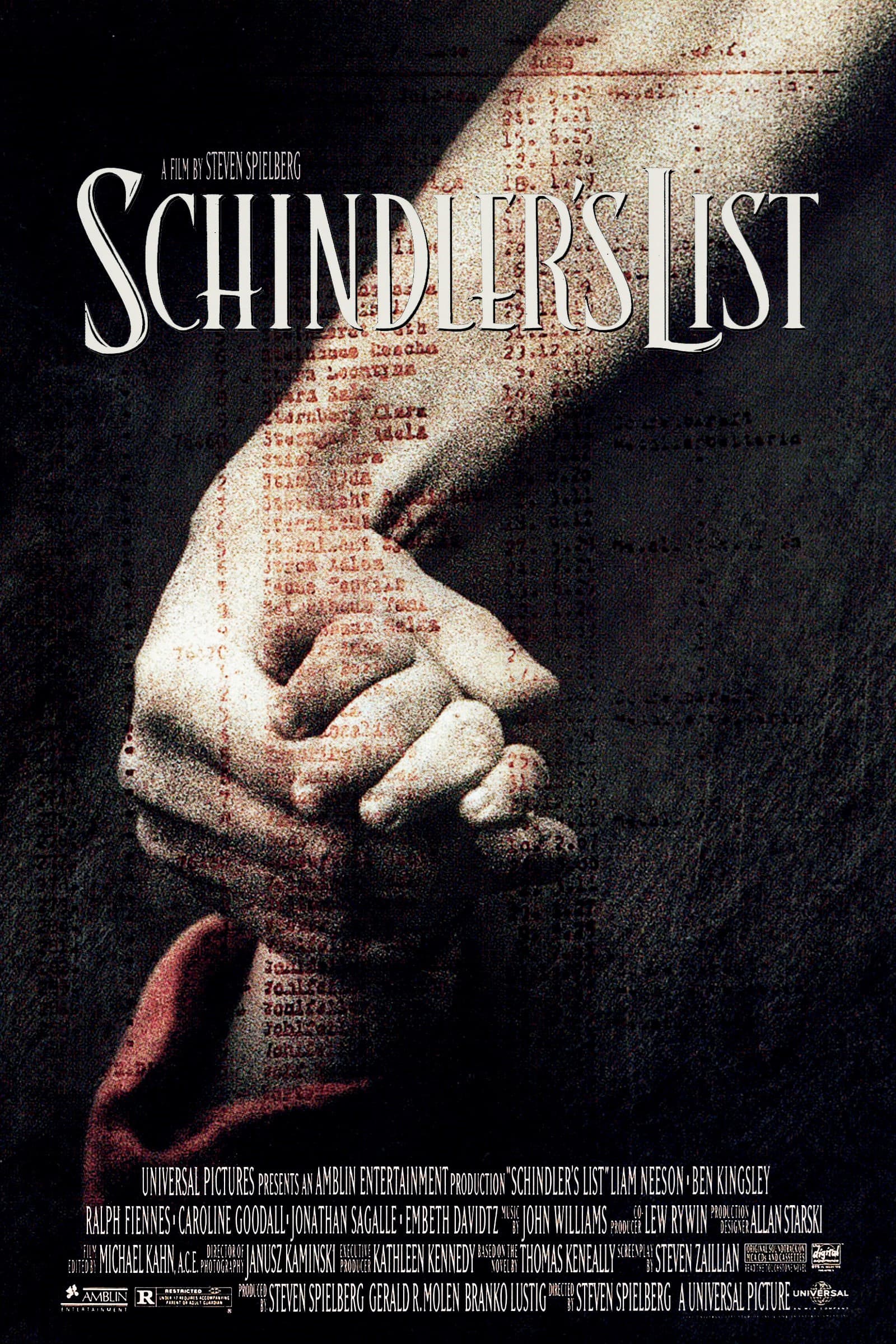
1993 // VHS
Schindler's List
A businessman who keeps a list — and keeps changing the kind of man he is.
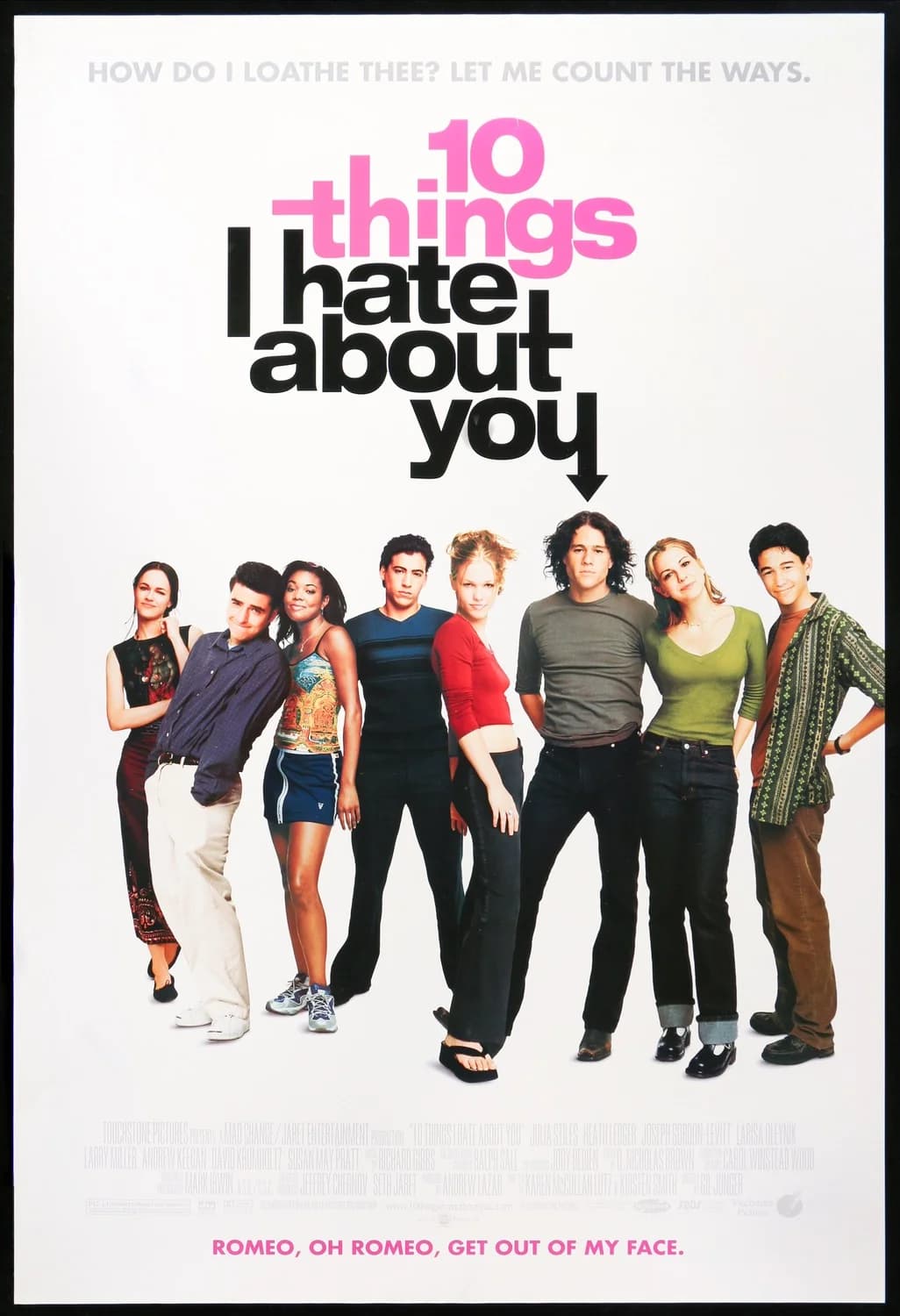
1999 // VHS
10 Things I Hate About You
Sibling rules, a rooftop serenade and one very stubborn Kat — Shakespeare in a school corridor.
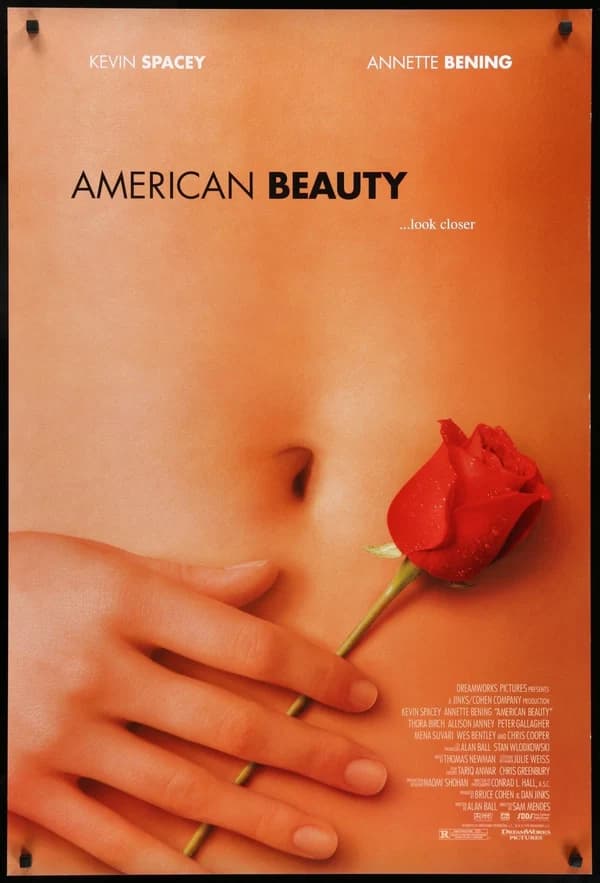
1999 // VHS
American Beauty
Lester Burnham, suburban rot and a midlife argument that still stings.