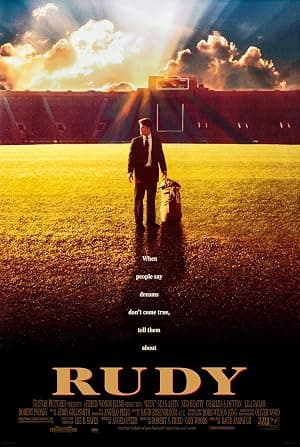
Rudy
A walk-on dream, stubborn as hell — and the crowd that eventually carries it.
// The setup
PLAYBACK STARTED
Rudy is a film you can describe in one sentence and still miss why people keep coming back to it. It follows Daniel 'Rudy' Ruettiger, a working‑class kid from Joliet who refuses to accept that Notre Dame — and a place on the team — are beyond him. Directed by David Anspaugh, it dresses that stubbornness in the language of the underdog and leaves you with something like victory even when the film stays firmly rooted in ordinary people.
THE MOVIE
Daniel 'Rudy' Ruettiger is still the reason this movie works
Start with Rudy: a working‑class lad from Joliet with neither the size nor the paperwork to get into Notre Dame, but with one stubborn aim — to play for the Fighting Irish. That single, almost ridiculous goal is the film’s heartbeat; everything else orbits around it.
David Anspaugh and Angelo Pizzo built the film as a clear, earnest underdog story: Rudy improves his grades at Holy Cross Junior College, manages a transfer to Notre Dame and then spends years on the scout team trying to win a single chance to dress for a varsity game. It’s simple and it’s relentless, which is partly why it gets under your skin.
The production leans on authenticity where it can — shooting on the Notre Dame campus and using real crowds for the climactic scenes — and Sean Astin’s central turn anchors the whole enterprise. Critics at release noticed that straightforwardness, praising the emotional payoff even when the movie wears a few familiar genre stamps.
THE SETUP
The idea that sets Rudy in motion
The premise is gloriously uncomplicated. Rudy wants Notre Dame. He doesn’t have the grades, the money or the natural build for the team, so he makes himself the project.
That project has stages: fix academics at Holy Cross Junior College, transfer to Notre Dame, survive as a walk‑on and keep showing up on the scout team until somebody, for whatever reason, gives him a shot. The drama comes from the grinding repetition as much as from any single moment of triumph.
Because the screenplay keeps the goal so specific, obstacles feel meaningful rather than schematic — family pressure, institutional gatekeeping and the sheer physical unfairness of the sport all matter because they stand between Rudy and one very human desire.
It works because you can explain the plot in a sentence, but the film spends its time showing exactly how stubbornness functions as a kind of labour. That’s where the emotion lives.
THE CHARACTER
Why Daniel 'Rudy' Ruettiger matters
Rudy matters because he is small in every register but enormous in intention. Sean Astin plays him, and the story keeps returning to the contrast between his modest background and the grandeur of his aim.
The film surrounds Rudy with people who define different versions of what success looks like. His father is sceptical and pushes the practical option — the mill — which frames Rudy’s quest as not just personal vanity but resistance to a family script.
On the other side of that push is Fortune, the stadium groundskeeper, who acts as a quiet mentor. Fortune’s own regret about what he might have done with his life provides a moral echo to Rudy’s refusal to accept a small fate.
Priests, coaches and teammates populate that world too — they’re not window dressing but the kinds of small, necessary voices that make Rudy’s single‑minded goal feel like something shared rather than merely self‑regarding.
UNDER THE SURFACE
Rudy has more on its mind than the plot suggests
On the surface, Rudy is a tidy underdog tale about persistence. Below that, it’s about who gets access to institutions and why. The movie sets blue‑collar aspiration against gatekeeping — education, money and physicality are all barriers the protagonist must work around.
Community matters here in a particular way: the film turns what could be a solo glory quest into a communal story. Rudy’s attempt to belong to Notre Dame becomes a way of testing social bonds — teammates, mentors and even sceptical fathers are part of that proving ground.
There’s also a self‑aware habit of mythmaking. The movie reshapes real events to produce an uplifting, communal finale; the storytellers are not pretending this is a documentary, they’re consciously sculpting emotion.
Put together, those elements mean Rudy is not just about getting onto a roster. It’s about what persistence looks like when it’s given names, faces and a stadium to echo in.
PRACTICAL EFFECTS
The effects work that gives Rudy its physical personality
Rudy leans on tangible reality rather than trickery. For the climactic dressing‑room and carry‑off sequence the production filmed with real crowds during a Notre Dame home game, which gives the film an unmistakable electricity that staged extras rarely match.
To capture the on‑field action convincingly the filmmakers used N.F.L. Films footage alongside what they shot on set. That hybrid of real crowd atmosphere and professional football photography is what sells the big moment.
It’s worth noting the production’s physicality cut both ways: the shoot was demanding. The record shows Sean Astin came away with significant bruising, and a stunt performer ended up needing knee surgery — reminders that a crowd scene and gritty football staging are physical undertakings.
All of this adds up to a movie that prefers sweat to CGI gloss; the close, lived‑in feel of the climactic moments matters because the audience is being asked to buy into a communal moment, not special‑effects spectacle.
PURE 80S
Rudy could not belong to any other decade
Released in 1993, Rudy sits in a lineage of American inspirational sports films that treat true stories as motivational blueprints. It’s the same creative team — Anspaugh and Pizzo with Jerry Goldsmith’s music — who made Hoosiers, so there's an obvious throughline in how small‑town grit gets staged as large, cinematic heart.
The film’s festival screenings and October release place it in the early‑1990s studio slate that favoured crowd‑friendly dramas you could bring the family to and leave feeling a bit uplifted. Rudy shares that comfort‑food quality while keeping its emotional engine narrowly focused.
Its personality comes from that balance: it wants to be earnest and communal in a way that suited early‑90s audiences, while explicitly nodding back to the 1980s sports‑drama template established by the team’s earlier work.
So Rudy feels of its moment because it both continues and tightens a familiar formula — the result is recognisable, but it’s not a period exercise of nostalgia for nostalgia’s sake.
WATCHING IT NOW
What has aged — and what hasn't
The big emotional sequence — the dressing‑room chant and carry‑off — was shot with live crowds and real game footage sewn in, and that decision keeps the finale feeling immediate and communal even decades later. You can still sense a crowd reacting, not a green‑screen crowd being told to look excited.
The movie’s straightforward emotional strategy also helps it survive: when your climax genuinely involves an audience — both the characters’ audience and the movie’s audience — it resists becoming purely a period artefact.
Practically, the film has been cared for: a restored 30th‑anniversary 4K edition and a director’s cut keep the presentation sharp for modern viewers, which matters for anyone returning to it on a home screen.
That said, Rudy asks a viewer to embrace earnestness and to accept a degree of dramatic shaping of real events. If you’re resistant to straightforward uplift or sensitive about mythmaking around true stories, that will affect how the movie reads today.
THE LEGACY
Why Rudy still matters
Certain scenes from Rudy — most notably the closing set‑pieces and the idea of a ‘one‑chance’ walk‑on — have lodged in popular culture as shorthand for the underdog narrative. That image of a single, earned moment of recognition is the movie’s lasting contribution.
The film’s presence in lists of inspirational sports movies and its inclusion on AFI’s '100 Years...100 Cheers' evidence that it’s remembered for its capacity to uplift, not merely for being a tidy true‑story drama.
The continued care given to the picture — anniversary restorations and a director‑approved 4K master — keeps it visible and usable in conversations beyond film buffs; it’s a title people still hand to athletes or friends who want a morale boost.
Public figures have pointed to Rudy as personally meaningful, which speaks to its reach beyond critics’ pages: the film’s emotional shorthand is straightforward enough that it’s entered broader cultural use.
THE VERDICT
Does Rudy still hold up?
Yes — if you’re the sort of person who responds to single‑minded stories and communal catharsis. Rudy is precisely engineered to make one specific dream feel universal: a working‑class kid from Joliet, who fixes his grades at Holy Cross and grinds on the scout team, being rewarded for refusing to fold.
The film doesn’t pretend the path is tidy; the screenplay stacks obstacles — academic ineligibility, family pressure to go into the mill, a tragic friend’s death that sharpens Rudy’s choice — and treats those blocks as the material of his perseverance.
The climactic dressing‑room chant and carry‑off were staged with real crowds and mixed with professional football footage, and that decision pays off. It’s an emotional endpoint the movie has earned by letting community and team solidarity build scene by scene.
So should you watch it today? If you want a lean underdog story about stubbornness, mentorship (Fortune) and the social work of small gestures, Rudy remains a clean, effective reminder that one determined person can change how a crowd feels — and sometimes the crowd will change them back.
Share this movie
// Keep watching
More movies from the 90s
If Rudy is your kind of movie, there's plenty more on the shelves worth rewinding.
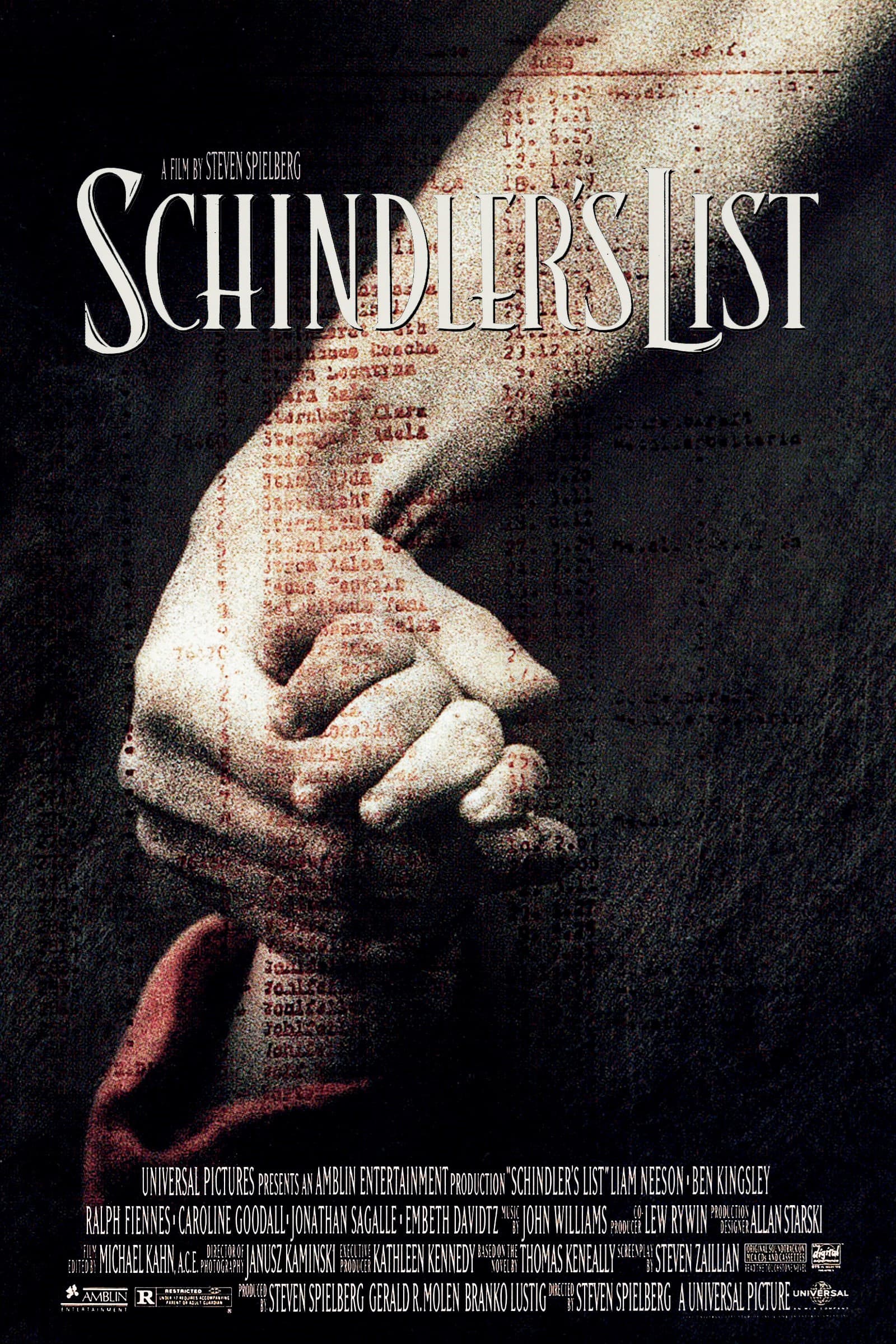
1993 // VHS
Schindler's List
A businessman who keeps a list — and keeps changing the kind of man he is.
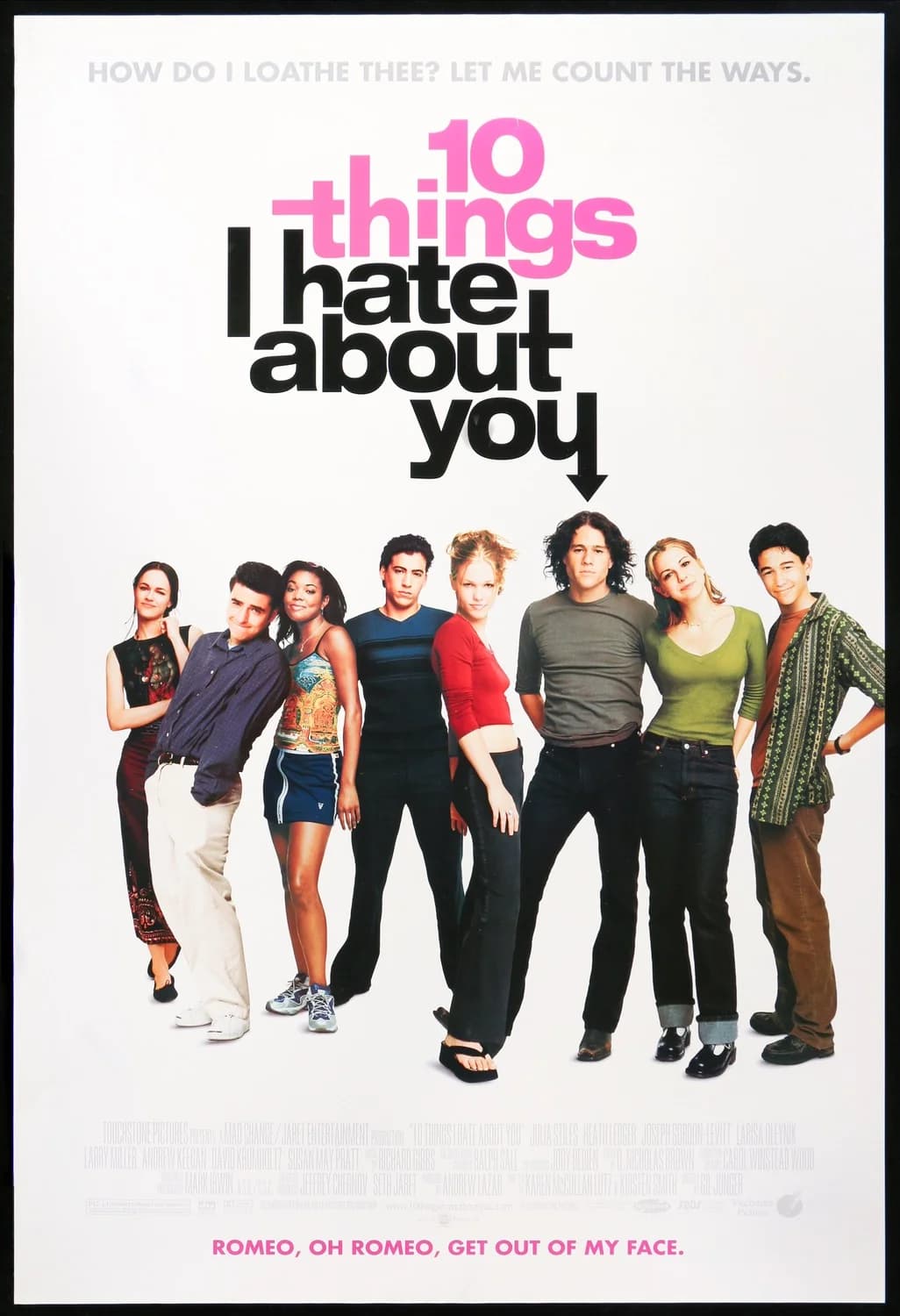
1999 // VHS
10 Things I Hate About You
Sibling rules, a rooftop serenade and one very stubborn Kat — Shakespeare in a school corridor.
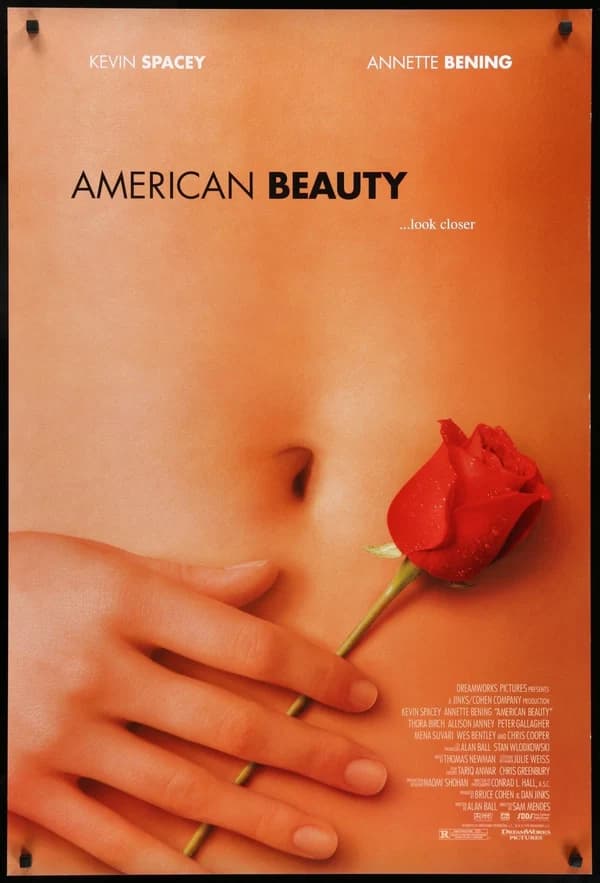
1999 // VHS
American Beauty
Lester Burnham, suburban rot and a midlife argument that still stings.