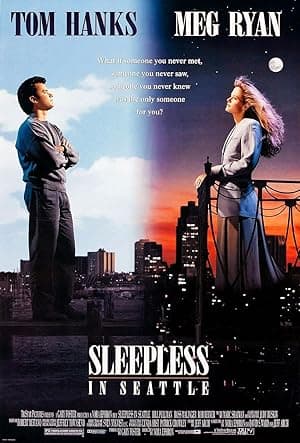
Sleepless in Seattle
A radio, a widower and a transatlantic crush — Nora Ephron’s rom-com still knows how to tug.
// The setup
PLAYBACK STARTED
Sleepless in Seattle feels like a comforting, slightly mischievous love letter to old-fashioned romance — except it’s written in voicemail, newspaper clippings and late-night radio. Nora Ephron turns familiar ingredients (a grieving dad, a curious child and an unexpected on-air confession) into a story that insists you care about grown-ups learning to risk happiness again.
THE MOVIE
Sam Baldwin is still the reason this movie works
There’s a simple trick at the heart of Sleepless in Seattle: make Sam Baldwin watchable to strangers. Move him to a floating house on Lake Union, give him an insomniac’s honesty and let an eight-year-old do something wildly brave on the radio. Suddenly you have a man who is private and, by accident, public.
That radio moment — a child asking for a new wife for his father — is the small, improbably human needle that Nora Ephron threads through the whole film. It turns private grief into a public story, and a list of strangers into a chorus of witnesses.
Put another way: it’s a film about grief and moving on, but it dresses the idea as a romantic comedy. That mix — tenderness handled with lightness — is why we still talk about the film, and why Sam Baldwin, as written and placed in the world of the story, matters so much.
THE SETUP
The idea that sets Sleepless in Seattle in motion
The film keeps its premise pleasingly tidy: Sam Baldwin is a widower starting over on the opposite coast, and a single on-air plea becomes the hinge that could swing two stranger’s lives together. The setup trusts a neat, slightly old-fashioned conceit and lets the characters do the rest.
That hinge is the on-air interview — Spun out of a child’s Christmas Eve phone call — which propels Sam into the public ear and gives Annie Reed, a Baltimore journalist who’s already promised herself to someone else, something to fall for that isn’t a person so much as a voice and a story.
What the screenplay then does well is stage a long-distance courtship built from radio stations, letters and newspaper columns. It’s not sudden lust; it’s accumulated intimacy performed across space. The film plays with practical obstacles — engagements, careers, geography — as the same things that make the eventual meeting feel earned.
And there’s a wink to classic romance: the screenplay borrows the meeting-at-a-landmark idea from An Affair to Remember, giving both characters a myth to either live up to or disappoint.
THE CHARACTER
Why Sam Baldwin matters
Sam isn’t a rom-com playboy or a manic self-improver. He’s a dad who keeps vigil over loss and, crucially, over his son. That protective devotion makes his vulnerability feel earned rather than theatrical.
Being a recent widower gives Sam a specific emotional weight: his sleeplessness and the way he answers questions on the radio make him unexpectedly open. People respond to that openness, and the film invites the audience to respond too.
He’s placed in a peculiar, visible domestic set-up — the floating home on Lake Union — which the film treats like a character in its own right: private but oddly exposed to the world. That positioning helps turn a personal grief into a public story.
And yes, Tom Hanks plays him — a practical piece of casting that keeps the character recognisable within the movie’s tone and the era’s star system.
THE PERFORMANCE
Why Tom Hanks's performance matters
Contemporary reviews singled out Hanks’s portrayal as the emotional anchor of the film — the reliable centre that lets the script lean into its sentiment without collapsing under it.
That’s a useful piece of evidence: when a movie mixes grief with romantic fantasy, it needs someone believable enough to carry both tones. The notices at the time explicitly credit Hanks with doing that anchoring work.
So when Sleepless in Seattle asks you to accept a man’s public vulnerability as the basis for a long-distance courtship, the performance is the mechanism that makes the leap plausible.
UNDER THE SURFACE
Sleepless in Seattle has more on its mind than the plot suggests
On the face of it the film is a romantic comedy about two people who might meet. Underneath it’s a movie about grief and the strange, halting way people ease themselves back into life.
It’s also stubbornly interested in fate. By borrowing the meeting-at-a-landmark motif the story asks whether romance can be guided by destiny — or whether destiny is something people invent to give their choices a poetic shape.
Mediated intimacy is another preoccupation. The film stages romance through radio, letters and newspapers, and so asks how much of connection is built by storytelling rather than proximity.
Finally, the film wears its love for mid-century romances on its sleeve. That nostalgia isn’t just pastiche; it gives characters a shared vocabulary of longing and expectation that the screenplay then puts to the test.
THE FILMMAKING
How Sleepless in Seattle was put together
The film makes deliberate use of real places. Production design under Jeffrey Townsend treats New York and Seattle landmarks as narrative props — locations that shape the characters’ expectations and choices rather than simply providing pretty backdrops.
Those location choices reinforce the story’s central conceit: two lives separated by geography, gradually pulled into alignment by media and memory. Using actual landmarks helps the screenplay’s homage to classic cinema land with a bit of concrete weight.
PURE 80S
Sleepless in Seattle could not belong to any other decade
Released in the early 1990s, the film participates in a moment when mainstream rom-coms were happy to wink at classic Hollywood. The screenplay’s explicit borrowing from An Affair to Remember is emblematic of that self-conscious homage.
It’s also of its time in how it doubles down on star pairing. Casting Tom Hanks and Meg Ryan together continued a trend of the era: audiences liked familiar on-screen couplings, and the film leans into the chemistry that pairing promises.
Those two facts — the nostalgic nods and the star-system casting — place the movie comfortably within the decade’s romantic-comedy playbook while letting it still feel like its own, particular story.
THE LEGACY
Why Sleepless in Seattle still matters
The film earned industry recognition: its screenplay and the song "A Wink and a Smile" both received Academy Award nominations, which is a tidy sign that it was taken seriously beyond ticket sales.
AFI later included the picture in genre lists for romantic films and comedies, suggesting it kept a place in institutional conversations about the form.
The story has had afterlives beyond the screen too: a stage musical adaptation premiered in regional theatre in 2013, and certain locations — most notably Sam’s floating home on Lake Union — became local points of interest.
All of which is to say: the film didn’t vanish after its theatrical run. It left traces in lists, on stage and, oddly, on a tourist map.
THE VERDICT
Does Sleepless in Seattle still hold up?
Short answer: yes — if you enjoy romantic comedies that ask you to accept love as a narrative that can be pieced together from other people’s stories. The film’s central conflict is emotional and logistical: a long-distance, media-shaped courtship versus real-life obligations and existing commitments.
Sam Baldwin’s grief and Jonah’s startlingly public plea are not gimmicks; they’re the emotional engine that convinces us a stranger’s voice could mean something. Annie’s dilemma — a pragmatic journalist engaged to someone else yet susceptible to romantic idealism — is the other half of that argument.
Nora Ephron directs a film that deliberately wears its old-fashioned aspirations: it borrows from An Affair to Remember, stages meetings around landmarks, and uses radio and letters to do what modern texts now do in other films. If you find that layering charming rather than quaint, it plays very well.
So should you watch it today? If you want a rom-com that mixes tenderness with a little bit of theatrical destiny, it still rewards. And if nothing else, it’s a reminder that sometimes a single, brave act — even a child’s phone call — is enough to make strangers believe in each other.
Share this movie
// Keep watching
More movies from the 90s
If Sleepless in Seattle is your kind of movie, there's plenty more on the shelves worth rewinding.

1993 // VHS
Schindler's List
A businessman who keeps a list — and keeps changing the kind of man he is.
1999 // VHS
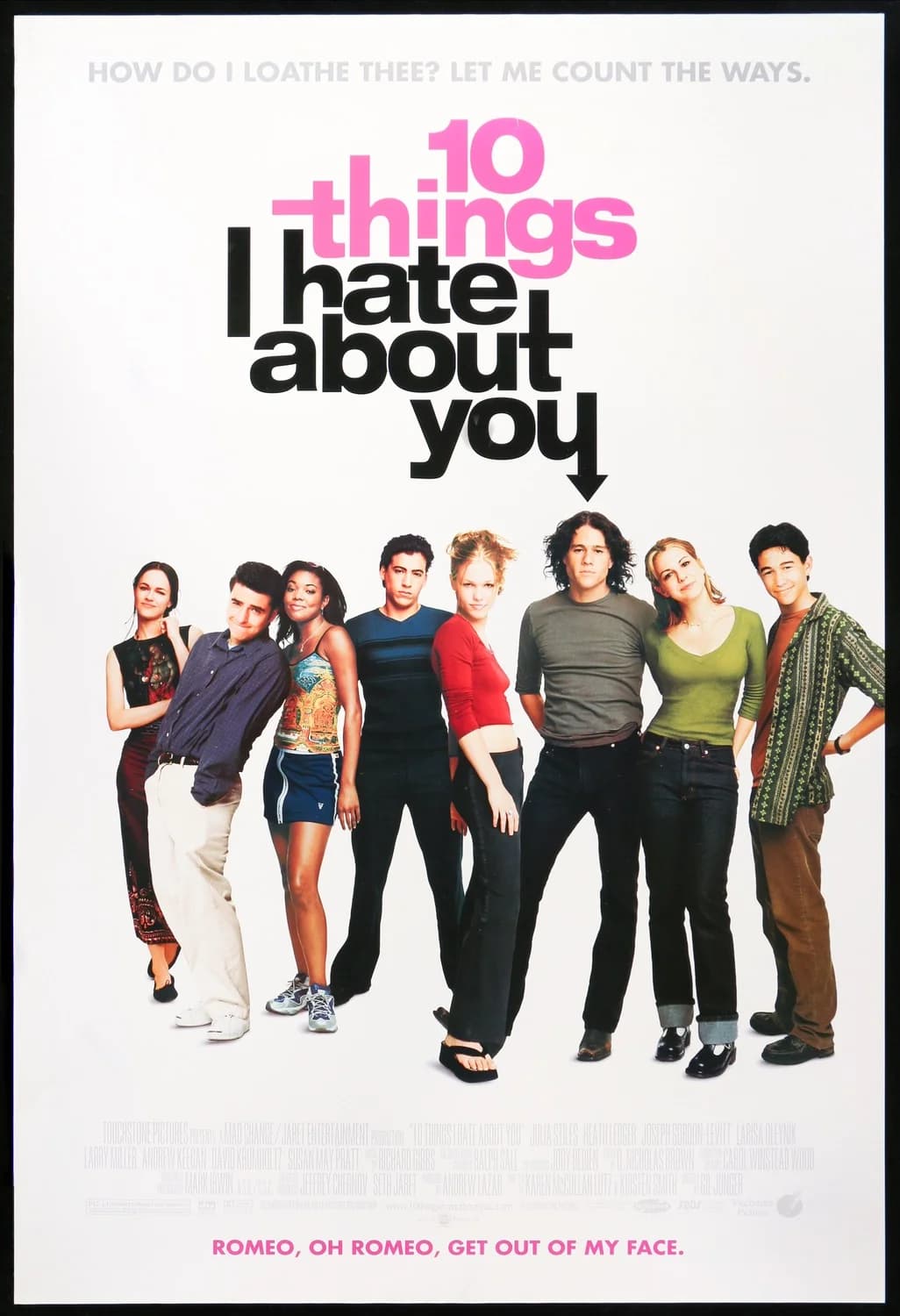
10 Things I Hate About You
Sibling rules, a rooftop serenade and one very stubborn Kat — Shakespeare in a school corridor.

1999 // VHS
American Beauty
Lester Burnham, suburban rot and a midlife argument that still stings.