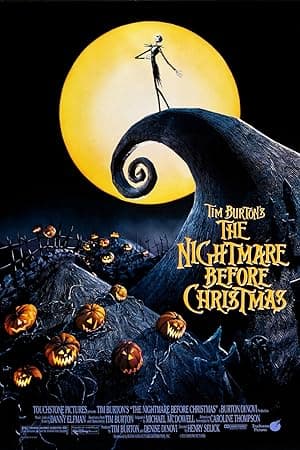
The Nightmare Before Christmas
A stop‑motion holiday mash‑up about a restless skeleton who mistakes enthusiasm for understanding.
// The setup
PLAYBACK STARTED
There’s a particular kind of glee in watching Jack Skellington realise there might be more to life than pumpkins and parades. The Nightmare Before Christmas is at once a Halloween fantasia and a very tidy examination of what happens when someone admired for their role decides they want to be something else. Directed by Henry Selick and fuelled by Danny Elfman’s songs, it still feels like a strange, compact musical that asks a few surprisingly grown‑up questions in the middle of a festive mash‑up.
THE MOVIE
Jack Skellington (speaking voice) is still the reason this movie works
Jack Skellington is the engine. He’s the Pumpkin King: admired, successful and quietly bored — the kind of leader who gets applause without being asked whether the applause still fits him. That restless ache is the simple spark that sends him tumbling into Christmastown and sets the whole thing in motion.
Crucially, Jack doesn’t just admire Christmas; he decides he can do it better. He attempts to take over the holiday and reboot it with a Halloween sensibility, and that attempt — enthusiastic, ill‑informed and oddly earnest — drives every comical and alarming consequence that follows.
All of this comes through a specific recipe: Henry Selick’s direction, Chris Sarandon supplying Jack’s speaking voice and Danny Elfman’s songs and singing voice shaping Jack’s inner life. It’s short — seventy‑six minutes — but precise, which is why people keep finding things to like about it.
THE SETUP
The idea that sets The Nightmare Before Christmas in motion
The film’s premise is admirably straightforward: Jack Skellington, the Pumpkin King of Halloween Town, grows tired of his role and stumbles into the wonder of Christmastown. That accidental discovery reframes his ambition — and the rest of the plot is a tidy experiment in what happens when one culture tries to run another’s festival.
Because it’s a musical, the songs do a lot of the heavy lifting. Instead of padding, musical set pieces carry plot and reveal interior choices; they tell you what Jack wants and why he thinks stealing Christmas might be the solution.
The story also keeps things clean by splitting the world into two clear places — Halloween Town and Christmastown — so the comedy of errors really feels like a culture clash. Misunderstanding another community’s customs is not just amusing, it’s the middle act’s engine.
Sally, created by Dr. Finkelstein, gives the story a personal counterpoint: she repeatedly warns Jack that his plan will go wrong, which introduces a moral and relational tension that keeps the experiment from being merely decorative.
THE CHARACTER
Why Jack Skellington (speaking voice) matters
Jack matters because he’s not just a spooky mascot; he’s a leader who begins to doubt that the role he fills equals the life he wants. That tension — admired on the outside, restless within — is the film’s lever.
It helps that the role is split between speaking and singing voices: Chris Sarandon provides Jack’s speaking voice while Danny Elfman wrote the songs and supplies the singing. That arrangement lets the movie separate Jack’s private longings from his public declarations.
Jack is also very much a Tim Burton creation at heart: the story and characters originate in Burton’s imagination, and the film’s central interest in outsiders encountering mainstream culture sits squarely in that territory.
Put simply: Jack is the story’s compass. His fascination with Christmastown, and the decision to appropriate the holiday, is what forces every other character and plot choice to respond.
UNDER THE SURFACE
The Nightmare Before Christmas has more on its mind than the plot suggests
On the surface it’s a holiday mash‑up, but the film is quietly interested in identity. Jack’s boredom is an existential itch — the film frames his search for meaning as the spark that leads him to try being someone else’s idea of a hero.
Culture clash and appropriation are baked into the premise: Jack doesn’t just borrow Christmas imagery, he repackages it through Halloween logic. That mismatch makes for comedy, but it also asks who gets to perform a tradition and what’s lost when performance replaces understanding.
There’s also a neat tension between showmanship and authenticity. The movie repeatedly stages performances — parades, pageants, Santa impersonations — and asks whether earnest spectacle can stand in for actually knowing and caring for the people at its centre.
And finally, there’s unrequited care. Sally’s warnings, born of concern and limited agency, underline a quieter emotional story: someone watching a loved one make a mistake and trying, often unsuccessfully, to steer them away from harm.
THE FILMMAKING
How The Nightmare Before Christmas was put together
This is very much a director‑led craft piece: Henry Selick steered a production that relies on small‑scale, handcrafted filmmaking choices rather than animation by computer. That decision gives the film a particular physicality.
Cinematography for the stop‑motion photography was led by Pete Kozachik, and Deane Taylor is credited as art director — names that matter because the movie’s look depends on careful frame‑by‑frame composition and detailed miniature work.
Stylistically, the film sits in the same family as other Selick stop‑motion features: there’s a consistent approach to miniature production design and animation that makes the world feel built rather than painted onto the screen.
Those visible choices — close control of each frame, a consistent design language — are the reason the film reads as an object you can almost hold in your hands, rather than a generic piece of backdrop.
PRACTICAL EFFECTS
The effects work that gives The Nightmare Before Christmas its physical personality
Everything you see was made by hand and photographed frame by frame: puppets, props and tiny sets. That’s not marketing copy — many shots required moving a puppet dozens of times for every second of finished film.
Production used multiple duplicates of principal puppets. Contemporary reports describe hundreds of puppet duplicates and a sizeable fabrication department, which is how the team kept up with the demands of a feature‑length shoot.
Some set pieces rely on in‑camera revelations. The Oogie Boogie sequence, for example, stages a practical reveal showing the villain composed of many insects — a design and animation choice executed with puppet and prop techniques rather than digital trickery.
All of these handbuilt methods are what give the film its tactile personality: the workmanship is visible in the way figures move and the way sets occupy space in each frame.
PURE 80S
The Nightmare Before Christmas could not belong to any other decade
Released in 1993, the film arrived at a moment when feature‑length stop‑motion was relatively rare in Hollywood. That scarcity made this kind of craft look special — not the default choice for a big studio picture.
Because it was produced as a hand‑made stop‑motion feature, the movie stands out against the period’s more common animation methods. That difference matters: it’s part of why the film has a distinct personality compared with other family or fantasy offerings of the time.
Seen this way, the movie feels of its moment not because of fashion but because it embraced a production approach that was uncommon then — and therefore felt like a deliberate alternative.
WATCHING IT NOW
What has aged — and what hasn't
The film’s musical backbone remains a structural strength because Danny Elfman wrote the music and provides Jack’s singing voice; the songs aren’t window dressing, they advance character and story in ways that translate to a modern ear.
The movie’s core imagination — the Tim Burton DNA behind the story and characters — still gives it a distinctive voice. That origin explains why it continues to read as the tale of an outsider crashing into mainstream sentiment.
Because the screenplay credits include Caroline Thompson with adaptation work by Michael McDowell, the end result still feels like a compact, clearly directed narrative rather than something sprawling. Its brevity helps it survive repeated viewings.
In short: the elements that made it unusual at the time — the Burton premise, Elfman’s songs and the stop‑motion execution — are the same things that keep it watchable today.
THE LEGACY
Why The Nightmare Before Christmas still matters
The film’s craft received industry recognition: it earned an Academy Award nomination in the visual effects category and a Golden Globe nod for Danny Elfman’s score. Those nominations underline the way the movie was seen by peers at the time.
After its initial run the picture was returned to theatres in updated forms — including a conversion to Disney Digital 3D beginning in 2006 — and it has been reissued multiple times since. Those reissues kept it in the public eye across different generations.
Elements of the movie have also been incorporated into Disney Park seasonal programming, for example Haunted Mansion overlays and seasonal tie‑ins. That integration shows how the film’s imagery and characters have been used in merchandise and attractions.
Taken together, these are concrete signs the film found a durable place within a larger entertainment ecosystem, both on screen and in park experiences.
THE VERDICT
Does The Nightmare Before Christmas still hold up?
Yes — with a few caveats. The film’s straightforward premise (Jack’s boredom leads him to appropriate Christmastown) still reads cleanly because the movie keeps its ideas tightly staged and resolves the culture‑clash mechanics without overstaying its welcome.
It helps that the songs are an integral part of telling the story rather than an excuse to pause the plot. Musical set pieces show internal states and move the action forward, which is why the film’s seventy‑six‑minute runtime never feels padded.
The emotional throughline — Sally’s repeated warnings and her tentative care for Jack — gives the comedy some moral ballast. Meanwhile, Oogie Boogie functions as a recognisable antagonist whose gambling and menace raise the stakes of Jack’s experiment with Christmas.
So if you’re deciding whether to watch it now: the film’s brevity, its clear two‑world structure, the way songs advance character, and the central figure of Jack Skellington (bored, admired and searching) all make it worth the time. It still plays as a strange, carefully made holiday fable rather than a mere novelty.
Share this movie
// Keep watching
More movies from the 90s
If The Nightmare Before Christmas is your kind of movie, there's plenty more on the shelves worth rewinding.
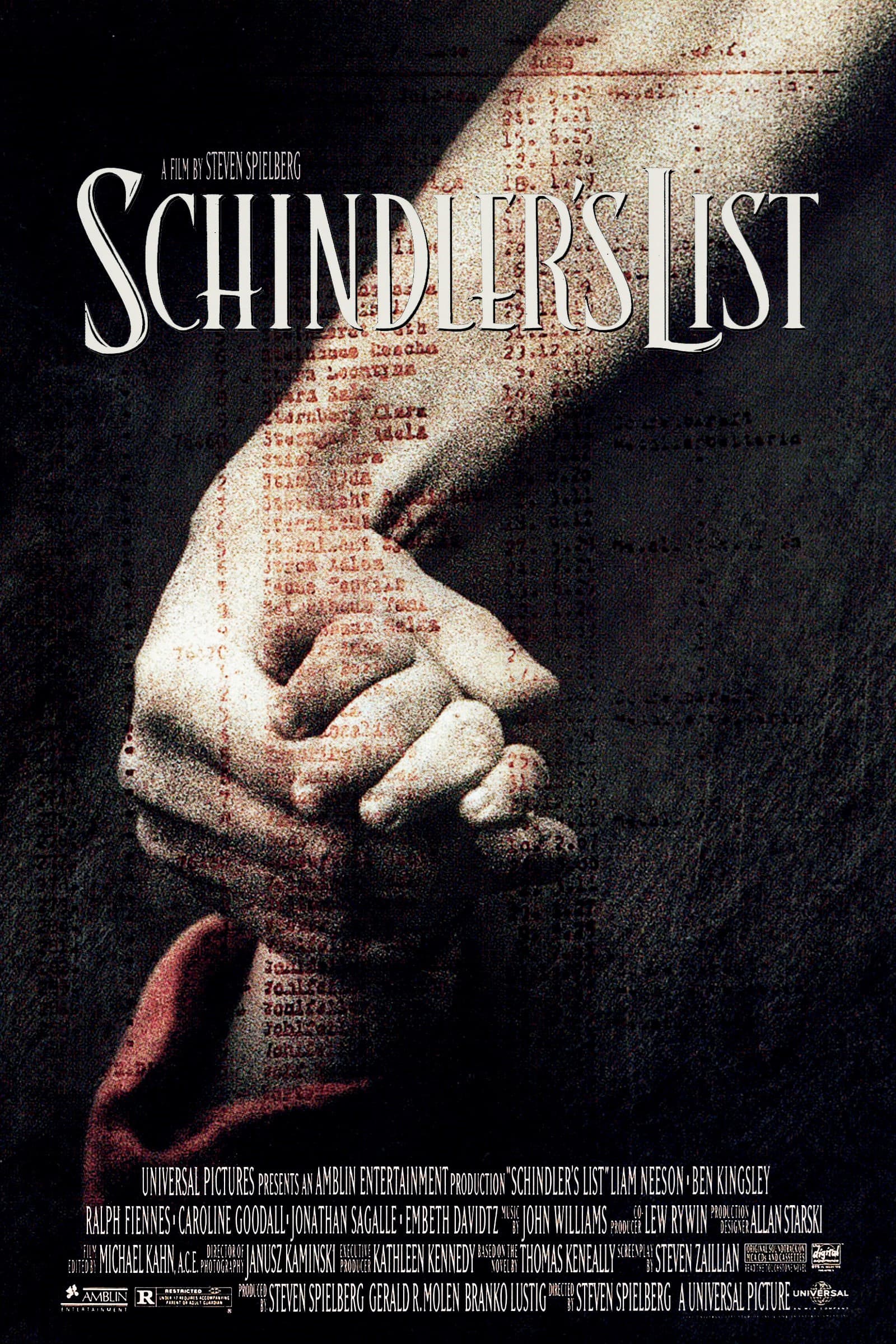
1993 // VHS
Schindler's List
A businessman who keeps a list — and keeps changing the kind of man he is.
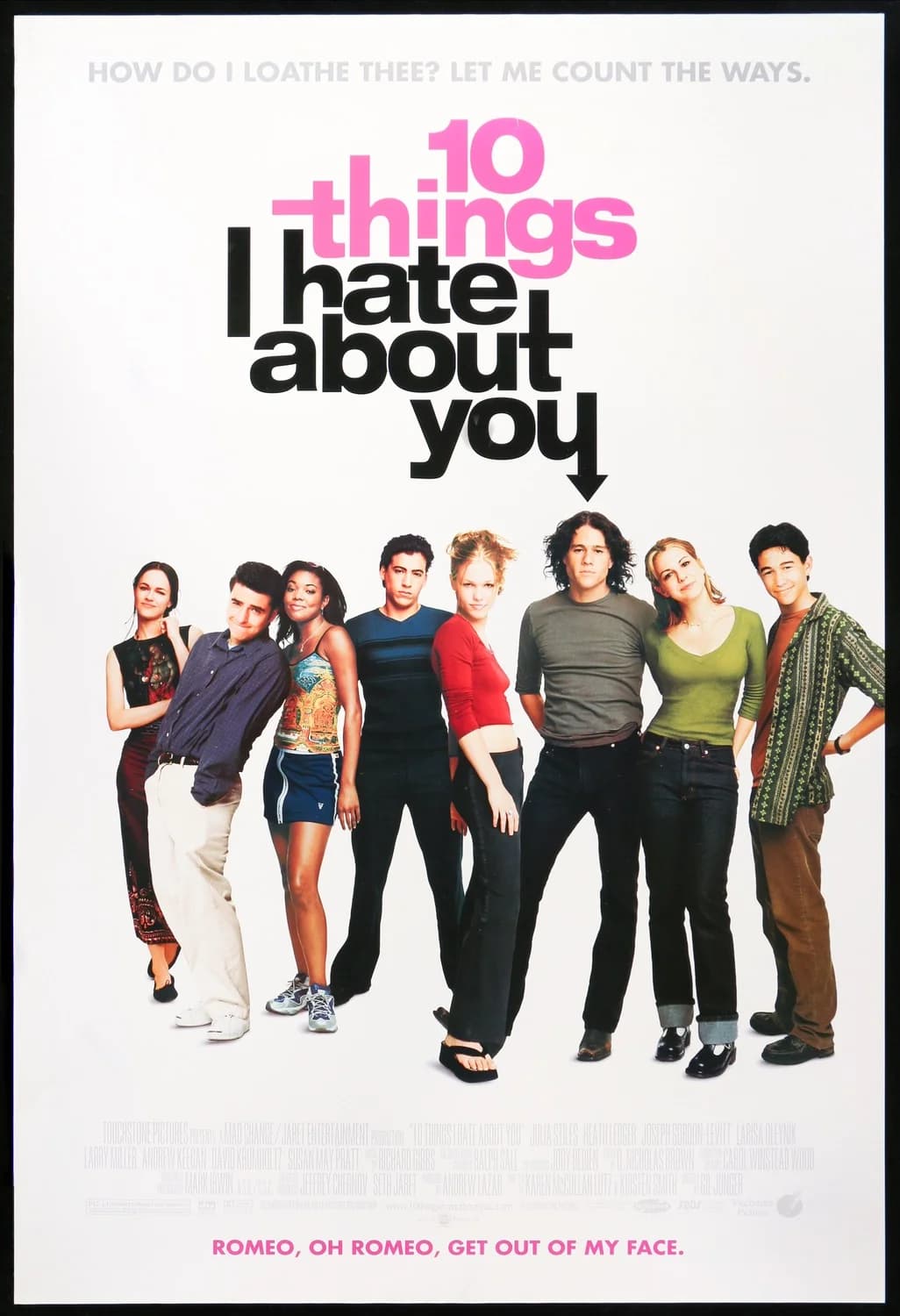
1999 // VHS
10 Things I Hate About You
Sibling rules, a rooftop serenade and one very stubborn Kat — Shakespeare in a school corridor.
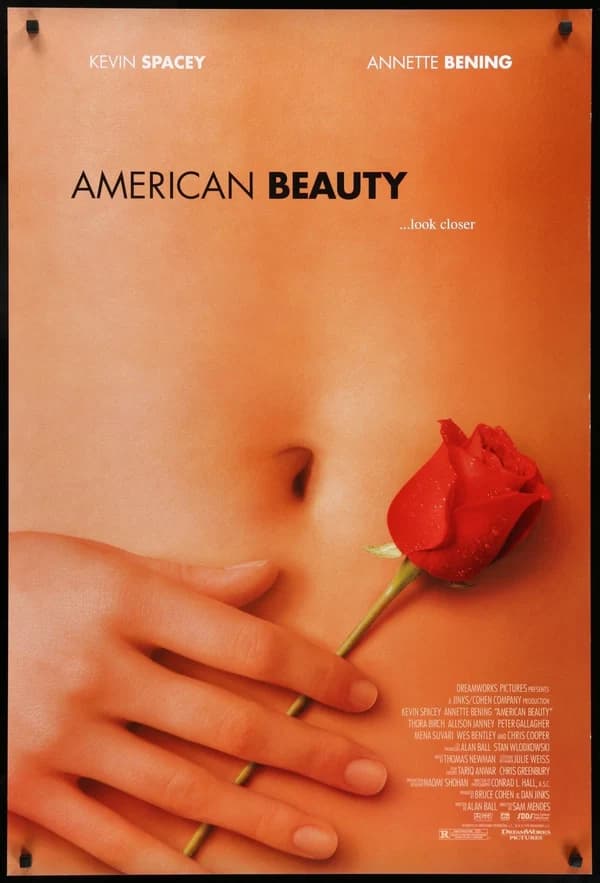
1999 // VHS
American Beauty
Lester Burnham, suburban rot and a midlife argument that still stings.