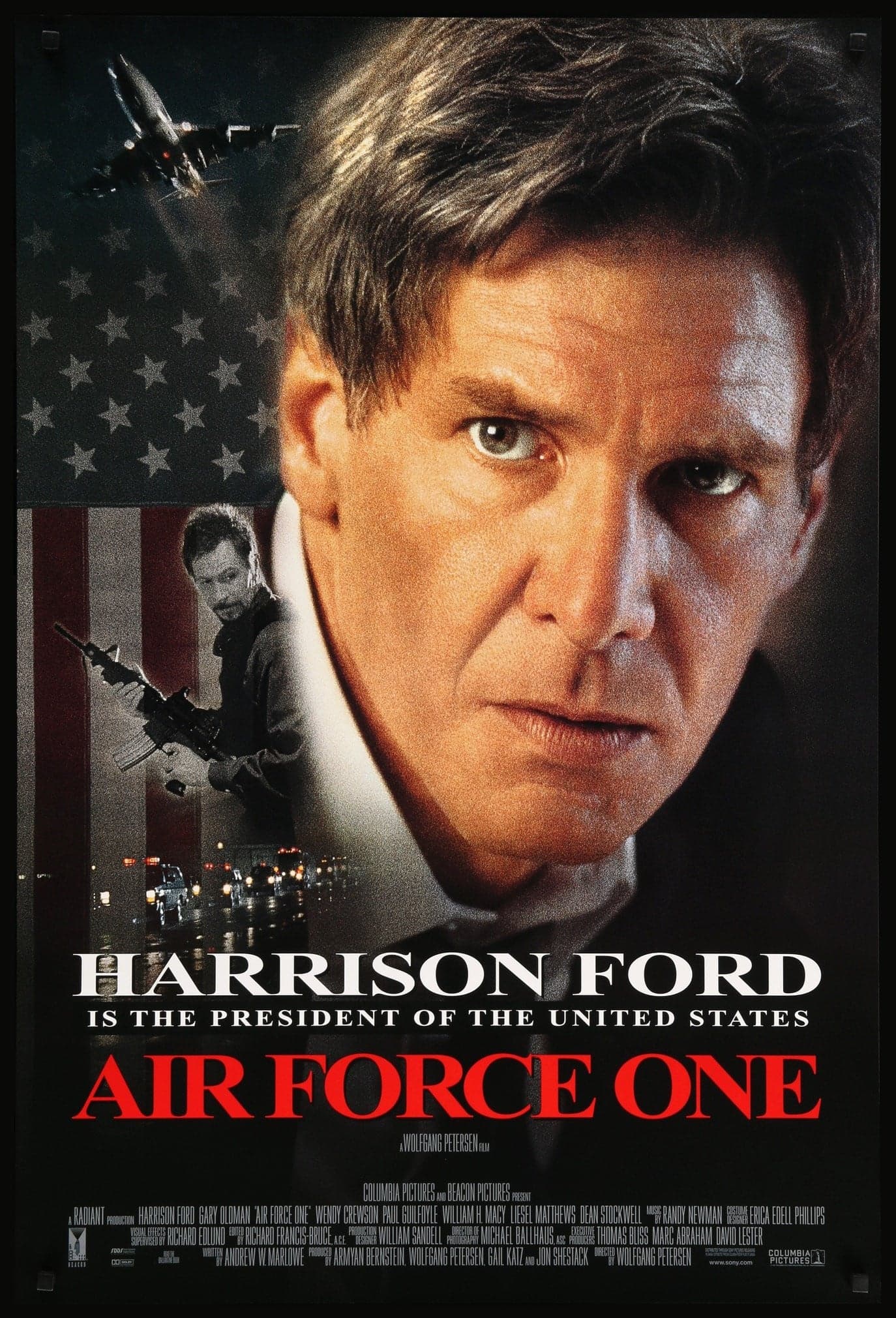
Air Force One
A high-altitude hostage drama where presidential duty gets painfully, thrillingly personal.
// The setup
PLAYBACK STARTED
Air Force One puts the leader of the free world into the most awkward in-flight situation imaginable: the presidential plane is hijacked, the family is onboard, and the clock is running. Wolfgang Petersen stages that squeeze with old-fashioned muscle, and Harrison Ford’s President James Marshall is the human centre that keeps the whole thing from turning into mere spectacle. It still makes for a gloriously tense two hours.
THE MOVIE
President James Marshall is still the reason this movie works
So why are people still talking about Air Force One? Because it dresses a straight-up action concept in the clothes of personal responsibility: the presidential aircraft is taken over mid-flight, and everything the movie does flows from that one squeeze. The hijack traps the president, his family and senior staff in a tin can with armed terrorists demanding the release of a captured dictator.
Wolfgang Petersen—best known for staging pressure-cooker dramas—directs, and the film keeps returning to a simple moral split. Harrison Ford’s President James Marshall is written and staged as someone with combat experience whose job is suddenly torn between protecting the nation and protecting the people he loves. That tension is the film’s personality.
Released in 1997 and running about two hours, Air Force One is very much an action-thriller of its moment: a contained, high-stakes scenario that needs a strong central figure to carry the weight. That’s exactly what the movie aims for — and what often keeps it watchable.
THE SETUP
The idea that sets Air Force One in motion
The premise is simple and efficient: the presidential aircraft is hijacked en route, leaving everyone important pinned aboard while the terrorists make political demands. That tight container gives the movie its forward motion without needing a complicated engine.
At the movie’s core is a clear dilemma. President James Marshall must protect his family and find a way to retake the aircraft, while the hijackers push to secure the release of a captured dictator. Those stakes keep the choices personal as well as geopolitical.
There’s a wrinkle that sharpens the hostage dynamics: one of the Secret Service agents on board is revealed to be an insider conspirator. That betrayal changes who the president can trust and raises the emotional temperature of the standoff.
Because the setup is compact and concrete, the film can spend its time testing loyalty, courage and improvisation rather than explaining logistics. It’s an old-school action premise that leaves room for character under pressure.
THE CHARACTER
Why President James Marshall matters
What makes President James Marshall memorable isn’t a single line or swaggering moment; it’s the way the script and staging insist he be both a commander and a father. Harrison Ford plays Marshall, and the character is specifically written as combat-experienced — someone who can handle violence but is repeatedly put in a position where violence would endanger the people he’s sworn to protect.
That split — country versus family — is the engine that carries much of the film’s emotion. Marshall isn’t an abstract office-holder; he’s a person with a wife and daughter on the same plane as the men who want to kill him. The choices he makes are readable and immediate because they’re personal.
When a story makes leadership into a problem you can watch happen in real time, the protagonist matters differently. Marshall’s importance comes from being the hinge the whole situation turns on: his decisions change both the private and the public stakes.
You leave the film thinking about responsibility in practical terms: how would you choose when the people you love and the people you protect demand different things? That question is why the president matters here.
THE PERFORMANCE
Why Harrison Ford's performance matters
Contemporary coverage singled out Harrison Ford’s central role as the anchoring element of the picture rather than its novelty or realism. That’s an important note: the film’s shocks and mechanics can be loud, but observers consistently pointed to Ford as the thing that keeps the emotion believable.
Put another way, the movie depends on the audience accepting Marshall as someone whose choices matter; public and institutional responses at the time emphasised that Ford’s presence supplied that necessary centre.
You don’t need to translate that into a superlative to see the point. The film asks you to follow a man who must choose between professional duty and personal attachment; having an obvious leading figure in place makes the moral questions easier to track across the action.
So while the plane and the plot do the spectacle work, Ford’s role is the movie’s glue — the human measure against which the rest of the film is judged.
UNDER THE SURFACE
Air Force One has more on its mind than the plot suggests
Underneath the hijack thriller lies a handful of themes the film keeps returning to: leadership under crisis, the tug between family and duty, personal sacrifice and the sting of betrayal. These are not abstract ornaments; they’re built into the conflict Marshall faces on every beat.
Leadership under crisis is the movie’s spine. The narrative continually asks what a leader must do when the personal and national collide — and whether leadership is a public office or a private burden. The family-versus-duty tension makes the stakes visceral rather than theoretical.
Betrayal and insider threat are used to sharpen that tension. The presence of someone on the inside who breaks trust makes the siege claustrophobic in a moral sense as well as physical: you can’t rely on the usual institutions when they’re compromised.
When an action picture keeps returning to questions of sacrifice and courage, it gives its explosions a human weight. Air Force One wants the spectacle to mean something, and the themes are what let it.
THE FILMMAKING
How Air Force One was put together
The production credits give a sense of the film’s craft ambitions: Michael Ballhaus is listed as cinematographer, Richard Francis-Bruce as editor and William Sandell as production designer. Those names point to a movie that’s aiming for a polished, professional sheen rather than rough-and-ready improvisation.
Wolfgang Petersen’s role as director and co-producer is also central to the film’s identity. His prior reputation for staging enclosed-space dramas is part of why he was a logical choice to handle a story that squeezes characters into a confined environment and milks tension from that pressure.
In practical terms, the movie is constructed with a clear hierarchy: sturdy technical crew, a director comfortable with claustrophobic storytelling, and a script that depends on clarity. Those choices keep the throttle steady when the plot needs to escalate.
That steadiness is why the film feels like a well-built piece of studio craftsmanship: it knows the kind of film it is, and the crew it hired reflects that intention.
PRACTICAL EFFECTS
The effects work that gives Air Force One its physical personality
Air Force One leans on physical, real-world tricks as much as digital ones. The production rented and repainted a Boeing 747 (registration N703CK) to stand in for the presidential aircraft and used it for exterior shots and stunt work.
That commitment extended to the aerial sequences: the production coordinated with U.S. military units and used real aircraft alongside model and computer-generated shots to create the film’s sky-bound tension.
Inside the plane, the filmmakers built large interior sets to represent cabins and cargo areas. Practical stunts were staged — even a runaway runway taxi was filmed using the rented 747 — which gives the film a tactile feel you can sense in the staging of close-quarters scenes.
Those choices make the movie feel physically grounded; when a door slams or a corridor is cleared, the movement has a tangible authority because bodies and metal were actually involved.
PURE 80S
Air Force One could not belong to any other decade
Air Force One sits squarely inside a 1990s cycle of action films that take the basic Die Hard recipe — one protagonist against terrorists in a closed location — and apply it to different backdrops. The hijacked presidential plane is just the location changed to something grander and more symbolic.
Wolfgang Petersen’s background helped sell the idea; critics and coverage at the time pointed to his experience with enclosed-space dramas when discussing how he handled the film’s pressure-cooker set pieces. That pedigree made the film’s reliance on contained tension feel like a deliberate, era-appropriate choice.
The result is a film that reads like a 1990s solution to a repeatedly lucrative problem: turn a contained setup into a test of character and endurance. The decade liked its big premises served in tight containers — and Air Force One delivers exactly that.
Call it retro if you like, but the movie is of a piece with its moment: a glossy studio action picture built around a recognisable, high-concept squeeze.
WATCHING IT NOW
What has aged — and what hasn't
The personal side of the story — the tug between family and duty — remains straightforward and watchable. When a film makes the president’s private life central to the stakes, the emotional beats translate across time because they’re human and immediate rather than topical.
The basic hijack plot — terrorists seizing the plane to force the release of a dictator, and the president trying to retake it — is a tidy mechanism that still supplies clear suspense. It’s not trying to be subtle; it sets up a situation and then tests the characters inside it.
Where the film’s age shows is in how it packages those elements as a glossy studio spectacle of the 90s, but that packaging doesn’t necessarily undermine the routes the story takes. The moral questions it poses — loyalty, sacrifice, what leaders must risk for others — are still readable.
So while some of the film’s surface might feel inherited from its era, the core drama remains direct and persuasive enough to engage a modern viewer who enjoys tidy, character-driven action.
THE LEGACY
Why Air Force One still matters
The film didn’t spawn a theatrical sequel, but it has retained visibility as a recognisable 1990s action thriller and as one of the better-remembered fictional presidential portrayals. That’s a tidy afterlife: not myth-making, but steady presence.
It turns up regularly in cultural commentary about fictional presidents and the period’s action cinema, which tells you how it has lodged in the popular conversation. People still use its premise and the figure of Marshall as an easy shorthand for a certain kind of ‘leader-in-peril’ movie.
In short, Air Force One’s legacy isn’t megastar influence; it’s familiarity. It’s the film people reach for when they want a presidential thriller that is both straightforward and pumped with studio muscle.
That kind of remembrance is modest but telling: the movie lives on because its central idea and its central figure are easy to recall and describe.
THE VERDICT
Does Air Force One still hold up?
Yes — if you turn up wanting the sort of thing it sets out to be. The movie’s premise is plain and potent: the presidential aircraft is seized, terrorists demand a dictator’s release, and the president must find a way to protect his family and reclaim control. That simplicity keeps the rhythm tight.
Two factors make it worth watching now. First, there’s the internal betrayal that complicates the hostage dynamics: a Secret Service agent is revealed as an inside conspirator, which raises the stakes beyond a standard exterior assault. Second, the picture is anchored around a central figure — Harrison Ford’s President James Marshall — and contemporary coverage highlighted Ford’s role as what holds the film together.
Add Wolfgang Petersen’s direction and the film’s technical commitments — from repainting a real Boeing 747 for stunt work to using military aircraft for aerial sequences — and you get a movie that looks, sounds and moves like a major-studio action picture of its era.
If you want subtlety and modern deconstruction, this isn’t your film. But if you enjoy a tight, character-focused thrill where leadership, sacrifice and family are more than afterthoughts, Air Force One still delivers. It’s a 90s action movie with a moral backbone — and that combination is rarer than you might think.
Share this movie
// Keep watching
More movies from the 90s
If Air Force One is your kind of movie, there's plenty more on the shelves worth rewinding.
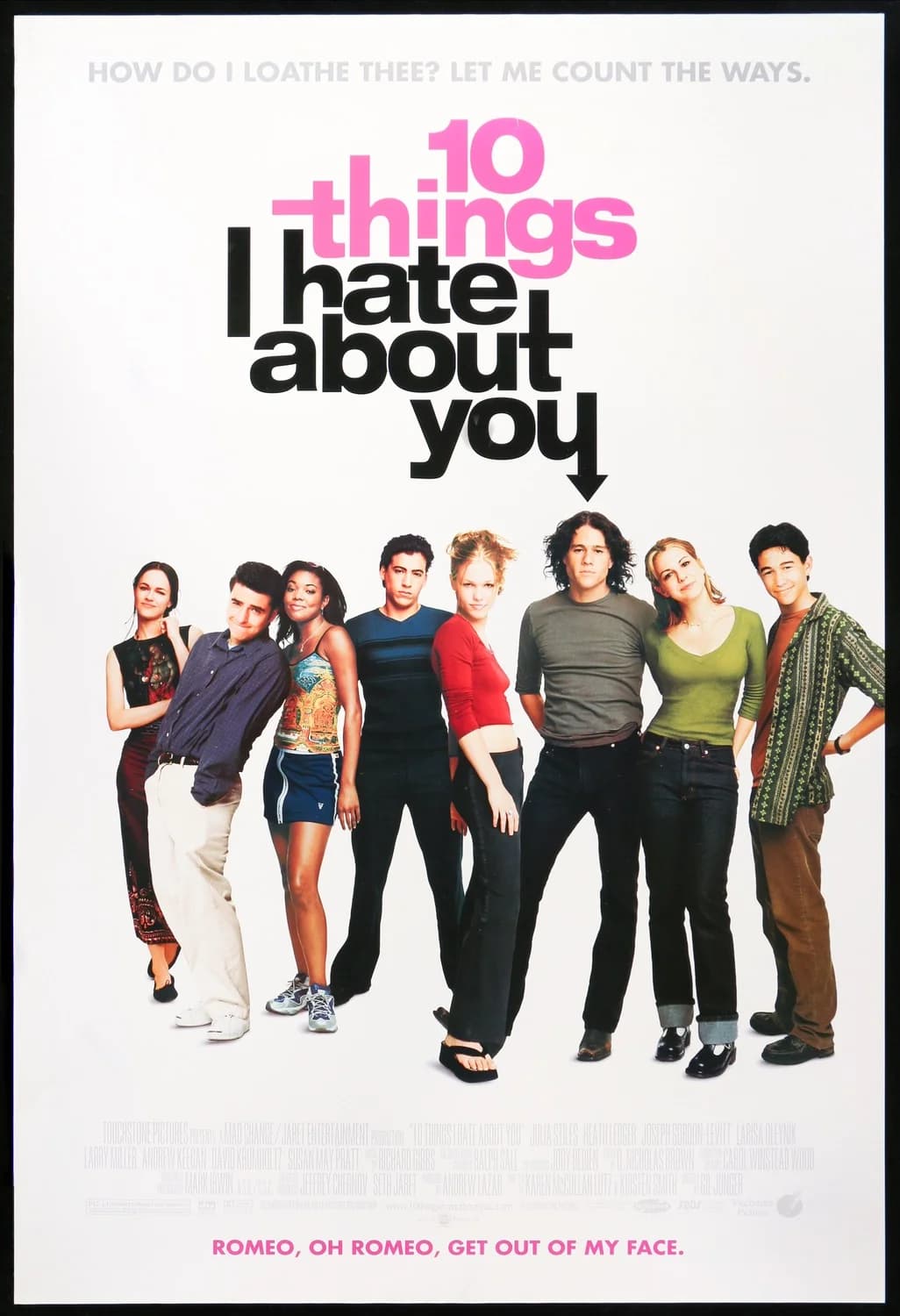
1999 // VHS
10 Things I Hate About You
Sibling rules, a rooftop serenade and one very stubborn Kat — Shakespeare in a school corridor.
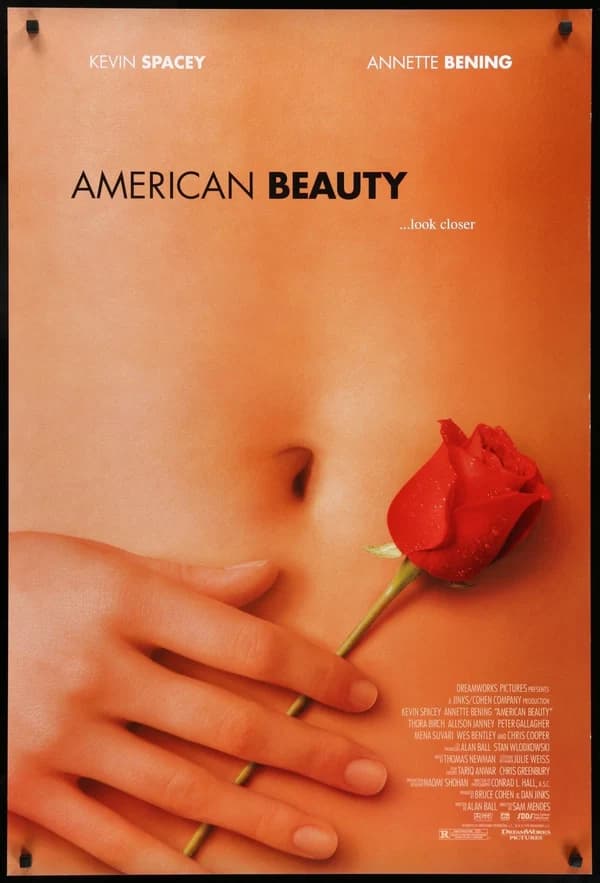
1999 // VHS
American Beauty
Lester Burnham, suburban rot and a midlife argument that still stings.
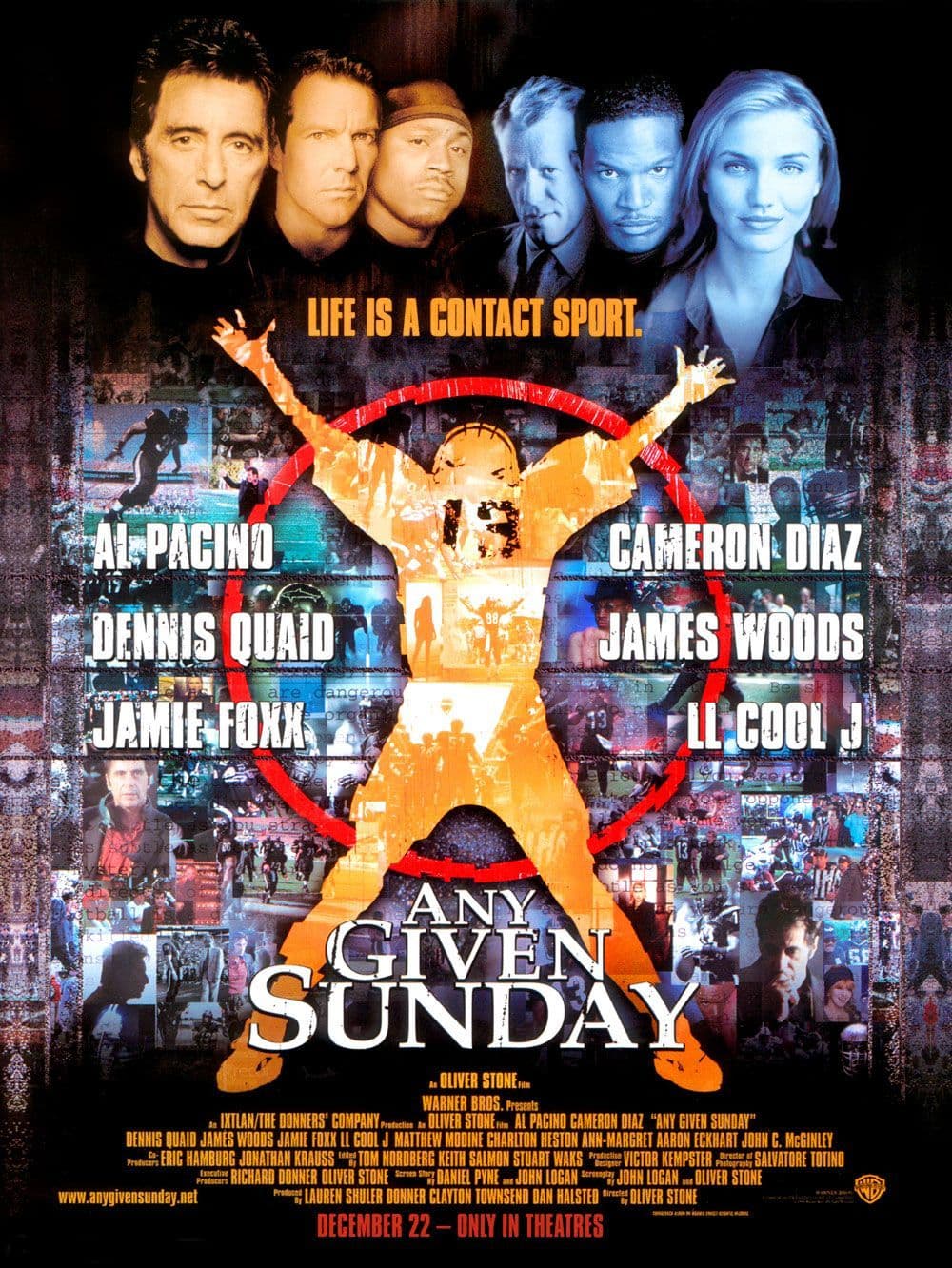
1999 // VHS
Any Given Sunday
Al Pacino's coach anchors the chaos of a film about football turned into product — loud, messy and oddly persuasive.