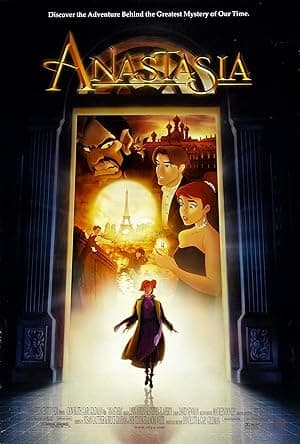
Anastasia
A missing princess, a scavenged past and a heroine who refuses to be written for her.
// The setup
PLAYBACK STARTED
Anastasia still turns up on streaming lists and family DVD racks because its engine is plain and stubborn: a young woman who can't remember where she belongs decides to find out. Don Bluth and Gary Goldman's film pairs a fairy-tale quest with a decidedly 1990s musical sensibility, and at the centre of it all is Anya — the amnesiac who gives the whole thing its argument and its warmth.
THE MOVIE
Anastasia/Anya (speaking voice) is still the reason this movie works
People keep coming back to Anastasia because, beneath the swash and songs, the film belongs to one curious, stubbornly hopeful character: Anya. She's not introduced as royalty so much as as someone unfinished — a woman with gaps in her past who volunteers for a future she can't yet name.
That setup is nicely economical. Two con men recruit Anya as a possible claimant to the missing Grand Duchess, and their scheme sends them toward Paris and the Dowager Empress. It's a tidy dramatic engine: money and deception on the outside, a question of identity on the inside.
It helps that the movie wears its influences proudly. Don Bluth and Gary Goldman steered the production, and the film mouths the conventions of the big-screen animated musical — songs that mark emotional beats, a clear family-friendly tone, and a runtime that keeps the adventure brisk. Put simply: Meg Ryan speaks for Anya, Liz Callaway sings for her, and the story gives those two things somewhere sensible to meet.
THE SETUP
The idea that sets Anastasia in motion
You don't need a thesis sentence to understand the film's premise: Anya, with no memory of her past, is found by two schemers who think she might net them a reward if she can pass for the missing Grand Duchess. It's a classic matchmaking of desperation and opportunity.
That recruitment is the inciting incident — the thing that puts feet on the road to Paris and to the Dowager Empress. From there the film balances two kinds of momentum: the outward plot of getting Anya to the court, and the inward plot of whether she will accept an invented identity or reclaim whatever traces of her real past remain.
The writers tie those strands together with tidy devices. Snatches of memory are triggered by music and landmarks, so revelations arrive as personal moments rather than history lessons. It keeps exposition light and emotional stakes clear.
As a result, the setup works because the stakes always feel immediate: it's not just about a payout, it's about whether Anya knows who she is and where she belongs.
THE CHARACTER
Why Anastasia/Anya (speaking voice) matters
Anya is memorable because she is the story's thermostat: her doubts set the temperature for everything else. The plot pushes outward — chases, schemes, a pursuing supernatural villain — but the movie keeps returning to her small, private question: do I belong to the past I've lost, or to the life someone else could give me?
That private question also shapes the people around her. Dimitri starts out playing the con; as he travels with Anya his priorities tilt from the reward to something more protective and personal, and that shift gives the romance genuine friction. It matters because his changing loyalties are visible choices, not tidy plot concessions.
At the other end of the journey is the Dowager Empress, who stands for the idea Anya is hunting: institutional memory, family continuity, the proof that a life once lived matters. The Empress doesn't turn the movie into a history lecture; she functions as the emotional destination for Anya's search.
Finally, the film sits comfortably in the family genre, which means Anya’s story is written to be clear and immediate: questions of belonging, truth and found family are all readable even if you strip away the musical numbers and set pieces.
THE PERFORMANCE
Why Meg Ryan's performance matters
There are two practical things to note about how Anya is presented: Meg Ryan supplies the adult speaking voice, while Liz Callaway provides the singing voice. The film separates the spoken and sung identities of the heroine, which is a technical choice with emotional consequences — speech carries the character's day-to-day personality while the songs carry larger moments of longing.
That arrangement lets the filmmakers play to different strengths without asking one performer to do everything. It also means Anya becomes a stitched-together figure by design, which mirrors the film's theme of a fragmented past being pieced back together.
Listeners will notice the seams if they listen for them — a slightly different tone from speaking to singing — but that's part of the trade-off the production made and the story builds on it rather than hiding it.
So the casting is pragmatic: Meg Ryan anchors Anya's spoken life, and Liz Callaway supplies the musical pulses that gesture toward memory and emotion.
UNDER THE SURFACE
Anastasia has more on its mind than the plot suggests
On the surface Anastasia is a musical adventure. Underneath it settles on a small cluster of ideas that keep returning: identity, memory and what counts as family. The film is less interested in proving historical claims than in staging a human search for roots.
Memory is treated as a set of triggers — a song, a place, an object — which the story uses to unlock the heroine's past in human-sized moments. That makes the movie feel more like a personal scavenger hunt than a textbook about the Romanovs.
The theme of imposture versus authenticity sits neatly opposite the found-family element. The con men start by selling a lie, but what develops between them and Anya becomes real enough to complicate their original plan. That shift from opportunism to attachment gives the emotional scenes their weight.
Finally, survival and escape thread through the film: it's a story about people who have lost everything and are improvising their way to safety and belonging. The search for family is as much about finding safety as it is about reclaiming a title.
PRACTICAL EFFECTS
The effects work that gives Anastasia its physical personality
Technically, Anastasia sits in the late-1990s pivot from traditional cel paint to digital methods. The production used digital ink-and-paint and digital compositing for much of the finished picture.
That choice is less about flash and more about finish: the workflows of the time allowed for cleaner compositing and consistent colour across sequences produced at multiple sites.
For viewers the effect is practical: the animation feels visually contemporary for its era because it uses the then-current digital paint processes rather than older cel methods.
So while the film reads as an old-fashioned animated musical in spirit, its production methods quietly pin it to the late 1990s industry transition.
PURE 80S
Anastasia could not belong to any other decade
Anastasia is very much a late-1990s creature: Fox had recruited Don Bluth and Gary Goldman to build a feature animation arm, and this film was their first big push to compete with the established musical template on a theatrical scale.
That ambition shows in the way the film positioned itself in awards conversation — it picked up Academy Award nominations for both its song and its overall musical score, which signalled a certain mainstream visibility for an independent studio stepping into big-studio territory.
Production-wise, the movie reflects how feature animation was organised in the period: large-scale, multi-site workstreams and the adoption of digital ink-and-paint were widespread across the industry by the late 1990s, and Anastasia took those techniques on board.
Finally, the film also marks a career high for its directors: it became the highest-grossing entry in Don Bluth's filmography and helped establish Fox Animation Studios as a theatrical competitor in that moment.
WATCHING IT NOW
What has aged — and what hasn't
As a family film, Anastasia still functions well: its beats are clear, its emotional choices are straightforward, and its running time keeps the momentum moving. If you sit down with children today, the story's structure still reads cleanly.
Themes of family and belonging haven't gone out of fashion. The film's central questions about finding where you come from and who you want to be remain easy to relate to, whether you're eight or thirty-eight.
What feels more of its moment are aspects tied to production and presentation: the separation of singing and speaking voices, the polished-but-not-showy digital finish, and the musical approach that places a couple of big, Broadway-style songs at the centre of the emotional journey.
In short: the emotional architecture endures; some technical and stylistic choices place the film in the late 1990s, but those choices rarely get in the way of the story.
THE LEGACY
Why Anastasia still matters
Part of the film's afterlife is plainly practical: it earned Academy Award nominations for its score and for "Journey to the Past," which kept it in the awards conversation at the time and signalled a level of industry respect.
Commercially and institutionally, the movie mattered to the people who made it: it became the highest-grossing film in Don Bluth's career and helped establish Fox Animation Studios as a theatrical contender in that era.
There is also a theatrical afterlife: the animated story was adapted into a stage musical that premiered in 2016 and reached Broadway in 2017, which shows producers and audiences continued to see theatrical and emotional value in the property long after its initial release.
So Anastasia's legacy is less a matter of cultural saturation than a steady series of markers — awards attention, box-office milestone for its makers, and a stage adaptation — that show it kept moving after 1997.
THE VERDICT
Does Anastasia still hold up?
Yes — but with sensible caveats. If you want a neat animated musical that asks a small, human question about who you are and where you belong, Anastasia delivers. The plot hooks — an amnesiac heroine, two schemers, a trip to the Dowager Empress — set up emotional choices that the film follows through rather than skimming.
Rasputin provides the recurring antagonist and episodic action, which gives the adventure muscle, while the movie keeps circling back to Anya’s internal search and those triggered memories (songs and places) that reveal who she might be. That balance of spectacle and intimacy is its primary strength.
Casting choices and musical craft support the film: Meg Ryan supplies the speaking voice, Liz Callaway the singing, and contemporary reviewers noted the overall strength of the voice ensemble as part of the movie's family-friendly appeal. The songs, including "Journey to the Past," were strong enough to pick up Academy Award attention.
So should you watch it now? If you want a compact, emotionally clear family musical about identity and belonging — and you don’t expect a history lesson — Anastasia still works. Its argument is simple and earnest: where you come from matters, but who you become along the way matters, too.
Share this movie
// Keep watching
More movies from the 90s
If Anastasia is your kind of movie, there's plenty more on the shelves worth rewinding.
1999 // VHS
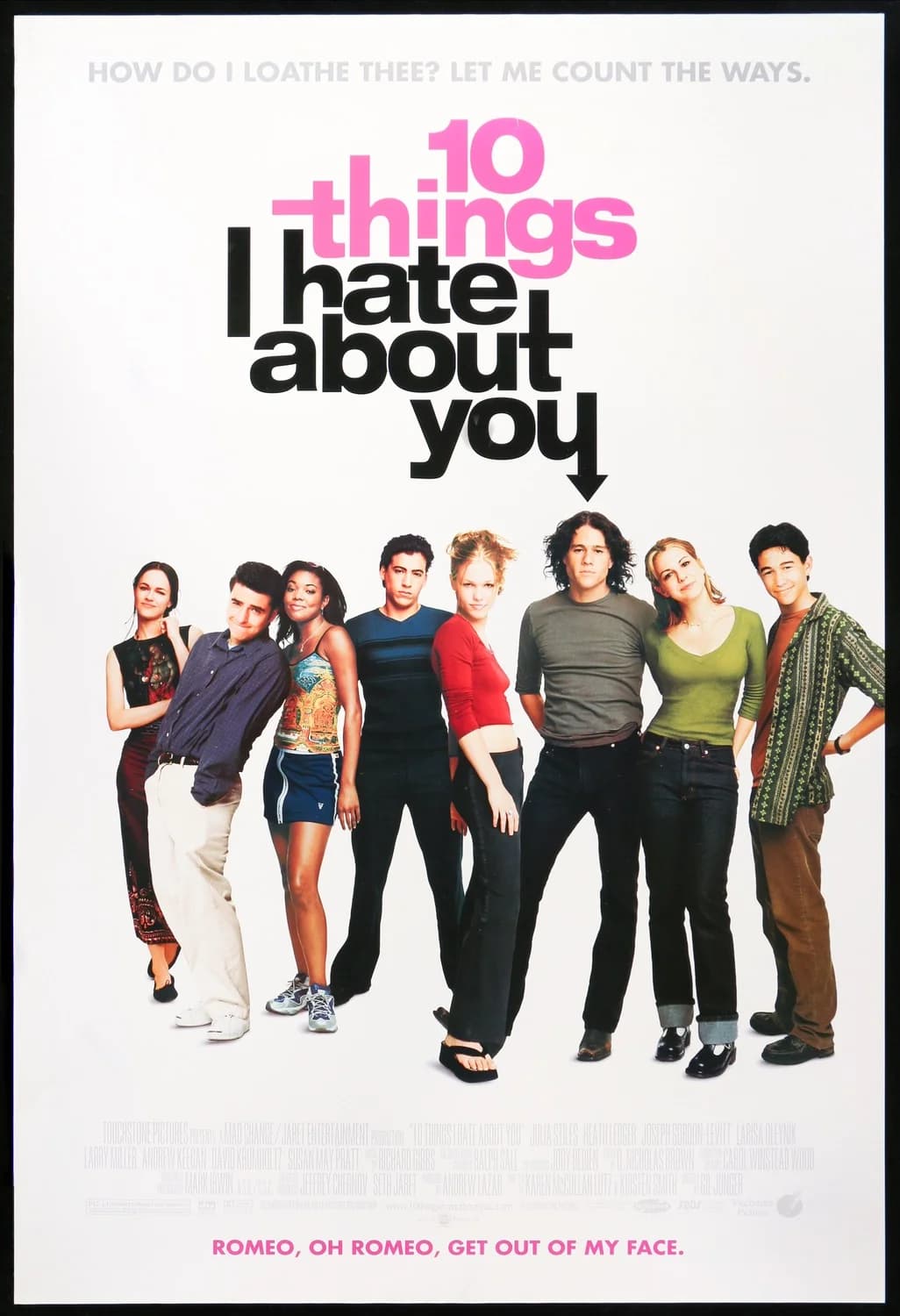
10 Things I Hate About You
Sibling rules, a rooftop serenade and one very stubborn Kat — Shakespeare in a school corridor.
1999 // VHS
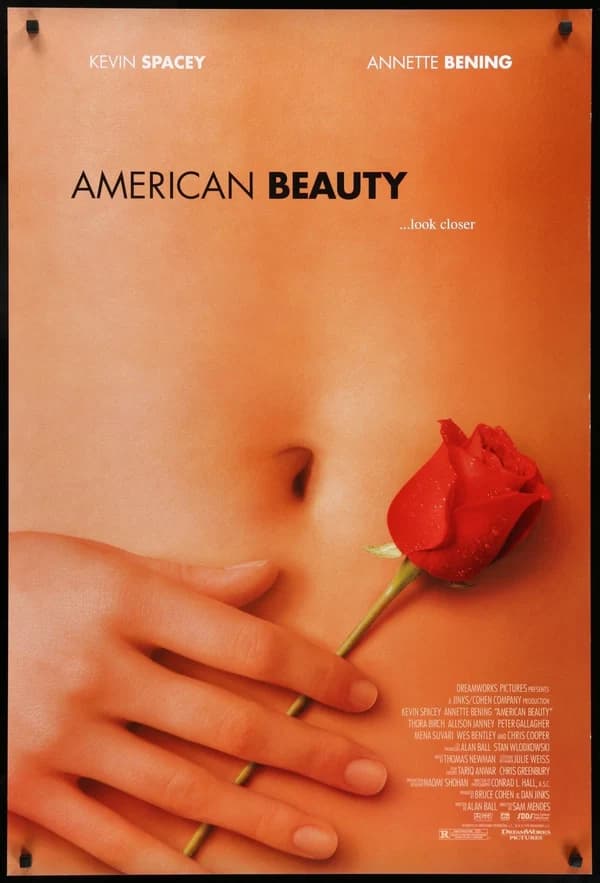
American Beauty
Lester Burnham, suburban rot and a midlife argument that still stings.
1999 // VHS
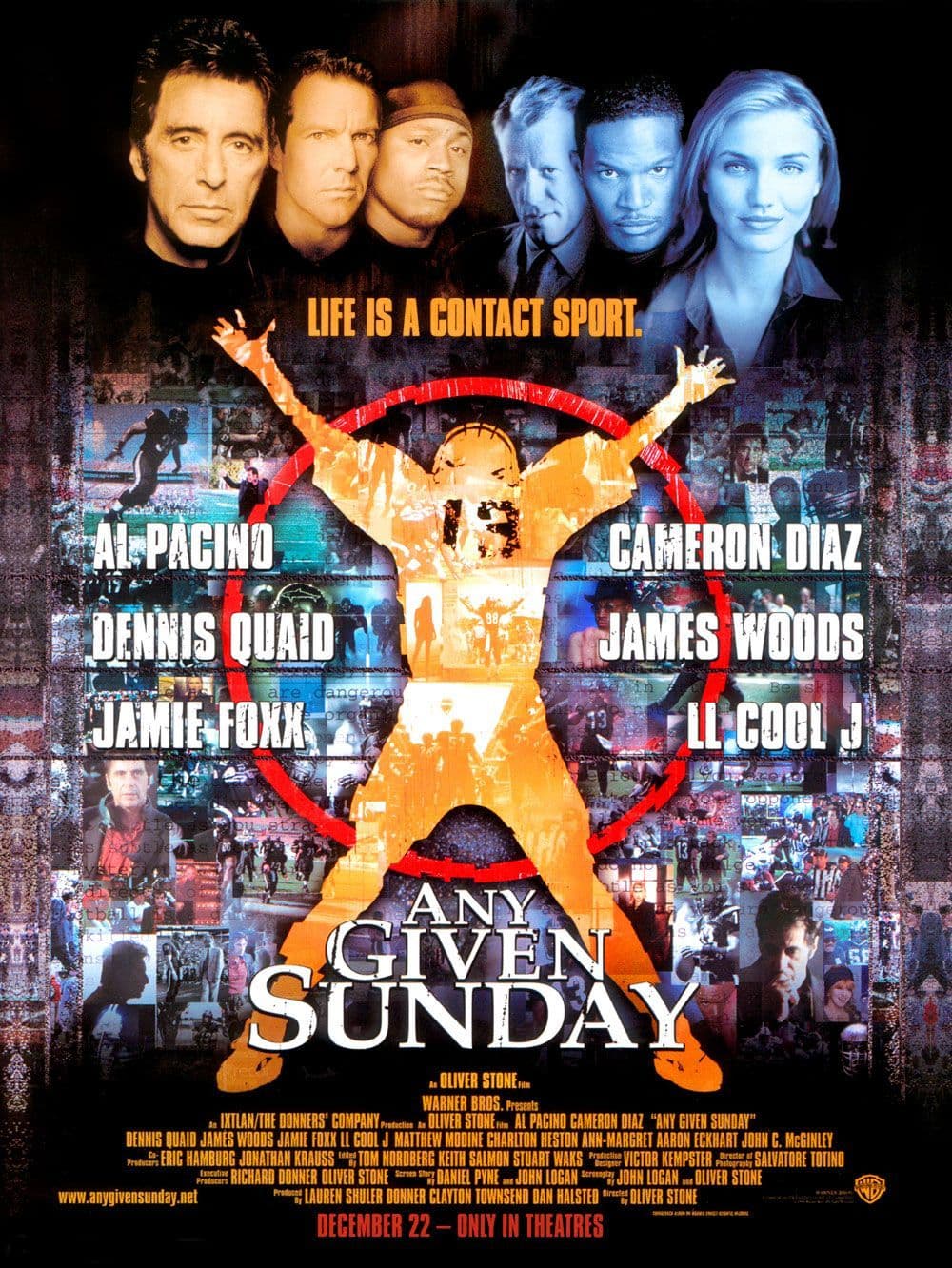
Any Given Sunday
Al Pacino's coach anchors the chaos of a film about football turned into product — loud, messy and oddly persuasive.