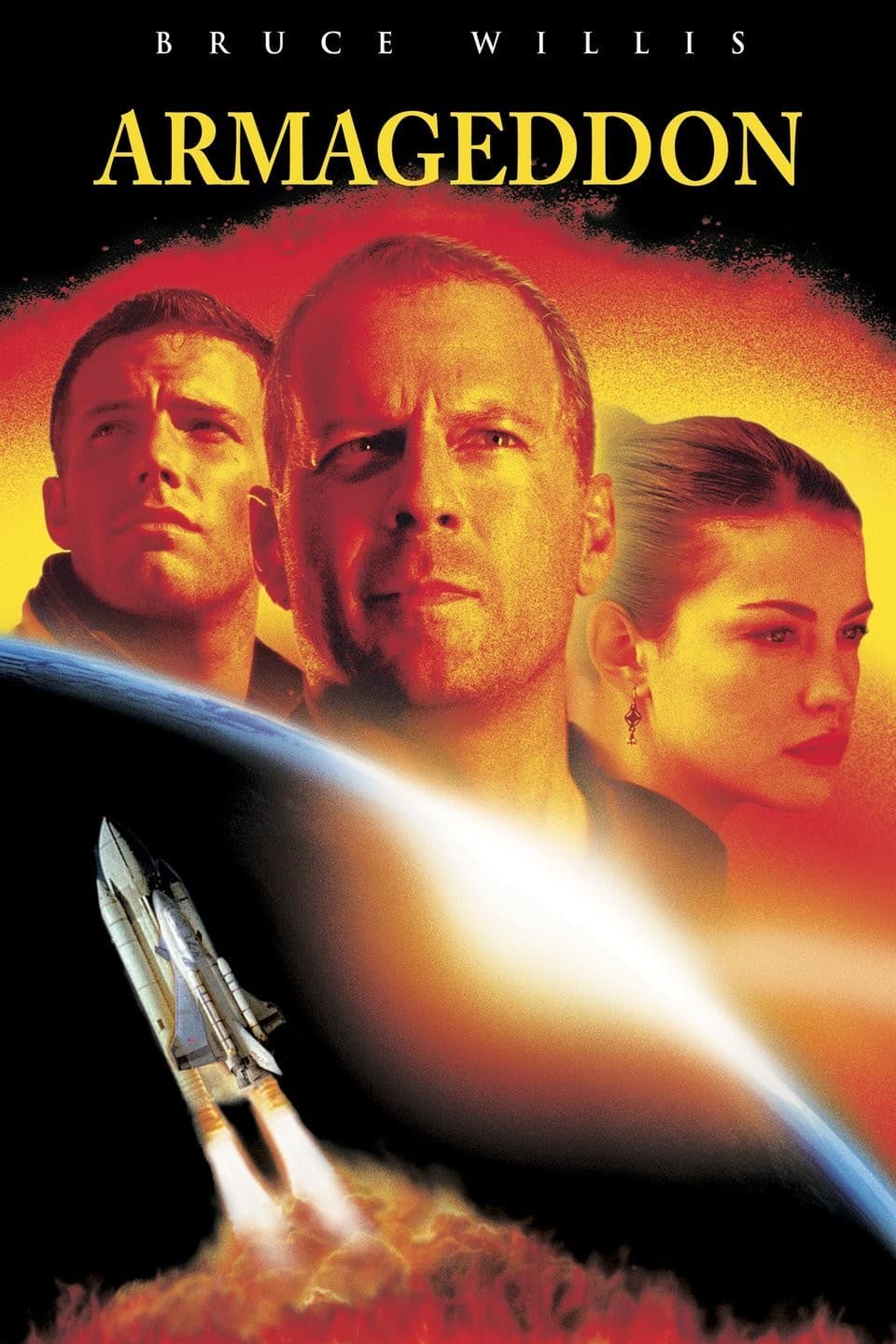
Armageddon
A Texas‑sized rock, a crew who can drill and one stubborn foreman — Armageddon is all about getting the job done.
// The setup
PLAYBACK STARTED
If you remember one thing about Armageddon it isn’t the special effects or the power ballad — it’s Harry S. Stamper. The film takes a ludicrously large problem (a Texas‑sized asteroid on a collision course) and solves it by throwing a crew of oil drillers into space. That strange, stubborn practicality is exactly why the movie still gets talked about.
THE MOVIE
Harry S. Stamper is still the reason this movie works
There’s a point early on where the premise hits you with the bluntness of a headline: a Texas‑sized asteroid is coming, and everything depends on drilling into it. It’s absurd in the best possible blockbuster way — a cosmic problem given a very human solution.
That human solution is Harry S. Stamper, a veteran oil‑rig foreman whose particular set of technical skills is exactly what NASA needs. The idea that an ordinary tradesman is chosen to lead a do‑or‑die space mission gives the film its personality: this is less about white lab coats and more about people who fix things under pressure.
Michael Bay’s direction pushes that personality into full spectacle: the picture lives on high‑energy visuals and rapid cutting, and it pairs spectacle with a clear emotional through‑line — sacrifice. In the middle of the noise, the movie asks who’s prepared to pay the greatest price to stop the world ending.
THE SETUP
The idea that sets Armageddon in motion
The movie gives you a simple, stomach‑knot premise: a near‑Earth asteroid the size of Texas is on a collision course with Earth. That single, enormous threat makes everything else — the jokes, the training montages, the arguments — have teeth.
To make the plan believable on its own terms, the story invents a practical need: the solution requires deep drilling, so NASA recruits an oil‑rig crew and turns them into astronauts. It’s a neat switch — specialists, not superheroes.
Bay and the writers add a hard deadline called the 'Zero Barrier', which keeps the film moving. Knowing there’s a point after which nothing can be done gives the whole rescue plot a constant, ticking pressure.
And because the movie isn’t content with abstraction, it layers in personal stakes — a romance and a father–daughter relationship — so the countdown also feels human. The planet is on the line, yes, but so are small, personal promises.
THE CHARACTER
Why Harry S. Stamper matters
Harry S. Stamper isn’t written as a tragic philosopher or a reluctant hero; he’s a tradesman. The film makes that clear: NASA chooses him because he’s the man who actually knows how to drill a hole where it needs to be drilled. That practical competence gives the whole mission its plausibility on film terms.
Because the rescue depends on real‑world knowhow rather than abstract heroics, Stamper becomes the moral centre of the piece without being sentimental about it. He represents a kind of blue‑collar expertise the movie trusts to solve a global problem.
Harry’s importance is also dramatic: his relationship with Grace — and the friction with A.J., the younger driller trying to prove himself — turns technical decisions into personal tests. You care about the drilling because you care about the people doing it.
Put another way: the film’s big set pieces are meaningful because the audience is anchored to someone who actually understands the work. When a foreman tells you how to save the world, you listen.
UNDER THE SURFACE
Armageddon has more on its mind than the plot suggests
At the surface it’s a disaster movie: big danger, big machines, big countdowns. Under that, the film keeps returning to sacrifice — the idea that people will accept extreme personal cost to stop catastrophe. It’s what gives the spectacle emotional weight.
Closely tied to sacrifice are familial bonds. The father–daughter relationship in the story gives otherwise blockbuster beats a quieter human anchor. It turns blown‑up vistas into scenes you can feel in a living room.
Heroism in Armageddon isn’t abstract nobility so much as practical skill under pressure. The movie prizes competence: the ability to do the job matters as much as the willingness to die for it.
Finally, there’s a tension between the crew’s hands‑on teamwork and the institutional response — a reminder that institutions can plan, but sometimes it’s the people on the ground who actually get things done.
THE FILMMAKING
How Armageddon was put together
Armageddon’s cinematic personality is loud by design. Contemporary reaction homed in on Michael Bay’s rapid cutting and high‑energy approach; that editing tempo keeps the film moving at full tilt, even when the emotional beats need breathing room.
That pace is part of the picture’s charm and its complaint. The relentless visual push makes the spectacle feel immediate, but reviewers at the time argued the heavy cutting sometimes cost the drama a little rhythm.
Put simply: Bay’s choices make the movie feel like a summer machine — everything is set up to deliver impact, even if the seams show sometimes. That’s part of the bargain you accept watching it.
PRACTICAL EFFECTS
The effects work that gives Armageddon its physical personality
The film’s visuals were a big piece of the puzzle, and the visual effects team received industry recognition — the supervisors credited were later named on the film’s Academy Award nomination for Best Visual Effects.
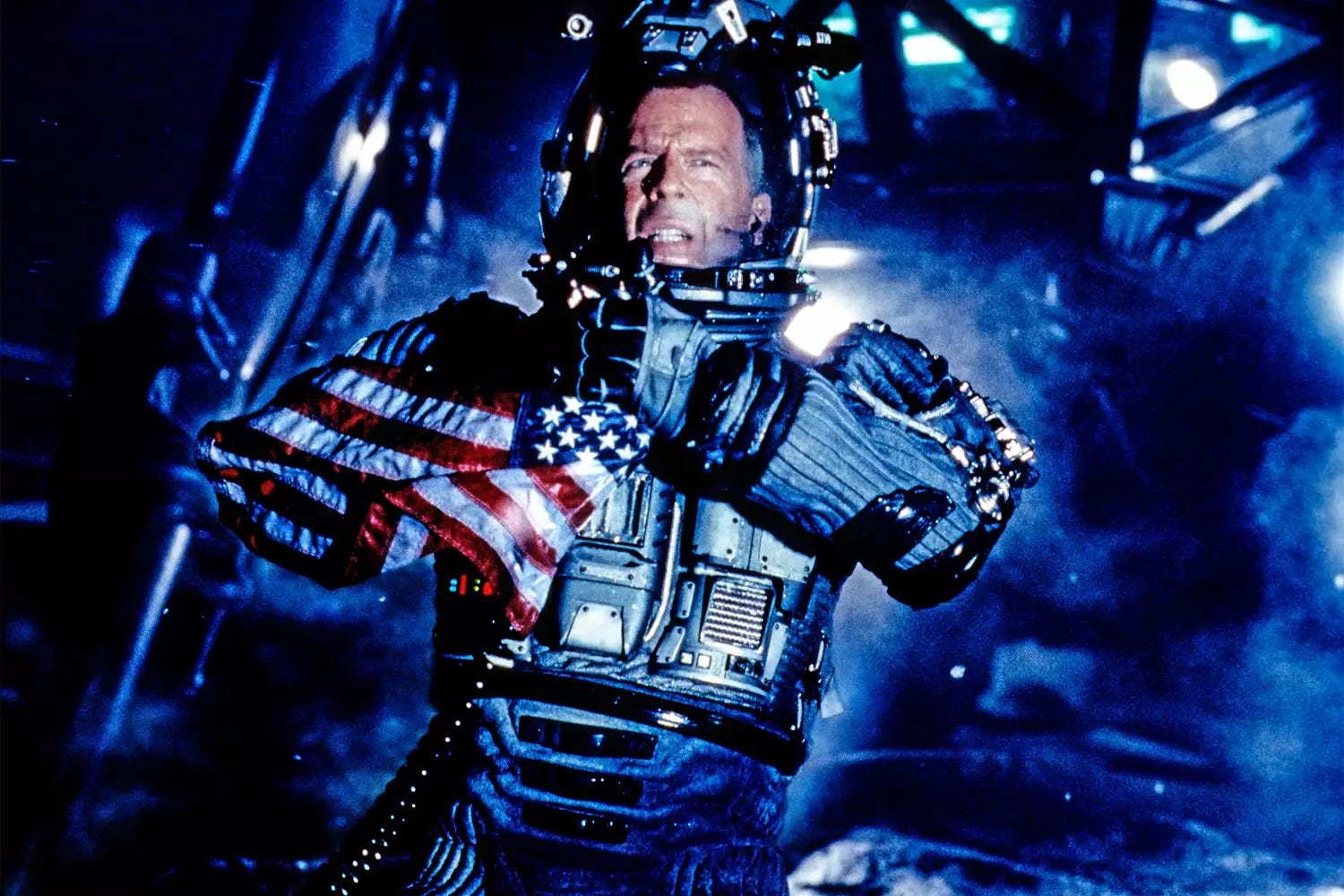
That recognition underlines how the picture relied on an effects department to make the impossible feel tangible. The movie also carried a clear sound‑and‑music identity: Trevor Rabin is credited as the principal composer on the soundtrack and score releases.
Those two elements — acknowledged VFX work and a foregrounded musical release — gave the film a physical and commercial texture that helped sell its larger‑than‑life ideas.
PURE 80S
Armageddon could not belong to any other decade
Armageddon is a late‑1990s blockbuster in almost every sense: big production budgets, an ensemble of stars, and expansive visual effects were all part of the era’s playbook.
It also slots into the period’s marketing model — a major soundtrack tie‑in and cross‑promotion with rock acts were part of how these films became cultural events, not just cinema releases.
The film’s combination of spectacle, star power and multimedia push feels very much of its moment. That doesn’t mean it’s a museum piece; it means it was built to be experienced as a large, noisy event.
THE LEGACY
Why Armageddon still matters
For better or worse, Armageddon was a commercial event — one of 1998’s highest‑grossing releases worldwide — and that scale guaranteed it a long public shelf life.
The soundtrack helped: 'I Don’t Want to Miss a Thing' became a major hit and even earned an Academy Award nomination for Best Original Song, which kept the film in the cultural conversation beyond cinemas.
The film’s technical achievements were noticed too; its visual effects work received industry recognition with an Academy Award nomination, which underlined the scale of the production’s ambitions.
On top of that, there were numerous licensed tie‑ins — soundtrack releases, model kits and themed attractions — all of which show the film was designed to be more than a movie ticket. It was a summer event with commercial wings.
THE VERDICT
Does Armageddon still hold up?
If you come for spectacle, decisive personalities and an uncomplicated emotional centre, Armageddon still delivers. The core idea — NASA recruiting oil‑rig drillers to place a nuclear device in a Texas‑sized asteroid — is daft but consistent, and the film commits to that odd premise fully.
The mechanics of the mission (improvised astronaut training, two big shuttle launches and specialist drilling vehicles) and the constant 'Zero Barrier' deadline keep the story threaded tightly between action and consequence. It’s undeniably constructed to keep you watching.
What gives the movie its staying power is the human angle: personal stakes like the engagement and the father–daughter bond make the countdown matter in a way raw pyrotechnics can’t. Harry S. Stamper as the team’s practical centre turns the film’s spectacle into a set of human decisions about who will do the dangerous work.
So should you watch it? Yes — if you want a summer blockbuster that wears its performative confidence proudly. It’s not subtle, and it’s not trying to be. It’s a movie about people with the right tools, under the right pressure, doing what needs to be done. That resolute, almost stubborn practicality is as much the film’s hero as any heroism on display.
Share this movie
// Keep watching
More movies from the 90s
If Armageddon is your kind of movie, there's plenty more on the shelves worth rewinding.
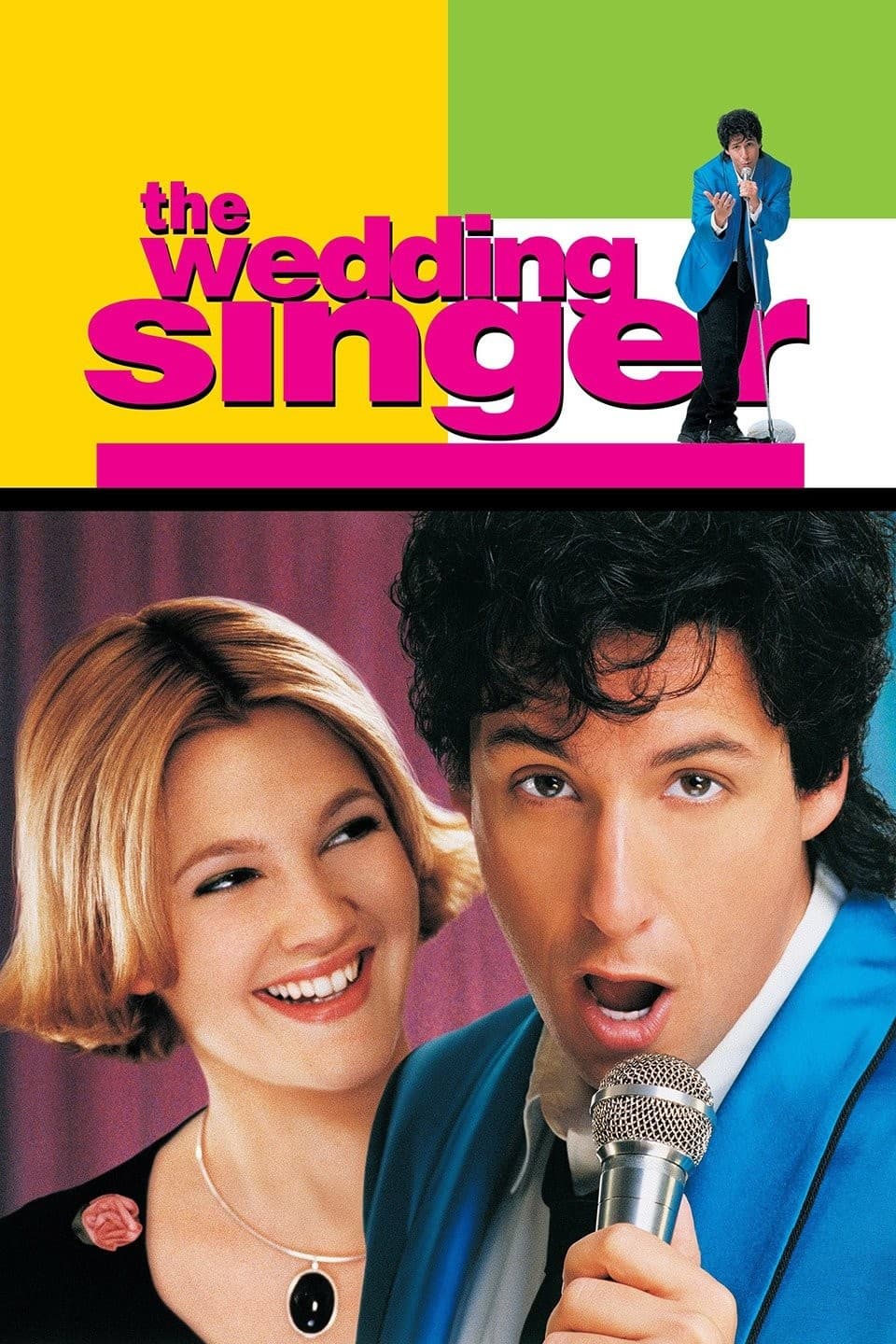
1998 // VHS
The Wedding Singer
A love story wrapped in 1980s pop — and carried by one very earnest wedding crooner.

1998 // VHS
There's Something About Mary
Romantic obsession, awkward masculinity and a hair‑gel gag you can't unsee.
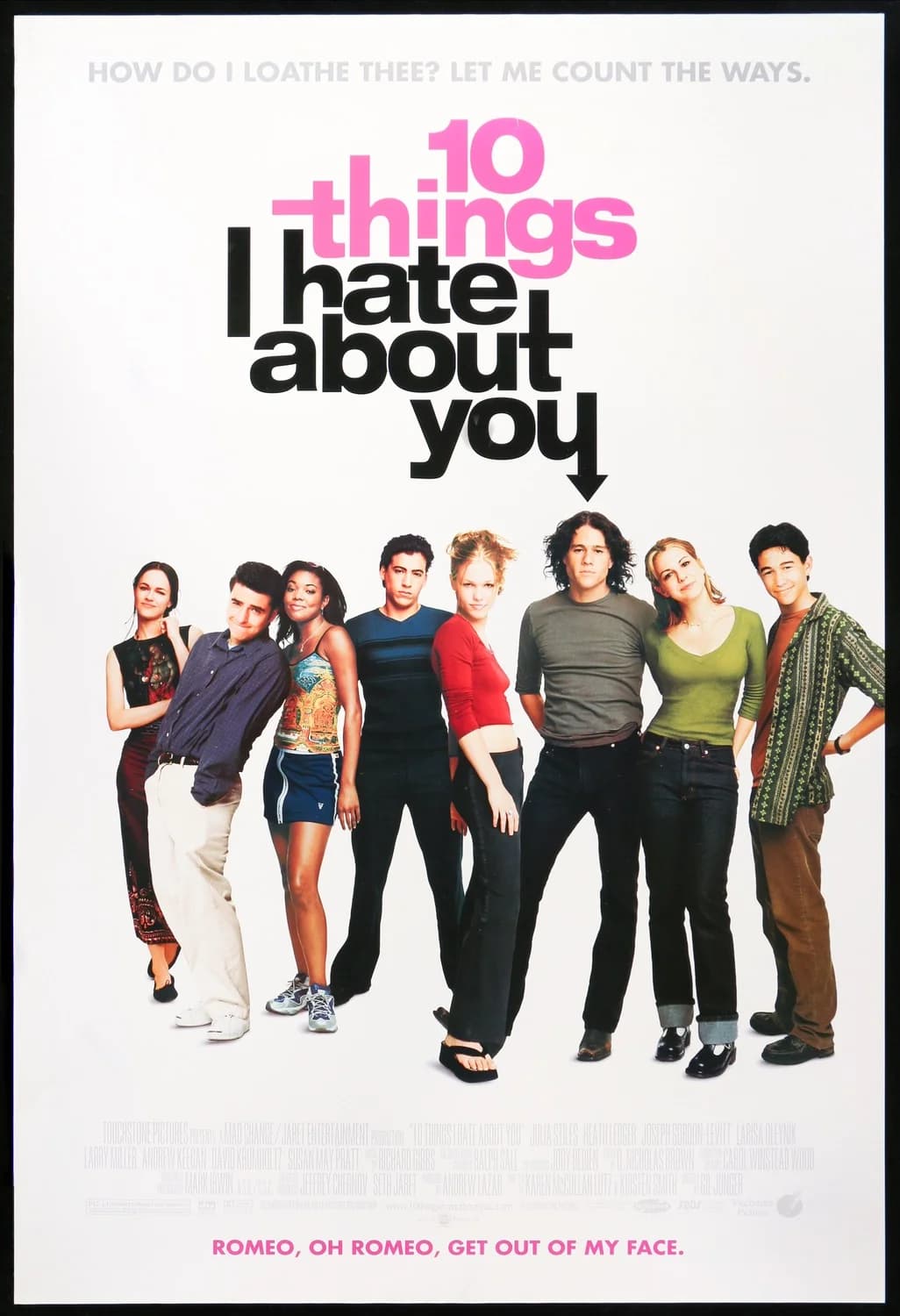
1999 // VHS
10 Things I Hate About You
Sibling rules, a rooftop serenade and one very stubborn Kat — Shakespeare in a school corridor.