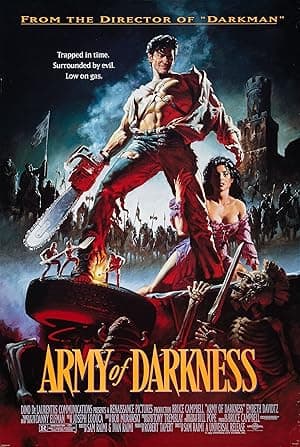
Army of Darkness
A chainsaw, a misplaced modern man and a very silly book — still terrifically watchable.
// The setup
PLAYBACK STARTED
Army of Darkness is the film that takes a bloke from a demolished modern world and catapults him into 1300 A.D., then trusts that his sarcasm, a chemistry textbook and questionable improvisation will be enough. It’s Sam Raimi having fun with genre mash‑ups, and it’s Bruce Campbell’s Ash at full tilt — the reason most people come for the laughs and stay for the nonsense.
THE MOVIE
Ashley "Ash" J. Williams / Evil Ash is still the reason this movie works
There’s an opening trick in Army of Darkness that still does the job: a thoroughly modern man is unceremoniously flung into 1300 A.D. and, instead of staring in astonishment, he treats the whole mess like a problem to be solved. That tilt — modern knowhow meets medieval chaos — is the film’s engine from the first frame.
The story gives Ash a simple, almost absurd task: find the right copy of the Necronomicon Ex‑Mortis and speak the correct phrase so he can get home. It’s a quest with built in comedy because the rulebook is cruel and the penalty for guessing wrong is spectacularly bad news.
All of this is under Sam Raimi’s direction, clocking in at a brisk 81 minutes. Bruce Campbell plays Ashley 'Ash' J. Williams (and his darker double) and his practical, modern instincts — guns, a chemistry textbook, even a mechanised Oldsmobile — are treated as battlefield advantages in a world that expects swords and sermons.
THE SETUP
The idea that sets Army of Darkness in motion
The film’s premise is neatly economical. Ash is the fish out of water: a 20th‑century survivor told to perform an ancient ritual. The rules are clear — choose the right book, say the right words — and the consequences for getting them wrong are instant and awful.
That ritual device gives the plot forward momentum without fuss. It keeps the focus on a single, slightly ridiculous goal and lets the movie alternate between small, giddy set pieces and genuinely large, staged confrontations.
The real complication isn’t the book itself but what follows: Ash has to pull together squabbling medieval factions and lead them against the Deadite army while an undead double of himself — Evil Ash — stalks the battlefield. It’s a neat way of making the external fight also an oddly personal one.
Worth noting: the film has had more than one edit over the years, with theatrical, international and director’s cuts shaping how some of these beats land. That shifting shape doesn’t change the central engine — the ritual, the army and Ash’s double — but it does mean viewers may have seen slightly different versions of the journey.
THE CHARACTER
Why Ashley "Ash" J. Williams / Evil Ash matters
Ash is what keeps the film honest. The set pieces could have been cardboard without him. Instead, he’s a reluctant survivor whose jokes are part survival strategy and part coping mechanism. The film leans into that: his modern tricks become battlefield tactics in a setting that never asked for them.
That practical modernity — a gun where others have spears, a chemistry approach where others have superstition — makes his presence believable in a film that otherwise enjoys being absurd. It’s a useful tension: he’s out of time, but he’s also the smartest person in the room.
Then there’s Evil Ash, the doppelgänger complication. Making the central antagonist a corrupted version of the hero keeps the stakes personal. The army Ash fights isn’t only external; the film stages a literal confrontation with a darker self.
This is a continuation of a journey. Army of Darkness follows on from earlier instalments, and Bruce Campbell returns to the role he’s been building. That continuity gives the character choices weight: this Ash has history behind him, even when the jokes are in the foreground.
THE PERFORMANCE
Why Bruce Campbell's performance matters
Contemporary and later coverage often points to Bruce Campbell’s broadly comic, deliberately hammy lead turn as the thing audiences respond to first. That’s not a throwaway note — the film’s tone depends on somebody who can sell the silliness without collapsing it.
Campbell’s presence acts like a tonal anchor: the world can be ridiculous and bleak in the same breath because the lead treats both as part of the same noisy evening. If the movie invites you to laugh at a siege, it also trusts you to feel the stakes when the Necronomicon’s rules bite back.
So even when the film leans into comedy, the performance keeps the balance between daftness and danger. It’s an odd combination, and the coverage that highlights Campbell’s approach nails why the film sticks in the memory.
Put simply: the performance is presented as the movie’s central appeal in coverage of the film, and that presentation informs how most viewers experience the rest of the material.
UNDER THE SURFACE
Army of Darkness has more on its mind than the plot suggests
At surface level it’s a romp. Underneath that romp are a few simple ideas that give the film a beating heart: the fish‑out‑of‑water comedy of a modern man trying to apply contemporary logic to the Middle Ages, and the way that improvisation becomes heroism.
Ash isn’t a polished knight; he’s a bloke who makes things work with what he has. That improvisation — the imaginative use of modern tools in an ancient fight — turns practical problem‑solving into a form of courage.
There’s also the film’s doubling theme: Evil Ash forces the hero to fight a version of himself. It’s not heavy psychology, but it’s a tidy way of making the stakes both external and personal.
Finally, Army of Darkness is in part a pastiche, a homage to older fantasy adventures. It wears those references like a costume, but one that the film immediately jokes about and then tries to outdo.
THE FILMMAKING
How Army of Darkness was put together
Behind the nonsense there’s a competent crew: Bill Pope worked as director of photography and Bob Murawski handled editing duties. Those names matter because they’re part of how the film pulls its tone together — brisk pacing, clear staging of gags and action.
The movie also exists in more than one shape. Multiple cuts — theatrical, international and a director’s cut — were produced after studio notes and re‑editing, so which version you watch changes some of the emphasis and rhythm.
What that means for viewers is simple: the film’s personality is partly a production choice. Raimi’s fingerprints are all over the direction, but the final flavour arrived after a few hands in the post‑production kitchen.
The result is a compact, propulsive picture that rarely lingers where it doesn’t need to. It’s editing and photographic choices serving the joke, the scare and the siege, in that order.
PRACTICAL EFFECTS
The effects work that gives Army of Darkness its physical personality
The film’s look and physical personality come from hands‑on work. Principal character makeup was handled by Tony Gardner’s Alterian team, with Kurtzman, Nicotero & Berger (KNB) contributing many other creature effects.
A distinctive element was Introvision’s front‑projection 'go‑animation' system, which let the filmmakers place actors against miniature backgrounds and animated plates. That technique is especially visible in sequences like the rising skeleton army.
There’s also a lot of mechanical, miniature and puppet work in the battle scenes: prosthetic hands, small‑scale puppetry and staged pyrotechnics feed the siege set pieces and keep the physical humour grounded.
All of this gives the film a tactile energy. The effects are clearly made, and Army of Darkness wears that craft on its sleeve rather than hiding it.
PURE 80S
Army of Darkness could not belong to any other decade
Although released in 1992, Army of Darkness sits at the cusp of a shift in filmmaking: it’s a product of Sam Raimi moving into larger studio resources after earlier, scrappier Evil Dead entries. That upgrade is noticeable in the production values and the scale of the ideas on screen.
The movie’s mixture of old‑school fantasy homage — think Ray Harryhausen sentiment — and front‑projection techniques reflects early‑1990s practical‑effects practice just before digital compositing became ubiquitous.
There’s also a studio hand in the shaping of the film: Universal’s involvement led to additional edits and a reshot, more mainstream U.S. ending. That kind of studio shaping was common for genre films at the time as they attempted to reach wider audiences.
Put another way: Army of Darkness is very much a film of its moment, straddling the indie past and the studio future, and that tension is baked into its texture.
WATCHING IT NOW
What has aged — and what hasn't
A lot of how we watch Army of Darkness today comes down to versions. Home‑video restorations and Blu‑ray releases that include the Director’s Cut and alternate edits have played a big role in how modern viewers reassess the film.
The central throughline — this entry continuing Ash Williams’ arc — still reads clearly: the film is part of a larger character story and sits comfortably as a mid‑career moment for the protagonist.
The practical makeup and creature work remain a tangible part of the film’s charm. The split between Alterian and KNB on creature effects gives the movie a DIY, hands‑on feel that many viewers find refreshingly physical compared with later digital epics.
All of which means the film still has a particular personality to offer modern audiences: brisk, tactile and unapologetically silly in places where sincerity might have felt false.
THE LEGACY
Why Army of Darkness still matters
Army of Darkness has accumulated a long‑standing international cult following. That’s not the same as mainstream dominance, but it explains why the film keeps turning up in collections, midnight screenings and fannish conversation.
Elements from the film — characters and locations — have reappeared in franchise tie‑ins like video games and later series, and those callbacks have helped keep the film present in the franchise’s continuing story.
Home‑video releases and the circulation of multiple edits, including a Director’s Cut and Blu‑ray restorations, have been instrumental in allowing new audiences to discover the film and established fans to reassess it.
In short: Army of Darkness persists because it’s part of a larger, ongoing conversation about Ash and because the film’s ideas and images have been recycled and referenced within the franchise over time.
THE VERDICT
Does Army of Darkness still hold up?
Yes — but with a small, useful rider. If you want airtight logic and solemn grandeur, this isn’t the film for you. If you want a compact, 81‑minute blast of invention, silly stakes and an everyman shoved into the wrong century, it still delivers.
The central engine remains tidy: Ash is transported to 1300 A.D., given a clear‑cut quest (find the Necronomicon and say the correct words) and then forced to lead humans against a Deadite army while dealing with a resurrected Evil Ash. Those elements are simple, well‑used and fun.
Sheila operates as Ash’s emotional anchor in the story, and supporting figures — Lord Arthur, Duke Henry and the Wise Man — supply the prophecy, political friction and ritual knowledge that keep the quest moving. That structure makes the stakes feel both personal and suitably epic for the film’s scale.
So watch it for the premise, the set pieces and the sheer brazenness of a plot that mixes mirrors, miniatures and medieval politics. Army of Darkness still works because its pleasures are particular, sharp and audience‑friendly — the kind of movie that knows exactly what it wants to be.
Share this movie
// Keep watching
More movies from the 90s
If Army of Darkness is your kind of movie, there's plenty more on the shelves worth rewinding.
1999 // VHS
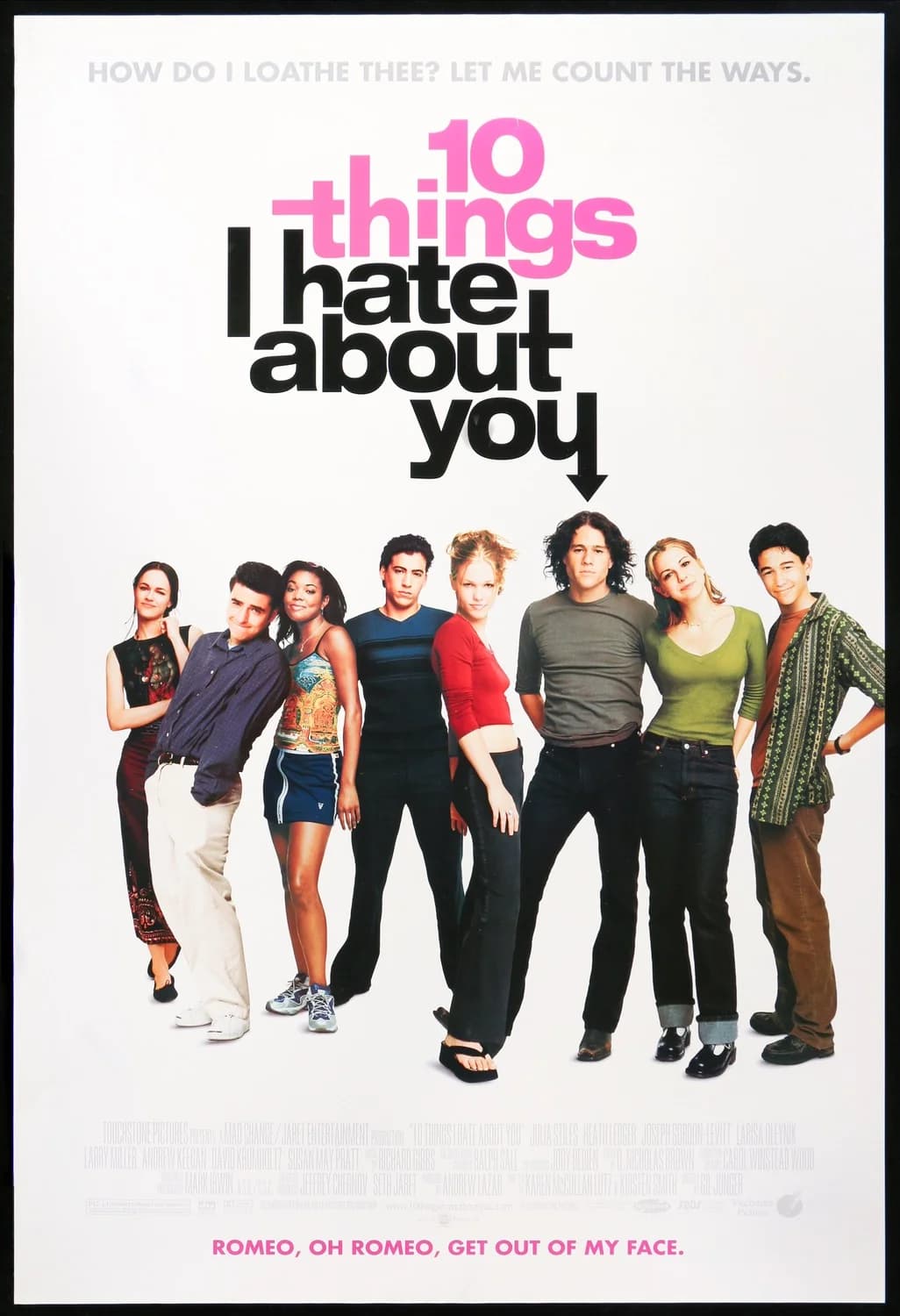
10 Things I Hate About You
Sibling rules, a rooftop serenade and one very stubborn Kat — Shakespeare in a school corridor.
1999 // VHS
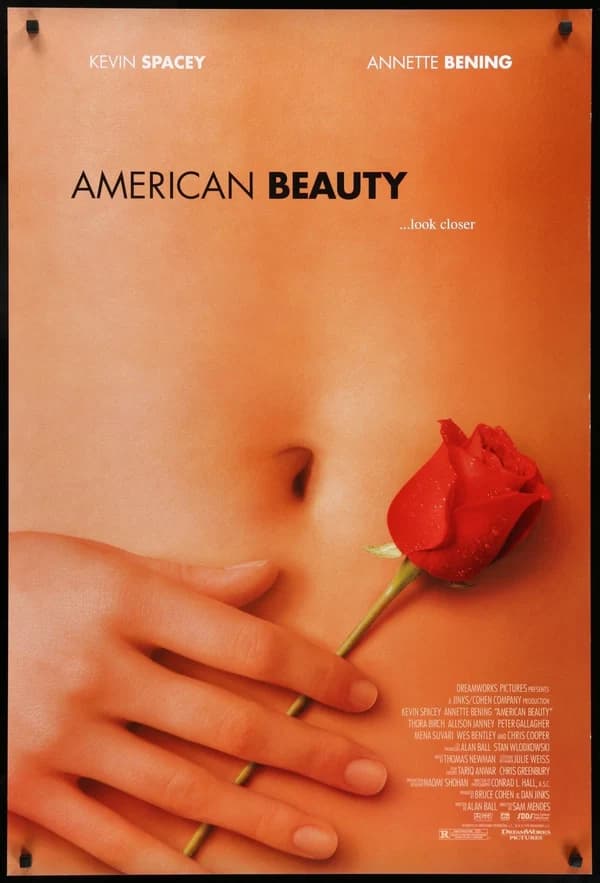
American Beauty
Lester Burnham, suburban rot and a midlife argument that still stings.
1999 // VHS
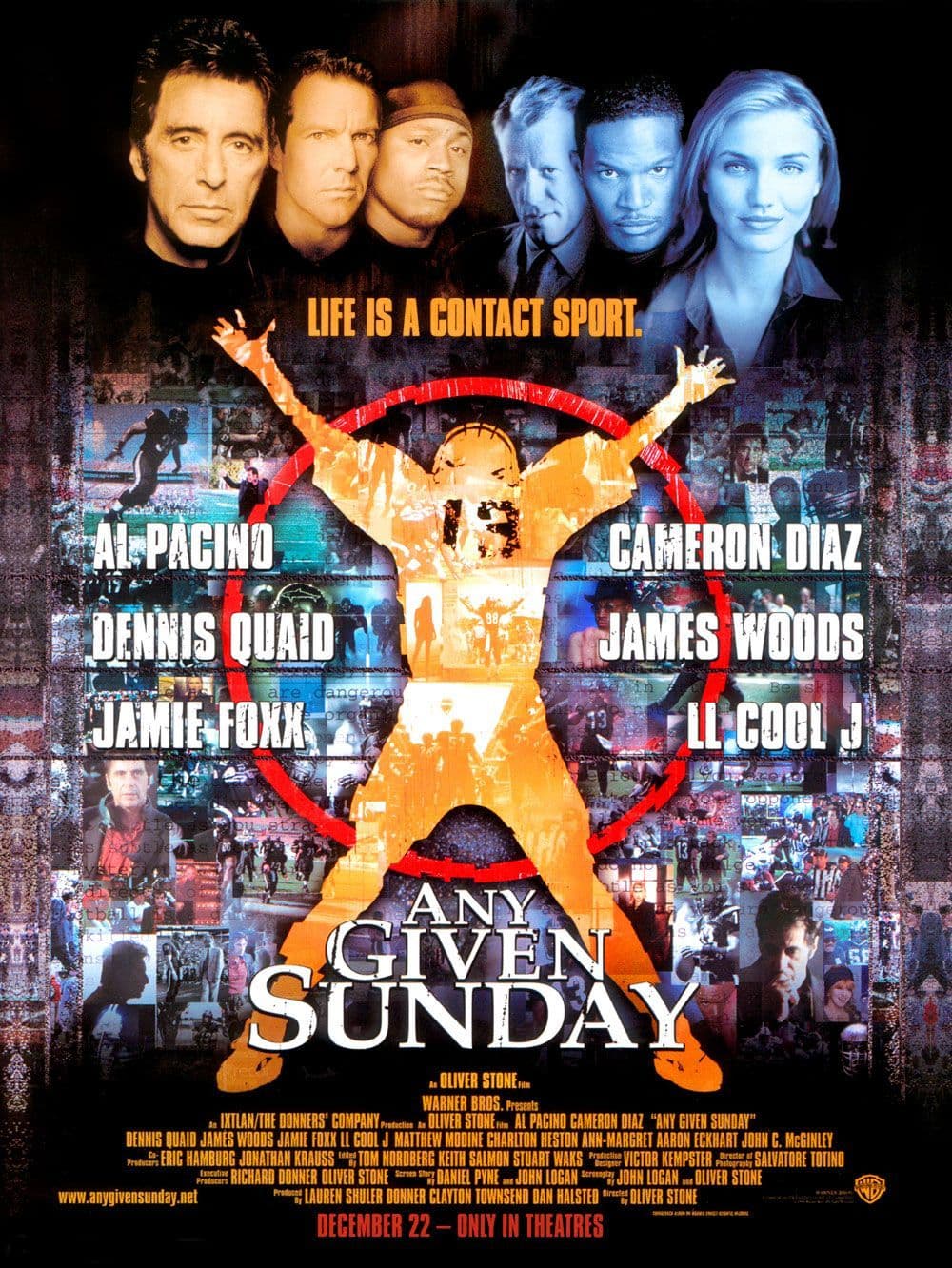
Any Given Sunday
Al Pacino's coach anchors the chaos of a film about football turned into product — loud, messy and oddly persuasive.