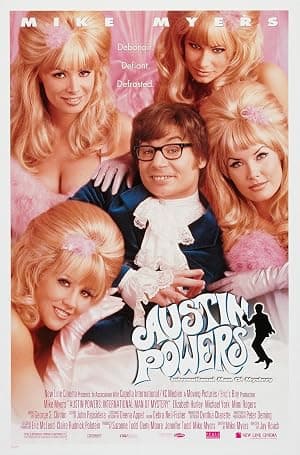
Austin Powers: International Man of Mystery
Swinging ’60s cheek meets 1990s brass — and both are played for laughs.
// The setup
PLAYBACK STARTED
Remember the bit where a man in a paisley suit walks into the Nineties and everything looks faintly ridiculous? That’s Austin Powers: International Man of Mystery in a nutshell. Jay Roach and Mike Myers set up a cartoonish time-capsule — equal parts affectionate parody and deliberate daftness — and then let their star do the rest.
THE MOVIE
Austin Powers / Dr. Evil is still the reason this movie works
Start with the obvious: the whole engine of Austin Powers: International Man of Mystery is a very 1960s spy who has been frozen and then unceremoniously revived in 1997. It’s a neat, giddy idea that buys the film permission to laugh at two eras at once.
What gives the film its personality is precisely that collision. Austin turns up as an unabashedly sexual, fashion-conscious relic trying to figure out how his swinging self fits into a very different decade, while his opposite number — Dr. Evil — brings a cartoon-sized threat that’s been retooled as corporate menace.
And yes: Mike Myers is centre stage playing both Austin and Dr. Evil. Under Jay Roach’s direction the movie is short, loud and shapely — a 95-minute comedy that knows what joke it wants to tell and mostly tells it with relish.
THE SETUP
The idea that sets Austin Powers: International Man of Mystery in motion
The premise is straightforward and intentionally stagey: a flamboyant 1960s British secret agent is cryogenically frozen and hauled into the 1990s when his old nemesis reappears. That single plot device lets the film be both a spoof of spy tropes and a culture-clash comedy.
Dr. Evil’s return — and his renewed extortion plot — is the inciting beat that pushes the British authorities into reviving their man from the past. It’s a tidy setup: one villainous plan and one outdated hero to stop it.
From there the movie keeps the mechanics simple. Cryogenics and a villainous corporation called Virtucon are the scaffolding that shifts Austin out of his era and into a series of contemporary gags, while recurring bits like ‘fembot’ henchwomen and the Number Two–Virtucon storyline give the film running threads.
There’s also a straight romantic angle that pulls on the generational gag: Austin’s relationship with Vanessa Kensington works as both a source of jokes and the movie’s main personal stake, keeping the film from turning into a string of disconnected set-pieces.
THE CHARACTER
Why Austin Powers / Dr. Evil matters
At the centre of the whole enterprise is the fact that Mike Myers plays both the man and his nemesis. That casting choice turns what could have been a simple hero-villain setup into a back-and-forth of personalities that the script keeps exploiting.
Austin matters because he’s not a toned-down hero; he’s an unabashedly exaggerated 1960s figure who must learn — clumsily, loudly — how to belong in the 1990s. That mismatch produces most of the film’s comic friction and gives Vanessa Kensington a believable counterpoint: a no-nonsense agent who’s initially unimpressed by Austin’s attitudes.
Dr. Evil matters because the film treats villainy like a business problem. The Number Two–Virtucon angle reframes nastiness as corporate ambition, which lets jokes land on boardroom absurdity as often as on cartoon moustaches.
Finally, it’s worth remembering this is the film that planted seeds for the series. As the first entry it establishes recurring characters and themes that the later films would pick up and play with.
THE PERFORMANCE
Why Mike Myers's performance matters
Contemporary notices singled out Mike Myers’s character work as central to the film’s humour and identity. That’s not a surprise: the movie is structured around his shifts between two broad comic poles.
Because Myers is playing both sides of the match-up, the film can play with doubling and contrast in ways a straight cast couldn’t. The laughs often come from the comparison rather than from single beats in isolation.
Putting the performer at the film’s comic fulcrum also helps the filmmakers keep the movie compact: at roughly 95 minutes the screenplay rarely loses focus, repeatedly returning to Myers’s characters to reset the joke.
UNDER THE SURFACE
Austin Powers: International Man of Mystery has more on its mind than the plot suggests
Beneath the one-liners and sex jokes the film is doing period-savvy work: it parodies 1960s spy cinema while lovingly recreating some of that decade’s visual and musical shorthand. That pastiche keeps the gags pointed because the film knows what it’s imitating.
The fish-out-of-water dynamic is the movie’s steady engine. Watching a Swinging-'60s sensibility crash into 1990s norms allows the script to talk about changing manners and, more amusingly, changing romantic expectations.
There’s also a satirical undercurrent aimed at corporate power. Recasting Dr. Evil’s plot through a business frame — Virtucon and Number Two’s boardroom approach — lets the film poke fun at late-20th-century commercialisation of villainy.
All of these layers mean the movie’s jokes rarely exist purely for shock value; they’re usually riffs on the contrast between eras, institutions and attitudes.
THE FILMMAKING
How Austin Powers: International Man of Mystery was put together
The film’s look and presentation were built around a specific cinematographic approach: Peter Deming was the principal cinematographer, and Super 35 photography was used in production. That technical choice gave the filmmakers flexibility in how the film was framed for release.
Editors credited on the picture helped keep the pace punchy. With a short running time and a comedy that depends on quick reversals, the editing choices keep the jokes moving without lingering on any single gag for too long.
Those production choices matter because the movie’s humour depends on contrast — between eras, between characters and between setups and payoffs. Tight photography and brisk cutting give the film the rhythm it needs to land those contrasts.
All this sits under Jay Roach’s direction, which keeps the film focused on the jokes and the central performances rather than on any sprawling visual ambition.
PURE 80S
Austin Powers: International Man of Mystery could not belong to any other decade
Released in May 1997, this film landed during a late-1990s comedy scene when studios like New Line were investing in broad, star-driven comedies. The film’s timing and backing mattered: it was built to be a tight, commercially minded parody.
The way it was distributed and presented also feels of its time. Different theatrical and regional cuts circulated in 1997, a common practice as distributors tailored films to markets and ratings systems.
That 1990s production-and-distribution mindset explains some of the movie’s economy: it’s short, specific and designed to move quickly from gag to gag — very much a product of studio comedy sensibilities of the period.
Put simply, the film feels like a 1997 picture because of how it was made and sold as much as for any on-screen reference to earlier decades.
WATCHING IT NOW
What has aged — and what hasn't
As the first film in the Austin Powers series it planted character types and running jokes that the sequels reused and amplified. That makes the original feel like a template — sometimes charmingly unfinished, sometimes briskly honed.
The movie’s afterlife was helped by the home-video market: a region 1 DVD issued in October 1997 turned the film into a strong seller for its distributor, which broadened its audience beyond theatrical release.
Those two facts together explain why the film still turns up in conversations: it established recurring characters while also reaching viewers through home formats, rather than living only in fleeting theatrical memory.
If some gags read a touch of their moment, the basic setup — a man out of time facing a corporate-style villain — still reads clearly today, because the central conflicts remain easy to follow.
THE LEGACY
Why Austin Powers: International Man of Mystery still matters
The film’s most obvious legacy is that it launched a franchise. Two official sequels followed, each leaning on the characters and jokes introduced here.
Home video helped the movie find a wider audience after cinemas: the DVD release and strong sales turned it into a lasting commercial property for its distributor, which kept the characters in circulation.
Beyond sales and sequels, the film has been the subject of multi-voice oral histories and retrospectives that trace its production and reception, suggesting it’s the sort of picture people return to and talk about when mapping late-1990s comedy.
So its legacy isn’t just a list of catchphrases; it’s a picture that created a set of comic templates and a business case that the sequels and continued discussion could build on.
THE VERDICT
Does Austin Powers: International Man of Mystery still hold up?
Yes — with a caveat. If you come for a short, sharp parody that uses a simple time-travel conceit to pit a 1960s figure against 1990s culture, the film still delivers. The premise — a flamboyant agent thawed out to stop his old nemesis — is clear and the movie keeps that setup front and centre.
A lot of its success rests on the central contrast: Austin’s old-school attitudes versus the expectations he finds in the 1990s, and the way villainy is reframed as corporate nastiness through Virtucon and Number Two. Those bones still make the jokes readable.
It helps that the film is compact — 95 minutes — and directed with a focus on gag economy by Jay Roach. The basic romance with Vanessa Kensington provides a grounding counterpoint, so the film never becomes nothing but sketches.
So should you watch it today? If you like affectionate parody, generational fish-out-of-water humour and a lead who’s allowed to be loudly daft, it still works. It’s not subtle, but it never pretended to be; it wanted to make you laugh at eras and ideas, and on those terms it mostly succeeds.
Share this movie
// Keep watching
More movies from the 90s
If Austin Powers: International Man of Mystery is your kind of movie, there's plenty more on the shelves worth rewinding.
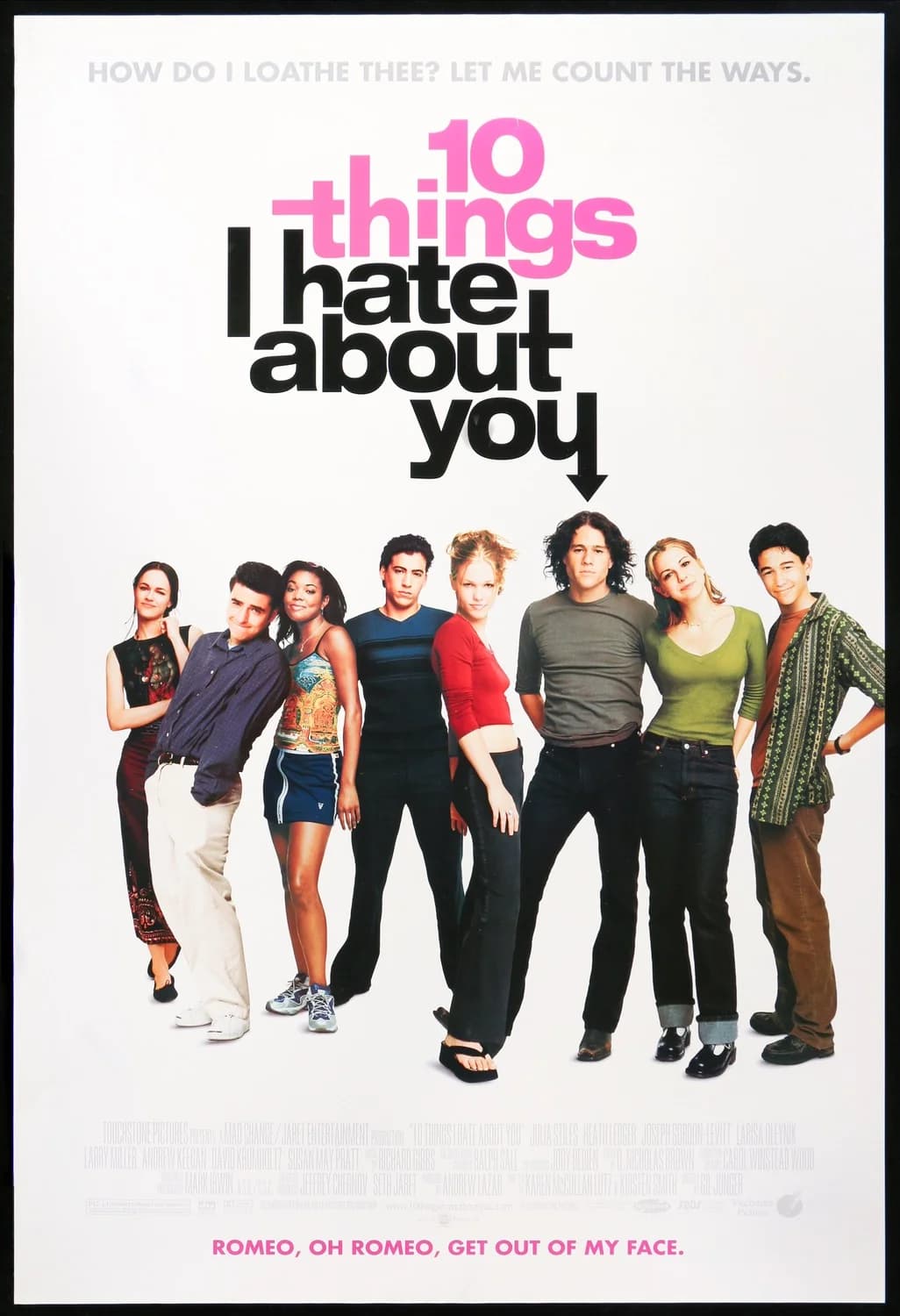
1999 // VHS
10 Things I Hate About You
Sibling rules, a rooftop serenade and one very stubborn Kat — Shakespeare in a school corridor.
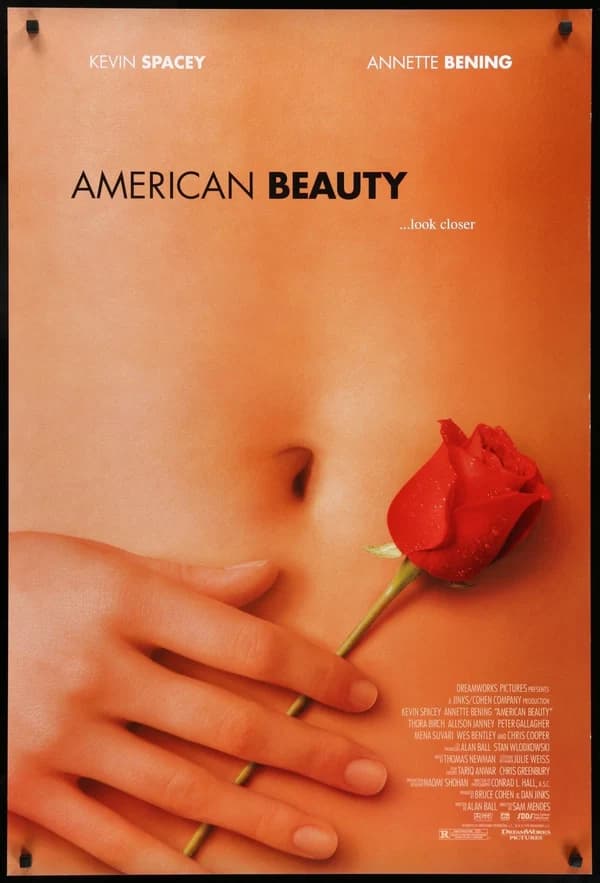
1999 // VHS
American Beauty
Lester Burnham, suburban rot and a midlife argument that still stings.
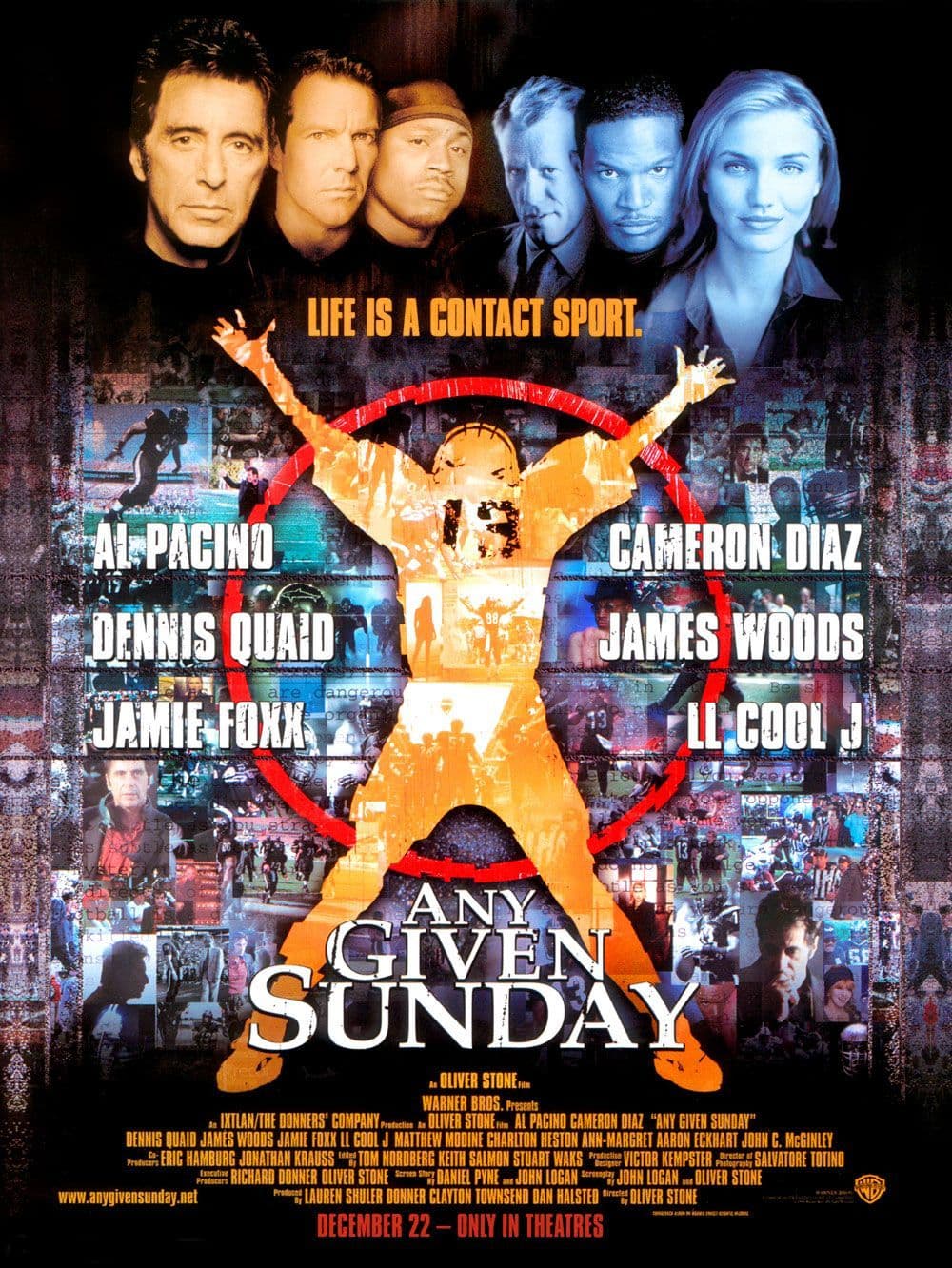
1999 // VHS
Any Given Sunday
Al Pacino's coach anchors the chaos of a film about football turned into product — loud, messy and oddly persuasive.