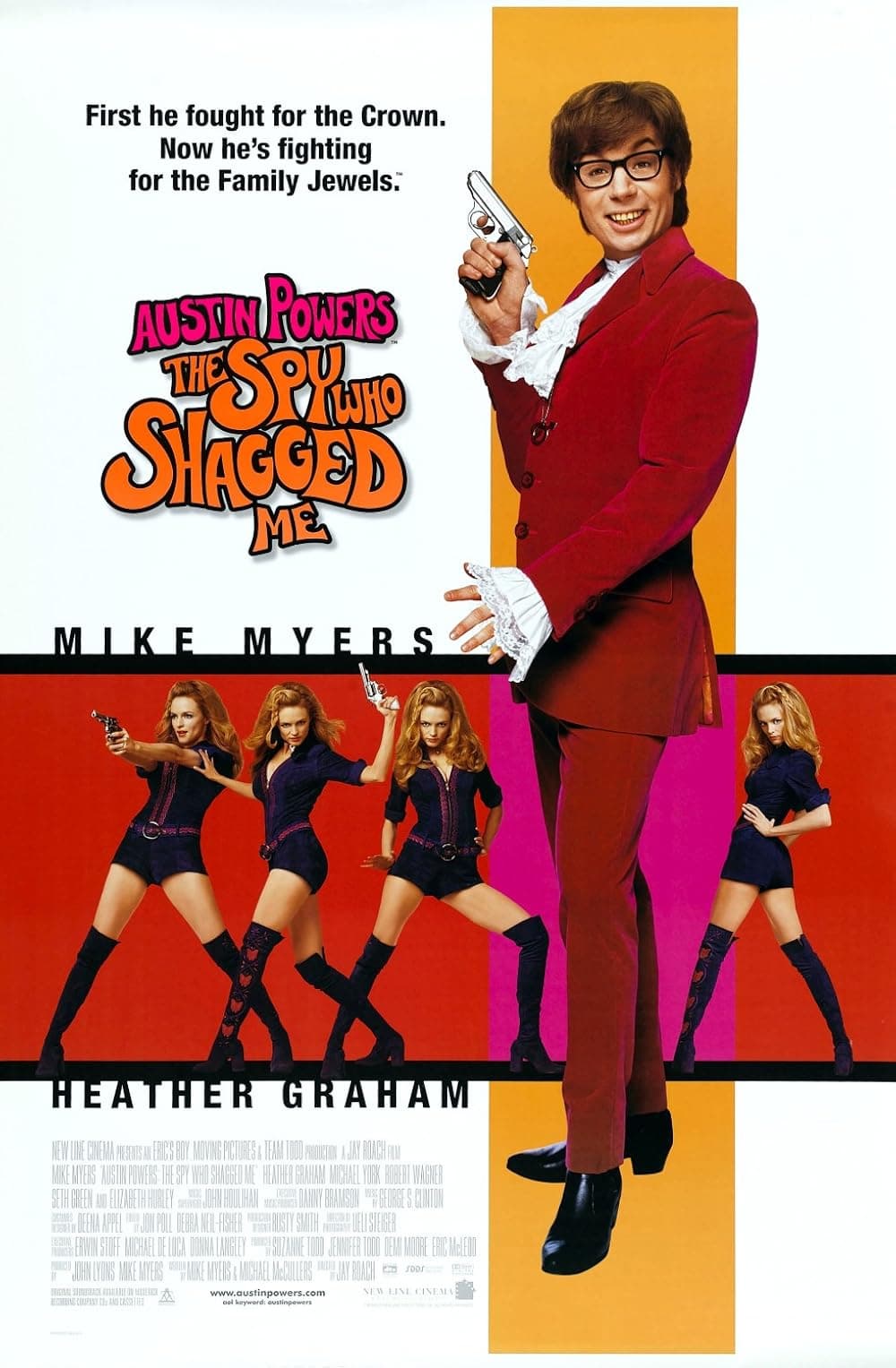
Austin Powers: The Spy Who Shagged Me
Mojo theft, time travel and a trio of Mike Myers characters — still absurd, still fun.
// The setup
PLAYBACK STARTED
There are films that make you laugh because the jokes land, and there are films that make you laugh because the world inside them is so loudly itself. Austin Powers: The Spy Who Shagged Me is very much the latter: a 95‑minute, full-volume shaggy dog of a comedy that owns its silliness. It’s built around a daft problem — the theft of Austin’s mojo — and a single stubborn belief that sexual confidence can be boiled down to a plot point.
THE MOVIE
Austin Powers / Dr. Evil / Fat Bastard is still the reason this movie works
If you can picture the moment when Austin finds his swagger has been stolen, you’ve got the engine of the film in your head. The comedy isn’t coy about its central joke: Dr. Evil uses a time machine to travel to 1969 and nick Austin’s 'mojo', turning the hero from a cocky 1960s superspy into someone who can’t quite do the job anymore.
That absurd premise — a blunt, bodily threat dressed up as spy silliness — gives every gag a simple aim. It’s a parody that wears its influences on its sleeve: James Bond and 1960s pop culture are the target, and the movie delights in squeezing those hallmarks until something ridiculous squirts out.
And at the centre of that chaos is the fact that Mike Myers plays Austin Powers, Dr. Evil and Fat Bastard. That triple billing (and the film’s willingness to time‑hop between 1999 and 1969) is why Jay Roach's sequel feels less like a straight follow-up and more like a variety show with a mission: get the mojo back, save the world, repeat the jokes until they’re gleefully exhausted.
THE SETUP
The idea that sets Austin Powers: The Spy Who Shagged Me in motion
The movie keeps its premise ridiculously neat: Dr. Evil has a new doomsday scheme and, crucially, he takes Austin’s mojo. That theft undercuts Austin’s sexual confidence — his whole superspy persona — and that loss becomes the obvious but very funny problem to solve.
From there the film stitches together set pieces around the central mission. Time travel sends characters between 1999 and 1969, which lets the script bounce jokes off era differences while offering mission beats to hang comic business on.
So rather than a dense plot, you get a string of escalating scenarios: get the mojo; infiltrate the scheme; confront Dr. Evil’s latest gadget. Each gag exists to serve the mission, and that tidy throughline keeps the silliness from floating away.
Mini‑Me’s arrival and the new gadgets tilt the stakes back toward the franchise’s cartoonish world-saving, while allowing the writers to invent fresh ways for Austin and Evil to collide.
THE CHARACTER
Why Austin Powers / Dr. Evil / Fat Bastard matters
This film leans on characters who are deliberately big and obvious rather than subtle. The movie is constructed around three personas that Mike Myers occupies: the lascivious Austin, the scheming Dr. Evil and the grotesquely comic Fat Bastard. The sheer fact of one actor switching between them gives the film a carnival feel — like watching a skilful performer change masks mid‑routine.
Austin’s problem is very public: without mojo he isn’t just embarrassed, he’s ineffective. That’s what turns sexual confidence into a narrative device rather than just a running joke — it creates comic stakes for the central mission.
Dr. Evil’s family life also matters here. Scott Evil’s role as Dr. Evil’s son supplies recurring friction and small subplots that break up the main gag and make the antagonist less of a one-note villain.
And the movie introduces Mini‑Me as a new element in Dr. Evil’s world — a physical shorthand for the sequel’s desire to top itself with fresh, immediately usable comedy dynamics.
UNDER THE SURFACE
Austin Powers: The Spy Who Shagged Me has more on its mind than the plot suggests
On the surface it’s a spy parody — delightedly aimless jokes aimed at Bond tropes and 1960s pop culture. But the film also uses that parody to play with eras: time travel lets it hold the 1960s and 1990s side‑by‑side and exploit the contrast for laughs.
At its heart the movie is also a comedy about masculinity and libido. Austin’s mojo is shorthand for a particular kind of sexual confidence; losing it makes him fallible in a way that fuels both jokes and a surprisingly persistent narrative engine.
The time‑travel set‑up lets the screenplay riff on cultural difference without turning mean. The 1960s vs 1990s clash is used as a comedic tool, not as an essay — which suits a film that prefers sensation over subtlety.
So yes, it’s a spoof, but the spoof is organised around ideas about the past colliding with the present and a comic curiosity about what makes a man feel 'complete' in cinematic terms.
PRACTICAL EFFECTS
The effects work that gives Austin Powers: The Spy Who Shagged Me its physical personality
Part of the movie’s physical comedy comes from literal, hands‑on makeup and prosthetics. The production credits name a supervising makeup designer and a dedicated studio and team for character fabrication — the kind of work you notice in big, shape‑changing bits.
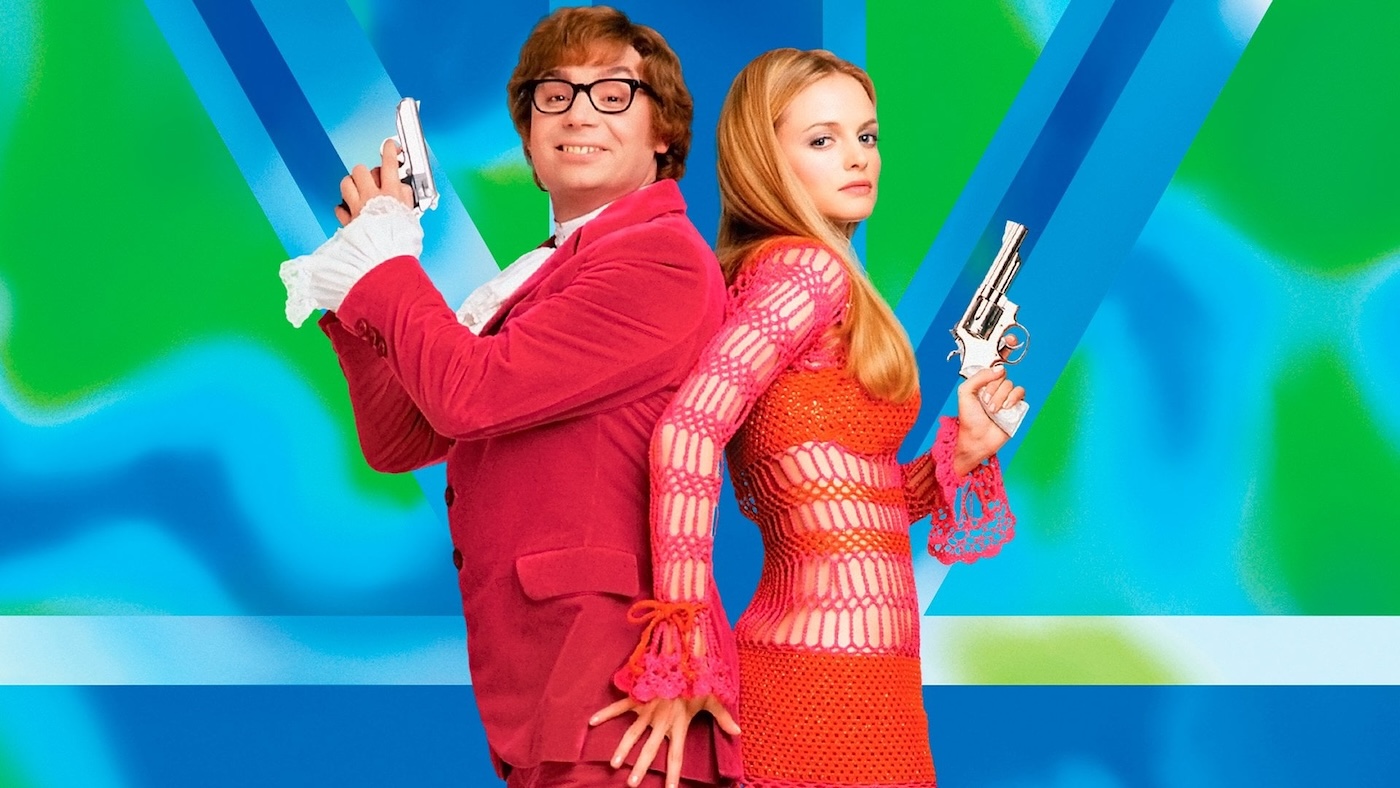
Those prosthetics are what let the film land visually outrageous characters in a way that reads as part of the joke rather than a digital gloss. When the film wants a laugh from a physical transformation, it commits to the work on set.
That practical approach helps the more grotesque bits feel tangible. The film’s characters aren’t just voice and manner: they’re objects you can look at and react to in the moment.
In short, the makeups and prosthetic fabrication are a key, credited ingredient in the movie’s personality — the physical side of the humour that supports the script’s broader silliness.
PURE 80S
Austin Powers: The Spy Who Shagged Me could not belong to any other decade
As a late‑1990s studio sequel, this film exemplifies a particular business logic of the era: take a successful comedy character and expand into a bigger, cameo‑friendly summer release. It’s sequel thinking that favours spectacle and repeatable jokes over restraint.
That commercial impulse also greased the film’s tone. The movie behaves like a character show built for a wide audience: easy hooks, quick returns to familiar beats, and new toys — like Mini‑Me — added to keep the machine well‑oiled.
But it’s not just commerce. The film’s play with 1960s and 1990s culture is precisely the kind of cultural mash‑up late‑90s comedies enjoyed: nostalgia remixed with contemporary snark.
Put simply, the sequel‑as‑event mentality and the culture‑clash premise make this very much a product of 1999, even as it devotes most of its jokes to a different decade’s aesthetics.
THE LEGACY
Why Austin Powers: The Spy Who Shagged Me still matters
Part of the film’s afterlife comes from simply being the middle chapter of a successful comedy trilogy. It follows the original and keeps the engine running, which helped the series stay visible through the early 2000s.
Mini‑Me arrived in this installment and proved durable enough to return in the subsequent sequel, which shows how one new character can reenergise a franchise’s joke palette.
Beyond characters, the movie’s commercial success at the time — a very wide opening and a large worldwide gross — meant it was part of the mainstream comedy conversation for several years after release.
So its legacy is practical: it sustained the franchise, added enduring additions to its roster, and made sure the Austin Powers language kept getting spoken for a while longer.
THE VERDICT
Does Austin Powers: The Spy Who Shagged Me still hold up?
Yes — if what you want is a loud, fast, silly sequel that keeps its sights set on easy, bodily comedy and periodic, gleeful absurdity. The film’s central conceit — Dr. Evil stealing Austin’s mojo — is uncomplicated and every set piece is content to work around that single, oddball problem.
Mini‑Me’s introduction and the escalated doomsday plot give the sequel fresh toys to play with, so it rarely feels like a retread. The time‑travel structure offers neat switches between eras that the film uses purely for comedic effect rather than any deeper drama.
It’s important to be clear about what you’re getting: this is broad parody, a franchise entry determined to keep the laughs rolling rather than subvert them. That makes it a very particular kind of pleasure — not subtle, but often effective at being brazen.
If you’re in the mood for a brisk 95‑minute comedy from 1999 that revels in its own silliness and trusts a handful of recurring character jokes, give it a watch. It’s a noisy, affectionate bit of spoofing that knows its audience and plays directly to them.
Share this movie
// Keep watching
More movies from the 90s
If Austin Powers: The Spy Who Shagged Me is your kind of movie, there's plenty more on the shelves worth rewinding.
1999 // VHS
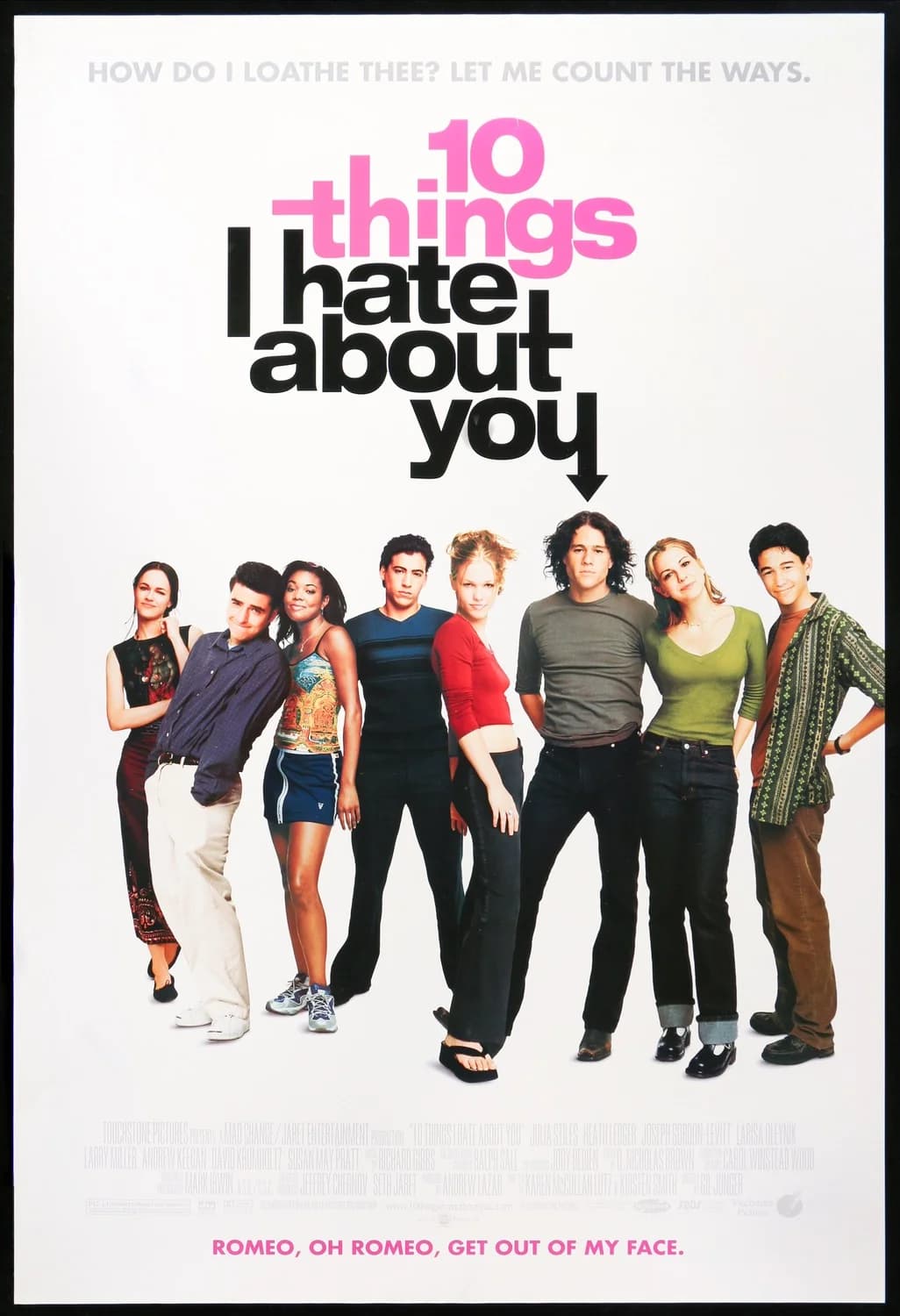
10 Things I Hate About You
Sibling rules, a rooftop serenade and one very stubborn Kat — Shakespeare in a school corridor.
1999 // VHS
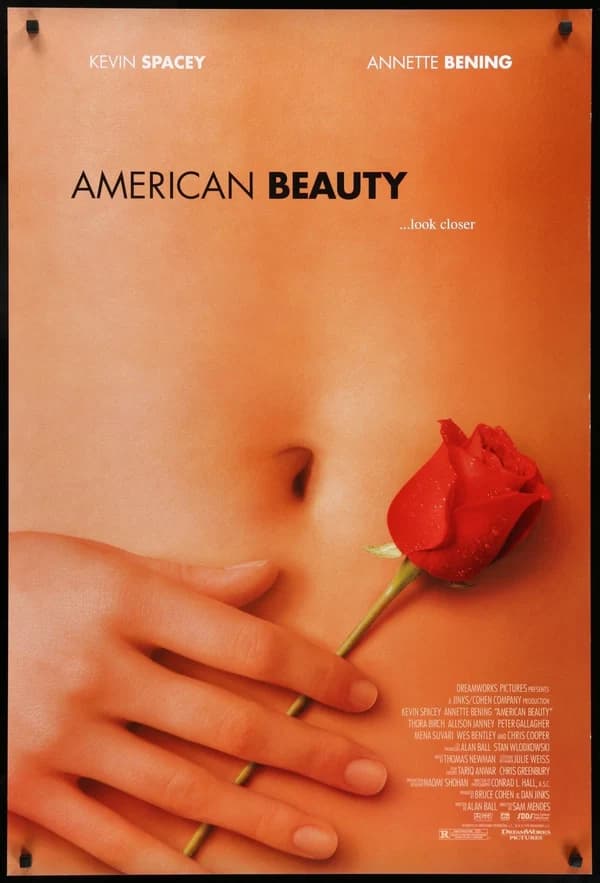
American Beauty
Lester Burnham, suburban rot and a midlife argument that still stings.
1999 // VHS
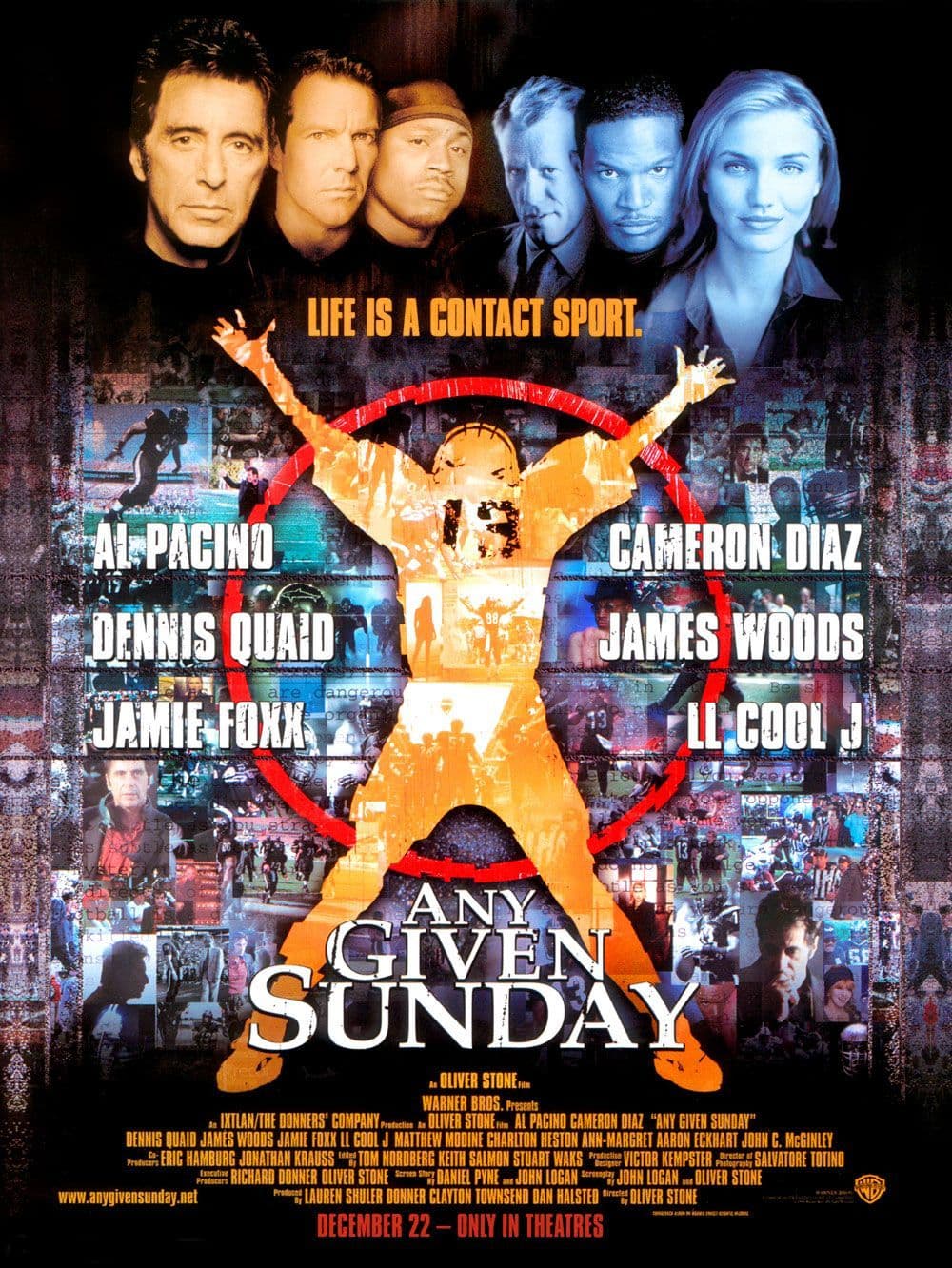
Any Given Sunday
Al Pacino's coach anchors the chaos of a film about football turned into product — loud, messy and oddly persuasive.