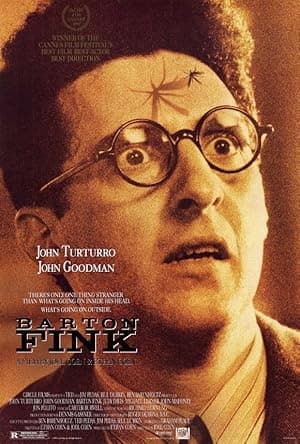
Barton Fink
A playwright who wants to speak for the common man finds himself trapped between ideals and the Hollywood machine.
// The setup
PLAYBACK STARTED
Barton Fink is the film about a writer who believes in words so hard he forgets how to write them. Joel Coen’s 1991 black comedy drops a New York playwright into 1941 Hollywood and watches the collision between literary conviction and studio commerce get very, very strange.
THE MOVIE
Barton Fink is still the reason this movie works
Call it the Barton problem: a young playwright who’s convinced he can speak for the ‘common man’ is hired to turn out a wrestling picture, and promptly discovers that conviction does not come with an instruction manual for screenplays. That collision—moral certainty shoved up against commercial expectation—is where the film lives.
Joel Coen directs a comedy-drama that stages this argument in 1941 Los Angeles, with John Turturro as the man with the manifesto and John Goodman as the neighbour who complicates everything. It’s a film that wants to be funny and unsettled at once, which is why it made such a mark when it stormed Cannes in 1991.
You can watch Barton Fink as a Hollywood satire, a study of creative paralysis, or a darkly comic play about how identity unravels when someone’s principles meet practice. But whatever label you pick, the whole thing hangs on its central character and the choices that force him to confront what he really stands for.
THE SETUP
The idea that sets Barton Fink in motion
At its simplest, the film asks: what happens when a playwright of principle is paid to write something he thinks is beneath him? Barton Fink leaves New York for a Hollywood studio job and is supposed to deliver a lowbrow wrestling screenplay. The premise is compact and cleverly antagonistic—Barton’s ambitions and the studio’s appetite are pointedly out of sync.
That mismatch produces the movie’s motor: Barton cannot write what the studio wants and the studio will not bend to his literary tastes. His paralysis isn’t just a joke about writer’s block; it’s a moral standoff staged as an industry problem.
Crucially, the film makes Barton’s block a social drama rather than a private quirk. His new life in Los Angeles forces him into encounters that test his ideas about art and audience.
One of those encounters is with his next-door neighbour, Charlie Meadows, whose easy manner and offhand stories serve as both a catalyst for Barton’s unraveling and a mirror that reflects darker possibilities back at him.
THE CHARACTER
Why Barton Fink matters
Barton Fink is not just the hero; he’s the engine. He arrives full of principles—an idealistic, self-conscious playwright convinced that his work represents ordinary people—and the film is arranged around the consequences of that belief.
Because Barton insists on art with a capital A, the everyday realities of studio filmmaking quickly look like betrayals to him. That friction is what makes his crisis interesting: it’s not only that he can’t write, it’s that every note of compromise feels like a personal failure.
His difficulties are made sharper by the company he keeps. Neighbours, executives, other writers—each relationship exposes a different way of surviving (or failing) in Hollywood, so Barton’s stubbornness reads less like virtue than a dangerous refusal to adapt.
You remember Barton because he’s an argument you can see. He stands for an idea about art, and the movie keeps testing that idea until it frays into something stranger than the battle between high and low culture.
THE PERFORMANCE
Why John Turturro's performance matters
It’s worth flagging that John Turturro’s work as Barton was recognised at Cannes: he won the Best Actor prize there in 1991. That’s not a festival trinket; it’s a sign that the role carried enough clarity and range to grab attention on a big stage.
Within the film’s architecture, the lead performance is the hinge that lets the satire and the unease live together. The Cannes award is the most direct piece of evidence we have that the central turn was read as a crucial element of the picture.
Put simply: the movie depends on someone convincing us that Barton truly believes his rhetoric. The festival prize tells you the performance supplied that credibility in ways the rest of the film could build on.
Whether you watch for the Coens’ direction or the production design, the story’s pulse runs through the title role—and Cannes’ choice makes it clear that Turturro was the actor carrying that pulse into the room.
UNDER THE SURFACE
Barton Fink has more on its mind than the plot suggests
On the face of it, Barton Fink is a Hollywood satire about an artist at odds with the studio system. But under that skin it’s juggling a handful of allied ideas: the tug-of-war between authorship and commerce, the paralysis that can afflict creators, and questions of identity and self-deception.
The authorship-versus-commerce thread is obvious—Barton’s literary ambitions crash into the assembly-line mechanics of studio filmmaking—but the film doesn’t stop at a simple critique. It shows how insisting on a single truth about art can become a narrowing trap.
Creative paralysis is treated less as romantic suffering and more as a consequence: Barton’s inability to write is the symptom of a wider refusal to compromise or to confront the messy realities of his own position.
And because the story keeps putting faces to ideas—studio executives, fellow writers, that worrying neighbour—the movie refuses tidy allegory. Identity fractures and self-deception play out in human interactions, which is why the themes feel lived-in rather than merely topical.
THE FILMMAKING
How Barton Fink was put together
Part of the film’s particular identity comes from the team behind the camera. Roger Deakins handled cinematography, Carter Burwell the music, Dennis Gassner production design and Roderick Jaynes is credited as editor—names that signal careful, deliberate craft running through the picture.
The production design deserves a special mention: the filmmakers and Dennis Gassner consciously gave the Hotel Earle a faded Art Deco look, using set-dressing choices that made the place feel organically decayed. That choice turns the hotel into more than a location; it becomes a character of sorts.
Those design decisions do practical work for the story: the hotel’s atmosphere keeps Barton's claustrophobia and the film’s sense of rot in the same frame, so the surreal moments and the satire feel anchored rather than arbitrary.
All of this is not gratuitous craftsmanship; it’s the way the Coens and their collaborators turned a shiny period idea into a lived-in stage for a very specific conflict between principle and practice.
PRACTICAL EFFECTS
The effects work that gives Barton Fink its physical personality
Barton Fink leans on tangible, built environments to sell its oddities. Two versions of the corridor outside Barton’s hotel room were constructed, including one specifically made to handle special-effects and stunts at a converted seaplane hangar outside Long Beach.
Large practical sets—Jack Lipnick’s office and Barton’s hotel room among them—were built on Culver City soundstages rather than trying to fake everything on location. Those physical choices let the filmmakers control space in precise ways, which matters for a movie that often corners its characters.
The presence of multiple corridor versions is a neat production trick: it makes sequences that feel claustrophobic and uncanny repeatable, which helps maintain the film’s uneasy rhythm without relying on trickery in the edit.
Taken together, the practical construction of spaces gives the film a tactile personality: its strangeness is staged and repeatable, and that steadies the surreal beats so the satire can land.
PURE 80S
Barton Fink could not belong to any other decade
Though set in 1941, Barton Fink lives very much in the early-1990s conversation about American independent cinema. Premiering at Cannes in May 1991 and taking top prizes there, the film arrived at a moment when American indies were getting noticed internationally.
The Coen brothers wrote the film between other projects—during a break from Miller’s Crossing—and that positioning shows: the film feels like an early-period work that’s both confident and exploratory, a movie trying to settle on a voice and a subject at the same time.
Its preoccupation with self-reflexive industry stories fits the era’s taste for films that looked inward, asking questions about how culture is made and who gets to claim authenticity.
So while the setting is the studio system of the 1940s, the film’s placement in 1991 links it to wider debates and to an audience increasingly curious about movies that comment on moviemaking itself.
THE LEGACY
Why Barton Fink still matters
Part of the film’s afterlife is literal: at Cannes in 1991 Barton Fink pulled off an unusual sweep, winning the Palme d’Or plus direction and acting prizes. That festival moment made sure people had to pay attention.
Back home, the film collected further recognition—Michael Lerner received an Academy Award nomination for Best Supporting Actor, and the picture earned nominations in art direction and costume design. Those honours underline that the film was taken seriously on both sides of the Atlantic.
Scholarly and critical attention has kept the film in conversation as well. Barton Fink is frequently discussed as a pivotal early Coen brothers picture that helped cement their reputation for dark comedy and formal inventiveness, and it marks the start of their working relationship with Roger Deakins.
When you add awards, industry recognition and ongoing criticism together, you get a film whose significance is grounded in clear milestones rather than affectionate forgetfulness.
THE VERDICT
Does Barton Fink still hold up?
Yes—if you’re after a film that stages an argument about art and industry in a way that’s funny, unnerving and carefully made, Barton Fink still delivers. The premise remains sharp: a playwright hired to write a wrestling picture finds his ideas at odds with the studio’s demands, and the story never lets him off the hook.
The movie’s central engine—Barton’s writer’s block and his moral discomfort with commercial material—gives it a focus that keeps the satire from becoming scattershot. At the same time, the relationship with his neighbour Charlie Meadows provides the mirror and the shove that the plot needs.
Practically, the film’s craft choices—from production design to the way sets were constructed—keep the strange moments feeling deliberate rather than accidental. Those choices support the film’s themes about authorship, authenticity and what happens when self-image and reality collide.
So watch it for the argument as much as the atmosphere. Barton Fink remains worth seeing because it doesn’t only tell a tale about Hollywood; it stages what it feels like to be a person who insists on a moral position until the position begins to look like a prison.
Share this movie
// Keep watching
More movies from the 90s
If Barton Fink is your kind of movie, there's plenty more on the shelves worth rewinding.
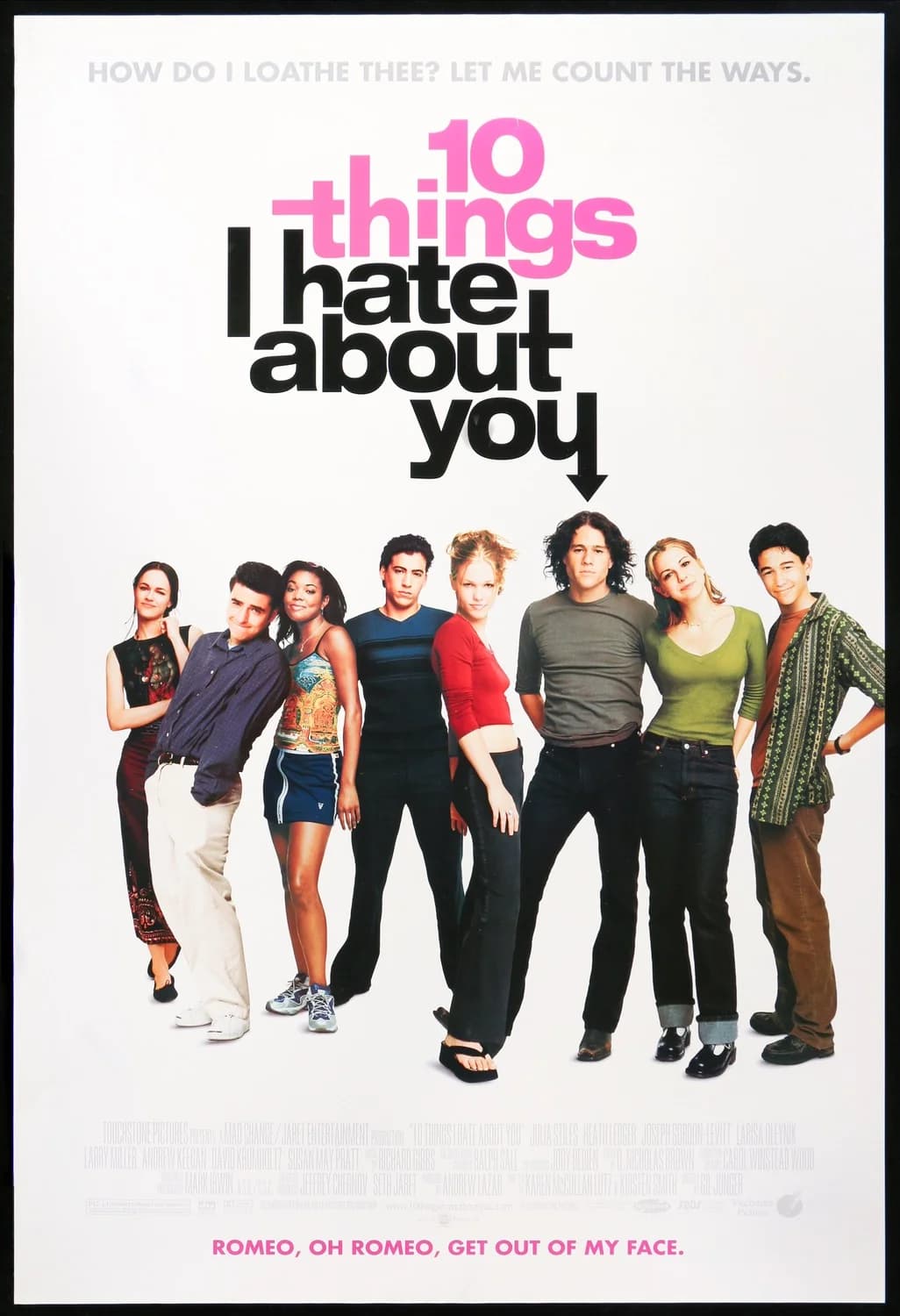
1999 // VHS
10 Things I Hate About You
Sibling rules, a rooftop serenade and one very stubborn Kat — Shakespeare in a school corridor.
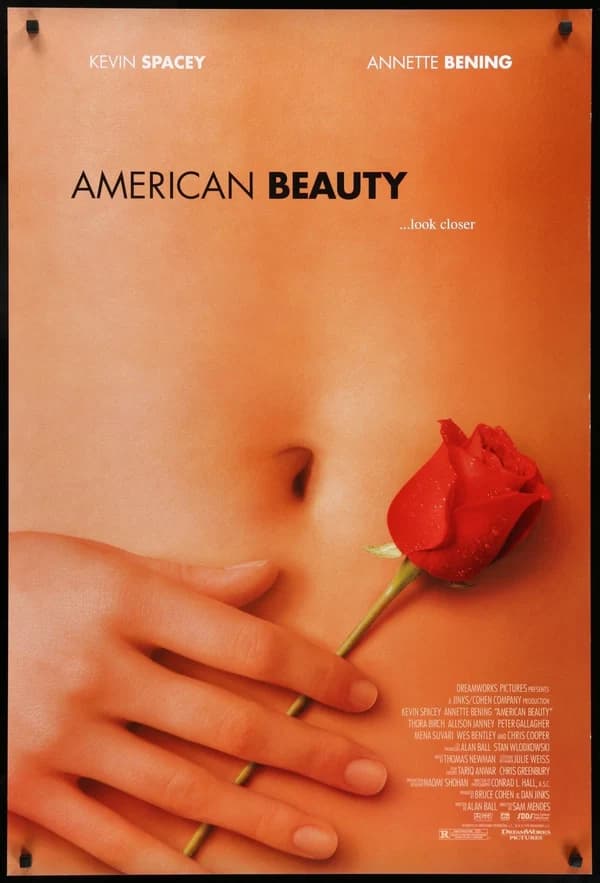
1999 // VHS
American Beauty
Lester Burnham, suburban rot and a midlife argument that still stings.
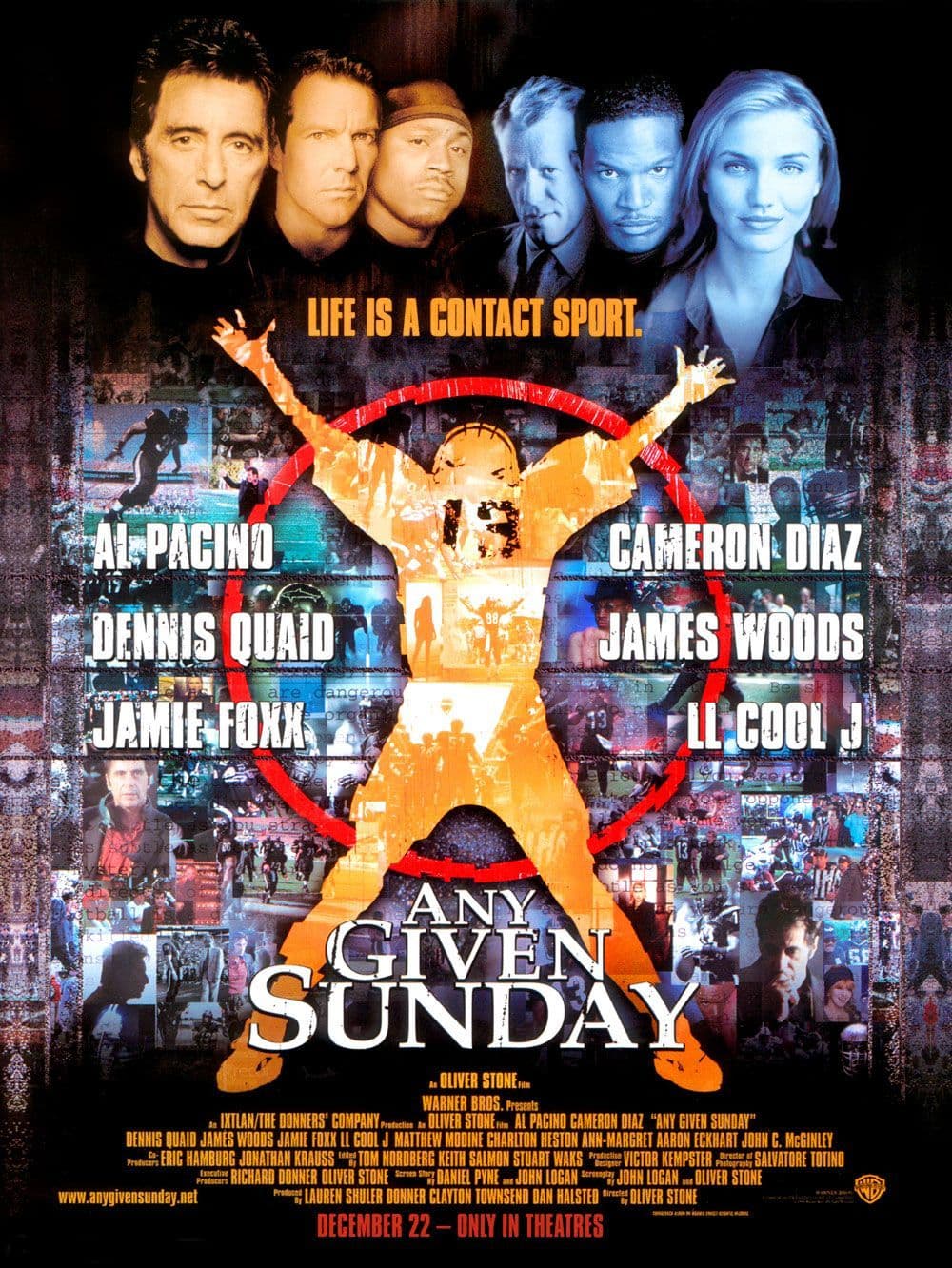
1999 // VHS
Any Given Sunday
Al Pacino's coach anchors the chaos of a film about football turned into product — loud, messy and oddly persuasive.