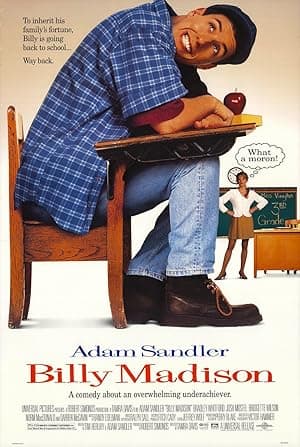
Billy Madison
A man-child in a blazer, twelve grades to go and the very serious business of growing up — poorly.
// The setup
PLAYBACK STARTED
Billy Madison is the kind of film you spot in a blink: a grown man sent back to school as punishment, and comedy that keeps sprinting from one daft idea to the next. Directed by Tamra Davis and led by Adam Sandler, it outfits a simple coming-of-age promise with sketchy set pieces and a stubbornly childish hero. Whether you remember it fondly or wince at parts, it’s hard to forget the conceit: repeat grades one to twelve or lose your inheritance.
THE MOVIE
Billy Madison is still the reason this movie works
Billy Madison is, quite simply, built around its central figure. The plot is a single, gloriously daft instruction: a privileged, chronically immature heir must re-enrol through grades one to twelve to prove he can take the reins of his father’s hotel company.
That setup — a childish adult shoved back into school — turns immaturity into the engine of the film. The threat isn’t an explosion or a lawsuit; it’s Brian Madison withdrawing his favour and considering a corporate replacement, which forces Billy to either grow up or be replaced.
Tamra Davis keeps the pace lean and the runtime tight (90 minutes), and Adam Sandler’s presence as Billy is the film’s lodestar: everything else orbits around his arrested development, the romantic stake with Veronica Vaughn, and a series of schooling set pieces that push the story forward.
THE SETUP
The idea that sets Billy Madison in motion
The film’s premise is straightforward and a little ridiculous: Billy must literally repeat the school years — from kindergarten through high school — to show he’s capable of taking over the family business.
That rule creates a clear external goal. It’s a neat way to make a man-child’s maturation tangible: every grade is a checkpoint, and the threat of being usurped by a corporate rival keeps the pressure real, if comedic.
Structurally, the screenplay treats this as a sequence of set pieces. Each grade becomes an excuse for a school-based comedy vignette or test, which lets the film hop from gag to gag while preserving a forward motion.
There’s also a romantic subplot: Billy’s pursuit of his teacher, Veronica Vaughn, provides a genuine personal stake beyond the inheritance and nudges the movie toward something like real emotional change.
THE CHARACTER
Why Billy Madison matters
Billy isn’t interesting because he’s clever or sympathetic. He matters because he forces the film to invent consequences for childish behaviour. His refusal to act like an adult is the plot’s fuel — and watching the film spend that fuel is the whole point.
Played by Adam Sandler, Billy is deliberately written as an arrested-development heir: his childishness isn’t a quirk, it’s the obstacle the story exists to remove. The personal stakes are practical as well as moral — his father can hand the company to someone else unless Billy proves himself.
Because the movie is organised around grades, the secondary cast mostly rotate as partners or obstacles: teachers, principals and classmates move in and out of scenes to set up the next gag or the next test Billy must face.
That configuration keeps the film focused. It isn’t trying to build a complex inner life for every side character; instead it uses them to reveal how Billy reacts when things don’t go his way — which, given his temperament, is often hilariously chaotic.
THE PERFORMANCE
Why Adam Sandler's performance matters
The industry took notice: Adam Sandler received a nomination for Best Comedic Performance at the 1995 MTV Movie Awards for his work here. That’s a useful, concrete signal that his comic persona connected beyond late-night sketches.
What the nomination points to is less about subtlety and more about presence. Sandler’s Billy anchors the film — the plot’s contrivances only work because an audience can follow and tolerate him as the lead.
One way to look at it: the movie asks you to spend 90 minutes inside Billy’s head. If you accept that arrangement, the film’s gags and structure fall into place around him.
So the question of ‘what Sandler brings’ is also a question of fit. The role is written to demand a particular comic energy, and the nomination shows that this energy registered with viewers at the time.
UNDER THE SURFACE
Billy Madison has more on its mind than the plot suggests
On the surface it’s silly — childish set pieces, daft tests, a man in detention. Under the surface, the film is surprisingly literal about a familiar coming-of-age arc: immaturity-to-responsibility played out through enforced schooling.
That enforced schooling is important because it frames maturity as something that can be learned, practised and tested. Education, in the movie, is not just knowledge; it’s ritualised accountability.
Money complicates the lesson. The inheritance angle reminds us that this is about succession and power: Billy’s growth is also about proving to his father — and to the boardroom — that he’s not merely a rich layabout.
So the film juggles three simple ideas at once: growing up, being responsible, and valuing education — all filtered through the absurdity of a grown man being graded on his behaviour.
THE FILMMAKING
How Billy Madison was put together
The film is assembled with a light, quick touch designed to keep the jokes moving. Editing — credited to John Gilroy and Jeffrey Wolf — shapes the movie’s pace so it can hop between rapid-fire gags and musical transitions without losing momentum.
That brisk editing is essential, because the screenplay itself is episodic: the cuts and transitions have to carry you from one school-based set piece to the next while maintaining a through-line.
Production design also plays a part. The movie uses estate exteriors and institutional school sets to set up a contrast between Billy’s private wealth and the public, democratic space of the classroom.
That contrast strengthens the theme: you see a privileged man dropped into environments that operate by different rules, and the design choices underline how out of place he is — and what he has to learn to belong.
PURE 80S
Billy Madison could not belong to any other decade
Released in February 1995, Billy Madison arrived in the thick of a mid‑90s moment when studios were handing feature vehicles to Saturday Night Live alumni and other sketch comedians.
It’s very much a product of that era: a star vehicle built around a distinctive comic persona and an episodic, sketch-derived structure rather than a conventional, tightly plotted comedy.
The film helped establish the looser, set-piece tone that became a hallmark of several late‑90s studio comedies, marking Adam Sandler as a reliable cinematic personality beyond his late-night roots.
Seen in context, it’s less an anachronism and more a piece of that wave — a clear example of how studios packaged sketch energy into feature-length laughs in the decade.
THE LEGACY
Why Billy Madison still matters
There’s practical evidence that the film mattered at the time: Adam Sandler earned a Best Comedic Performance nomination at the 1995 MTV Movie Awards, a sign his brand of comedy had a visible audience.
Financially, the movie proved viable: it grossed around $26.5 million worldwide on a modest production budget, helping establish Sandler’s commercial potential as a leading comic actor.
Over the years the film has stayed in people’s memories. It’s often brought up in retrospectives as an early specimen of Sandler’s feature‑film persona and has developed a cult following among parts of his audience.
That afterlife is not the same as universal acclaim, but it’s real: the movie is remembered because it was a successful early attempt to turn a late‑night voice into a feature-length amusement ride.
THE VERDICT
Does Billy Madison still hold up?
Yes — but on its own terms. Billy Madison is not trying to be subtle or sophisticated; it’s a 90‑minute comic contraption built around one premise: a privileged man must prove he can grow up by repeating the school years.
If you accept that conceit, the film largely delivers. The grade-by-grade mechanic gives the screenplay an excuse to keep reinventing small stakes and schoolroom set pieces, while a romantic thread with Veronica Vaughn adds a push toward real personal change.
Where it falters is familiar: the episodic, sketch-derived structure means some jokes land better than others, and the movie’s willingness to play broad sometimes trades depth for immediate laughs. Eric Gordon’s corporate threat and Brian Madison’s conditional favour do, however, keep the stakes readable.
So should you watch it today? If you want a compact, mischievous slice of mid‑90s studio comedy — one that shows Adam Sandler moving from SNL sketches into a leading-film voice — it still works. Just don’t look for anything the film never promised: it’s a grown‑up in a school uniform, and that’s the point.
Share this movie
// Keep watching
More movies from the 90s
If Billy Madison is your kind of movie, there's plenty more on the shelves worth rewinding.
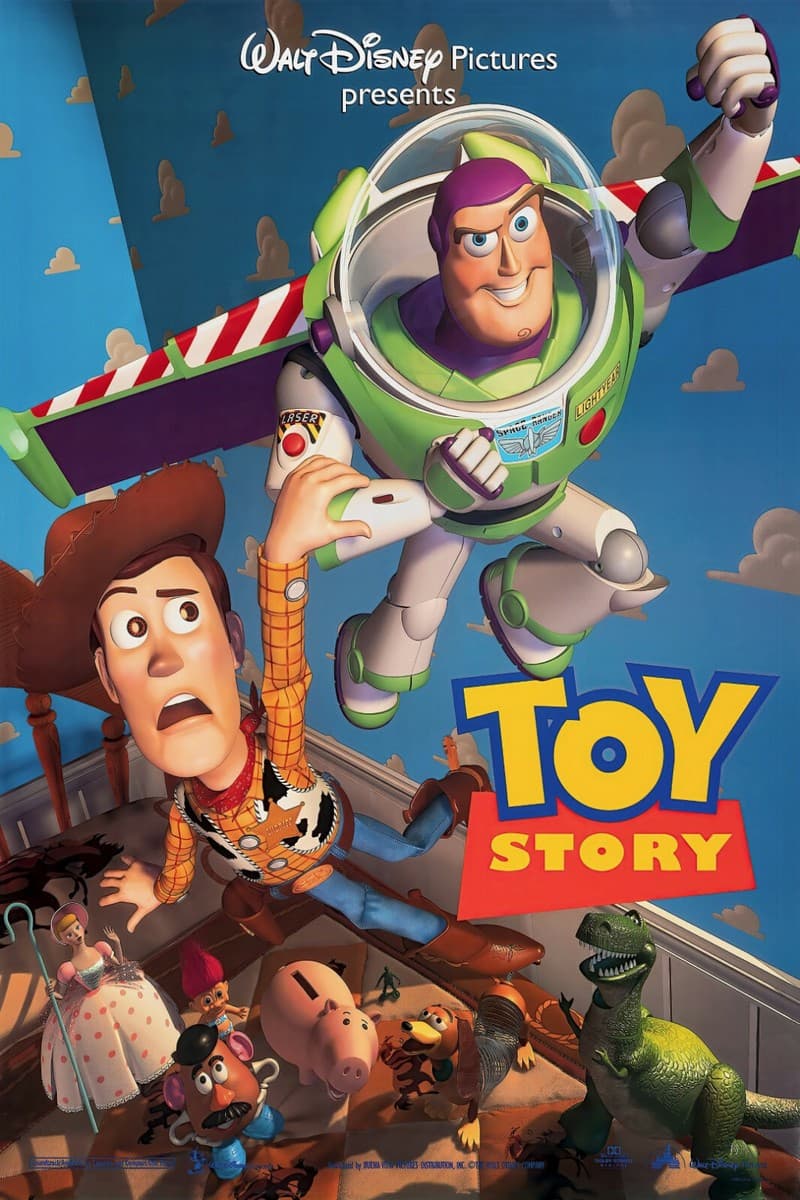
1995 // VHS
Toy Story
A pull‑string cowboy, a deluded space ranger and a small, very particular war over being loved.
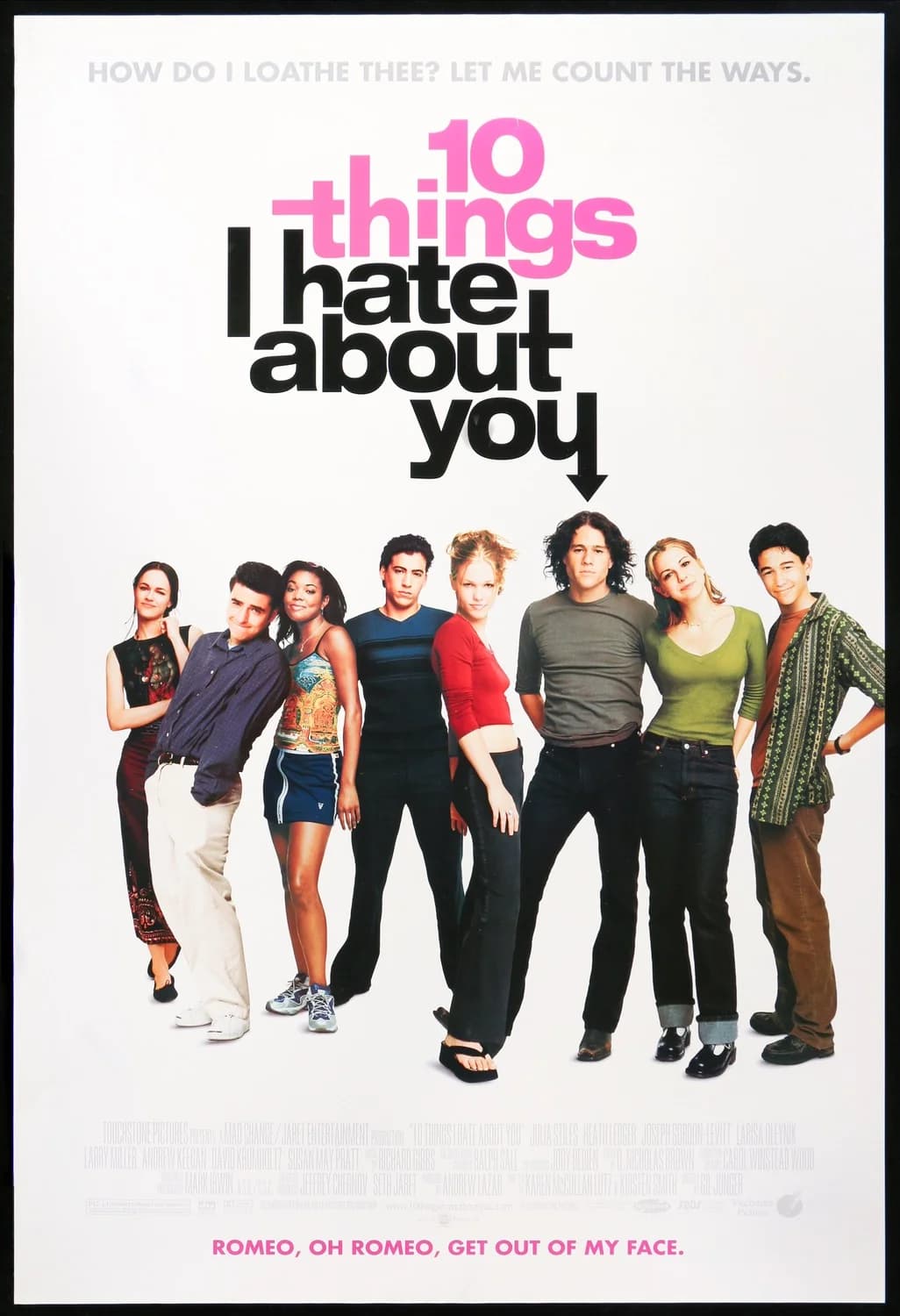
1999 // VHS
10 Things I Hate About You
Sibling rules, a rooftop serenade and one very stubborn Kat — Shakespeare in a school corridor.
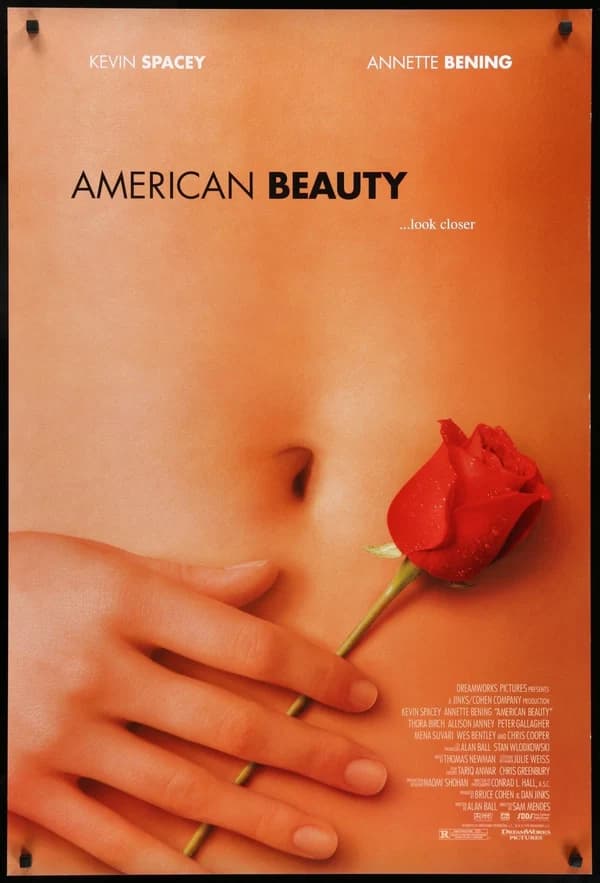
1999 // VHS
American Beauty
Lester Burnham, suburban rot and a midlife argument that still stings.