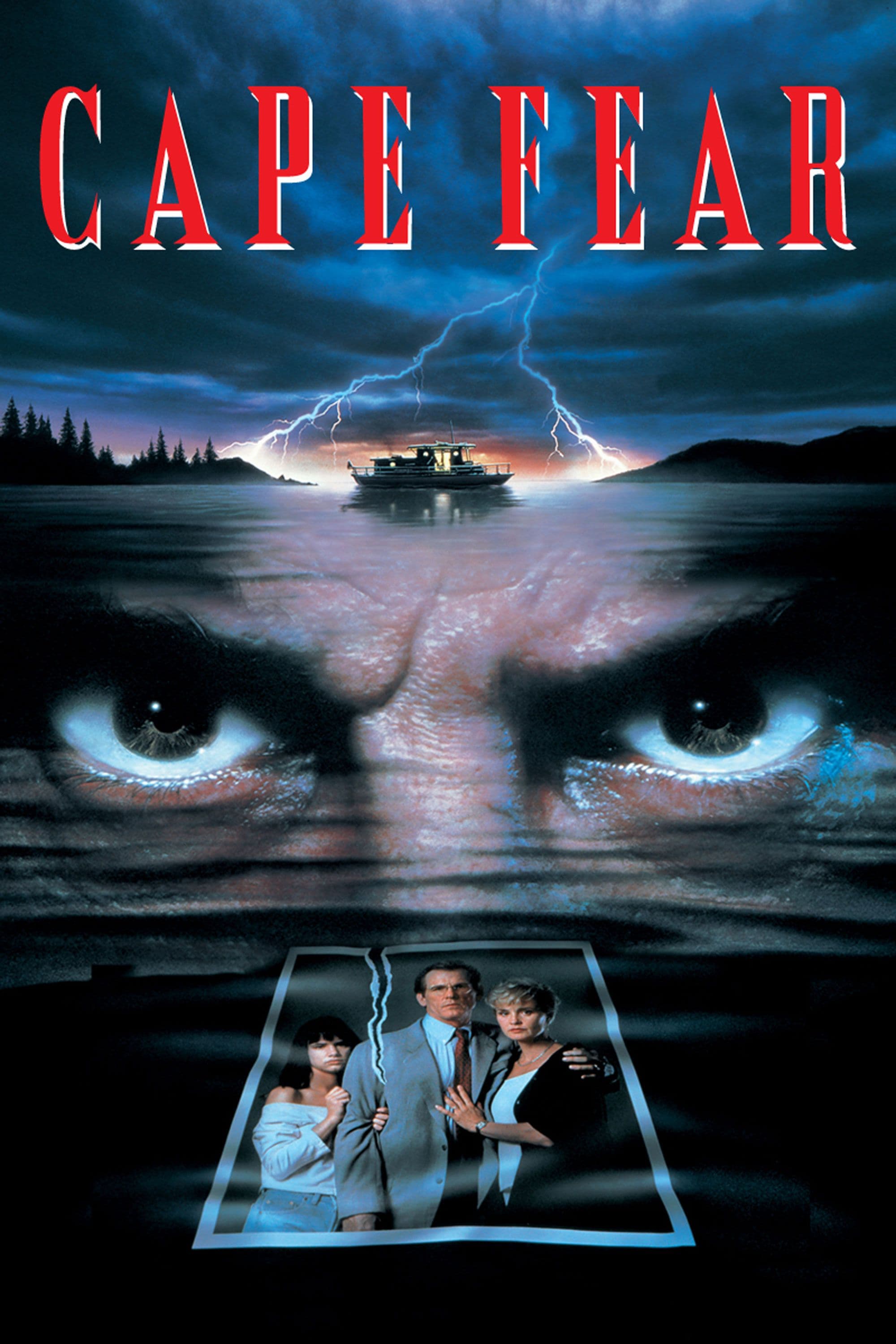
Cape Fear
A small-town family, a returned grudge, and one man determined to make them pay.
// The setup
PLAYBACK STARTED
You don't go back to Cape Fear for cosy thrills. You go back because Max Cady turns up — newly free, nailed with ink and purpose — and the whole film rearranges itself around him. Martin Scorsese's 1991 remake funnels a courtroom story into a family melodrama, and once De Niro's Cady arrives, everything starts to feel dangerously personal.
THE MOVIE
Max Cady is still the reason this movie works
Cape Fear begins with a simple, catastrophic return: after fourteen years inside, Max Cady is released and goes straight back to the town where the lawyer he hates lives. That single move — coming home with a score to settle — is the engine that drives the whole film.
Scorsese signed up to direct this version in 1991 and places Robert De Niro’s Cady at the centre of the machine. The film makes Cady’s grievance physical: his speech and body, including conspicuous tattoos, are constantly doing the work of the story, a walking manifesto of resentment aimed at one family.
Because the film funnels a courtroom tale into a domestic siege, it trades legal wrangling for escalating personal terror. It’s revenge writ intimate: one man’s return, one family’s unpicking, and a director who keeps watching the fallout.
THE SETUP
The idea that sets Cape Fear in motion
The central premise is direct: Max Cady, newly free after a long stretch inside, returns to the community of the lawyer he blames and starts to pick at the Bowden family. The inciting image is his release and immediate return to find Sam Bowden — that act instantly turns private history into present danger.
From there the film stages a conflict between Cady’s escalating harassment and Sam Bowden’s desperate attempts to keep his wife and teenage daughter safe. The tension is built around repeated confrontations: conversations, invasions, cold threats that steadily push the family apart.
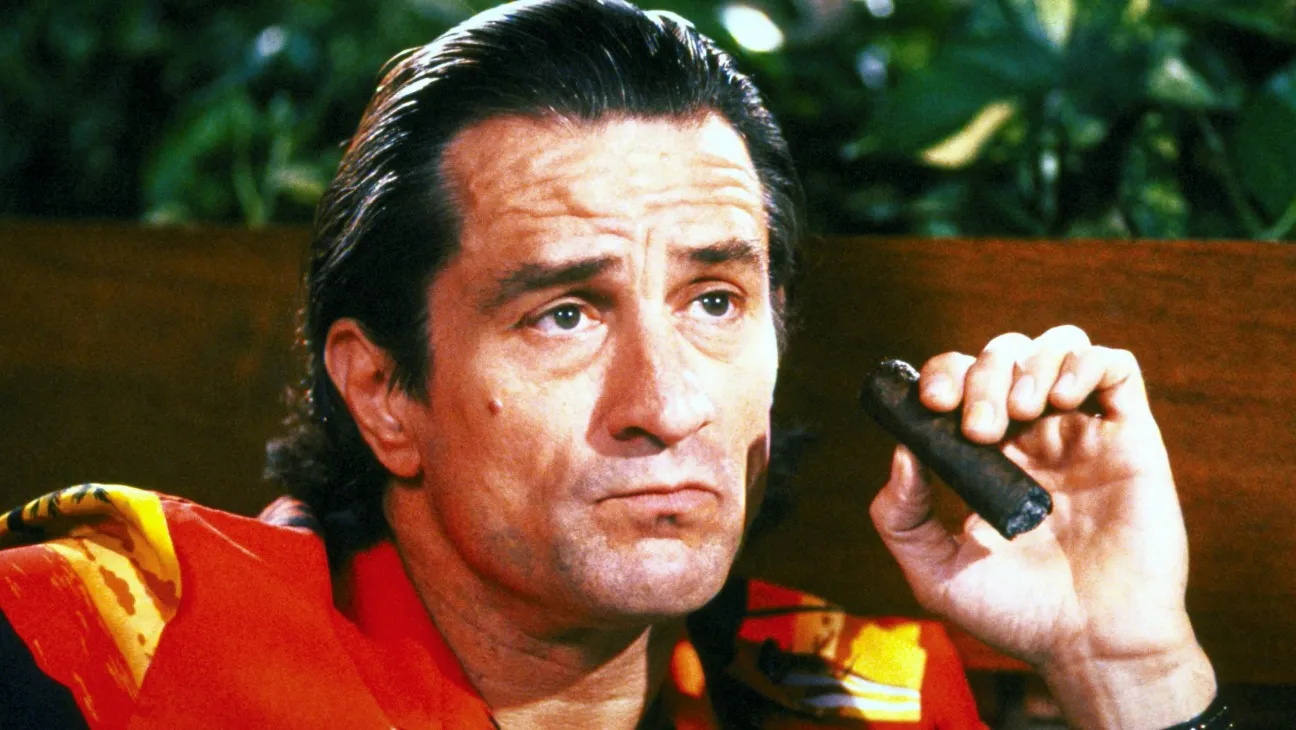
Where earlier versions leaned into courtroom mechanics, the 1991 film reframes things as a family melodrama. The legal decision that ruined Cady becomes the trigger, but the movie’s drama lives in how the Bowdens cope — and fail — under pressure.
A crucial storytelling choice is the film’s viewpoint: Danielle Bowden’s changing world supplies much of the narrative’s emotional tracking. Her flirtations and growing isolation are used to raise what’s at stake for the family, and to make Cady’s threat feel not abstract but immediate.
THE CHARACTER
Why Max Cady matters
Robert De Niro plays Max Cady, a returned convict whose entire narrative momentum is revenge. That concentration of purpose gives the film a clear, immovable antagonist: Cady is not a wandering menace, he’s a directed force aimed at one man and one family.
The movie uses Cady’s body and voice as storytelling tools. His speech and the extensive tattoos on his skin are there to make his grievance visible: where other villains hide motives, Cady wears his on him, which keeps the threat tactile and constant.
Cady’s presence also functions as a domestic corrosive. He doesn’t only threaten Sam Bowden; he deliberately unsettles the Bowden household, exploiting tensions and exposing private vulnerabilities that won’t be fixed by courtroom talk.
Finally, Cady’s attention to Danielle is crucial: the film positions her loss of innocence as a primary thread, and Cady’s manipulations are what turn a legal wrong into a personal, sexualised danger for the family unit.
THE PERFORMANCE
Why Robert De Niro's performance matters
Evidence for the part’s impact is straightforward: Robert De Niro earned an Academy Award nomination for his portrayal of Max Cady. That nomination is a concrete sign the role registered beyond the film itself.
The nomination sits alongside Juliette Lewis’s nod, underlining that the film’s central dynamics — Cady’s pressure and Danielle’s fragility — were recognised by the awards body as performances of note.
You don’t need to over-interpret the trophy shelf to accept the practical point: the movie was constructed around characters whose portrayals carried weight with contemporaries, and Cady’s role is the one the film continually returns to.
In short, the performance is part of the film’s structural claim: Cady isn’t decoration, and the awards attention reflects that the part mattered to audiences and industry alike.
UNDER THE SURFACE
Cape Fear has more on its mind than the plot suggests
On the surface it’s revenge: a man returns to make another pay. But the film’s obsession with retribution bleeds into a larger interest in social and moral rot. The setting and texture give it a Southern Gothic air — the kind of small-town feel where grudges linger and decay shows through polite façades.
The movie keeps returning to loss of innocence. That’s most obvious in Danielle’s storyline: her flirtations and isolation are not incidental, they’re how the film tracks a young life being pulled apart by adult sins.
Family disintegration is the emotional currency here. The Bowden marriage, with its private vulnerabilities, offers fertile ground for Cady’s campaign; what begins as a professional ethical lapse becomes an instrument for domestic destruction.
There’s a legal dimension too: the root of Cady’s vendetta is a buried piece of evidence and a lawyer’s earlier choice. So the film pairs personal vengeance with a quieter critique of moral compromise — how an apparently closed case can explode into ongoing harm.
THE FILMMAKING
How Cape Fear was put together
This was a Scorsese project built from a credited lineage: the 1991 picture names the 1962 screenplay and John D. MacDonald’s novel as source material, and Scorsese’s stewardship reframes that material for a contemporary, director-led mainstream audience.
Behind the camera the credits underline a deliberate craftsmanship. Freddie Francis is listed as director of photography, Thelma Schoonmaker as editor and Henry Bumstead as production designer — a line-up that signals an experienced creative team shaping the film’s look, rhythm and physical world.
Those names matter because they anchor the movie’s identity: Scorsese didn’t simply attach his name to a remake, he worked with a particular group of craftspeople to rework the original material into something that bears his stamp.
Put simply: the filmmaking is a collaborative statement — an attempt to turn a courtroom thriller into a bigger, more cinematic domestic nightmare.
PRACTICAL EFFECTS
The effects work that gives Cape Fear its physical personality
When the story needs danger to feel physically present, the production built real things to deliver it: a soundstage water tank and two full-size houseboat mock-ups were constructed specifically for the climactic sequences.
Those climactic pieces were supported by miniature and special optical effects for certain shots, with specialist teams credited on the production — a mixed approach that kept the scenes tactile while extending scale where necessary.
On a more intimate level, Max Cady’s tattoos were not improvised. Makeup and applied tattoos were produced in consultation with a jailhouse-tattoo specialist, and individual application sessions took roughly an hour and a half.
All of this is to say the film leans on physical craft: when a story revolves around harassment and confrontation, you need real, touchable props and effects to make the danger convincing.
PURE 80S
Cape Fear could not belong to any other decade
Released in 1991, this Cape Fear arrives at a particular industry moment: it’s an early-90s, high-profile remake produced through Spielberg’s Amblin Entertainment in partnership with Universal.
That production DNA matters because it represents a time when studios were willing to finance prestige remakes and to back director-driven mainstream fare — a blend of studio muscle and auteur name that was especially prominent in that period.
So the film is of its moment in the sense that it sits where commercial ambition met established cinematic pedigree: a mainstream vehicle that still wanted to be a film of serious craft.
It’s not nostalgia for nostalgia’s sake; it’s a product of a specific industry instinct — remaking a respected suspense story with a contemporary director and a big studio behind it.
WATCHING IT NOW
What has aged — and what hasn't
The film’s core dynamics still read clearly: the plot’s hinge — Cady’s release and return — remains a crisply dangerous promise, and Scorsese’s involvement keeps the film feeling like an auteur project rather than a routine studio thriller.
Where the picture holds up best is in the domestic material. The story of family disintegration — the marriage tensions, the daughter’s drifting — still supplies emotional weight that modern viewers can recognise without needing period context.
The fact that this is an explicit remake of the 1962 film is also part of how we watch it now. The remake is playing a two-handed game: it borrows the original’s bones but reshapes them around a late-20th-century appetite for genre transformed into family melodrama.
In short, the movie’s structural choices — refocusing courtroom drama into intimate terror — give it elements that age as narrative strengths rather than as quaint period trappings.
THE LEGACY
Why Cape Fear still matters
Part of the film’s afterlife is simply its stance: a credited, deliberate remake that keeps a visible tether to the 1962 original while recasting the story around a family under siege. That lineage is baked into how people talk about the movie.
The film also registered at awards time: both Robert De Niro and Juliette Lewis received Academy Award nominations for their work, which formalises the sense that the performances were seen as central to the film’s impact.
On a stylistic level, the remake’s opening titles by Saul Bass and the conscious reuse and reworking of Bernard Herrmann’s earlier score (adapted by Elmer Bernstein) are commonly noted as clear homages to the original — deliberate choices that shape the remake’s identity.
All of which means the movie remains a reference point for discussions about how to remake a classic: it’s a conversation piece rather than a simple replacement.
THE VERDICT
Does Cape Fear still hold up?
Yes — but with a rider. If you want a tightly focused portrait of revenge that deliberately leaves the courtroom behind and turns danger into a domestic problem, Cape Fear still does that job. The inciting fact is elemental: Cady’s release and immediate return to confront Sam Bowden sets an inevitability in motion that the film follows through with clarity.
Much of the film’s continued push comes from repeated set pieces — confrontations, Danielle’s estrangement, the houseboat sequences — that structure suspense around personal encounters rather than legal resolution. That keeps the stakes intimate and the tension steady.
On the thematic side the movie still hits useful notes: the loss of innocence, family disintegration and questions about legal guilt are all handled as lived problems rather than abstract ideas. Scorsese’s direction and the decision to centre the narrative on those domestic blows give the remake its particular identity.
If you’re watching now, go for the central collision: Max Cady’s focused vengeance, Sam Bowden’s scrambling protection, and a film that prefers to make its audience uncomfortable inside a family home. It’s not a polished moral lecture; it’s a sustained experiment in what happens when a past wrong comes back and refuses to be settled.
Share this movie
// Keep watching
More movies from the 90s
If Cape Fear is your kind of movie, there's plenty more on the shelves worth rewinding.
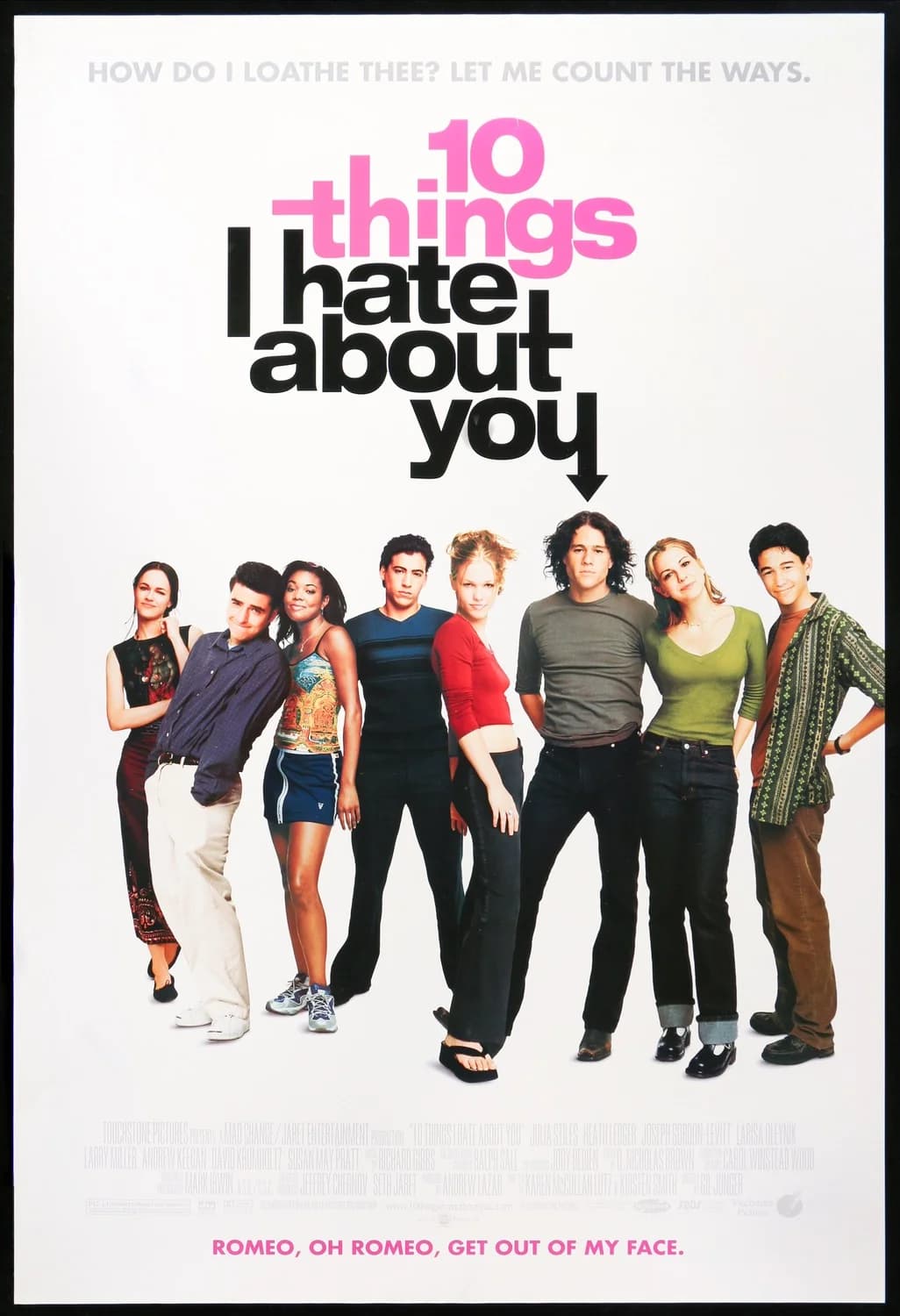
1999 // VHS
10 Things I Hate About You
Sibling rules, a rooftop serenade and one very stubborn Kat — Shakespeare in a school corridor.
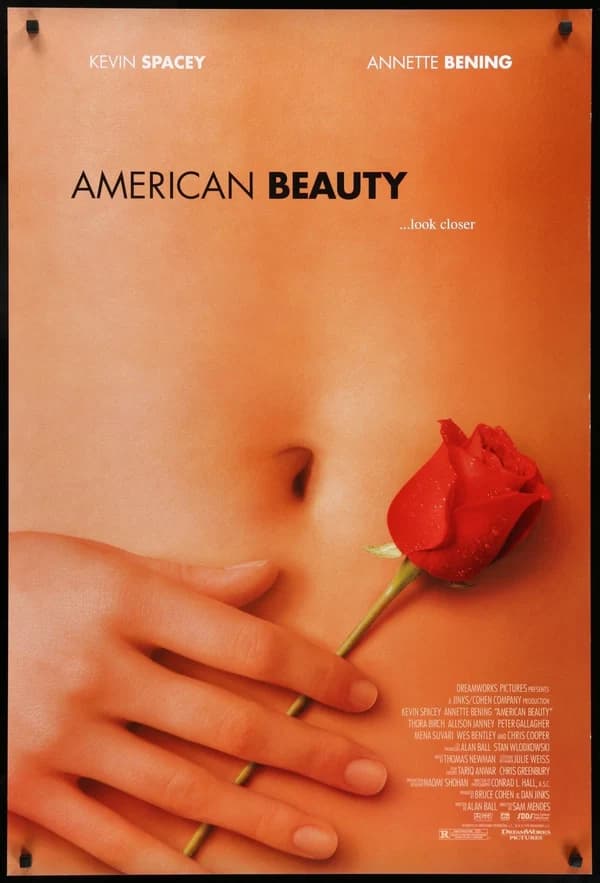
1999 // VHS
American Beauty
Lester Burnham, suburban rot and a midlife argument that still stings.

1999 // VHS
Any Given Sunday
Al Pacino's coach anchors the chaos of a film about football turned into product — loud, messy and oddly persuasive.