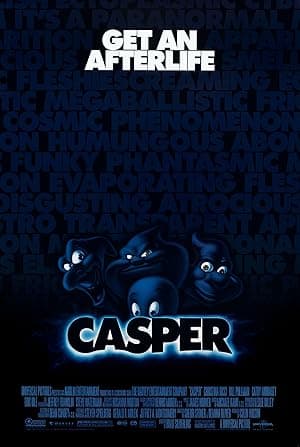
Casper
A polite little ghost, a grieving girl and a 1990s effects trick that still feels like movie-magic.
// The setup
PLAYBACK STARTED
Casper works because it trusts one small, obvious idea: a young ghost who only wants a friend. That simple truth — played out between Whipstaff Manor’s living and its departed — gives the film a warmth that keeps it from being just another effects showcase. Directed by Brad Silberling and fronted vocally by Malachi Pearson, it’s a family picture that remembers how to be tender without getting mawkish.
THE MOVIE
Casper McFadden (voice) is still the reason this movie works
There’s an astonishingly simple engine driving Casper: a friendly ghost in an empty house who, bafflingly to other people, wants a living friend. It’s not a high-concept twist — it’s literally the film’s heartbeat, and everything else orbits that small, stubborn wish.
That wish lands because the living world the movie brings into the house isn’t superficial. Kat Harvey is 13, grieving her mother, and the arrival of Dr James Harvey and his attempts to clear the house puts her in the path of someone who understands loneliness in a very different way. The friendship that grows between Kat and the ghost matters because both are searching for belonging.
The film is a mid-90s family piece from Brad Silberling, built around recognizable voices: Malachi Pearson supplies the voice of Casper McFadden and the movie leans on that performance to make the ghost feel like a person you’d want to befriend.
THE SETUP
The idea that sets Casper in motion
Casper’s plot is helpfully compact: a friendly young ghost haunts Whipstaff Manor and wants a living friend. That want is the movie’s north star — it’s why Casper keeps trying, and why the living characters keep bumping up against him.
The immediate engine of conflict is practical and straightforward. Carrigan Crittenden inherits Whipstaff, believes a treasure is hidden there and hires Dr James Harvey to remove the house’s spirits. Harvey moves in with his teenage daughter Kat to do the job, which places the living squarely inside Casper’s territory.
There’s emotional ballast too: the screenplay gives Casper a human backstory — he was a 12-year-old boy, Casper McFadden, who died of pneumonia — and that history informs several of the film’s quieter moments. It turns what could have been a gag into something that feels a bit tender.
Mechanically, much of what happens depends on the friction between the Ghostly Trio’s attempts to intimidate the living, the Harveys’ efforts to communicate with spirits, and the fundamental mismatch between Casper’s wish for friendship and most people’s instinctual fear of ghosts. The set-up keeps the stakes clear while leaving space for those gentler beats to land.
THE CHARACTER
Why Casper McFadden (voice) matters
Casper is not a spooky force of nature. He’s a small, unmistakable personality with a simple motivation: loneliness. The movie makes that obvious and refuses to apologise for it, which is why the voice matters more than any trick the effects team tries.
Malachi Pearson provides the voice for Casper McFadden, and everything the film asks us to feel about the character — that he’s earnest, vulnerable and oddly hopeful — travels through that vocal presence. You’re asked to accept a ghost as a companion, and the voice is where that acceptance begins.
Casper’s desire for a living friend sits against the Ghostly Trio’s nastier brand of mischief — they’re motivated by keeping control of their home and scaring intruders off. That contrast keeps Casper from being an abstract conscience; he’s a kid among bigger, goofier forces.
This is a family film that doesn’t try to overcomplicate its lead. Giving Casper a clear, human backstory and a voice that can carry the film keeps the character grounded inside the fantasy.
THE PERFORMANCE
Why Malachi Pearson's performance matters
We don’t have to guess whether the voice casting worked — Malachi Pearson won a Young Artist Award for his voice work as Casper. That’s a tidy, factual shorthand for the film’s success at making the character feel like a real presence rather than just an effects demo.
Putting a vocal actor at the emotional centre matters here because the ghost on screen is a computer-generated figure. The voice is what bridges the gap between the CGI image and a person you care about.
In a family film, clarity of intent is everything. The credited voice allows the film to ask young viewers to empathise with a non-threatening, very human character, and the award recognition suggests that the choice paid off.
So if Casper still works for you, a big part of why is that the movie trusted its voice to do emotional work that the rest of the production then supported.
UNDER THE SURFACE
Casper has more on its mind than the plot suggests
On the surface, Casper is a family-friendly haunted-house yarn. Underneath, it’s clinging to a handful of simple ideas: friendship between unlikely figures, grief and questions about what comes after death. The film keeps returning to these notes so the lighter beats never feel empty.
Friendship is the obvious theme — a living girl and a ghost becoming companions is the film’s structural plea for empathy. But that’s wrapped around grief and loss; Kat is a teenager who has lost her mother, and that vulnerability makes her willing to accept an unconventional friend.
Death and the afterlife appear not as metaphysical puzzles but as the emotional terrain the story wants to explore. Giving Casper a human backstory — a boy who died young — makes those moments feel honest rather than exploitative.
There’s also a practical, plot-level theme in play: greed and inheritance. Carrigan’s belief that treasure sits in Whipstaff Manor is the motive that forces the living and the dead together, which is a neat way of tying family conflict to wider human foibles.
PRACTICAL EFFECTS
The effects work that gives Casper its physical personality
Casper’s ghostly presence was built on a serious visual-effects effort: Industrial Light & Magic supplied the film’s computer-generated ghosts, and Casper is widely noted as the first feature to put a fully CG character in a lead role. That technical ambition is part of why the film felt like a proper movie event on release.
ILM didn’t just point a mouse at a model and click ‘render’. Their work used traditional maquettes alongside digital modelling as part of the pipeline — the film mixed old-school and new-school craft to make the character sit with real actors.
Not every sequence was quick. The team spent many months on at least one complicated set-piece — a roughly 90-second scene between Casper and Christina Ricci — which shows how much effort was poured into making those human-to-ghost moments read emotionally.
There’s also a small, tactile effect moment: the Crypt Keeper cameo used puppetry, performed by Brock Winkless, which is a reminder the film leaned on a variety of technique rather than a single trick.
PURE 80S
Casper could not belong to any other decade
Casper sits very firmly in the mid-1990s moment when studios were pushing the live-action/CGI marriage forward after Jurassic Park. Putting a fully CGI lead character into a family film was a clear statement of intent: this was the sort of mainstream, effects-driven studio project that only made sense in that technological moment.
It’s also a product of 90s family‑fantasy thinking: studios adapting established children’s properties into theatrical spectacles, complete with merchandising-friendly characters and cross-platform plans. Casper’s production sits in that trend — a safe, big-studio take on a familiar comic character with enough effects to look like a proper cinematic outing.
WATCHING IT NOW
What has aged — and what hasn't
A lot of Casper’s staying power comes from its durable, family-friendly core: the themes of friendship and the father–daughter bond still read cleanly today. Those human relationships are the glue that holds the film together if the effects ever feel a little dated.
The emotional throughline — a lonely ghost wanting a friend, and a grieving girl open enough to accept him — is still simple and effective. That sort of clarity is exactly what family audiences want, and it doesn’t go out of fashion.
Technically, the film’s place in the live-action/CGI lineage matters to historians of effects: Industrial Light & Magic’s work on a fully CG lead remains a talking point, and the film still prompts interest for that reason alone.
Finally, the screenplay’s roots in the Harvey Comics character give it a certain quaintness that modern viewers may find either comforting or old-fashioned. Either way, the basic story still functions: Casper’s wish is easy to understand, which makes the emotional beats work.
THE LEGACY
Why Casper still matters
Casper earned a substantial worldwide box office and led to more Casper media: two direct-to-video prequels and an animated spin-off. That longevity in the franchise catalogue is part of why the film remains visible to families and collectors.
For director Brad Silberling it was a career moment that helped move him forward; the film’s commercial profile and studio backing made it a visible calling-card in the mid-90s landscape.
The movie’s afterlife is practical as much as cultural: home-video reissues across formats and a later 4K remaster show it’s been kept in circulation, which is how new generations keep discovering — or rediscovering — the story.
THE VERDICT
Does Casper still hold up?
Yes — if you come for the small, honest idea at its heart. Casper is a movie about a ghost who wants a friend, about a grieving girl who is open to the unusual, and about the way family and greed collide under one roof. Those are story promises the film keeps in a way that still reads as genuine.
A big part of the film’s effectiveness rests on the decision to give Casper a clear human backstory and a credited voice — Malachi Pearson’s role and the Young Artist Award he won underline that the vocal performance was central to the film’s emotional life. Christina Ricci’s recognised contribution also speaks to the film’s investment in its young characters.
Technically the film is a mid-90s document — it was a studio-sized family fantasy built to blend people and CG — and that context explains a lot of its choices. If that particular blend appeals to you, the movie still works as a warm, slightly old-fashioned family picture running just over 90 minutes.
So should you watch it? If you want a sentimental touch without mawkishness, an earnest central friendship and a bit of effects-era curiosity, Casper still delivers. It’s not perfect, but it’s honest about what it is: a polite ghost looking for company — and that’s a neat thing to watch again.
Share this movie
// Keep watching
More movies from the 90s
If Casper is your kind of movie, there's plenty more on the shelves worth rewinding.
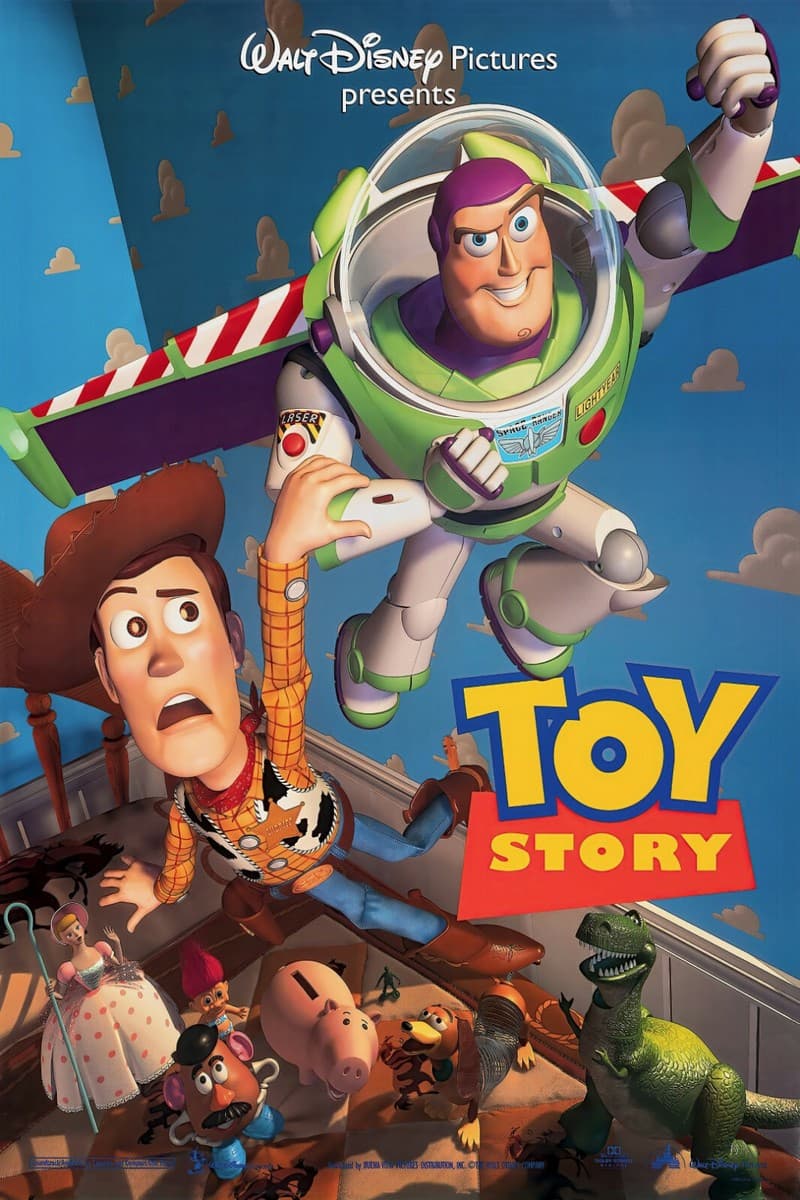
1995 // VHS
Toy Story
A pull‑string cowboy, a deluded space ranger and a small, very particular war over being loved.
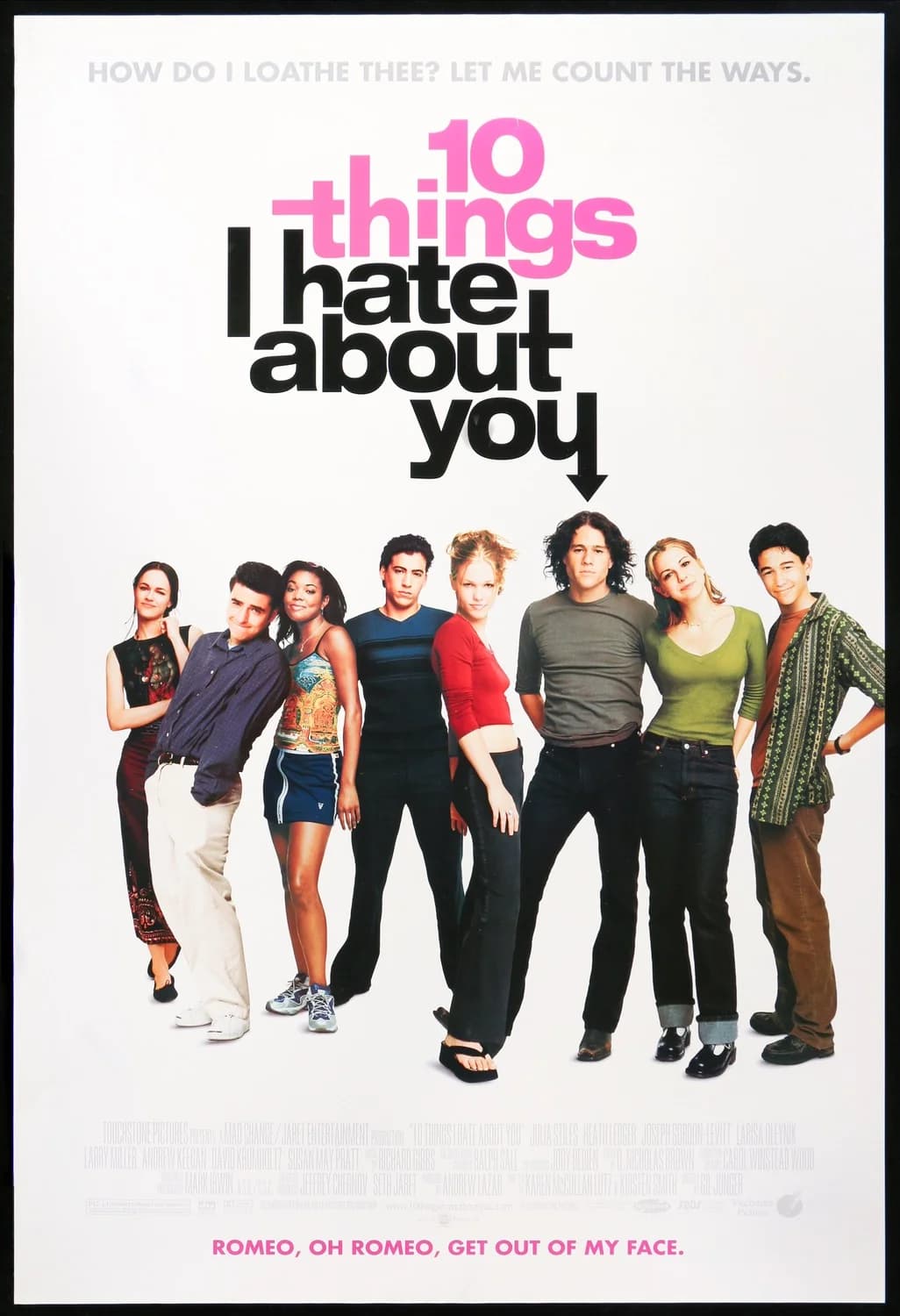
1999 // VHS
10 Things I Hate About You
Sibling rules, a rooftop serenade and one very stubborn Kat — Shakespeare in a school corridor.
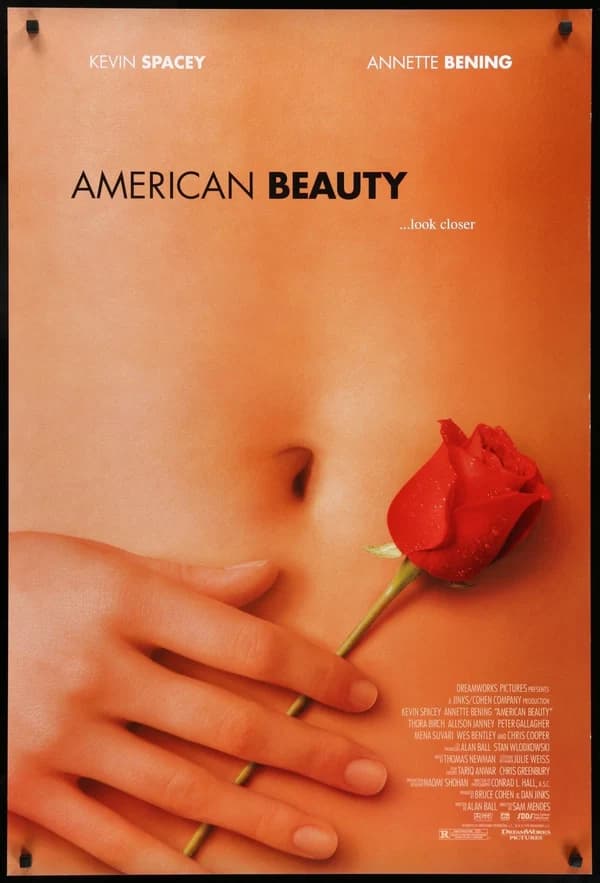
1999 // VHS
American Beauty
Lester Burnham, suburban rot and a midlife argument that still stings.