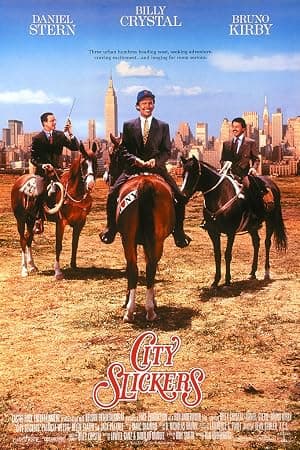
City Slickers
Midlife, mates and a grizzled trailman: why City Slickers still hits where it counts.
// The setup
PLAYBACK STARTED
City Slickers is a movie you remember as a laugh-a-minute buddy romp — until you notice it’s quietly about getting your life back together. Thirty-ish? Fortysomething? Doesn’t matter. Ron Underwood’s cattle-drive comedy lands because it centres on a single, recognisably flustered man trying to find meaning in the middle of his life: Mitch Robbins.
THE MOVIE
Mitch Robbins is still the reason this movie works
City Slickers never hides what it is: three city men on a two-week cattle-drive holiday. That simple, slightly absurd hook — office blokes signed up for a cowboy experience — gives the film both its comedy and its pressure-cooker setup.
What lifts it above a gag-and-grope premise is Mitch Robbins. He’s introduced as a likeable, middle-aged radio-ads salesman who’s quietly unhappy; the film frames his approaching fortieth as the reason he bolts for the trail in search of something that feels like purpose again.
Directed by Ron Underwood and clocking in at roughly ninety minutes plus a little spare, City Slickers rides the terrain between buddy comedy and earnest self-examination. It’s that balance — jokes with a serious undertow — that still gets people talking.
THE SETUP
The idea that sets City Slickers in motion
At its most basic the film is a neat, portable premise: Mitch and his two long‑time friends sign up for a packaged cattle-drive intended for city visitors. That premise immediately does two jobs — it puts these blokes somewhere they don’t belong, and it gives the story a built‑in clock and itinerary.
From there the movie unfolds as a series of trail set-pieces. River crossings, animal sequences and campfire conversations punctuate each day on the trek and let the story swap between broad comic business and quieter, more revealing moments.
Those episodic beats are clever because they force small reckonings: cramped tents and long rides leave little room to hide, and the physical challenges nudge each man toward a conversation he’s been avoiding.
So the setup works because the cattle drive is both entertainment and structure — sight gags and rough terrain, yes, but also a believable way to make friends confront themselves.
THE CHARACTER
Why Mitch Robbins matters
Mitch is the film’s emotional compass. He isn’t a cartoon midlife cliché; he’s presented as a decent bloke whose life has slipped into routine and quiet dissatisfaction, which is why the cattle drive looks attractive in the first place.
That restlessness is important because it makes Mitch relatable. He’s the sort of character who could be anyone’s colleague, friend or neighbour — amiable in public, unsettled in private — and that ordinary-ness lets the film’s bigger ideas register without needing melodrama.
Mitch also exists inside a male friendship that’s deliberately familiar. The trip isn’t a solo pilgrimage; it’s a shared attempt to shake loose something the three of them have lost or mislaid. That communal quality keeps the story from drifting into simple self-help territory.
Finally, Mitch’s centrality was obvious enough that he returned in a sequel, which underlines how the character anchors the series’ narrative world.
THE PERFORMANCE
Why Jack Palance's performance matters
One reliable contemporary reaction was that the cast — and especially Jack Palance as Curly — gave the film much of its bite and ballast. Critics singled out Palance and the three leads as a main strength, and that response is worth noting because tone is everything in this picture.
Curly’s presence functions as more than a collection of lines; he’s the sort of figure whose arrival changes how the other characters behave and what the movie lets itself do. The fact that reviewers highlighted him suggests he supplied a crucial dramatic counterweight to the comedy.
Mentioning that critical response isn’t name‑checking for its own sake. It’s a sign that the film’s emotional peaks were lodged in performance choices that landed with audiences and reviewers at the time.
In short: contemporary critics saw Palance as doing work the story needed — the grit that prevents the comedy from being merely froth.
UNDER THE SURFACE
City Slickers has more on its mind than the plot suggests
On the surface it’s a buddy comedy with cowboys; under the surface the film keeps coming back to getting older and what that feels like. The approaching fortieth birthday that kickstarts Mitch’s journey is the obvious marker: it’s a film about midlife and trying to find purpose when the old routines no longer satisfy.
Male friendship is the engine that moves the story forward. The trip is as much about these men keeping each other honest as it is about any external obstacle, and the camaraderie lets the movie extract real moments of tenderness without turning sentimental.
There’s also an obvious mentorship and mortality thread running through the film. The trail introduces an older, experienced figure whose stories and example force the younger men to confront age and loss in ways the city never could.
Finally, the contrast between urban life and the rural trail frames the film’s self-discovery moments. Being out of place — literally pulled from city comfort into physical challenge — is how the characters see themselves anew.
THE FILMMAKING
How City Slickers was put together
A quick production note explains part of the film’s feel: Lawrence G. Paull is credited as production designer, and the picture was produced by Castle Rock Entertainment. Those facts matter because production design and a clear studio backing shape the movie’s choices — it’s built to be both crowd-pleasing and physically specific.
That combination helps explain why City Slickers balances comic set-pieces with intimacy. The film is organised and staged around the cattle-drive concept; design choices needed to sell both the spectacle and the quieter campsite conversations.
Casting the three city friends against a grizzled trail presence also reads like a filmmaking decision with consequences: the story and design had to leave room for both broad comic moments and the more sombre beats where characters talk about life.
In short, the film’s identity comes from straightforward production choices: a recognisable design sensibility and studio support that allowed the movie to move between laughs and weight.
PRACTICAL EFFECTS
The effects work that gives City Slickers its physical personality
Some of the film’s more hands-on business required literal hands-on solutions. For the calf-birth scene the special-effects team built a puppet cow hindquarter and used multiple stand-ins; producers also employed several live calves and used a gelatin coating on a newborn to achieve the sequence.
That kind of practical problem-solving gives the movie a tactile honesty: you can tell care was taken to make the sequence read on screen rather than rely on an obvious trick.
On another front, contemporary production reports note the three leads handled much of their own physical stunt work, including managing cattle on slopes and during river crossings. That willingness to get stuck in shows on screen — the actors are actively part of the physical comedy and strain rather than being doubled out of every risky moment.
These production choices make the film feel lived-in. The awkward births, the tough river fords — they’re the kind of details that come from doing things practically rather than pretending they happened.
PURE 80S
City Slickers could not belong to any other decade
Released in June 1991, City Slickers fits neatly into an early‑1990s mainstream trend: comedies that wanted to make you laugh but also to tug a little at the heart. Studios at the time were comfortable mixing broad humour with genuinely earnest themes about adult responsibility and reinvention.
As a Columbia Pictures summer release produced by Castle Rock, it was built to be a crowd-pleaser — the kind of film that could anchor a studio’s light, thoughtful slate while still drawing in a mainstream audience.
That pairing — wink-at-the-jokes plus a sincere centre — is very 1991. It’s the era when films were happy to be funny and grown-up in the same breath.
So while City Slickers looks like a comedy first, its production and release context explain why it keeps reaching for something slightly larger than a laugh.
WATCHING IT NOW
What has aged — and what hasn't
Some parts of City Slickers still land. Later writing often points to Jack Palance’s contribution and the film’s central friendship dynamic as elements that have endured; those two things give the movie a core you can still care about today.
At the same time, a few comic set-pieces and cultural signifiers are very much of their moment. That doesn’t ruin the film, but it does put certain jokes in a box labelled ’early‑90s’ — they’ll elicit more nostalgia than surprise for a modern viewer.
If you watch it now, the friendship scenes remain the anchor. The best sequences rely on conversation and shared history rather than throwaway pop-culture gags, and that keeps the emotional throughline intact.
So City Slickers is partly a time capsule and partly surprisingly durable: the human stuff still works, while some of the surface jokes reveal their date.
THE LEGACY
Why City Slickers still matters
At the box office the film did well enough that the studio backed a sequel in 1994, which is a blunt measure of commercial success and of how the movie connected with audiences at the time.
The picture also marks the feature-film debut of Jake Gyllenhaal, who appears as Mitch’s son — a small, factual footnote that looks interesting in hindsight given his later career.
And then there’s the awards footprint: Jack Palance’s recognition at the Academy Awards for his role is a lasting part of the film’s pedigree. That win keeps the movie in conversations about solid supporting turns in early‑1990s cinema.
Taken together these things explain why City Slickers hangs around in people’s memories: it did what it set out to do at the time, and it left behind a few notable traces.
THE VERDICT
Does City Slickers still hold up?
Yes — if you’re watching for the things the film was built to do. The story’s simple engine (three friends on a guided cattle drive) gives the film a structure that forces conversation and confrontation; the trip’s episodic challenges — river crossings, animal sequences, campfire confessions — keep that engine running.
Mitch’s approaching fortieth and his quiet dissatisfaction are the emotional prompt, and the film uses that prompt to stage earnest moments rather than melodrama. The presence of a seasoned trailman figure supplies the tougher questions about getting older, so the movie doesn’t let the comedy float free of consequence.
Performance and casting matter here: contemporaries singled out the ensemble and Curly in particular, and Palance’s later awards recognition is a tidy confirmation that the role carried weight. Those elements turn the comedy into something with a memory — a film that can make you laugh and, at times, slightly sting.
If you want a lightweight comedy with heart, City Slickers still does the job. Its strengths are character and camaraderie; its few dated jokes don’t derail the whole. Put it on when you want a movie about mates and middle age that remembers to be kind as well as funny.
Share this movie
// Keep watching
More movies from the 90s
If City Slickers is your kind of movie, there's plenty more on the shelves worth rewinding.
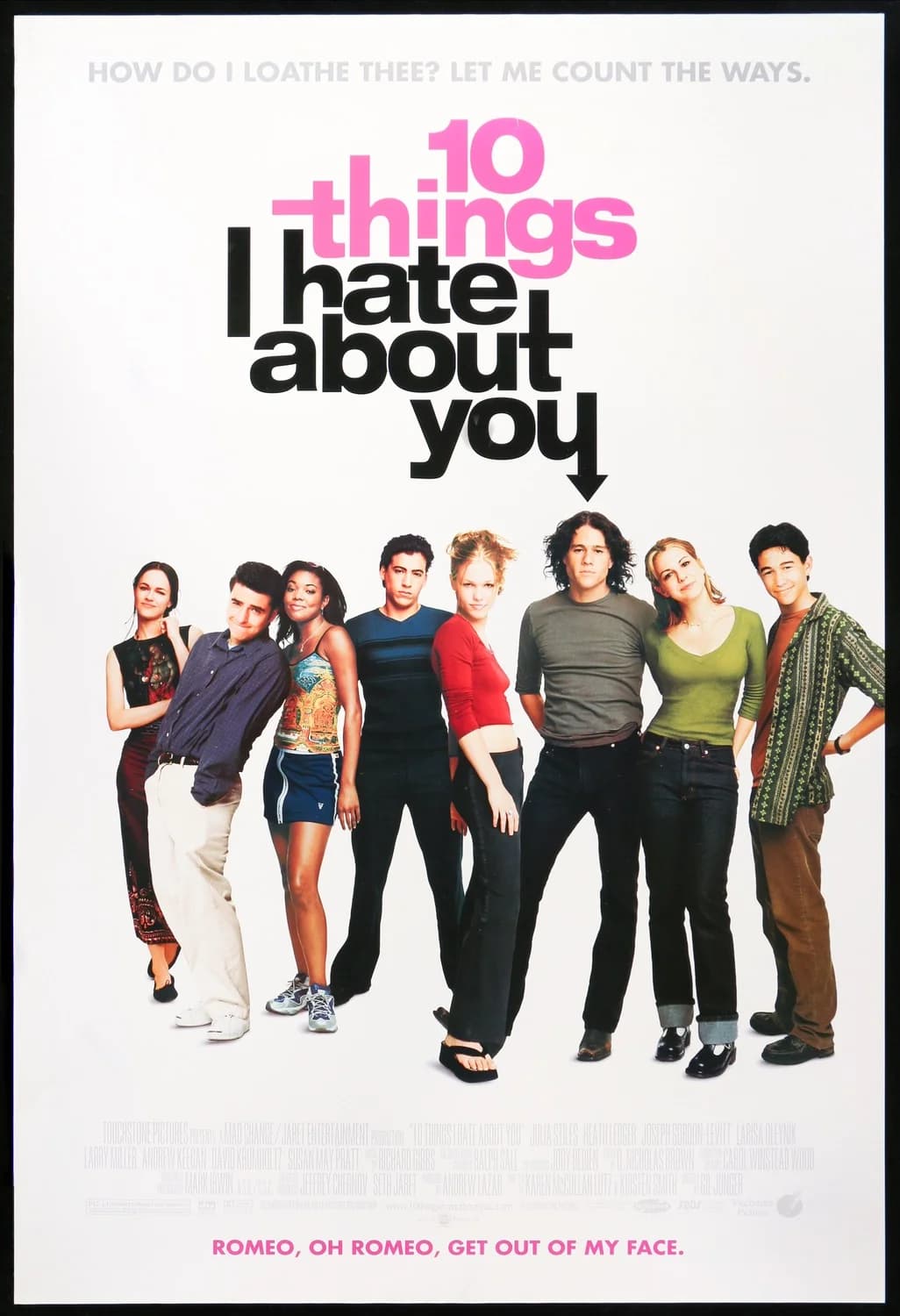
1999 // VHS
10 Things I Hate About You
Sibling rules, a rooftop serenade and one very stubborn Kat — Shakespeare in a school corridor.
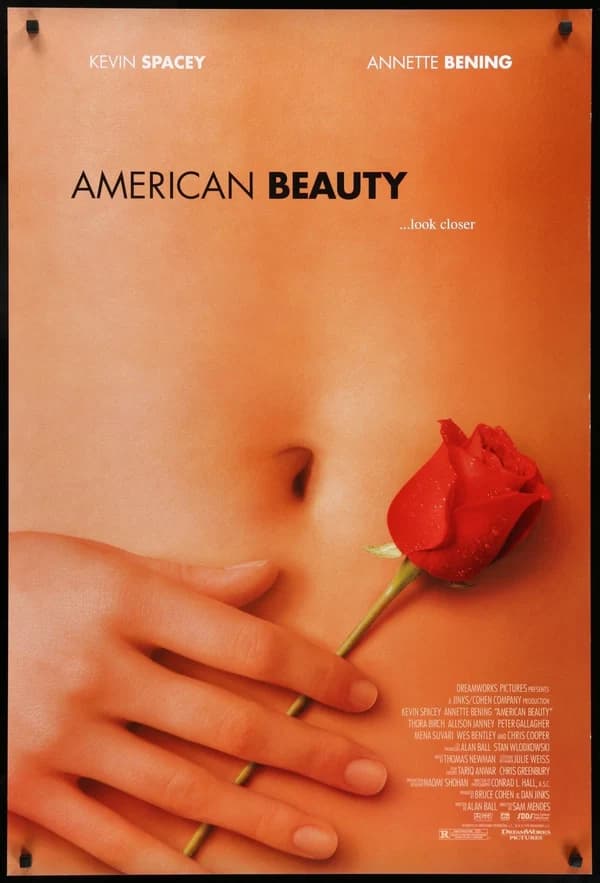
1999 // VHS
American Beauty
Lester Burnham, suburban rot and a midlife argument that still stings.
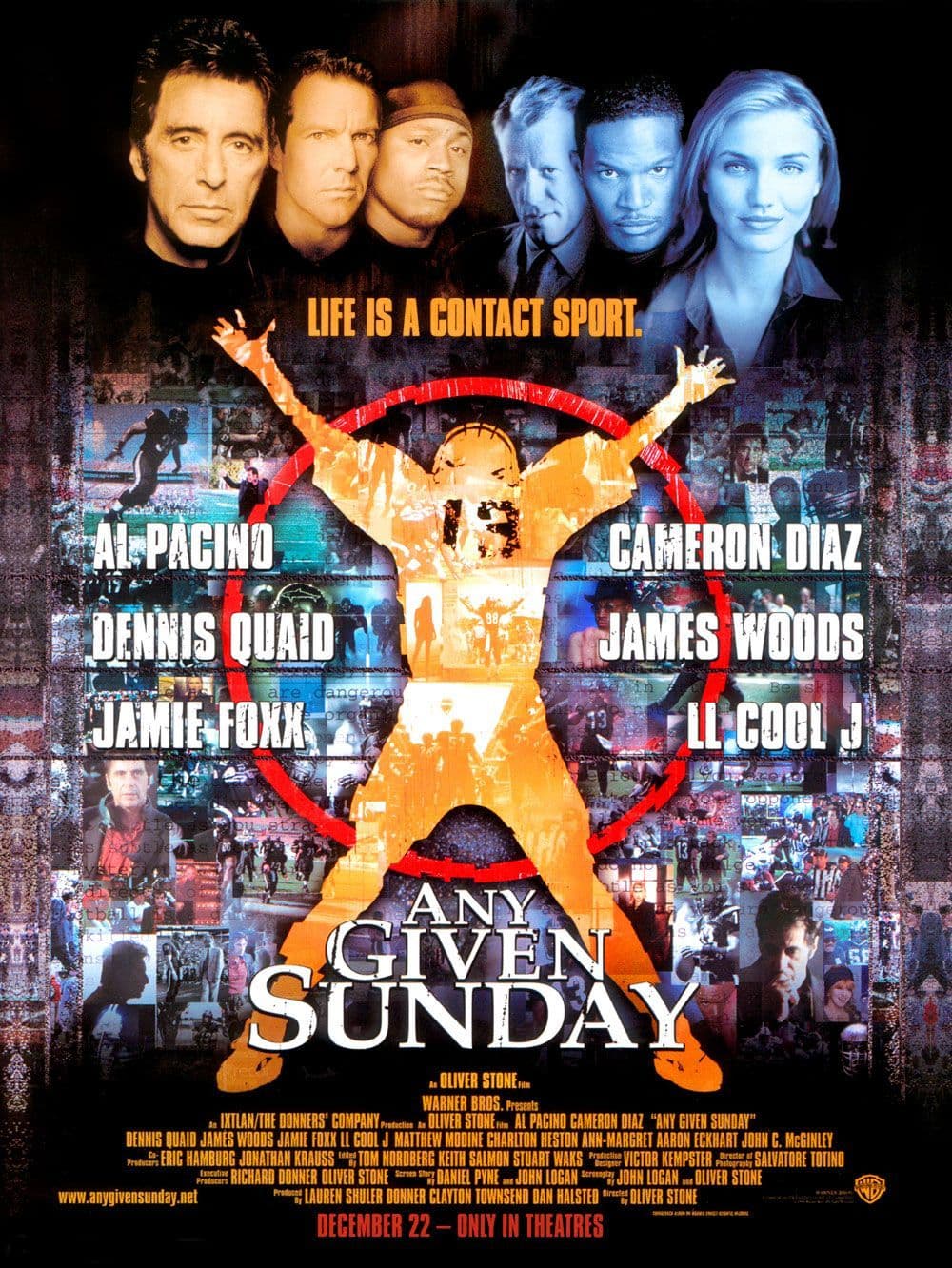
1999 // VHS
Any Given Sunday
Al Pacino's coach anchors the chaos of a film about football turned into product — loud, messy and oddly persuasive.