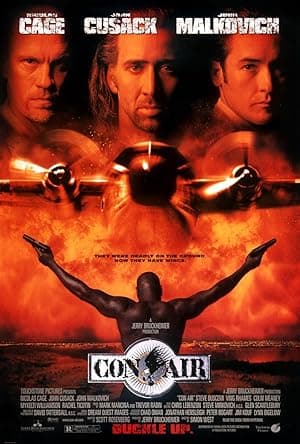
Con Air
Loud, daft, oddly tender — and carried by one stubborn Army Ranger.
// The setup
PLAYBACK STARTED
Con Air still gets talked about because it pairs ridiculous summer-movie excess with a recognisable emotional spine: a man trying to get home. Simon West’s debut is loud, unashamedly macho and strangely sentimental, and Cameron Poe’s refusal to abandon his family is the steady thing in the middle of the chaos.
THE MOVIE
Cameron Poe is still the reason this movie works
Con Air is the kind of movie that announces itself with a roar and then refuses to be modest. At its heart, though, it’s not a stunt reel: Cameron Poe is a paroled former Army Ranger who climbs aboard a JPATS prison transport to get home, and when the plane is taken over he stays because he has someone waiting for him.
That refusal to leave—a soldier bound by loyalty to his pregnant wife and daughter—gives the chaos a quiet centre. The hijacking is organised by Cyrus "The Virus" Grissom, a clever criminal whose plan turns the flight and its scheduled ground exchanges into a moving set of traps and deadlines.
Simon West’s 1997 Bruckheimer-produced blockbuster runs for 115 minutes and trades in big setpieces, an ensemble of recognisable faces and an anything-goes attitude. It’s noisy, it’s theatrical, and for better or worse it knows exactly what it wants to be.
THE SETUP
The idea that sets Con Air in motion
The film’s central engine is pleasingly simple: a federal prisoner transport plane is commandeered mid-flight, and the isolation of the aircraft turns it into a pressure-cooker of personalities and small-scale battlefields.
Into that sealed world walks Cameron Poe, a parole-eligible former Army Ranger who chooses to remain because he’s trying to get home and protect the people he cares about. That position makes him an insider with outside loyalties—exactly the sort of pivot the story needs.
On the ground, U.S. Marshal Vince Larkin is the other half of the problem: he’s the practical counterweight trying to track and contain the disaster while the flight alternates between scheduled landings and new complications.
The script repeatedly uses those planned landings and ground exchanges as fresh turning points—the plane’s itinerary becomes a clock for the criminals’ escape plan and for Poe’s race to keep others safe.
THE CHARACTER
Why Cameron Poe matters
Poe isn’t in Con Air to be macho for its own sake. He’s a man with a simple job: get back to his pregnant wife and daughter. That personal stake explains why he stays on a plane full of convicts rather than taking his freedom and leaving the others to it.
Because he’s motivated by family loyalty and a private code—call it soldier’s honour—the film gives us someone to root for who can plausibly shoulder physical and moral tests without feeling like a parody.
Placing a straight-arrow character amid an ensemble of spectacularly monstrous and unpredictable convicts lets the movie run through small character set-pieces: Poe’s choices constantly contrast with the passengers around him, which keeps the stakes immediate.
In short: the movie’s melodrama and spectacle work better because Poe brings a human, recognisable logic into every scene he’s in.
UNDER THE SURFACE
Con Air has more on its mind than the plot suggests
On the surface Con Air is a succession of escalating setpieces and macho one-upmanship. Underneath it’s about redemption: Poe’s journey is framed as a man trying to put himself right and get back to the ordinary life he’s been denied.
Family and loyalty aren’t window dressing here; they’re the movie’s moral currency. Poe’s decisions spring from those ties, and the film often measures its action against the question of who you owe and why.
There’s also an obvious appetite for spectacle and exaggerated masculinity—the film wears its testosterone like armour, using loud setpieces and big gestures as a way of signalling seriousness while also having fun with excess.
Finally, Con Air plays with law versus criminality by populating the plane with characters who aren’t reducible to cartoon villains; the tension between institutional justice and personal codes sits just below the surface of the explosions.
THE FILMMAKING
How Con Air was put together
Con Air’s look and tempo are very much of a late-90s Bruckheimer playbook: big, glossy setpieces shot and cut to maximise impact. The direction pairs MTV-derived visual energy—quick, punchy staging—with traditional large-scale action beats.
That mix gives the film a breathless momentum. It folds small, intimate confrontations into much bigger practical sequences without losing rhythm.
Credit for that construction goes to the crew behind the camera as well as the director: David Tattersall was the cinematographer, and the film’s principal editors helped stitch the sequences together so the pace rarely loses steam.
The result is a movie that feels engineered to land as a summer tentpole: slick, fast and engineered to deliver one setpiece after another.
PRACTICAL EFFECTS
The effects work that gives Con Air its physical personality
Con Air’s physical personality comes from a blend of old-school and newer techniques. The production used miniatures and matte paintings alongside digital compositing to build the aircraft and desert sequences.
That hybrid approach meant the film could stage large-scale action—including the desert boneyard and aircraft shots—without relying solely on one method.
On-set practical effects crews handled a lot of the heavy lifting for the big sequences, with hi-speed and miniature photography used where the production needed scale.
Visual-effects vendors and miniature photography units were explicitly part of the workflow, which gives the movie a tactile sense even when the final image is a composite of techniques.
PURE 80S
Con Air could not belong to any other decade
Con Air sits squarely in a mid-to-late-1990s wave of glossy, high-concept action pictures from Jerry Bruckheimer—films built around big production values, ensemble casts and a very particular, MTV-influenced visual style.
Part of its identity is the studio-era summer logic: a wide theatrical launch and a marketing push that leaned into spectacle over subtlety. It’s a movie designed to be seen loud and big.
For Nicolas Cage, Con Air was another step in a move toward mainstream action leading roles; the film helped position him in that space during the late 1990s.
Stylistically and commercially, it feels like a product of its moment: an unapologetic tentpole that knows how to package chaos as entertainment.
WATCHING IT NOW
What has aged — and what hasn't
If you’re revisiting Con Air, it’s important to accept its impulses: it leans into excess rather than apologising for it. For many viewers that’s the point—its mixture of humour, excess and memorable character moments is exactly what’s kept it in conversation.
The emotional through-line—Poe’s loyalty to his family—still gives the film something solid to hang its flights of fancy on. The personal motive makes the spectacle feel keyed to a real human wish rather than pure testosterone.
Fans have kept talking about the film: it’s developed a steady cult audience, which shows up in retrospectives and anniversary pieces that enjoy its particular brand of over-the-top entertainment.
In short: the movie’s tone still divides viewers, but its combination of character anchor and spectacle explains why it survives modern re-watches.
THE LEGACY
Why Con Air still matters
Con Air’s afterlife is a mix of institutional recognition and affectionate audience memory: it earned Academy Award nominations (Best Sound and Best Original Song) and opened as a commercially successful summer release in 1997.
Beyond awards, the film has kept a place in conversations about 1990s action cinema and in discussions of Jerry Bruckheimer’s era of glossy blockbusters—people still point to it when they talk about that particular studio moment.
It’s also had periodic revivals: anniversary coverage and a limited 25th-anniversary theatrical re-release in 2022 show there’s an appetite to see it back on a big screen.
Put together, those facts explain why Con Air remains in the cultural orbit: it’s a snapshot of a certain kind of blockbuster that people either delight in or mock—often both at once.
THE VERDICT
Does Con Air still hold up?
Yes — if you know what you’re tuning in for. Con Air’s premise (a JPATS aircraft hijacked mid-flight) gives it a built-in dramatic architecture: deadlines, landings and exchanges that keep the story moving and invent fresh complications.
At the centre of that chaos is Cameron Poe, an initially reluctant insider who stays on board out of loyalty to his wife and daughter; that personal obligation turns the film’s spectacle into something with an emotional anchor.
The film foregrounds an ensemble of antagonists rather than a single distant villain, and the dynamic between Poe, Cyrus and the others supplies the movie with a steady stream of confrontations and small character beats—some outrageous, some unexpectedly human.
If you enjoy loud, slightly daft action that still carries a redemptive through-line, Con Air rewards a modern watch. It’s uneven, often excessive and deliberately showy—but it also knows how to mix spectacle with a recognisable moral motive, and that combination keeps it watchable.
Share this movie
// Keep watching
More movies from the 90s
If Con Air is your kind of movie, there's plenty more on the shelves worth rewinding.
1999 // VHS
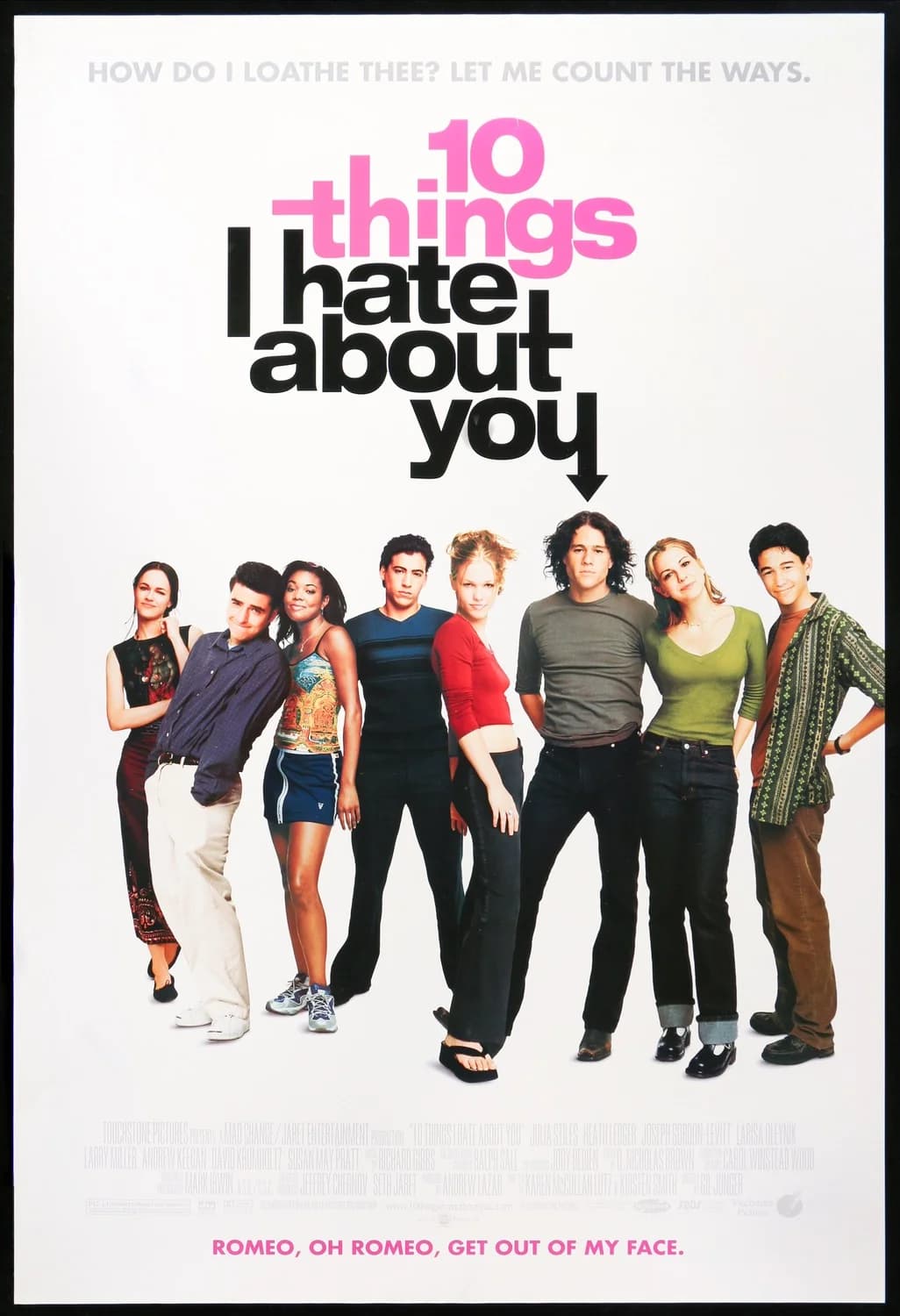
10 Things I Hate About You
Sibling rules, a rooftop serenade and one very stubborn Kat — Shakespeare in a school corridor.
1999 // VHS
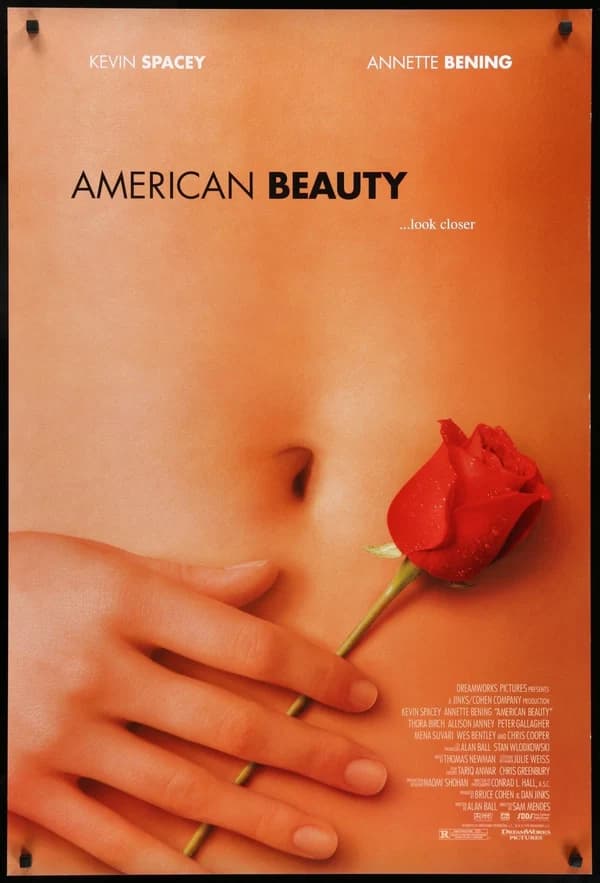
American Beauty
Lester Burnham, suburban rot and a midlife argument that still stings.
1999 // VHS
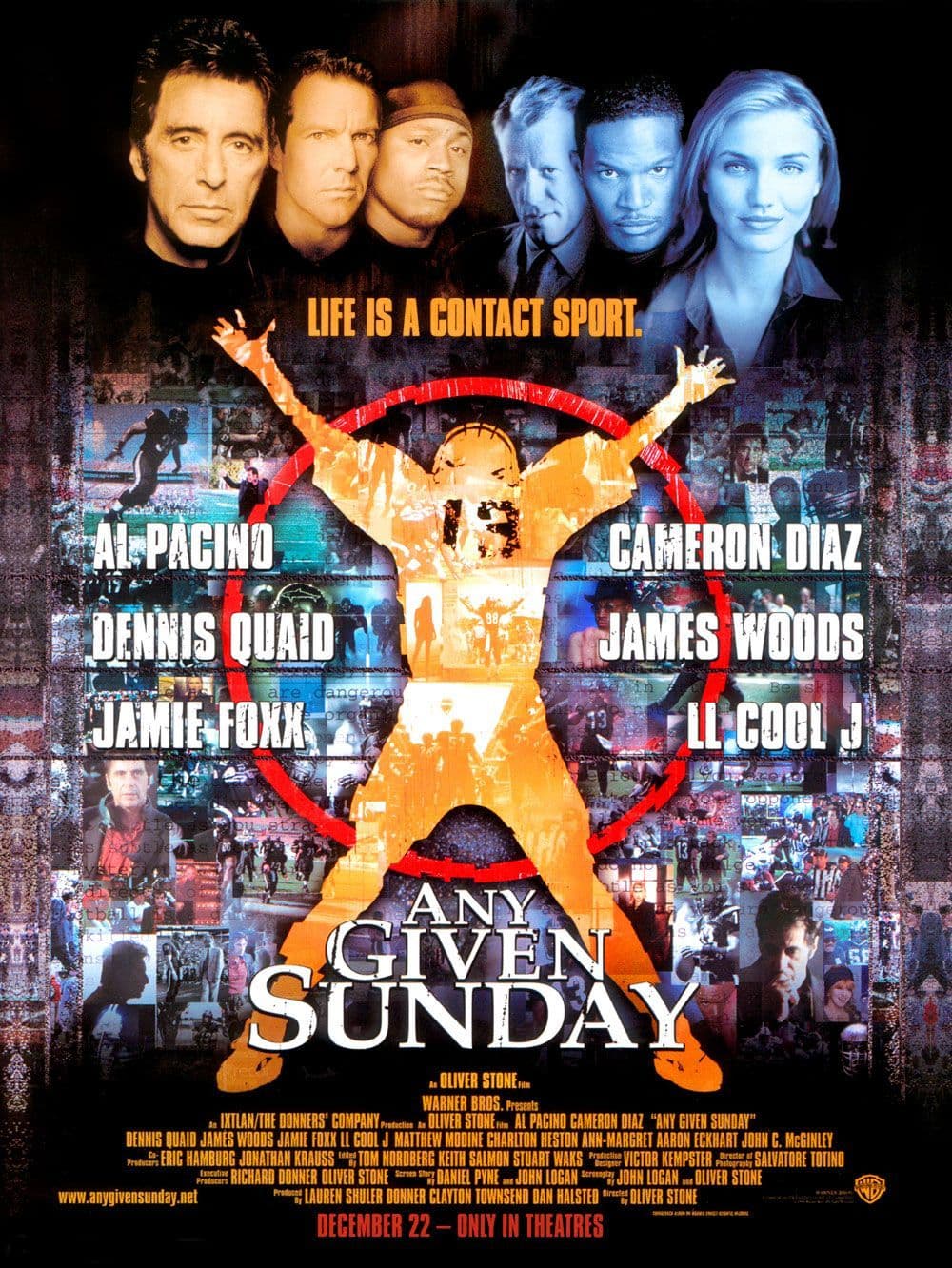
Any Given Sunday
Al Pacino's coach anchors the chaos of a film about football turned into product — loud, messy and oddly persuasive.