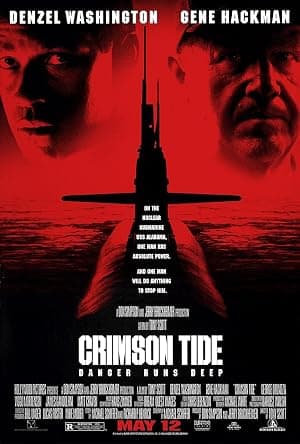
Crimson Tide
Two men, one submarine and an incomplete order that asks an uncomfortably simple question: who gets to decide?
// The setup
PLAYBACK STARTED
Crimson Tide still feels like a high-tension chess match played in a metal tube. It’s not just about missiles and sonar pings; it’s about the single person who refuses to let the machinery of war run on autopilot. Lt. Cmdr. Ron Hunter is the elbow in the system—insistent, procedure-obsessed and the reason this particular Tony Scott picture keeps being worth a revisit.
THE MOVIE
Lt. Cmdr. Ron Hunter is still the reason this movie works
Crimson Tide sets itself up as a classic locked-room argument, but the room is an entire ballistic-missile submarine and the thing on the table is an order that could wipe out cities. The drama begins when an Emergency Action Message tells the USS Alabama to ready for a pre-emptive launch, and then a second message starts to come through and is suddenly cut off after the radio antenna is damaged.
That broken transmission is a deliciously simple engine for suspense: it converts procedure into doubt, and doubt into confrontation between two men who both think they’re doing the right thing. Captain Frank Ramsey stands for decisive command; Lt. Cmdr. Ron Hunter stands for careful verification. The film makes the choice between them feel, genuinely, like a life-or-death question.
Directed by Tony Scott and released in 1995, Crimson Tide wears its genres — action, thriller, war and submarine drama — comfortably, but it’s Hunter’s insistence on the rules and the moral weight behind that insistence that gives the film its personality. Remove him and you’re watching a submarine movie; keep him and you’re watching an argument about nuclear responsibility.
THE SETUP
The idea that sets Crimson Tide in motion
The USS Alabama is on patrol against a backdrop of political collapse and ultranationalist violence in post‑Soviet Russia. That geopolitical unease matters because it makes the opening order plausible rather than melodramatic: the world outside the hull is already brittle.
At the centre of the film’s mechanics are real-seeming naval procedures — the Emergency Action Message system and a two-person launch consent — and then a very specific failure: the antenna is damaged mid-transmission so the second message cannot be verified. Simple as that, and suddenly every manual, every rule and every assumption in the control room becomes a battleground.
From there the drama is tidy and ruthless. Captain Ramsey wants to act on the confirmed first order; Hunter insists on confirmation before he gives his consent. That tug turns command protocol into a personal standoff and escalates into a formal breakdown of shipboard authority.
It’s efficient storytelling. The screenplay keeps the engine mechanical enough to explain what’s happening, while the characters turn the machine into moral theatre.
THE CHARACTER
Why Lt. Cmdr. Ron Hunter matters
Ron Hunter is written and positioned as the procedural conscience of the Alabama. He’s the officer who treats checklists and confirmation not as bureaucracy but as the last firewall against catastrophe.
That matters because the movie never makes his caution an abstract quirk. It’s presented as a moral stance: when nuclear weapons are in play, the question isn’t who’s brave enough to push the button but who’s brave enough to stop if something smells wrong.
Crimson Tide stages the central clash so both sides make sense. Captain Ramsey’s insistence on decisive command and the need to act quickly is a defensible position. Hunter’s refusal to consent without verification is equally defensible. The film’s tension comes from that mutual plausibility.
Put simply: Hunter gives the debate its teeth. Without a character who sees procedure as an ethical duty, the story would be a thriller about hardware; with him, it becomes a drama about responsibility.
UNDER THE SURFACE
Crimson Tide has more on its mind than the plot suggests
On the surface it’s a submarine thriller about missiles and tense corridors. Below that surface it’s asking who should be allowed to make irreversible decisions, and why we trust certain kinds of authority more readily than others.
The film leans into the moral question of command versus conscience: is following orders enough when the consequence is potentially nuclear annihilation? That dilemma gives the film a nerve that outlives any particular action sequence.
Connected to that is the theme of breakdown in communications. A damaged antenna is not just a plot device; it’s a neat symbol for how fragile systems — technical, political and human — can be. When the lines go down, you discover what people are made of.
Finally, there is leadership under stress and the claustrophobic dynamics that produces. Lock a dozen people in a steel tube with a disagreement about launch authority and you’ll watch petty tensions, courage and panic all reveal themselves in quick succession.
PRACTICAL EFFECTS
The effects work that gives Crimson Tide its physical personality
What keeps Crimson Tide feeling physical — the claustrophobia, the sudden jerks and the sense that the submarine is a living thing — is the production’s commitment to moving the sets. The crew built a large hydraulic gimbal to mount the interior sets and tilt them, so the spaces actually rocked and jolted during sequences meant to simulate torpedo impacts.
That was overseen by special-effects supervisor Al DiSarro, who handled the technical heavy lifting needed to make those sequences convincing. The result is a film whose tension is partly mechanical: you feel the ship move in a way that makes arguments and arguments’ consequences feel immediate.
In short, the physical shaking isn’t decoration. It’s part of the storytelling — an external reminder that decisions inside the hull play out inside a shifting world.
PURE 80S
Crimson Tide could not belong to any other decade
Released in May 1995, Crimson Tide sits squarely in the mid‑90s moment when big, high‑concept action thrillers dominated the multiplex. It carries the production fingerprints of Jerry Bruckheimer and Don Simpson’s era: lean, urgent premises designed to be understood in a single sentence.
The film’s geopolitical backdrop — post‑Soviet instability and ultranationalist violence, including references to Chechnya — is genuinely of its time. The Cold War might have ended, but the 1990s were still figuring out what nuclear security looked like when the old certainties dissolved.
Finally, it’s part of Tony Scott’s run of muscular, personality-driven action films. The movie’s appetite for close, high-stakes confrontation between big personalities is very much of that director’s 1980s–1990s stock-in-trade.
THE LEGACY
Why Crimson Tide still matters
One clear, concrete afterlife for the film is the music: Hans Zimmer’s score received a major industry recognition, winning a Grammy in 1996 — a reminder that the film’s tension was shaped as much by sound as by argument.
Beyond that, Crimson Tide continues to appear on critics’ lists of notable submarine or nuclear-themed thrillers. It keeps turning up in conversations that compare and contrast how different films stage the pressure cooker of undersea conflict.
There’s also a modest home‑video footnote: an unrated/extended DVD with deleted material appeared in the mid-2000s, while a later Blu-ray release is reported to include the theatrical cut only. Small details, perhaps, but they keep the film in circulation for new viewers.
THE VERDICT
Does Crimson Tide still hold up?
Yes — but with a clear rider. If you want a film that treats nuclear decision-making as a personal, room-sized argument, Crimson Tide still delivers. The inciting piece of business — an interrupted second EAM because of a damaged antenna — is a neat, economical engine for moral uncertainty, and the resulting fight over consent and command stays compelling because both sides are written as honestly plausible.
The movie’s mechanics matter: two‑person launch protocols, the EAM system and a severed communications link are not window dressing; they’re the literal scaffolding that turns abstract questions about responsibility into immediate, practical dilemmas. That keeps the drama focused and urgent.
There are also small, durable pleasures that help: the physicality brought to the submarine sequences, and the way the central clash between Ramsey and Hunter is staged as a genuine argument rather than a cartoon showdown. Contemporary reviewers singled out that antagonism as the film’s dramatic core, and you can still watch the film and see why the writers set it up that way.
So yes — watch it. Not because it will surprise you with new ideas about nuclear strategy, but because it forces the old ones into a tight, human scale. It’s a film that reminds you how terrifyingly fragile decision‑making can be when the lines go down.
Share this movie
// Keep watching
More movies from the 90s
If Crimson Tide is your kind of movie, there's plenty more on the shelves worth rewinding.
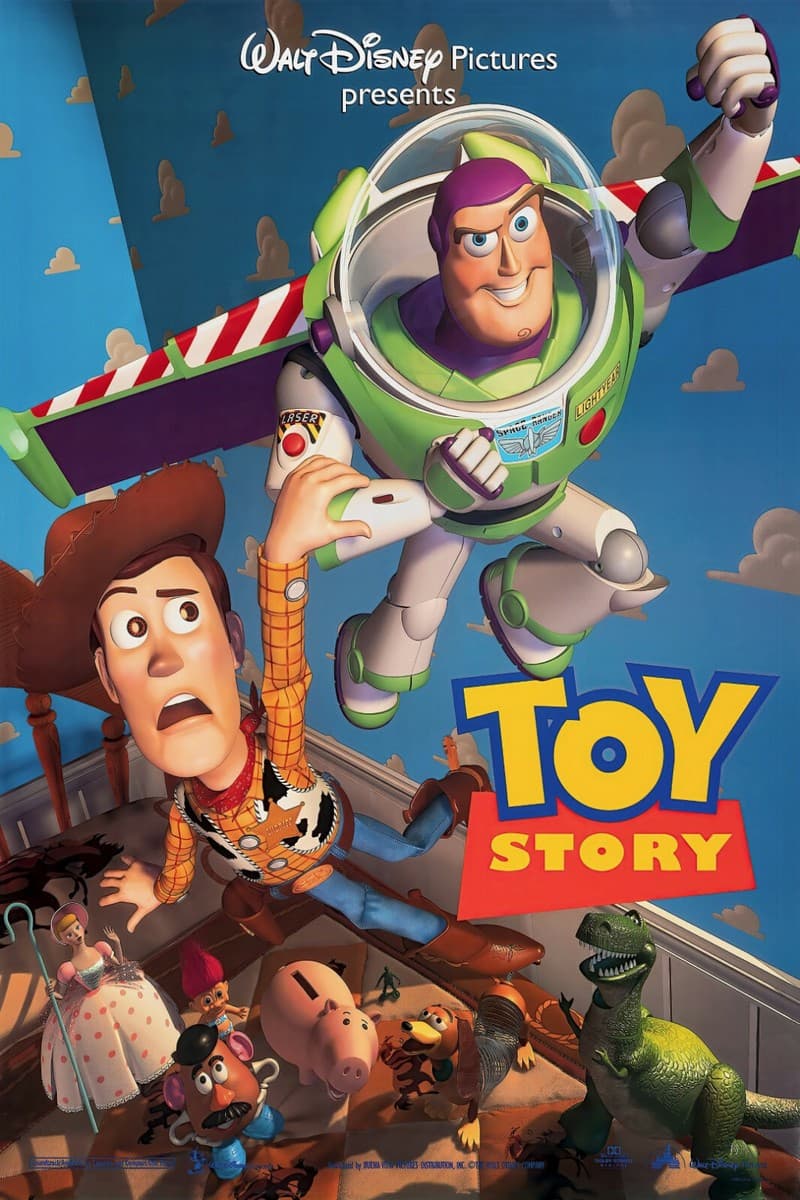
1995 // VHS
Toy Story
A pull‑string cowboy, a deluded space ranger and a small, very particular war over being loved.
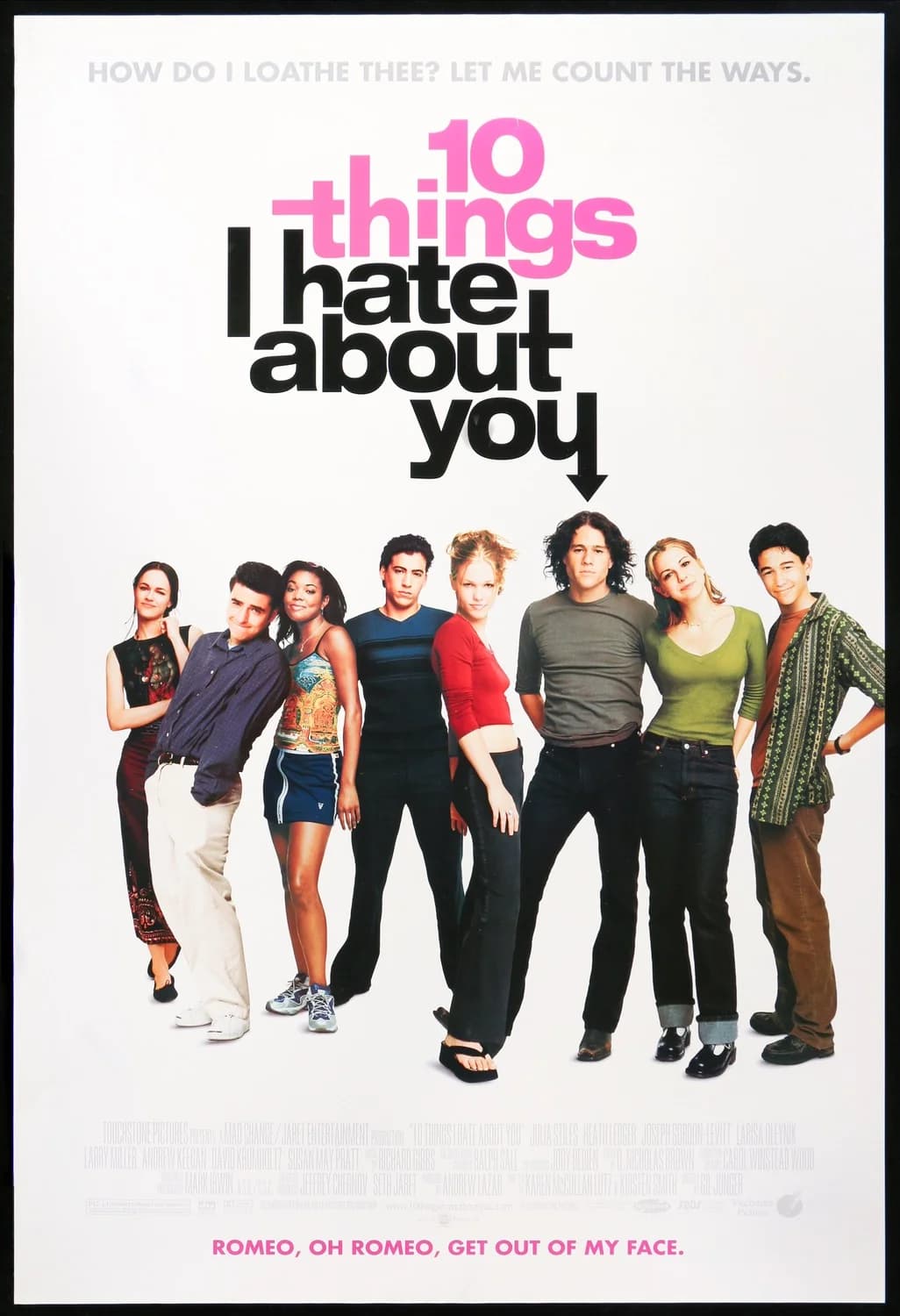
1999 // VHS
10 Things I Hate About You
Sibling rules, a rooftop serenade and one very stubborn Kat — Shakespeare in a school corridor.

1999 // VHS
American Beauty
Lester Burnham, suburban rot and a midlife argument that still stings.