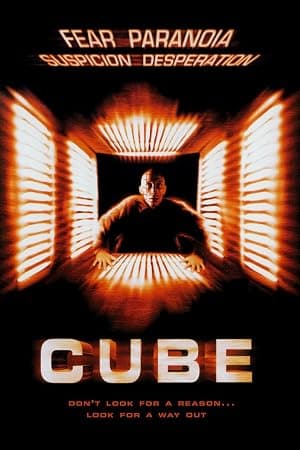
Cube
A locked puzzle, a handful of people and Joan Leaven’s equations — Cube still makes logic feel dangerous.
// The setup
PLAYBACK STARTED
You remember the rooms before you remember the credits: identical cube-shaped cells linked into a lethal maze. It’s a small idea executed with surgical focus — and at the centre of it is Joan Leaven, the maths student whose number-plate logic becomes everyone’s best hope. Vincenzo Natali’s 1997 debut turns claustrophobia into a thinking-person’s nightmare, and it still rewards a rewatch.
THE MOVIE
Joan Leaven is still the reason this movie works
Six strangers wake up in a locked, modular labyrinth of cube-shaped rooms — some rooms are harmless, some are booby-trapped, and none of them were expecting to be there. That simple premise is the engine; it forces the film to be economical and tense from frame one.
What stops Cube from being just another closed-room stunt is a character who actually understands the system. Joan Leaven is introduced as a young mathematics student and, crucially, it’s her number-plate analysis that gives the group any coherent method of escape. The movie hands her the toolkit and then watches the consequences unfold.
The result is a piece of work by Vincenzo Natali that runs tight — roughly ninety minutes of horror and deduction — and places a very particular set of ideas front and centre: mechanised, anonymous entrapment; logical problem-solving pitched against panic; and how people break under a system that treats them like data.
THE SETUP
The idea that sets Cube in motion
Cube doesn’t waste time on backstory. The central mechanic is straightforward: every room has a numbered plate and those numbers carry the only clues worth following. Working out what they mean becomes the group’s main job — and the audience’s, too.
Kazan, a character with a savant ability to factorize integers, becomes unexpectedly useful; his rapid factoring is the practical test for Leaven’s hypotheses about which doors lead to safety. It’s neat storytelling: a mathematical trick with life-or-death stakes.
Built into the setup is another pressure-cooker: the cube isn’t just dangerous because of spikes and traps. Human tensions spike as well. Arguments, mistrust and violence among the group escalate until people are as much a threat to one another as the architecture around them.
Leaven’s calculations go beyond guessing; she determines the cube’s vast scale as part of the escape plan, a structural idea that turns a geometric puzzle into the survival map the others must follow.
THE CHARACTER
Why Joan Leaven matters
Joan Leaven isn’t a cipher or a resource you can ignore. She’s introduced specifically as a mathematics student, and the film leans on that identity — her ability to read the numeric logic stamped into every room is what turns random survival into a solvable problem.
That gives Leaven a rare kind of agency in a horror setup: she is the group’s tool for understanding the machine. Without her, the rooms are arbitrary and lethal; with her, they become patterns that can, at least in theory, be beat.
Leaven also operates as a calm axis around which the others rotate. The cast is built to test her: a cop, an office worker with inside knowledge of the structure, a savant, a scientist — each person’s background matters because it either supports or undermines her method.
There’s also a neat, slightly bleak detail in the naming: many characters bear names that evoke real prisons, which rigs the drama with the idea that these people are already defined by penal identity. Leaven’s mathematics doesn’t just solve rooms — it lets her push back against that imposed label.
THE PERFORMANCE
Why Maurice Dean Wint's performance matters
Contemporary press and later write-ups tend to single Maurice Dean Wint out for the intensity of his work as Quentin McNeil. That recurrence in coverage is itself telling: within a tight ensemble, one portrayal repeatedly drew attention.
Mentioning that attention isn’t empty praise; it signals the part Quentin plays in pushing the group’s dynamics into danger. Wint’s portrayal is the performance many discussions return to when they talk about the film’s emotional volatility.
UNDER THE SURFACE
Cube has more on its mind than the plot suggests
At face value Cube is a survival puzzle. Underneath, it stages a small, claustrophobic satire of bureaucratic systems: anonymous, mechanised, and indifferent. The cube functions like a piece of paperwork made solid — but with teeth.
There’s a constant tug-of-war between logic and irrationality. Leaven’s maths tries to impose order; panic, suspicion and sometimes outright cruelty drag events in the opposite direction. The film makes those two forces feel like equal hazards.
Watch long enough and the movie becomes about how people are dehumanised by extreme conditions. Trapped together, the characters are reduced to functions — thinker, muscle, dispenser of information — and the process strips them down to the parts most useful to survival.
Even the small production choice of giving characters names that echo prisons threads the idea of confinement into identity. It’s not just a physical box here; confinement becomes a label people bring with them into the cubical machine.
THE FILMMAKING
How Cube was put together
Cube feels like many rooms because Natali and his cinematographer worked tricks on one single set. Different lenses, colour choices and camera setups were used to make each cell register as its own space rather than a repeated stage.
They also built the main cube off the floor. That wasn’t an indulgence — it allowed the team to backlight walls and alter lighting schemes quickly, which is how a modest physical structure reads as a sprawling, shifting labyrinth on screen.
Those are economical, clever moves: the film’s formal inventiveness comes less from flashy gear and more from how the crew made a small budget feel bigger through patient design choices.
It’s a nice reminder that constraint can be creative. The way Cube is shot and staged is driven by the need to sell scale without the budget for it, and the solutions are part of the film’s personality.
PRACTICAL EFFECTS
The effects work that gives Cube its physical personality
Cube’s hazards were realised the old-fashioned way: on-set physical construction. The set was rigged with removable panels and practical trap mechanisms so the rooms could be altered and triggered without relying on heavy digital work.
Sound design helped too. Ambient noises — including real-world sounds from a nearby train line — were folded into the film’s audio to suggest movement and machinery beyond the frame. Those tactile choices make the cube feel like an actual, functioning device rather than a conceptual trick.
PURE 80S
Cube could not belong to any other decade
Cube arrived in 1997 out of a specific independent-film ecosystem. It premiered at the Toronto International Film Festival and won TIFF’s Best Canadian First Feature award, a launchpad that suited its festival-first life.
The movie was a product of the Canadian Film Centre’s First Feature Project — a late‑90s environment that encouraged economical, high-concept debuts. Cube’s single-set economy and festival-driven strategy are textbook examples of that era’s indie practice.
Put simply: Cube reads like a late‑90s indie — hungry, resourceful and festival-aware. Its production story is part of why the film feels compact and uncompromising in tone.
THE LEGACY
Why Cube still matters
Cube’s festival success — including TIFF recognition — and its prize circuit run helped establish Vincenzo Natali’s career and ensured the film would be discussed beyond its initial screenings.
It also spawned follow-ups: a sequel and a prequel extended the world, and decades later a remake arrived in Japan. That continuation shows the central idea had enough grip to justify further storytelling.
Critics and filmmakers regularly point to Cube when tracing the lineage of escape-room and puzzle-trap horror. Natali and several retrospectives have discussed how the film’s premise functioned as a template for later genre experiments.
THE VERDICT
Does Cube still hold up?
Yes — if you’re looking for a compact, idea-driven thriller that makes logic feel like a weapon. The film’s premise is blunt: a handful of people awake in a modular maze of cube rooms, some of them deadly, and live by decoding the numbered plates on each door. That structure rewards attention and rewards thought.
Joan Leaven’s mathematical work is the film’s clearest through-line. Her calculation of the cube’s scope — the structural idea that the labyrinth comprises 17,576 rooms plus a bridge — turns deduction into the group’s method of forward motion, and Kazan’s factoring ability gives those deductions a practical test. That marriage of concept and plot keeps the stakes intelligible.
There are other reasons to watch: the movie is short and sharp (around ninety minutes), it’s director Vincenzo Natali’s original low-budget statement, and contemporary observers singled out Maurice Dean Wint’s intense portrayal of Quentin as a frequent talking point — which matters because his presence helps destabilise the group dynamic on screen.
If you want spectacle or sprawling answers, Cube isn’t that. But as a disciplined exercise in claustrophobic logic, punishment-by-procedure and human collapse under pressure, it remains a compelling, unsettling watch.
Share this movie
// Keep watching
More movies from the 90s
If Cube is your kind of movie, there's plenty more on the shelves worth rewinding.
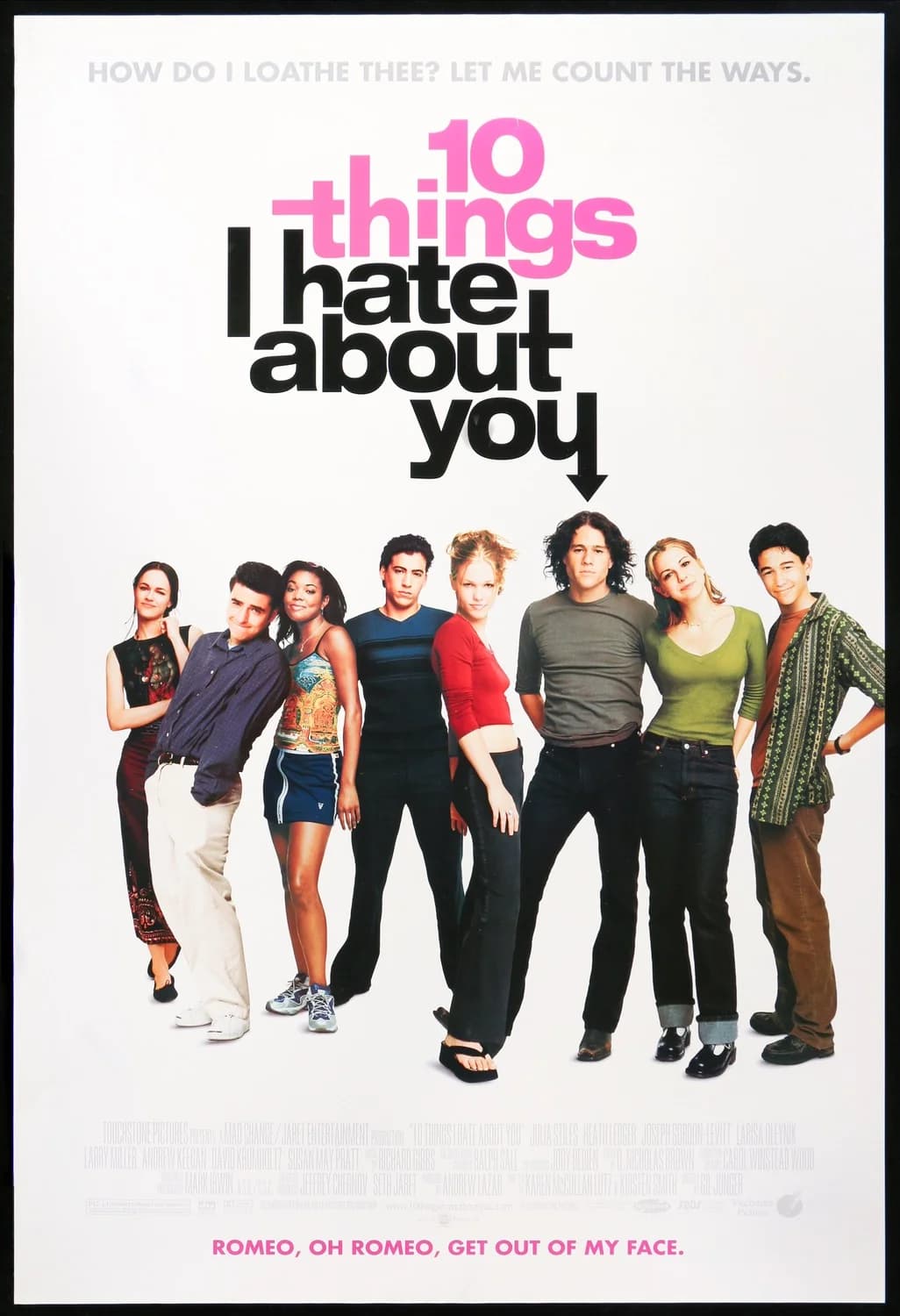
1999 // VHS
10 Things I Hate About You
Sibling rules, a rooftop serenade and one very stubborn Kat — Shakespeare in a school corridor.
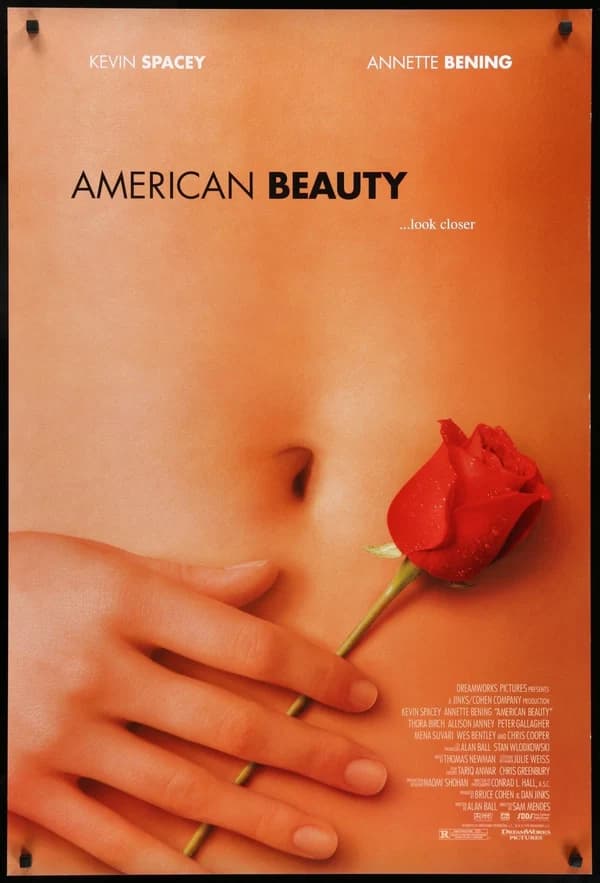
1999 // VHS
American Beauty
Lester Burnham, suburban rot and a midlife argument that still stings.
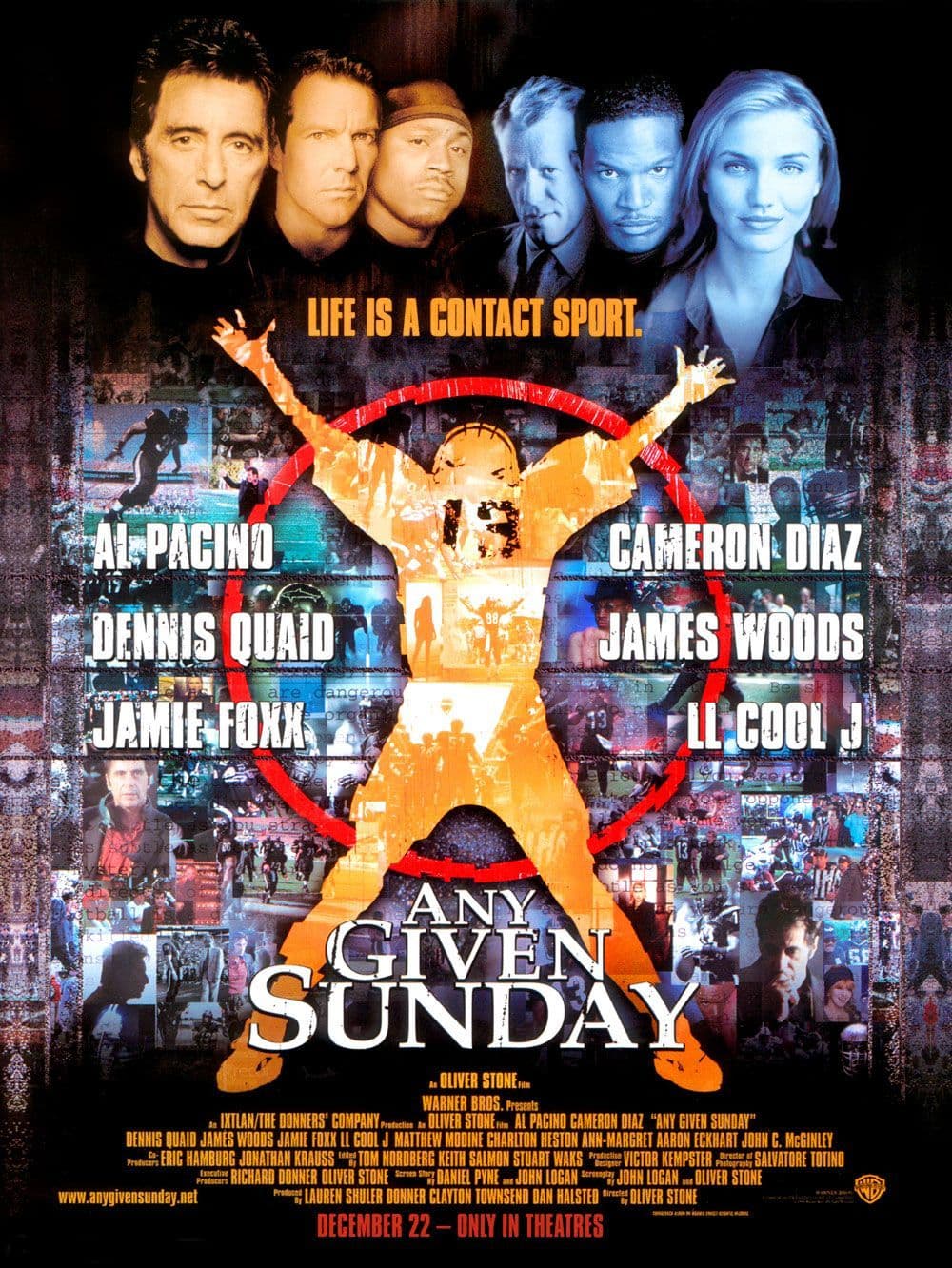
1999 // VHS
Any Given Sunday
Al Pacino's coach anchors the chaos of a film about football turned into product — loud, messy and oddly persuasive.