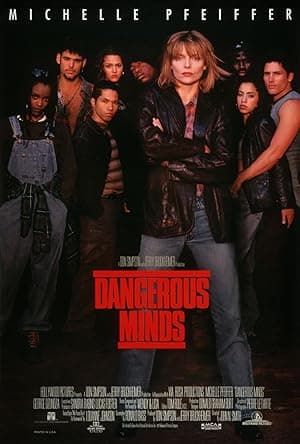
Dangerous Minds
A former Marine, a class of hard edges and poems — plus a soundtrack that would not shut up.
// The setup
PLAYBACK STARTED
Dangerous Minds is the sort of film you remember for a handful of clear things: Michelle Pfeiffer as LouAnne Johnson, a Marine-turned-teacher who tries to reach a class the system has mostly given up on; the classroom tricks that lean on music and poetry; and a soundtrack that exploded out of the cinema. Directed by John N. Smith and adapted from Johnson’s memoir, it still asks whether teaching can really change violent, marginalised lives — and whether Hollywood knows how to tell that story without tripping over its own clichés.
THE MOVIE
LouAnne Johnson is still the reason this movie works
People still talk about Dangerous Minds because it centres on a plainly watchable idea: a former Marine steps into a classroom of bright but battered teenagers and tries to get them to care. That neat, stubborn hook — bookish methods banging against streetwise defence mechanisms — is why the film, adapted from LouAnne Johnson’s memoir, never feels generic even when it leans on familiar beats.
Michelle Pfeiffer’s LouAnne is the clearest thing on screen: a woman who’s brought military discipline into a school system that isn’t set up for the kids she’s been given. The film makes her methods — literature, poetry, popular music — the tools by which she attempts to connect, and those classroom gambits are the movie’s emotional currency.
John N. Smith directs a brisk 99 minutes that rides those set pieces, and the commercial packaging around the film — most famously its soundtrack — made Dangerous Minds feel like a proper 1995 event. That mixture of earnest classroom scenes and a very loud pop-cultural afterlife is why the movie still nags at people: it’s simple, clear, and there are obvious questions about how the simplicity was bought.
THE SETUP
The idea that sets Dangerous Minds in motion
The film’s premise is straightforward without being simple: LouAnne Johnson accepts a post teaching a special group of academically capable but troubled inner-city teens. That framing — an outsider in a system that has largely written these young people off — does a lot of structural work for the story.
What gives the movie its texture is how Johnson reaches for literature and music as connection points. Classroom scenes hinge on poems and song lyrics (the screenplay even brings in Bob Dylan and Dylan Thomas references) as a language the students can use to talk about what’s happened to them.
Conflict is built less around plot gymnastics and more around the everyday obstacles: the students’ distrust, gang-related dangers that hover in and out of school, and administrators who are sceptical or distant. It’s a tight, recognisable engine: teacher tries a different way, runs into institutional and social resistance, keeps pushing.
THE CHARACTER
Why LouAnne Johnson matters
LouAnne is not written as a saint. She’s a former Marine who brings that background into the classroom: it explains her discipline and it gives her a shorthand for authority the kids notice. That origin is a tidy piece of character engineering — it makes her credible in a room that respects toughness, and it gives the film a plausible reason to centre on her.
What makes her stick in the head, though, is the combination of tactics. The plot gives her not only rules and firmness but also a willingness to try odd little ways of connecting: bringing popular music into lessons, using poems as a map to what the students are feeling. Those choices are the part of the character that turns Johnson into more than a poster for motivation.
She’s also grounded socially. The movie keeps a small community around her — colleagues like Hal Griffith who offer a practical, human anchor outside the classroom — which stops the story becoming a lone-hero tale and gives the character somewhere to be fallible and recognised.
Finally, LouAnne’s afterlife — the film’s commercial success even led to a short-lived television adaptation — is a reminder that her character was built to be portable: clear, direct, and designed to carry ideas about teaching and rescue across audiences.
THE PERFORMANCE
Why Michelle Pfeiffer's performance matters
Contemporary critics were clear about one thing: Michelle Pfeiffer gives the film a centre that critics and audiences could hang on to. Reviews singled out her presence as a steadying force even when the screenplay took familiar shortcuts.
That matters because Dangerous Minds is often saved from feeling like a checklist by having a central figure who can carry both the film’s earnestness and its unexamined bits. Pfeiffer’s involvement made the film feel deliberate rather than accidental.
UNDER THE SURFACE
Dangerous Minds has more on its mind than the plot suggests
On the surface it’s an inspirational-teacher movie, but beneath that shell the film juggles a cluster of sharper ideas. Education and empowerment are the most obvious: the story constantly asks whether focused teaching can give young people tools to change their trajectories.
At the same time, the film awkwardly sits inside the white saviour conversation. The central figure is a white teacher arriving to ‘fix’ a mostly non-white classroom, and that framing complicates how we read Johnson’s motives and the larger social dynamics at play.
Youth marginalisation and gang violence are woven through the film’s stakes. The danger in and around the school is not just background noise; it’s a practical threat to any attempt at progress, which means the movie’s optimism is constantly undercut by real-world risks.
Finally, music and poetry are not decorative choices here: they’re presented as pedagogy. The classroom becomes a place where lyrics and verse are tools for translation — a way to make experience legible — and that makes the film less about lectures and more about finding a shared language.
THE FILMMAKING
How Dangerous Minds was put together
John N. Smith directs an economical feature with a clear production team behind it: Pierre Letarte handled cinematography, Tom Rolf edited, and Wendy & Lisa supplied the score. The movie’s construction favours clarity — it wants audiences to understand what each scene is doing without fuss.
That no-nonsense approach helps the film move. At ninety-nine minutes, it doesn’t linger on set pieces; it slots Johnson’s classroom techniques and the external pressures into a tidy rhythm that prioritises story momentum over lingering ambiguity.
The soundtrack and score choices are an extension of that approach: music is used as a storytelling shorthand, signalling mood and cultural location quickly so the film can keep going. It’s a tightly packaged studio drama, built to communicate rather than obfuscate.
PURE 80S
Dangerous Minds could not belong to any other decade
Dangerous Minds arrived in 1995 at the tail end of a wave of inspirational-teacher films; that context matters because audiences were already familiar with the template and, by then, a little weary of it. The film both fits and frays that pattern: it uses the genre’s shorthand but presses harder on urban danger and popular-music crossover.
The soundtrack strategy is very of its moment. Mid-1990s studios were happy to pair mainstream dramas with commercially minded hip-hop and R&B records, and Dangerous Minds is a textbook case: the movie’s music played as much part in its release strategy as the casting.
So the film reads like a 1990s studio product — built to be immediate, radio-friendly and easy to market — which explains both its broad reach at the time and the way modern viewers sometimes find it a little of-the-era in its mechanics.
WATCHING IT NOW
What has aged — and what hasn't
Some elements still land. As a teen drama about marginalised youth and gang violence, its stakes feel immediate: that sense of danger hovering beyond the classroom is a durable dramatic engine.
The film’s classification as a teen/hood drama means parts of it still speak to younger viewers who recognise the pressure points — exclusion, loyalty, survival — that the students face. Those emotional beats haven’t dated in principle.
Where it struggles is the framing. The narrative that places a white teacher at the heart of marginalized students’ redemption is now read differently than it would have been in 1995, and that shift changes how sympathetic or problematic the movie feels.
Finally, the film’s popularity at release — which even produced a short-lived TV series — shows that it translated well enough then. Watching it today means sitting with both the earnest classroom work and the questions the movie raises about representation and agency.
THE LEGACY
Why Dangerous Minds still matters
You can find arguments about the film’s legacy in two places: the movie itself and the noise that followed it. On the latter front, the soundtrack produced a global hit — Coolio’s 'Gangsta’s Paradise' — which long outlived the film as the clearest cultural memory tied to it.
Commercially, the film was successful enough to spawn a television version, which is a practical sign that studios thought the premise had legs beyond one release. That afterlife helps explain why the movie pops up in 1990s nostalgia and industry chat.
More importantly, Dangerous Minds remains a frequent reference point in conversations about teacher-saviour narratives and how Hollywood represented race, education and urban youth in the 1990s. It’s shorthand for a set of choices studios kept making: an inspirational outsider, the classroom as redemption site, and a soundtrack to sell the sentiment.
So it matters partly because of what it contains — classroom experiments with literature and music, a teacher trying hard — and partly because it became a touchstone in debates about representation and the limits of uplift stories.
THE VERDICT
Does Dangerous Minds still hold up?
Yes — but with qualifications. If you want a compact, pulpy teacher movie that prioritises connection over nuance, Dangerous Minds delivers. It’s a 1995 adaptation of LouAnne Johnson’s memoir that keeps the core conceit intact: an ex‑Marine-turned-teacher uses literature and music to reach students the mainstream system ignores.
Where the film asks to be watched critically is in its frame. The central conflict — breaking through distrust, confronting gang-related danger, and pushing against distant administrators — is dramatically valid, but the way the narrative centres a white teacher’s heroics is now read with more scepticism than it likely was at release.
Michelle Pfeiffer gives the film a steady presence that contemporary reviewers noted, and that reliability helps the movie hold together even when the screenplay leans on familiar inspirational tropes. Hal Griffith’s role as an off-classroom ally also humanises the world beyond LouAnne’s lessons.
If you watch Dangerous Minds today, do it aware of what it is: a tight, earnest studio drama from 1995 that raises important questions about education and representation even as it sometimes answers them in old-fashioned ways. It’s worth seeing, but bring the conversation with you.
Share this movie
// Keep watching
More movies from the 90s
If Dangerous Minds is your kind of movie, there's plenty more on the shelves worth rewinding.
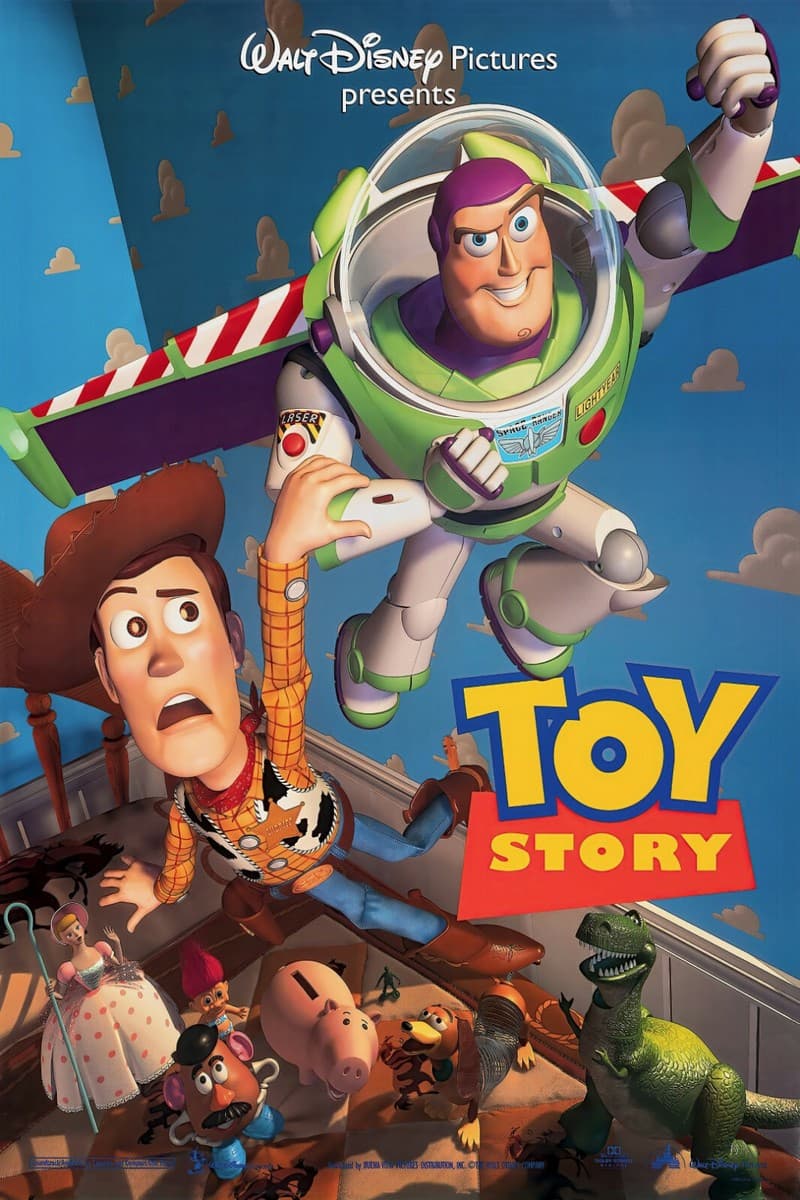
1995 // VHS
Toy Story
A pull‑string cowboy, a deluded space ranger and a small, very particular war over being loved.
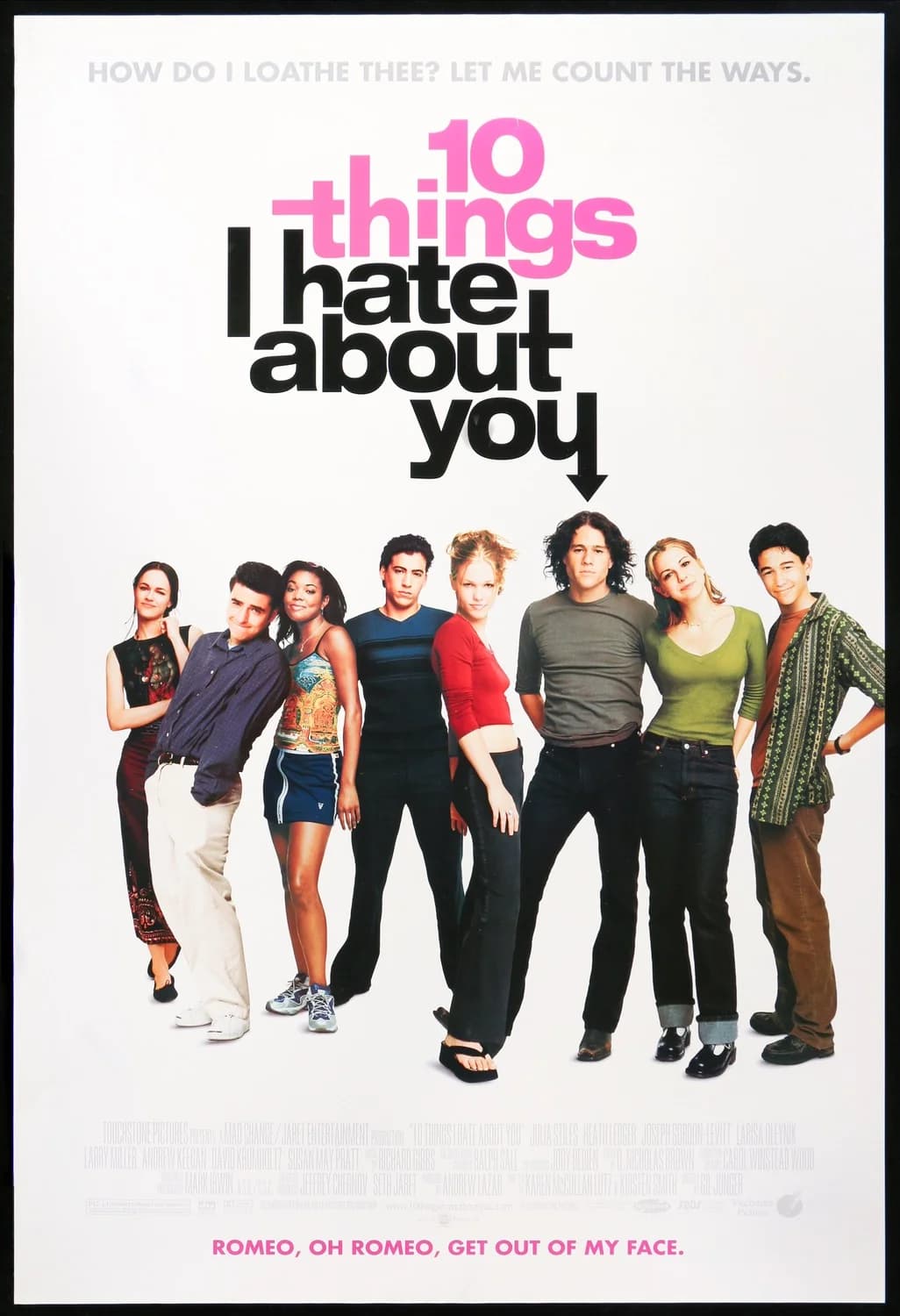
1999 // VHS
10 Things I Hate About You
Sibling rules, a rooftop serenade and one very stubborn Kat — Shakespeare in a school corridor.
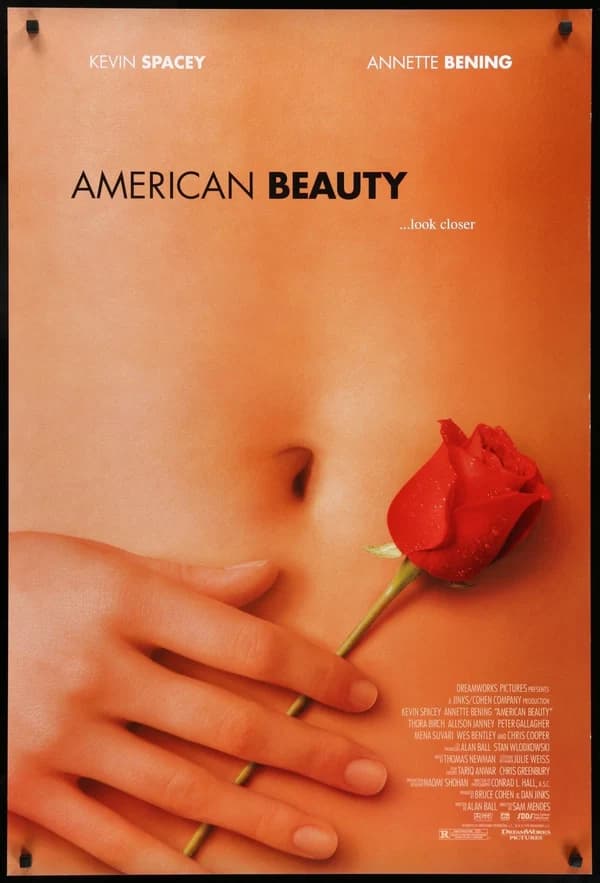
1999 // VHS
American Beauty
Lester Burnham, suburban rot and a midlife argument that still stings.