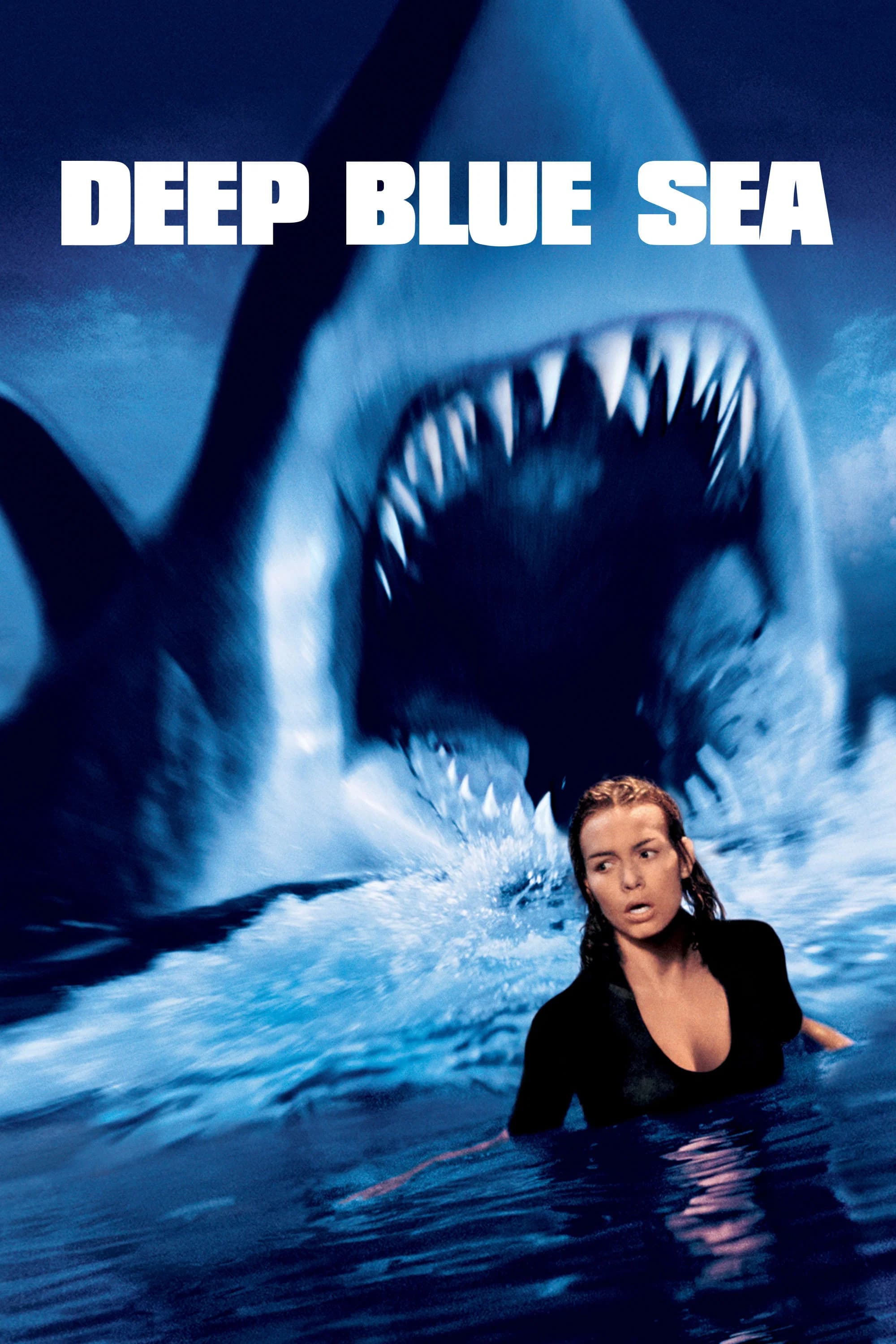
Deep Blue Sea
Brains, blood and bad decisions — and Saffron Burrows in the middle of it all.
// The setup
PLAYBACK STARTED
Deep Blue Sea arrives like a neat, silly dare: take an offshore lab, give its sharks bigger brains, then lock people inside while the creatures work out how to bite back. It’s a late‑90s summer thriller that remembers spectacle first but keeps a moral question planted under the water: what happens when science tries to short‑cut suffering? The reason this one still gets talked about isn't just the sharks — it's the scientist at the centre who made the mess.
THE MOVIE
Dr. Susan McAlester is still the reason this movie works
Deep Blue Sea doesn't open with a clever line or faux‑documentary set‑up. It drops you on Aquatica — an offshore research station whose whole point is to squeeze a brain protein out of mako sharks in the name of Alzheimer’s research — and very quickly makes the human choices as interesting as the teeth.
At the story’s heart is Dr. Susan McAlester, played by Saffron Burrows: the lead scientist whose decision to enlarge shark brains with unauthorised procedures is what turns a controlled experiment into an ethical and practical crisis. The movie frames that as man versus nature, yes, but it keeps bringing the arguments back to the lab bench.
That posture — Renny Harlin’s summer‑thriller direction, the big‑set spectacle and the moral misstep that causes the trouble — is why people still mention Deep Blue Sea when the conversation turns to creature pictures. It’s loud, it’s lean (105 minutes, no dawdling), and it remembers that thrills and ideas can share the same bloodstream.
THE SETUP
The idea that sets Deep Blue Sea in motion
The central idea is simple and efficient: a research station full of people, a handful of newly intelligent mako sharks, and the kind of mechanical failures that turn contained problems into life‑or‑death improvisation.
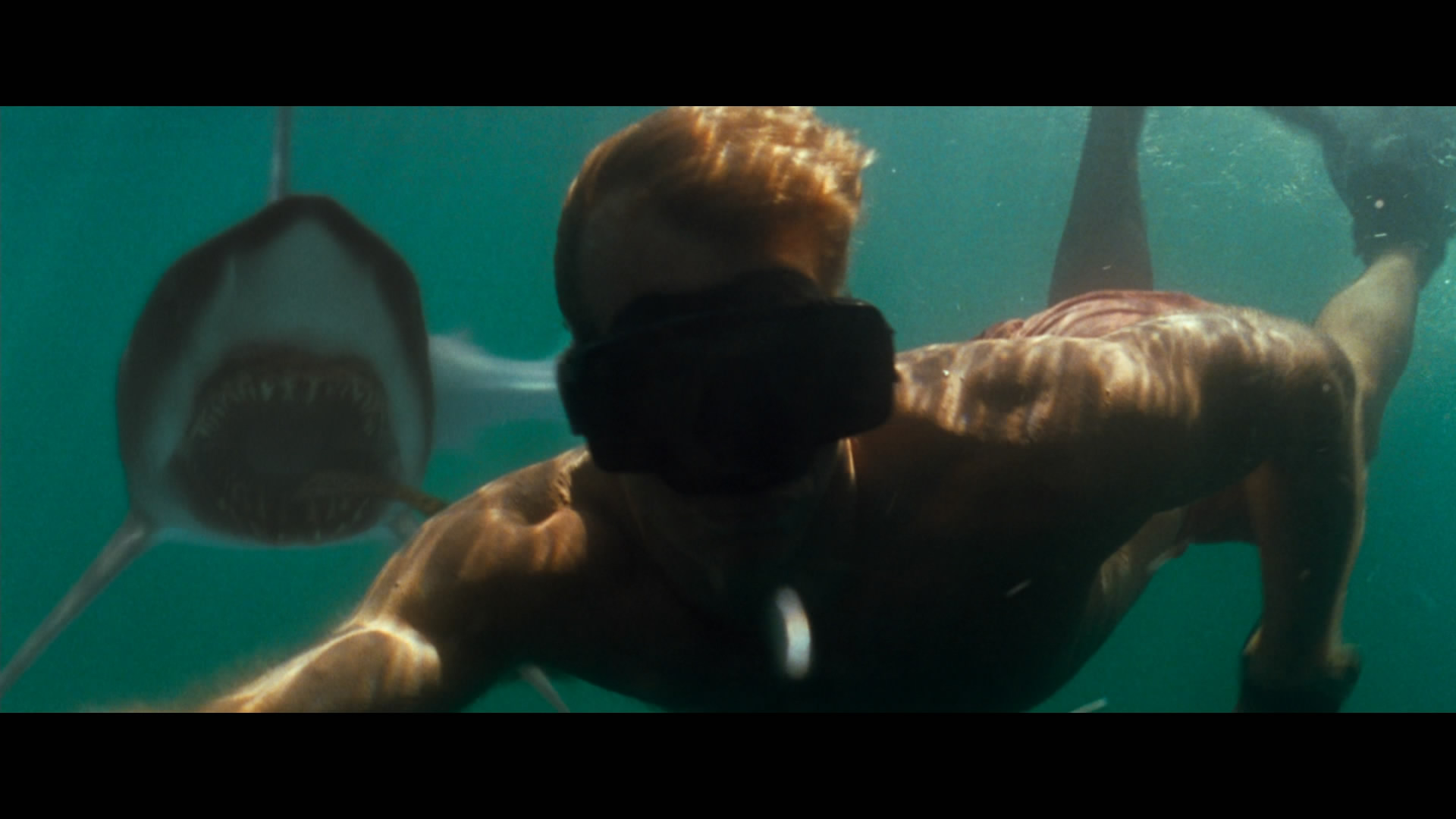
From there the film does what it does best — it turns containment and survival into a series of escalating set pieces. The stranded crew have to fix systems and find a way out while the sharks, newly clever, methodically take apart the very facility meant to keep everyone safe.
It works because the stakes are immediate and physical. There’s no waiting for the moral punchline; survival mechanics (sealed levels, flooding and broken evacuation systems) keep the tension constant and the action moving.
Contemporary notices picked up on that pacing and the way the production turned every mechanical failure into a dramatic problem to solve, even when critics had mixed feelings about plotting details.
THE CHARACTER
Why Dr. Susan McAlester matters
Dr. Susan McAlester isn’t just another scientist who gets eaten. She’s the one who pushes the experiment over the ethical edge. That decision — the unauthorised enlargement of shark brains to harvest tissue — is the engine of the film’s trouble, and so the character carries both practical and moral weight.
Because her choices precipitate the crisis, the audience spends more time with consequences than with surprises. The drama becomes less about ‘who will survive?’ and more about ‘how do we live with the outcome of a well‑intentioned mistake?’
Saffron Burrows plays her, and the film gives McAlester enough centrality that the shark attacks feel like the noisy aftermath of human error rather than random horror. The plot keeps folding back to the lab and the decisions made there, which is what makes the character stick in the head after the movie ends.
In short: she’s less a plot device and more the moral fulcrum. Remove her choices and the movie has teeth but no bite.
THE PERFORMANCE
Why LL Cool J's performance matters
Sherman 'Preacher' Dudley might have been a bit part in a lesser creature feature, but contemporary reviewers singled out LL Cool J’s screen presence and delivery as a positive element.
That attention matters because the film mixes scientists, engineers and ordinary crew, and actors who can hold the room give the ensemble texture. When a cast member stands out it helps knit together the chaos of the set pieces.
Put simply: his moments of personality help the human side of the film feel lived‑in, which matters in a movie where people are one step away from disappearing into a hatchway.
UNDER THE SURFACE
Deep Blue Sea has more on its mind than the plot suggests
On the surface, Deep Blue Sea is a shark movie with action beats. Under it sits a cluster of questions about how far science should push itself. The project at Aquatica is aimed at curing Alzheimer’s; that noble purpose complicates the moral line when researchers start cutting corners.
That ethical friction links neatly to the man‑versus‑nature frame. The film doesn’t treat the sharks as mere monsters; their increased intelligence reads like a direct consequence of human intervention — a predator improved and then weaponised by accident.
The movie also loves the drama of containment. A flooded, damaged station is a pressure‑cooker that sharpens choices: who stays, who goes, who repairs what and at what cost. Those set pieces do more than thrill; they force the characters into ethical decisions under stress.
Finally, there’s a workplace argument here about corporate oversight versus scientific autonomy. When lab choices are made away from scrutiny, the potential for disaster grows — and the film keeps nudging the viewer to reckon with who was allowed to make those calls.
THE FILMMAKING
How Deep Blue Sea was put together
Renny Harlin packages the picture as an effects‑forward summer thriller. That shows in the prioritisation: fast pacing, energetic editing and action beats that treat the station itself as an antagonist.
Contemporary reviewers noticed that approach. They named the production design and the set pieces as reasons the film works when it does, even when opinions were mixed about the plotting or some of the digital work.
The result is a film that feels like it was conceived to be watched loudly: keep the momentum up, move the characters through physical problems and let the spectacle carry emotional hits.
That’s a deliberate kind of filmmaking choice — spectacle first, moral questions threaded in — and it largely explains why the movie still fits comfortably in summer action cycles.
PRACTICAL EFFECTS
The effects work that gives Deep Blue Sea its physical personality
The film was assembled from a toolbox: animatronic shark puppets, CGI and recorded footage of real sharks all play a part in how the creatures show up on screen.
Coverage at the time highlighted a very large principal animatronic mako and multiple smaller practical rigs for closer work — the sort of physical hardware that makes shark encounters feel tactile rather than purely digital.
The production also built sets to be flooded on camera. Several studio stages were partially submersible so the movie could stage real‑time destruction and the escalating danger of rising water.
That combination — practical bite, digital fill, and wet sets built for havoc — gives the film a particular physical personality. The sharks feel like physical things in a collapsing place, which keeps the danger immediate.
PURE 80S
Deep Blue Sea could not belong to any other decade
Arriving in summer 1999, Deep Blue Sea sits at the tail end of a decade that favoured effects‑driven genre fare. The picture’s mix of practical rigs and CGI fits neatly into late‑90s blockbuster habits: visible creatures, big set pieces, and clear spectacle.
Critics at the time repeatedly put the film in conversation with earlier shark movies — Jaws being the obvious reference — but they also noted how it followed modern blockbuster conventions: make the creature visible, then give audiences a reason to care between the shocks.
That late‑90s positioning explains a lot of the film’s instincts: quick pacing, conspicuous effects, and the willingness to trade subtlety for immediate, mechanical threats.
Seen this way, the movie is less a throwback and more a product of a particular moment when studios leaned on creature spectacle and physical set‑piece craft to sell summer tickets.
THE LEGACY
Why Deep Blue Sea still matters
Two follow‑ups — Deep Blue Sea 2 (2018) and Deep Blue Sea 3 (2020) — show that the film left enough of a mark to keep returning to the idea of genetically‑tampered sharks and flooded research stations.
More than sequels, the film carved out a persistent cult reputation among shark‑thriller fans. It’s the title people name when they want a late‑90s, effects‑centred creature movie that mixes moral worry with spectacle.
That afterlife is modest and specific: not a shift in cinema but a durable place in conversations about post‑Jaws shark films and summer creature fare.
Put another way: Deep Blue Sea matters because it keeps being the example people reach for when they want thrills spliced with ethical discomfort.
THE VERDICT
Does Deep Blue Sea still hold up?
Yes — if what you want is a tight, theatre‑ready thriller that pairs practical set‑piece ingenuity with a clear moral engine. The film’s premise (scientists at Aquatica working to isolate a protein for Alzheimer’s treatment) gives it a plausible motive for risk‑taking, and the unauthorised amplification of shark brains is what turns ethical debate into immediate danger.
The inciting failure — a routine airlift/transfer gone wrong that damages the station and strands personnel — is exactly the sort of mechanical escalation the script needs. From there the movie shapes successive action set pieces around the confined‑underwater mechanics: sealed levels, flooding, damaged elevators and submersibles. It’s a neat machine of peril.
Saffron Burrows’ character remains central because the plot keeps returning to the laboratory choices that made the sharks a problem in the first place. The human decisions matter as much as the animal threat. And small casting notes — contemporary reviewers singled out LL Cool J for bringing noticeable presence — help the ensemble feel solid when the water starts coming in.
If you’re put off by late‑90s plotting quirks or some mixed CGI moments, this isn’t the film to change your mind. But if you enjoy practical rigs, claustrophobic escalation and a monster movie that remembers to ask whether humans earned their trouble, Deep Blue Sea still delivers a sharp, splashy good time.
Share this movie
// Keep watching
More movies from the 90s
If Deep Blue Sea is your kind of movie, there's plenty more on the shelves worth rewinding.

1999 // VHS
10 Things I Hate About You
Sibling rules, a rooftop serenade and one very stubborn Kat — Shakespeare in a school corridor.

1999 // VHS
American Beauty
Lester Burnham, suburban rot and a midlife argument that still stings.

1999 // VHS
Any Given Sunday
Al Pacino's coach anchors the chaos of a film about football turned into product — loud, messy and oddly persuasive.