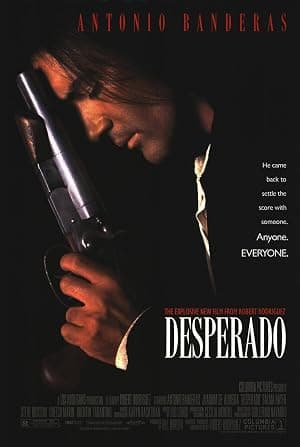
Desperado
A gunslinging musician, a guitar case full of trouble and a director who refuses to play small.
// The setup
PLAYBACK STARTED
Desperado is the film that made you believe a guitar could be a lethal prop and a Mexican border town could feel like a stage for operatic revenge. Robert Rodriguez turned a compact indie idea into a studio thriller with a distinct personality — loud, stylish and single-minded — and El Mariachi is the reason it holds together.
THE MOVIE
El Mariachi is still the reason this movie works
The easiest way into Desperado is the man with the guitar. El Mariachi returns to a border town with one job: find the drug lord who destroyed the life he once had. It’s revenge theatre, dressed up as an action movie.
Everything else — the episodic shootouts, the hidden arsenal in a guitar case, the nightclub set pieces — spins around that single, furious purpose. Rodriguez strings the film together as a sequence of confrontations, each one louder and more showy than the last.
That focus gives the film its personality. Antonio Banderas’s El Mariachi keeps his distance until necessity drags him close; Salma Hayek’s Carolina is both ally and emotional anchor; Joaquim de Almeida’s Bucho is the obvious target. Rodriguez’s mix of stylised violence and western flourishes makes the movie feel like a revenge fable framed as a pop-action picture.
THE SETUP
The idea that sets Desperado in motion
Desperado starts with a tightly held premise: a guitarist-turned-gunslinger returns to town to settle a score. That simplicity matters — it gives the film licence to lean hard on mood and action rather than twisting itself into a complicated plot.
Rodriguez builds the film around recognisable mechanics: a guitar case that doubles as a weapons locker, episodic bar and street shootouts and a central relationship with Carolina, the local bookstore owner who becomes his principal ally. Those elements are the engine; the rest is spectacle.
Crucially, this is not a brand-new idea for Rodriguez. Desperado reworks and enlarges the El Mariachi character from his 1992 debut, taking the same figure and giving him a bigger stage and a studio-scale wardrobe of stunts.
That decision has consequences. Critics at the time liked what the movie did on a visual and action level but often noted the story’s thinness — and that criticism follows naturally from a film that prioritises momentum over exposition.
THE CHARACTER
Why El Mariachi matters
At the centre of Desperado is a character built on absence. El Mariachi doesn’t parade a backstory; he protects himself with silence and a guitar case full of answers. That guardedness is the point: he’s a man defined by what he’s willing to do rather than what he says.
Because the film relies on action beats, the Mariachi’s choices — when to trust, when to explode — create the emotional rhythm. Carolina’s presence as a practical, emotionally connected ally gives him a reason to lower his defences, which in turn allows the movie to shift from lone-avenger set pieces to quieter human stakes.
The fact this is a revisitation of Rodriguez’s own earlier work matters too. Desperado deliberately reframes the Mariachi figure for a larger audience; it’s the same silhouette on a grander canvas, which keeps the character recognisable while letting Rodriguez play bigger with tone and spectacle.
Put plainly: without El Mariachi the film is fireworks. With him, the sparks mean something.
THE PERFORMANCE
Why Antonio Banderas's performance matters
Contemporary coverage singled out Antonio Banderas as the face of Desperado’s appeal. He became the movie’s main point of contact, the figure audiences could hang the film’s swagger and quiet menaces on.
That recognition matters because the film’s momentum depends on its lead holding attention even when the plot thins. Banderas’s casting steers the audience through the shootouts and the silences in equal measure.
In short, the film asked for a star who could carry attitude in small doses and menace in larger ones — and contemporary reaction made clear that Banderas filled that slot in the movie’s public life.
If you want to understand why people still name-check Desperado, start with who was playing the Mariachi.
UNDER THE SURFACE
Desperado has more on its mind than the plot suggests
On the surface Desperado is revenge cinema: a man with a score to settle, moving methodically toward his target. That revenge pulse keeps the film taut and straightforward, and it’s why the action feels urgent rather than gratuitous.
Underneath, Rodriguez is also playing with identity. The Mariachi is both performer and predator — a musician who hides a military-grade toolkit. The collision of those roles makes the character interesting; he is always, in a way, performing the part he needs to survive.
There’s also a deliberate nod to western and spaghetti-western conventions. The lone figure, the dusty border town, the duel-like confrontations: these are recognisable bones dressed up in modern, stylised violence.
Put together, the movie is about what happens when a performer takes the law into his own hands: you get spectacle, yes, but you also get a strange moral economy where music, identity and vigilantism intersect.
THE FILMMAKING
How Desperado was put together
Robert Rodriguez ran a tight ship on Desperado: he wrote, co-produced, directed and even handled the edit. That multi-role approach gives the film a single, often audacious point of view — something that shows in how it favours staccato rhythms and bold set pieces.
Guillermo Navarro is credited as director of photography, and the film’s look leans on high-contrast imagery to make the action pop. The visual choices are not decorative afterthoughts; they’re part of how scenes announce themselves.
Critics at the time noticed the same trade-off most viewers do now: the movie’s visual confidence and action choreography are its strongest cards, while the narrative underneath is comparatively thin.
Those production choices explain a lot about why Desperado feels like a director’s calling card written in gunpowder and guitar strings.
PURE 80S
Desperado could not belong to any other decade
By 1995 the pattern was familiar: filmmakers who proved themselves in the indie world were being given bigger budgets and a longer leash. Rodriguez followed that route, bringing an indie sensibility — he wrote and edited the film himself — into a studio-sized action movie.
Desperado’s journey through the festival circuit (it screened at Cannes) and into a wide August release positioned it squarely in a mid-1990s moment when director-driven, stylised genre films found mainstream attention.
That timing matters. The film’s confidence — in its violence, its tone and its visual swagger — is a product of an era willing to let an auteur’s personality dominate a commercial picture.
So while the movie uses familiar western tropes, its production story is distinctively of its time: indie-to-studio, personal control intact, and unapologetically showy.
THE LEGACY
Why Desperado still matters
Desperado endures partly because it sits in the middle of a trilogy that traces a character across different scales — from the scrappy El Mariachi to the more lavish set pieces here.
It also played a role in the careers of its leads: the film helped raise Antonio Banderas and Salma Hayek’s visibility in U.S. cinema, a fact that turns up repeatedly when people chart their breakthroughs.
Music mattered too. Los Lobos’ instrumental 'Mariachi Suite' from the soundtrack won a Grammy, which is a tidy reminder that Rodriguez’s gamble on marrying music and action paid off in unexpected ways.
And in its moment, Desperado even reached mainstream pop culture: a Best Kiss nomination at the 1996 MTV Movie Awards is the sort of mainstream footnote that keeps a film circulating in memory.
THE VERDICT
Does Desperado still hold up?
Yes — if you’re in the mood for a stylised, lean revenge picture that puts showmanship ahead of complication. The film’s spine is simple: a musician-turned-gunslinger returns to settle a score, and Rodriguez strings a series of set-pieces around that aim.
If you want tight plotting and subtle moral debate, this isn’t the movie for you. But if you enjoy a lead who carries attitude in silence and in action — the Mariachi’s guardedness, his guitar-case trick, the way Carolina grounds him — Desperado delivers on its promise.
It’s also a snapshot of a director making the leap: Rodriguez directing, writing and editing a 106-minute studio picture that reworks his earlier material into something louder and more polished. That combination of ambition and personality still has energy.
So watch it for the swagger, the set pieces and the central figure who makes them matter. Desperado isn’t subtle, but it’s unmistakably itself — and sometimes that’s exactly what you need.
Share this movie
// Keep watching
More movies from the 90s
If Desperado is your kind of movie, there's plenty more on the shelves worth rewinding.
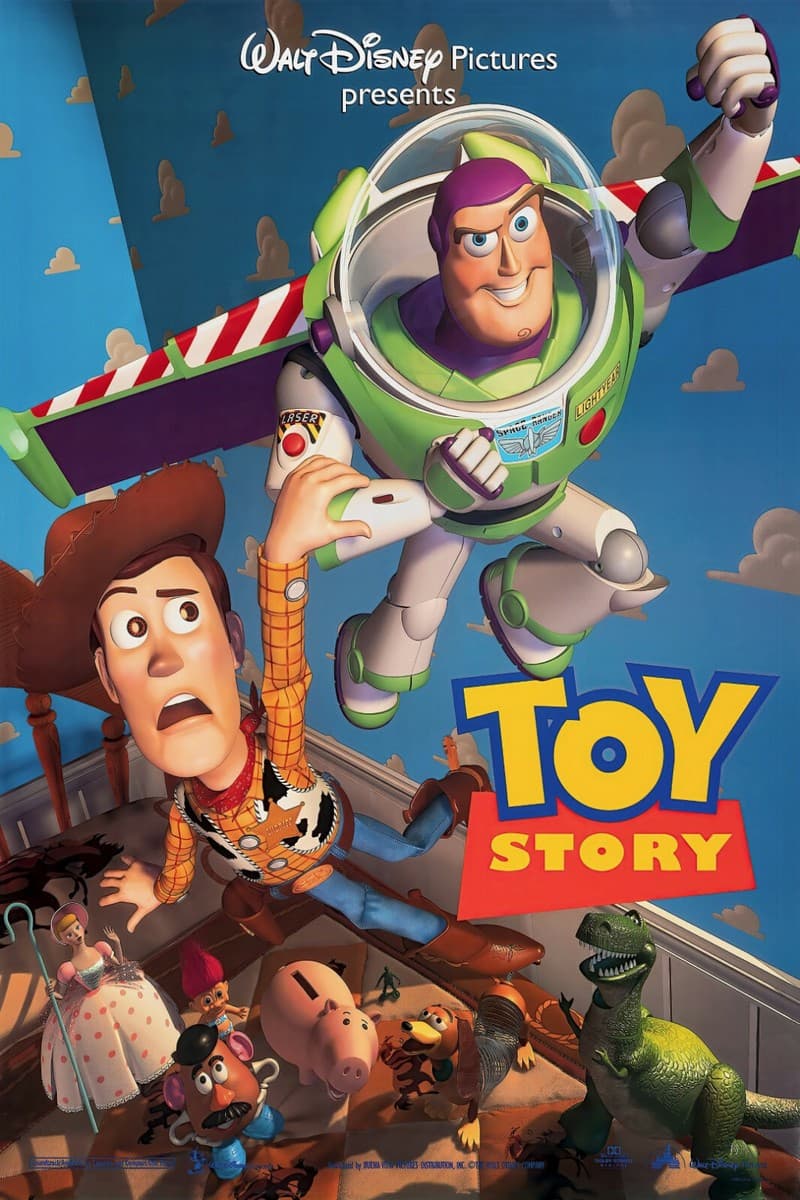
1995 // VHS
Toy Story
A pull‑string cowboy, a deluded space ranger and a small, very particular war over being loved.
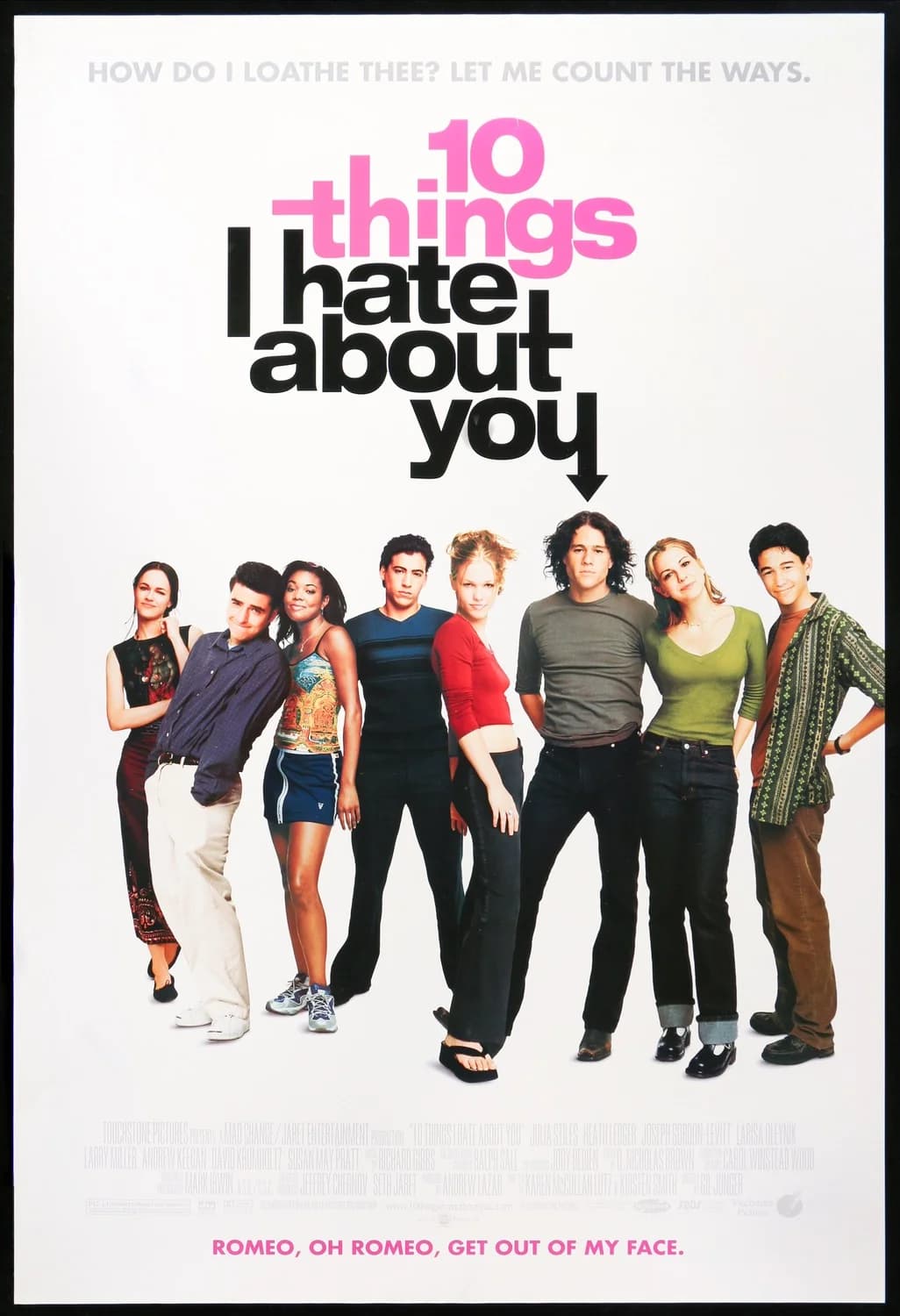
1999 // VHS
10 Things I Hate About You
Sibling rules, a rooftop serenade and one very stubborn Kat — Shakespeare in a school corridor.
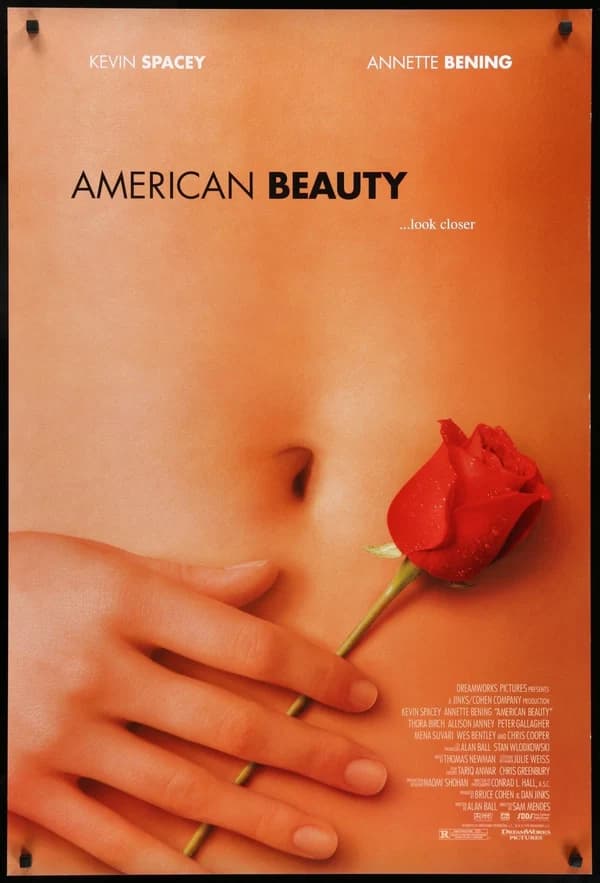
1999 // VHS
American Beauty
Lester Burnham, suburban rot and a midlife argument that still stings.