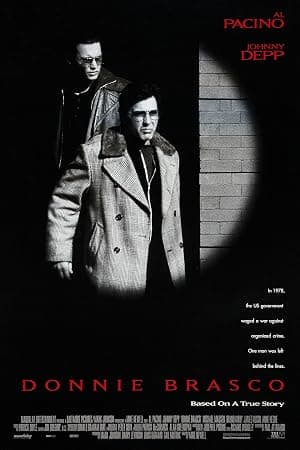
Donnie Brasco
Loyalty, lies and a friendship that collapses under its own truth.
// The setup
PLAYBACK STARTED
Donnie Brasco is the kind of crime movie that sneaks up on you: it looks like another undercover thriller on paper, but it becomes a study in two men who teach one another how to be human — and how dangerous that can be. Mike Newell directs a slow-burning, character-first piece about trust, betrayal and the cost of living a double life.
THE MOVIE
Benjamin "Lefty" Ruggiero is still the reason this movie works
You could come to Donnie Brasco for the undercover caper and stay for something narrower and stranger: the slow, oddly tender friendship between an ageing mobster and the cop who lives inside his life. The film stages an FBI infiltration of the Bonanno family in the 1970s, but the opening engine — Donnie entering Lefty Ruggiero’s circle and earning his trust — is the human hinge that makes everything else click.
That hinge levers a central problem: Joseph D. Pistone is a methodical undercover agent whose increasing emotional involvement with the crew complicates his job. The drama isn’t only about evidence or arrests; it’s about how loyalty to a friend begins to look like betrayal of an employer.
Mike Newell steers the whole thing at a deliberate pace over roughly two hours and change, giving Johnny Depp’s Donnie and Al Pacino’s Lefty space to find each other and make the emotional cost of that bond plain.
THE SETUP
The idea that sets Donnie Brasco in motion
At its simplest, Donnie Brasco is about a professional line that bends until it breaks. Pistone’s duty as an FBI agent collides with a genuine loyalty to Lefty, and that conflict is where the plot lives.
The movie doesn't rely on cartoonish shoot-outs or exaggerated showdowns to do its work. Instead it uses the procedural tools of undercover work — surveillance, wiretaps and carefully staged criminal moves — to build a record of criminality while also tracking how Donnie changes inside the crew.
That double register — evidence-gathering on one hand, intimate human ties on the other — lets the film keep both a pulse of procedural momentum and a quieter, almost domestic pressure.
So the setup works because the mechanics of the operation are credible enough to sustain tension, and because the emotional stakes (friendship, debt, trust) make every step feel costly.
THE CHARACTER
Why Benjamin "Lefty" Ruggiero matters
Lefty is the film’s human anchor. He’s presented as an ageing, debt-burdened Bonanno crew member who prizes loyalty and is painfully exposed to betrayal — the kind of man for whom honour is both currency and fragile pride.
That vulnerability makes Lefty more than a mob stereotype. His relationship with Donnie is paternal: he teaches, he trusts, he wants a hand to steady him. In practical terms, Lefty is the access point into the family; narratively, he’s the person whose trust transforms an investigation into something agonisingly personal.
Because the movie foregrounds male friendship and mentorship, Lefty’s choices and disappointments stop being background colour and become the scenes’ fulcrum. When the crew’s internal politics shift, and the emotional balance wobbles, Lefty is where the consequences hit hardest.
Put simply: remove Lefty and Donnie Brasco is a competent undercover movie. Keep Lefty and the same story becomes a study of care, shame and what an older man can lose when the people he counts on change.
THE PERFORMANCE
Why Al Pacino's performance matters
One concrete piece of contemporary evidence helps explain why Lefty is so felt: reviews of the time frequently flagged the on-screen chemistry between Al Pacino and Johnny Depp as a principal strength.
That chemistry matters because the emotional heart of Donnie Brasco is a relationship, not a plot mechanic. If audiences buy the warmth and trust between the two leads, every operational choice becomes more urgent.
So, while a performance can’t carry the whole movie on its own, the critical response at release suggests Pacino and his co-star found a rhythm that made the central friendship convincing and, therefore, painful when it fractures.
UNDER THE SURFACE
Donnie Brasco has more on its mind than the plot suggests
Beneath the wiretaps and stakeouts sit a handful of clear, stubborn ideas: loyalty versus duty, identity and the moral grey of law enforcement. The movie wants you to feel how personal ties can undermine institutional purpose.
There’s also the question of double life. The undercover job turns a man into two people, and that split is both practical — for the investigation — and existential: who is Donnie when he’s not wearing his federal hat?
Male friendship and mentorship are threaded through all of this. The film stages an unlikely, intense bond between a younger man and an older one on opposite sides of the law, and that bond is where guilt, care and obligation collide.
Finally, Donnie Brasco doesn’t pretend law is clean. The moral ambiguity of policing and the long-term consequences of undercover work are folded into the story’s choices, so the audience keeps squinting at who is in fact compromised by the relationship.
THE FILMMAKING
How Donnie Brasco was put together
The film’s credits point to a solid, traditional crew: Peter Sova is listed as director of photography, Jon Gregory as editor and Donald Graham Burt as production designer, with Patrick Doyle supplying the score. Those names tell you this is an assembly of craftspeople aiming for clarity and weight rather than flashy reinvention.
Mike Newell’s direction keeps the focus squarely on the characters and their conversations; the production choices — as credited — support that intention by giving those scenes shape and rhythm.
Ultimately, Donnie Brasco feels composed rather than showy, the work of technicians and designers building an environment for an interpersonal drama to play out.
If you’re watching for technical bravura, this isn’t the film to catalogue it. But if you care about how visual and editorial craft can hold a character study together, the credits on this one point in the right direction.
PURE 80S
Donnie Brasco could not belong to any other decade
Donnie Brasco arrived in 1997 at a moment when 1990s cinema was still interested in realistic, character-driven takes on organised crime. The film’s patient attention to procedure and personal cost fits neatly within that wider trend.
There’s also a lineage to consider: the movie’s development was delayed earlier in the decade after the success of Goodfellas, and that proximity in sensibility — the focus on lived-in crime worlds and human consequences — is visible in how Donnie Brasco structures its scenes.
Critics at the time were already placing the film among other contemporary mafia pictures because of this shared appetite for procedural detail and emotional aftermath.
So while its story is rooted in the 1970s, the film’s temperament and the conversations around it are distinctively 1990s.
WATCHING IT NOW
What has aged — and what hasn't
The relationship at the centre of Donnie Brasco — that intense mentorship and friendship between two men — still reads as the film’s strongest asset. It’s an emotional engine that doesn’t depend on trendy flourishes, so it retains force for a modern viewer.
The movie’s character-driven, sober approach to organised crime also survives the years better than more ostentatious genre fare. Because it treats criminal life as a human ecology rather than a soap opera, the stakes feel lived-in rather than staged.
Where it might feel more of its time is in the wider catalogue of 1990s mafia films. The movie sits comfortably in that conversation, but it doesn’t try to reframe the genre so much as apply a quiet, humane scalpel to it.
In short: the core relationships and the realistic temperament are the parts that age best.
THE LEGACY
Why Donnie Brasco still matters
There are a few concrete signals of the film’s standing. Paul Attanasio’s adapted screenplay earned an Academy Award nomination, and the movie’s release helped keep public interest alive in Joseph Pistone’s real-life undercover operation.
That interest didn’t stop at the cinema door: the Pistone memoir and the film together sustained further adaptations and televised treatments of the case, so the story’s reach continued beyond a single release.
On a smaller note, the year’s awards season recognised Anne Heche in part for her work that included this picture, which is one more sign the film was noticed for its performances.
Taken together, these points explain why Donnie Brasco remains a useful reference when people discuss serious, character-focused mafia dramas from the 1990s.
THE VERDICT
Does Donnie Brasco still hold up?
Yes — but with a small, important rider. Donnie Brasco works today insofar as you’re watching for a character study about divided loyalties rather than for sensational thrills. The film dramatizes an FBI undercover infiltration of the Bonanno family, and its inciting move — Donnie earning Lefty’s trust — remains the story’s clearest, most affecting transaction.
That central conflict — duty versus a growing personal loyalty — is the film’s engine. The procedural elements (surveillance, wiretaps, staged operations) keep a steady beat, but what lingers is how Donnie slowly immerses into mob life and how that immersion complicates the handlers’ work.
Contemporary responses help explain the picture’s continuing pull: reviewers singled out Johnny Depp’s gradual, restrained transformation into the undercover role and noted a memorable late scene from Al Pacino; critics also frequently praised the chemistry between the two leads. Those qualities are still persuasive reasons to watch.
If you want a muscular, myth-making gangster epic, this isn’t it. If you want a careful, humane film about what undercover work does to ordinary people — and about a friendship that becomes both shelter and trap — Donnie Brasco still repays your time.
Share this movie
// Keep watching
More movies from the 90s
If Donnie Brasco is your kind of movie, there's plenty more on the shelves worth rewinding.
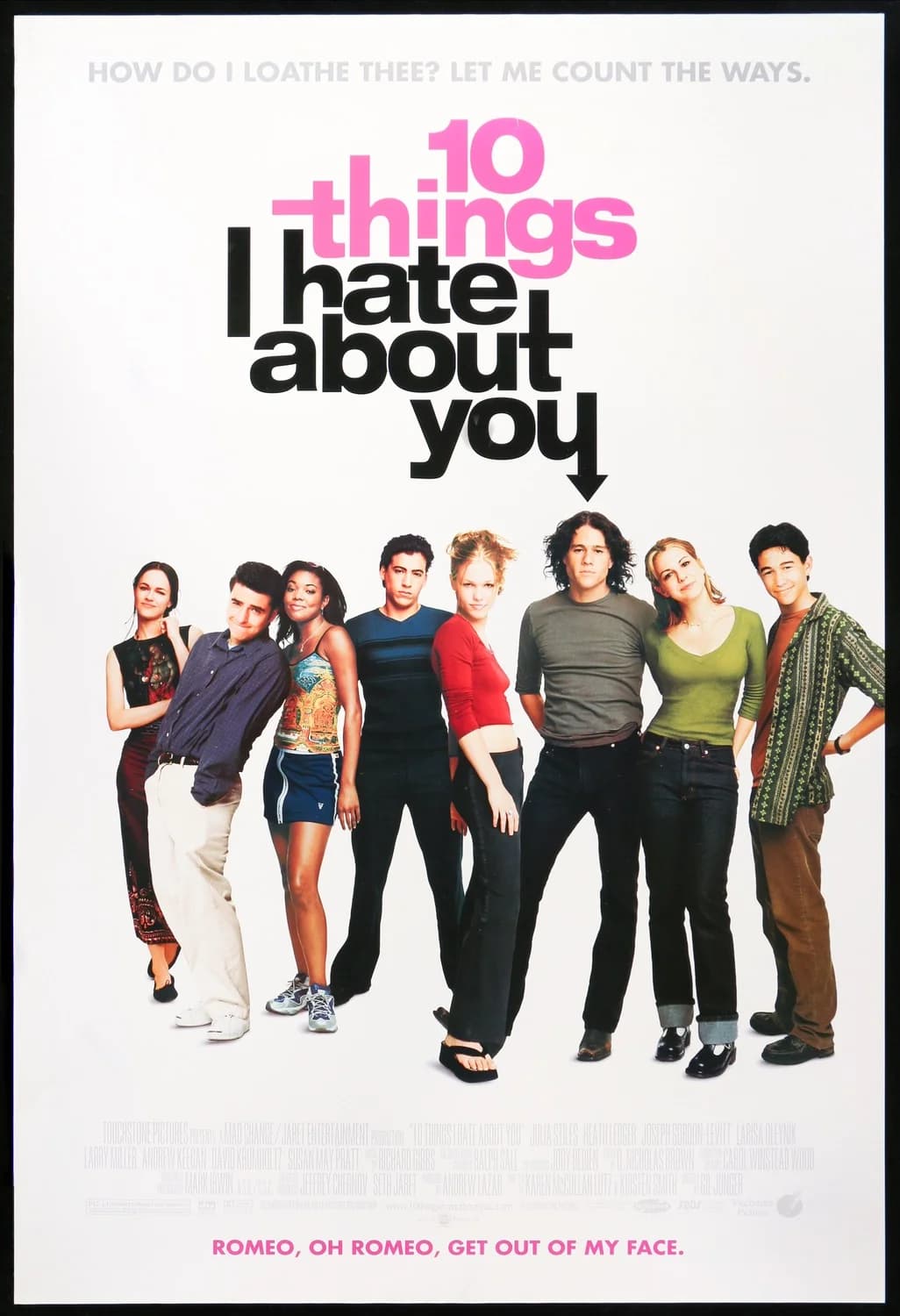
1999 // VHS
10 Things I Hate About You
Sibling rules, a rooftop serenade and one very stubborn Kat — Shakespeare in a school corridor.
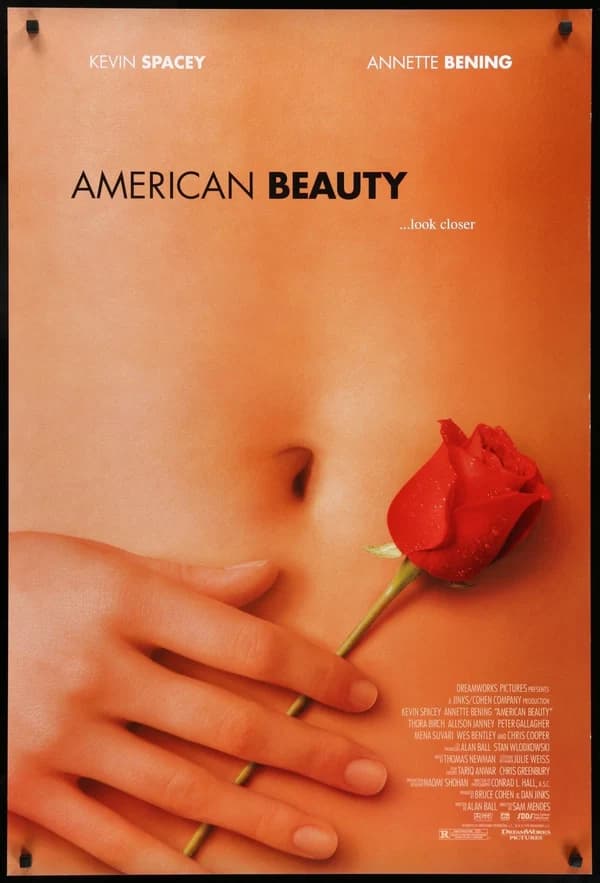
1999 // VHS
American Beauty
Lester Burnham, suburban rot and a midlife argument that still stings.
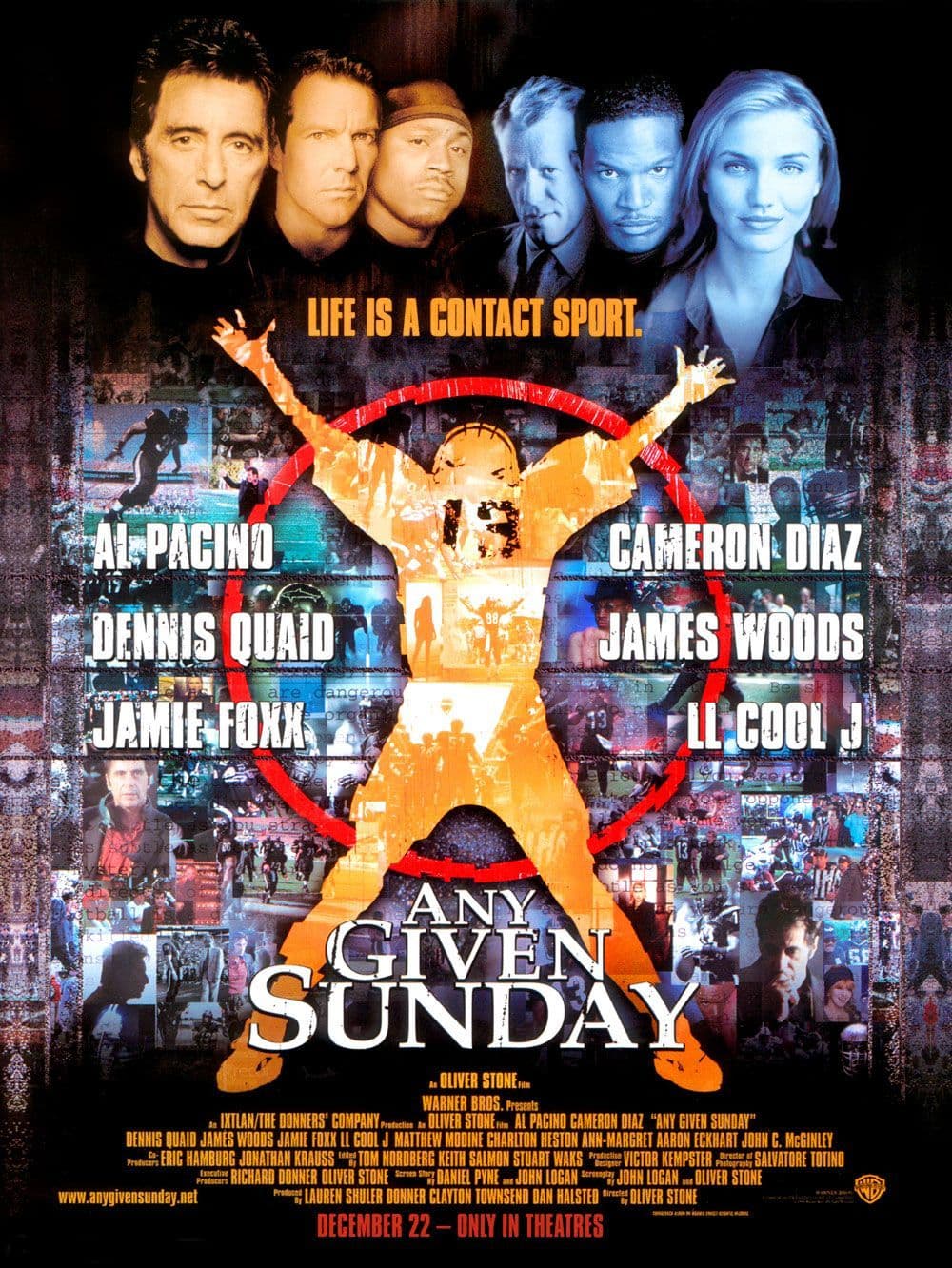
1999 // VHS
Any Given Sunday
Al Pacino's coach anchors the chaos of a film about football turned into product — loud, messy and oddly persuasive.