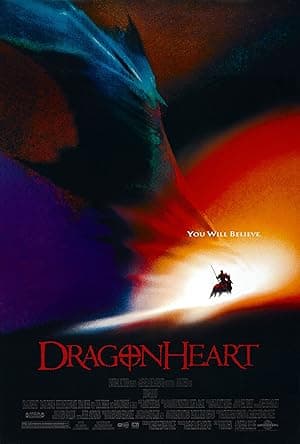
Dragonheart
A grumpy knight, a talking dragon and a ridiculous shared-heart problem — and it still somehow feels like a proper adventure.
// The setup
PLAYBACK STARTED
Dragonheart is the kind of film that arranges its ingredients with confidence: a disillusioned knight, a chatty dragon voiced by Sean Connery, and a plot hinge so bonkers it becomes moral ballast. Revisit it and you find a movie that wants to be both a buddy-road picture and an old-fashioned tale about honour — and mostly pulls both off.
THE MOVIE
Bowen is still the reason this movie works
If you remember one thing about Dragonheart it is probably not the logistics of a shared organ. It’s Bowen. He’s the film’s human anchor: a former Knight of the Old Code who has gone from idealistic protector to pragmatic dragonslayer-for-hire. That mixture of honour and world-weariness gives the whole picture an emotional centre to hang its more fanciful ideas on.
The fantasy hook — a dragon called Draco giving part of his heart to a wounded boy, creating a literal life-link — sounds, when you say it out loud, like the start of a daft fairy tale. But because the film commits to the consequences of that act, the gimmick becomes the engine of real stakes instead of a throwaway trick.
Rob Cohen directs a brisk 103-minute adventure that pairs Dennis Quaid’s Bowen with Sean Connery’s voice for Draco. The film wants to be a buddy movie, a medieval romance and a small moral play about the Old Code, and it’s Bowen — grumpy, pragmatic, still carrying a code he rarely gets to follow — who keeps all of that from toppling over into nonsense.
THE SETUP
The idea that sets Dragonheart in motion
The premise is tidy and clever enough to carry a lot of tonal shifts. Set in a legendary medieval Britain, the story follows Bowen — once a knight who lived by an Old Code of honour — now scraping by as a dragon-hunter and bounty man.
Early on, Draco saves a boy by giving him part of the dragon’s heart. That single act creates a literal bond between dragon and human that turns into a narrative complication when the boy grows up into King Einon. Because Draco and Einon share life, killing the tyrant king is not a straightforward option.
That shared-heart device does the heavy lifting: it turns what could be a simple monster-hunt into a moral puzzle. The movie cleverly uses smaller, episodic set-pieces — notably a running ‘scam’ where Draco and Bowen stage dragon slayings to collect bounties — to establish the partnership and Draco’s personality before the central dilemma tightens the screws.
It’s a neat bit of plotting because the fantastical element isn’t just spectacle; it forces characters to find alternatives to brute force, which makes the film’s concerns about power, loyalty and sacrifice feel earned.
THE CHARACTER
Why Bowen matters
Bowen is the human measure in a film that otherwise traffics in dragons and kings. He’s a former Knight of the Old Code who, disillusioned with institutions and power, makes a living as a pragmatic bounty hunter. That tension — a man who still believes in something purer but lives by rougher rules — gives the story its emotional friction.
He’s not a tragic marble statue of virtue. Bowen feels like someone who knows how to get things done and who keeps his old beliefs in reserve for when they’re actually needed. That undercuts any potential mawkishness from the dragon’s more fantastical elements and grounds the friendship at the film’s heart.
The supporting presence of Brother Gilbert is part of that moral scaffolding: the movie sets Bowen against a world of shifting loyalties, and his relationships remind us why the Old Code matters even when it’s inconvenient.
Ultimately Bowen matters because he is the hand that steers the strange plot turns. Without his combination of cynicism and honour the dragon’s big moral problem would just be an abstract puzzle; with him it becomes a human choice.
THE PERFORMANCE
Why Dennis Quaid's performance matters
Contemporary notices tended to point at Dennis Quaid as the film’s steady human core. His Bowen reads as an affable, roguish hero rather than a mythic, remote knight.
That approach matters because the movie is juggling tones: it needs someone who can sell banter and also carry the Old Code’s weight when stakes rise. Quaid’s screen presence is the glue that holds those tonal switches together.
Put bluntly: Bowen is the role that makes the dragon feel like a partner instead of a spectacle, and the critics of the time singled Quaid out for providing that central human energy.
UNDER THE SURFACE
Dragonheart has more on its mind than the plot suggests
On paper Dragonheart is a creature-feature with a silly premise. In practice it’s quietly interested in a handful of clear moral ideas: friendship that crosses species, the stubbornness of an old chivalric code, how power warps a man, and the demands of sacrifice when lives are linked.
The friendship between Bowen and Draco isn’t just cute banter; it’s the thing that tests ideas of honour. When a king owes his life to a dragon, questions about duty and responsibility stop being abstract and become urgent.
The corrupting influence of power shows up in the contrast between the Old Code and the political world that Einon comes to embody. That contrast lets the film play small moral scenes — arguments, decisions, refusals — that feel weightier because of the life-link complicating direct action.
And because lives are shared, sacrifice isn’t rhetorical. The film keeps nudging the audience toward practical choices rather than grand speeches, which keeps the themes from turning into sermonising.
THE FILMMAKING
How Dragonheart was put together
One of the quieter production choices that pays off is the way the crew gave actors something tangible to work with. Rather than relying solely on off-screen computer imagery, the production used practical reference models and a full-sized puppet element on set so performers and camera crews could stage believable interactions with the dragon.
That practical foundation matters in scenes where human reactions have to land against an absent creature: involving puppeteered elements lets moments feel like proper exchanges instead of actors pretending something is there.
It’s a straightforward decision, but one that helps the movie feel lived-in. Small, practical commitments like that prevent CGI from floating free of the humans it’s meant to be part of.
PRACTICAL EFFECTS
The effects work that gives Dragonheart its physical personality
Dragonheart’s dragon is a hybrid creature — the result of careful real-world tooling combined with then-cutting-edge digital animation. ILM didn’t simply hand a script to computers; the studio built practical and puppeteer-controlled components for on-set interaction.
Tippett Studio contributed physical maquettes through many design iterations. Those maquettes acted as shape and motion references for the animators who would later build the dragon in CG.
Crucially, ILM used photographic and video reference of Sean Connery’s face and vocal performances to animate Draco’s facial moves and lip-sync via their Caricature (CARI) system. The result is a dragon whose speech and rhythm are explicitly tied to the actor’s recorded voice rather than being imagined afterward.
PURE 80S
Dragonheart could not belong to any other decade
Dragonheart is very much a 1990s visual-effects movie: it arrived in the immediate technical wake of Jurassic Park and joined a wave of films trying to create photoreal CG characters that could carry emotion and dialogue.
Hiring top visual-effects houses and traditional creature designers was part of that decade’s playbook. The film pairs heavy digital pipelines with practical creature expertise — ILM’s digital muscle alongside Tippett Studio’s hands-on design work — a combination that typified the era’s approach to bringing non-human characters to life.
That mixture of old-school fabrication and new digital animation gives the film a specific technical personality: ambitious, hybrid, and rooted in the era’s drive to make believable talking creatures.
WATCHING IT NOW
What has aged — and what hasn't
Seen now, Draco still carries a certain technical curiosity. VFX histories and retrospectives keep pointing back to the character as an early example of a photoreal CG figure whose facial animation and vocal coupling drew attention at the time and still does in reappraisals.
That doesn’t mean the dragon’s digital skin is seamless everywhere; commentators note that the effects sometimes read as early-era CGI. But the character work — the voice and the decisions about how Draco behaves — retain a charm that modern viewers can still appreciate.
The film’s human core also helps it age better than a purely effects-driven picture might. Small supporting threads — like Brother Gilbert — and Bowen’s steadfast code keep the emotional stakes recognisable rather than washed out by spectacle.
Put simply: some technical pieces show their age, but the dragon’s character and the moral knots at the story’s centre still give the film much of its watching value.
THE LEGACY
Why Dragonheart still matters
Part of the film’s afterlife is technical. The movie picked up an Academy Award nomination for Best Visual Effects, and ILM’s facial-animation work on Draco — including the Caricature/CARI approach to lip-sync — gets cited in discussions of 1990s VFX progress.
That technical pedigree isn’t empty showboating: it’s the reason Draco still gets talked about in VFX histories, and why the film is referenced when people trace how digital characters learned to carry personality.
There’s also a more prosaic legacy: Dragonheart spun off a media franchise, with sequels and prequels that kept returning to the idea of dragons and shared fate, even when the original cast weren’t always involved.
So it matters partly as a milestone in effects craft and partly as the start of a continuing franchise conversation about dragons, honour and the costs of power.
THE VERDICT
Does Dragonheart still hold up?
Yes — with a couple of caveats. If you want a flawless, modern CGI showcase, it’s not that. But if you want an adventure that pairs a grumpy, honour-bound human lead with a genuinely characterful dragon voice, this still delivers. The central conceit — a dragon giving part of his heart to a boy, binding their fates — raises moral stakes that the film uses for real, not just as a visual trick.
Bowen’s predicament matters because it turns assassination into an ethical problem rather than a simple shootout. The film keeps returning to that shared-heart tension and forces characters to improvise, which makes the story feel cleverer than its broad genre labels might suggest.
Dennis Quaid’s Bowen is the human glue; contemporaries noted his affable, roguish presence as the kind of lead who can trade banter with a dragon and still make honor feel like something you live by. Sean Connery’s vocal turn for Draco is another central piece — the movie’s decisions about animating the dragon’s face and syncing it to his voice were part of why the character registered then and still does when people revisit it.
So watch it for the oddness of the premise turned into a moral engine, for the buddy-dynamics between knight and dragon, and for a period of filmmaking where practical puppets and nascent photoreal CG were learning to talk to one another. It’s a film that rewards an afternoon’s indulgence: not perfect, but curiously sincere, and that sincerity still counts.
Share this movie
// Keep watching
More movies from the 90s
If Dragonheart is your kind of movie, there's plenty more on the shelves worth rewinding.
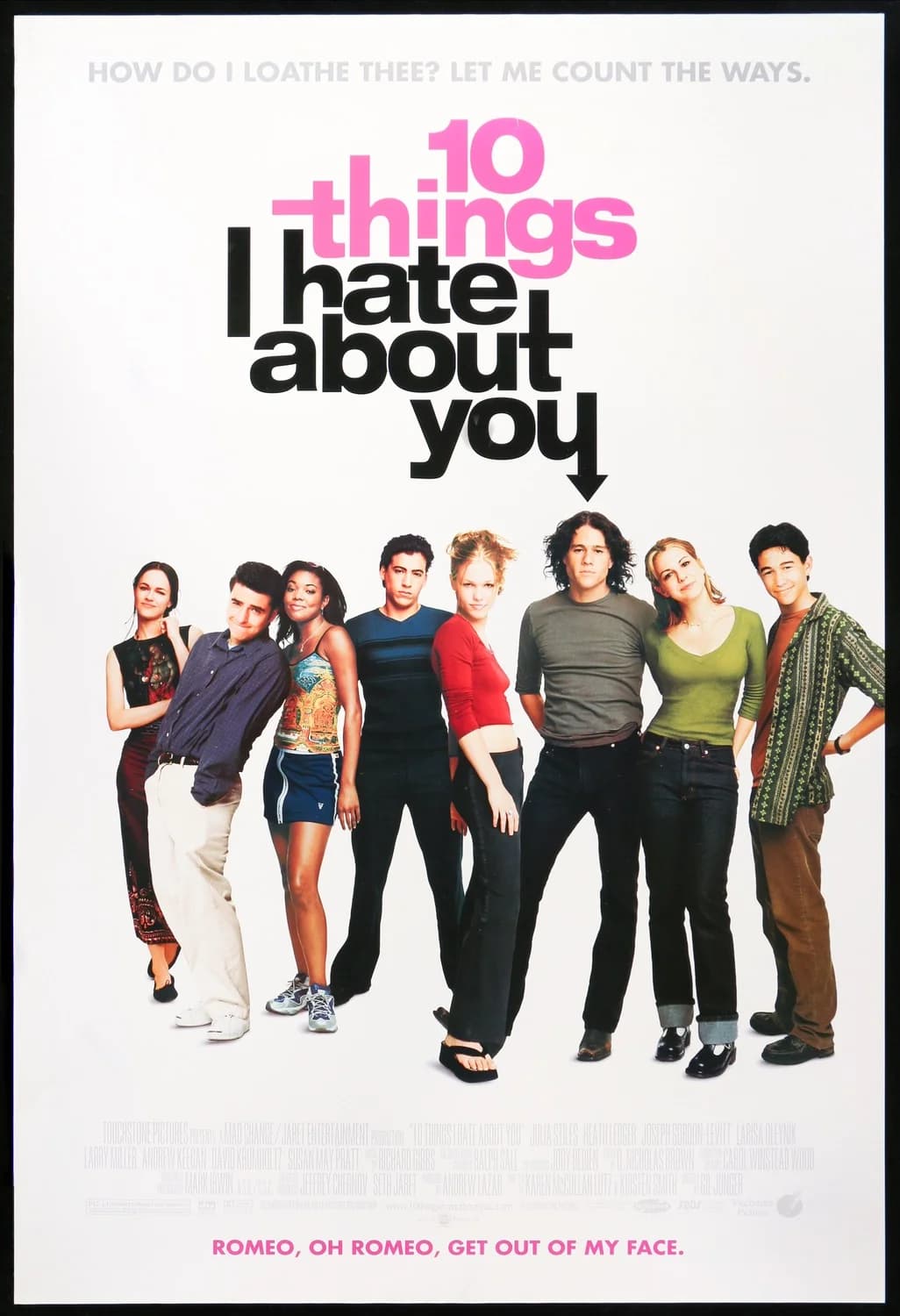
1999 // VHS
10 Things I Hate About You
Sibling rules, a rooftop serenade and one very stubborn Kat — Shakespeare in a school corridor.

1999 // VHS
American Beauty
Lester Burnham, suburban rot and a midlife argument that still stings.
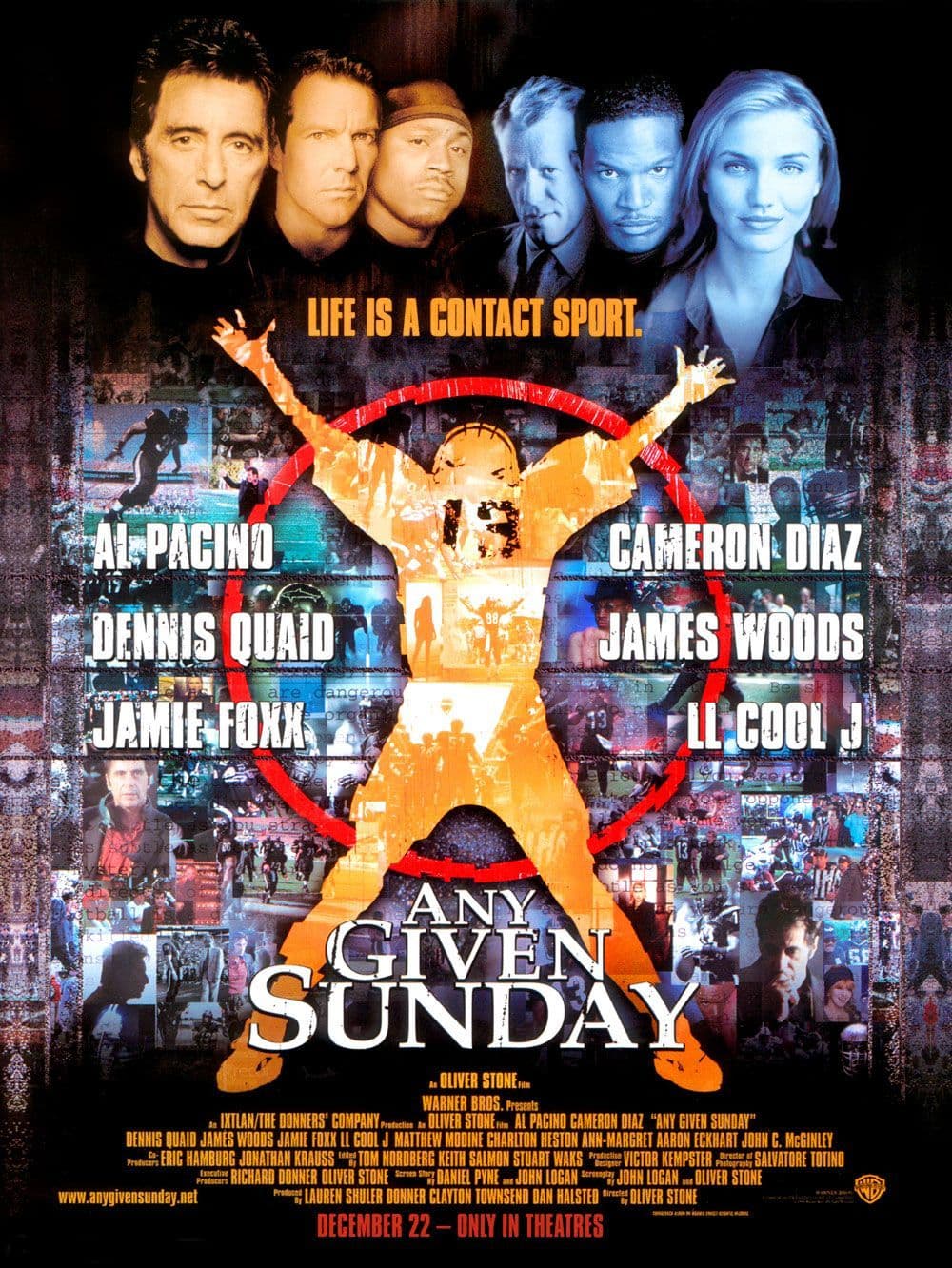
1999 // VHS
Any Given Sunday
Al Pacino's coach anchors the chaos of a film about football turned into product — loud, messy and oddly persuasive.