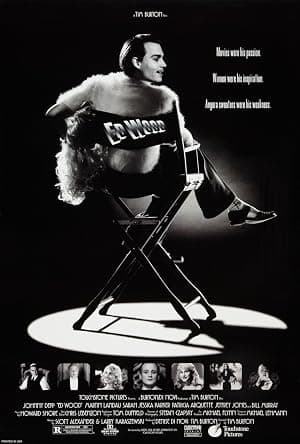
Ed Wood
An affectionate, oddly stubborn portrait of a man who refused to stop making movies.
// The setup
PLAYBACK STARTED
Tim Burton's Ed Wood is a black‑and‑white valentine to someone who loved cinema harder than anyone gave him credit for. It follows a relentlessly optimistic filmmaker trying to get by in late‑1950s Hollywood — and builds a movie out of the people who refuse to let him sink.
THE MOVIE
Ed Wood is still the reason this movie works
This is a film fuelled by one utterly specific obsession: a man insisting on making earnest movies even when the industry has no time for him. Burton points his camera at Edward D. Wood Jr. at the point in his life when keeping a career alive means improvising, recruiting eccentrics and never, ever stopping.
That refusal — nervy, daft, touching — gives the film its shape. Johnny Depp plays the filmmaker and Martin Landau plays the fading horror star who becomes his companion; around them a cast of oddballs (Dolores Fuller, Kathy O'Hara, Vampira, Tor Johnson and more) form an informal company the film keeps coming back to.
Burton and his team also made deliberate production choices to sell the period and the mood: a monochrome presentation, a 126‑minute running time and a score by Howard Shore, all of which help turn a string of failed productions into a cohesive portrait of artistic obsession.
THE SETUP
The idea that sets Ed Wood in motion
At its simplest: the movie is about a filmmaker who keeps making films even though hardly anyone takes him seriously. That stubborn desire to tell stories — earnest, poorly funded, and often ridiculous — is the engine of the picture.
Rather than a single neat arc, the screenplay adapts episodes from a biography and delivers them in an episodic way: a string of shoots, failed deals and awkward personal moments that add up to a life rather than a conventional rise‑and‑fall story.
Those recreated production sequences — the sets of the terrible films within the film — do most of the heavy lifting. They pop up again and again, showing both how Wood worked and how low‑budget filmmaking looked in that late‑1950s world.
Because the structure keeps returning to those shoots, the movie never lets you forget why Wood carries on: not for money or fame, but for the making itself.
THE CHARACTER
Why Ed Wood matters
What lodges in the memory is not plot mechanics but personality. The movie gives us a man who is almost defiantly upbeat: constantly energetic, forever pitching ideas and assembling a cast of misfits to bring them to life.
That optimism is theatrical — it makes him lovable and exasperating in equal measure — and it shapes how the film treats failure. Failed shoots and cheap props are not just jokes; they’re the practical evidence of someone who treats filmmaking as an act of conviction.
Ed’s world is composed of people who matter to him: a fragile friendship with a former horror star, intimate relationships that respond differently to his cross‑dressing, and an informal stock company of eccentrics whose quirks and needs fill the film's emotional margins.
Because the picture keeps looping back to his productions and to those relationships, Ed stops being a caricature of incompetence and becomes a portrait of someone whose life is organised around making art, however messy and misfiring it may be.
THE PERFORMANCE
Why Martin Landau's performance matters
Martin Landau's depiction of Bela Lugosi was singled out from the start and it culminated in an Academy Award for Best Supporting Actor.
Contemporary critics flagged Landau's work as one of the film's main strengths, an element reviewers returned to when assessing why the movie carried genuine weight beneath its comic surface.
That recognition matters because it gives the movie authority when it shifts from affectionate farce to something more delicate and sombre.
Put simply: the film's laughter and its tenderness sit better together because Landau's portrayal was taken seriously by the people who write about movies.
UNDER THE SURFACE
Ed Wood has more on its mind than the plot suggests
On the surface the film is charmingly comic; underneath it is a study of outsider artistry — a defence of people who keep making work when the commercial rewards are absent.
Friendship and dependency thread through the story: the picture shows how relationships can be simultaneously enabling and precarious, especially when one partner is both career anchor and emotional lifeline.
Identity and gender expression are also present in the material the screenplay drew from, so the film doesn't treat Wood’s cross‑dressing as a punchline but as part of a more complicated personal picture.
Finally, there’s an argument running through the film about enthusiasm versus commercial success: it celebrates the stubborn, sometimes deluded faith of someone who values the act of making above the market's verdict.
THE FILMMAKING
How Ed Wood was put together
Burton assembled a production team that could sell the look and texture of late‑1950s low‑budget filmmaking: Stefan Czapsky on the camera and Tom Duffield on production design collaborated to recreate that worn, improvised world.
The editing deliberately intercuts the staged reproductions of Wood's own films with behind‑the‑scenes and quieter interior moments, creating a period tableau rather than a straight, documentary‑style chronology.
That choice — to treat the shoots as recurring set pieces within a broader life tableau — helps the movie feel less like a list of failures and more like a patchwork portrait.
Creditable technical craftsmanship underpins the storytelling: the crew’s decisions about how to put sequences together give the film its period identity and keep the tone steady across scenes that could easily have felt disjointed.
PRACTICAL EFFECTS
The effects work that gives Ed Wood its physical personality
A vital piece of the film’s physical work was the prosthetic makeup created for Martin Landau to transform him into Bela Lugosi.
Rick Baker led the prosthetic design, with application work by Ve Neill and Yolanda Toussieng — a team whose work earned an Academy Award for Best Makeup.
The appliances were built to recreate Lugosi’s facial features while still allowing the actor to be expressive, rather than settling for heavy, mask‑like construction.
That balance — likeness without immobilising the performance — helped the film sell both the illusion and the emotional reality beneath it.
PURE 80S
Ed Wood could not belong to any other decade
Released in 1994, Ed Wood arrived amid a 1990s interest in prestige biopics and movies that reappraised mid‑century cultural figures.
For Tim Burton it was a stylistic departure: less cartoonish and more humanised, a film that trades big gothic gestures for a smaller, more humane study of an outsider artist.
That shift made the movie feel like part of the decade’s appetite for serious filmmaker‑as‑artist portraits, even as it kept Burton’s taste for the offbeat intact.
Seen this way, the film reads as both of its moment and deliberately slightly apart from it — a 1990s picture that looked back rather than forward.
WATCHING IT NOW
What has aged — and what hasn't
What still works is the film’s focus on relationships and the company Wood keeps. The friendship and dependency at the story’s heart remain easy to understand and to feel.
Because the screenplay is built from episodic scenes around his productions and personal episodes, modern viewers can dip into the movie’s world without needing to follow a tight commercial arc.
That episodic structure both helps and hinders: it preserves the quirks and small‑scale humanity of the characters, but viewers expecting a conventional biopic rhythm might find it scattershot.
Overall, the core of people‑centred storytelling — a cast of misfits linked by loyalty, need and occasional tenderness — still reads clearly today.
THE LEGACY
Why Ed Wood still matters
The film earned industry recognition: it won two Academy Awards — for Best Supporting Actor (Martin Landau) and for Best Makeup (Rick Baker, Ve Neill and Yolanda Toussieng).
Beyond trophies, the movie became a touchpoint when people discussed sympathetic biopics about marginal or cult artists, and it remains a frequently mentioned entry in conversations about Burton’s 1990s work.
It also rekindled popular interest in Edward D. Wood Jr.’s original output, nudging Plan 9 from Outer Space back into the public imagination as a cultural reference point.
Those outcomes explain why the film continues to be returned to: it solidified a particular view of Wood and made sure his story reached a broader audience.
THE VERDICT
Does Ed Wood still hold up?
Yes — if you're interested in a film that privileges personality, company and the act of making over tidy commercial storytelling. It’s a biographical comedy‑drama rooted in the late‑1950s period when Wood was trying to get Glen or Glenda and Plan 9 off the ground, and that historical focus is used to explore a filmmaker who made earnest work despite little industry respect.
The recurring device of reenacted production sequences keeps the movie lively and gives a clear sense of why Wood kept going; you see the process repeatedly, which makes his optimism more persuasive than any single triumphant scene could.
At the centre is the professional and emotional relationship with Bela Lugosi — a fragile, complicated bond the film treats seriously — and that through‑line is one of the things that gives the whole picture its emotional weight. You can also point to the awards the film won (Best Supporting Actor, Best Makeup) as signs that parts of the craft were especially well‑executed.
If you come for personality, curiosity and a portrait of outsider artistry, this remains a rewarding watch. It won’t be the cinephile’s textbook on canon, but it's a reminder that enthusiasm can be a form of courage — and sometimes that’s the story a movie needs to tell.
Share this movie
// Keep watching
More movies from the 90s
If Ed Wood is your kind of movie, there's plenty more on the shelves worth rewinding.
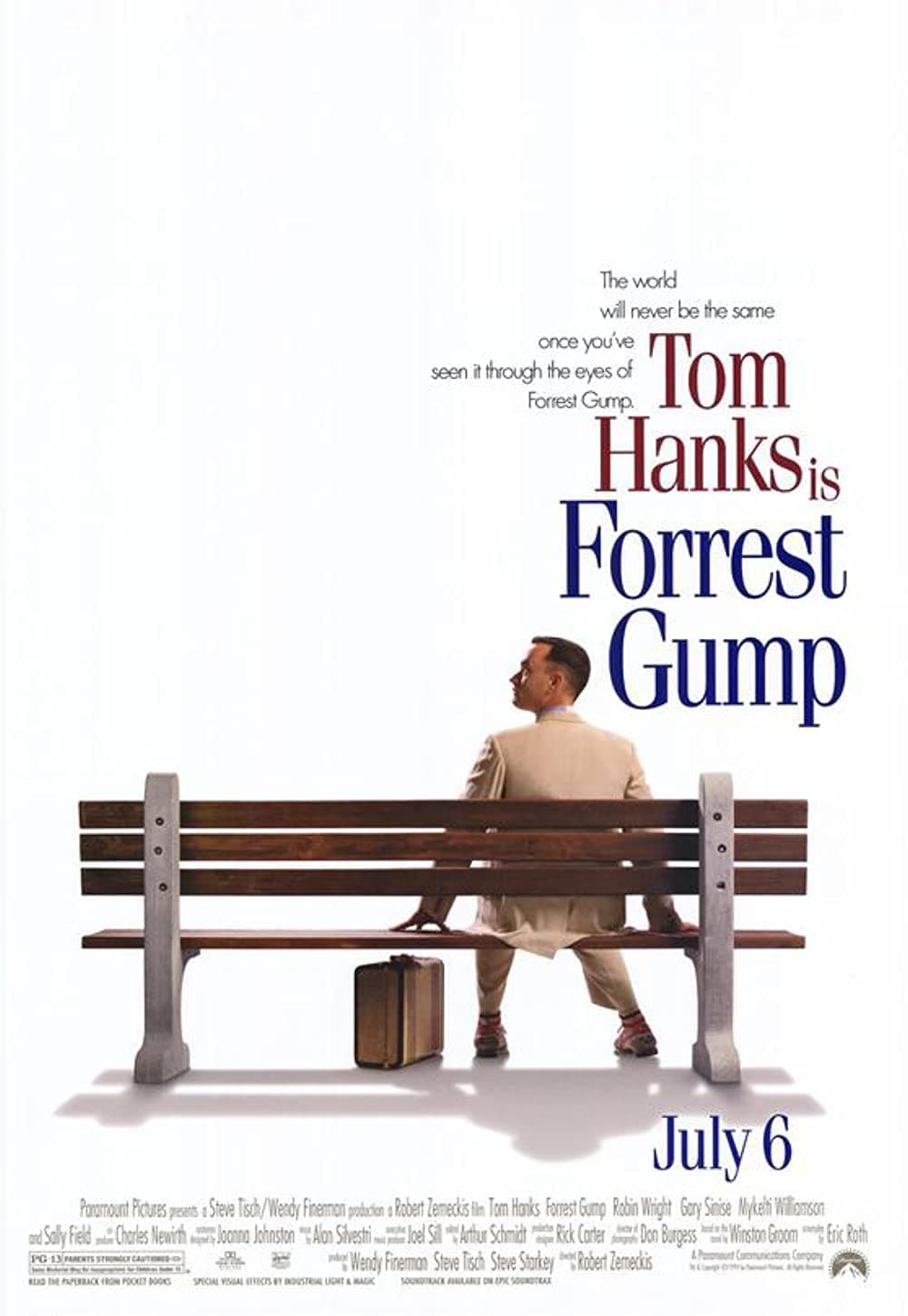
1994 // VHS
Forest Gump
A man on a bench who refuses to make history anything more complicated than a story worth telling.
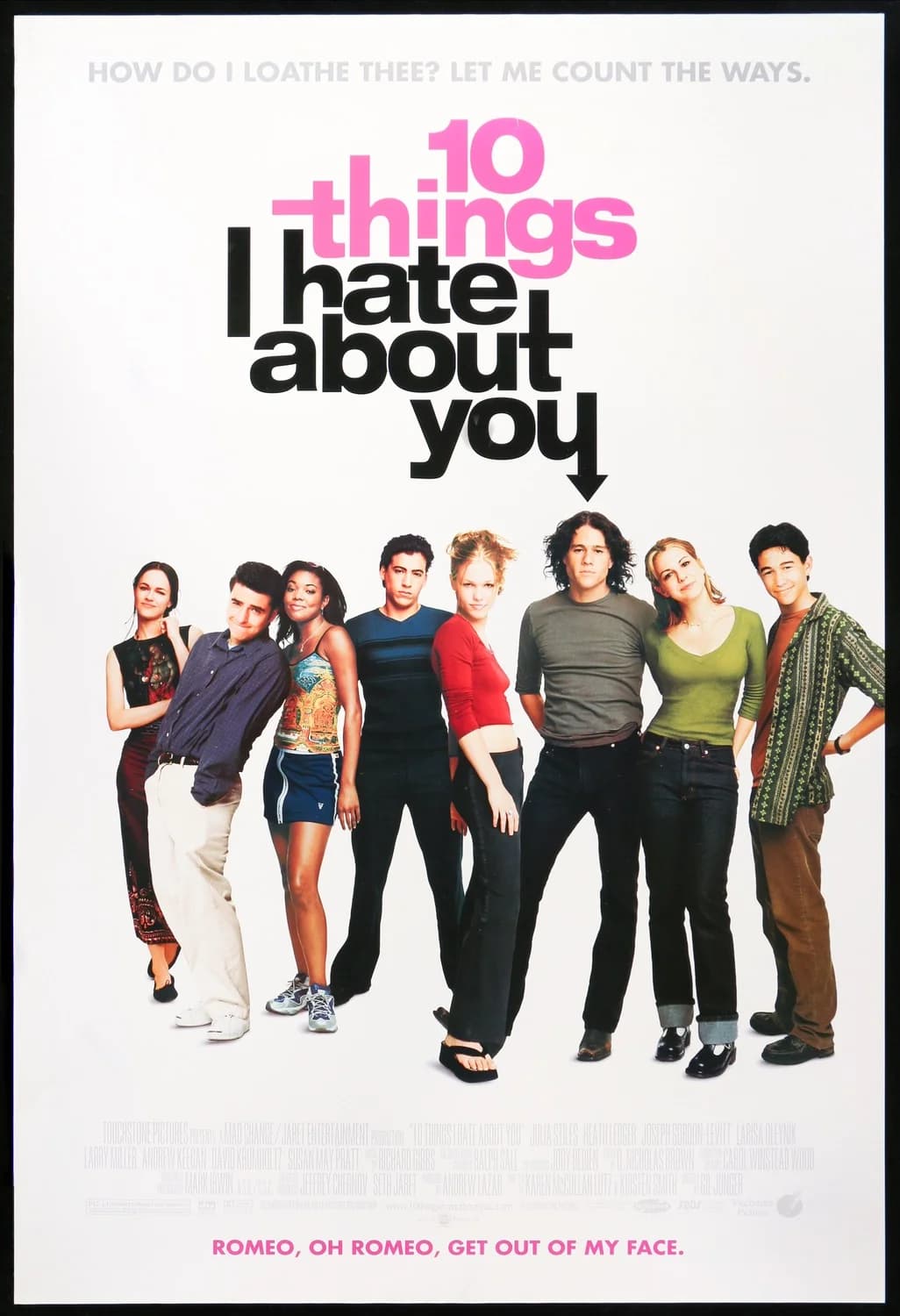
1999 // VHS
10 Things I Hate About You
Sibling rules, a rooftop serenade and one very stubborn Kat — Shakespeare in a school corridor.
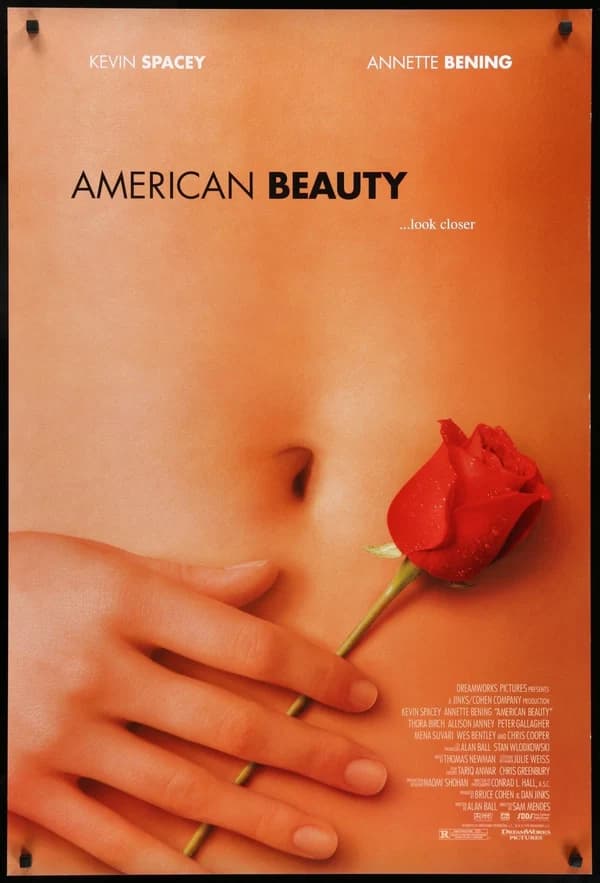
1999 // VHS
American Beauty
Lester Burnham, suburban rot and a midlife argument that still stings.