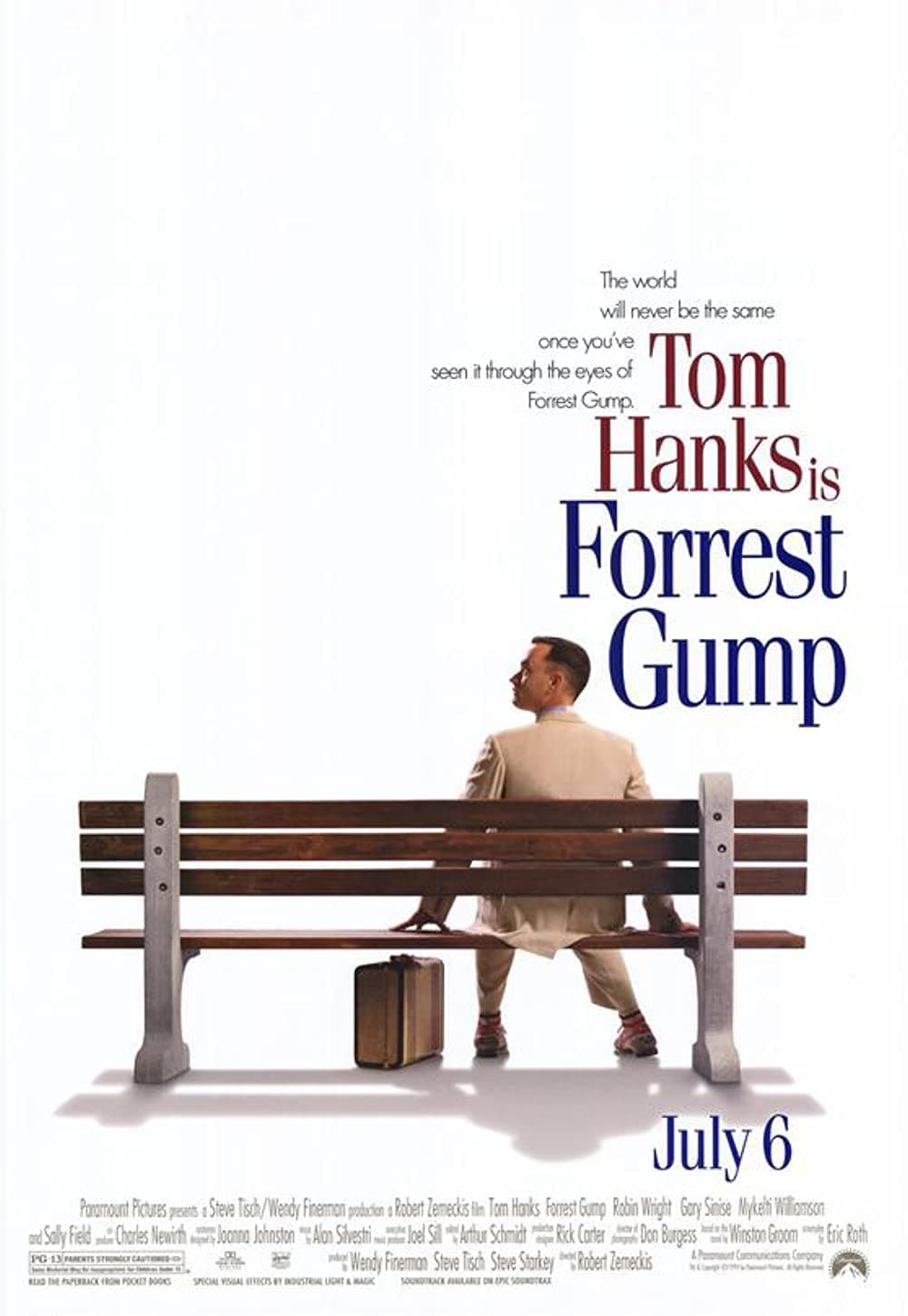
Forest Gump
A man on a bench who refuses to make history anything more complicated than a story worth telling.
// The setup
PLAYBACK STARTED
Forrest Gump is one of those films everyone seems to have an opinion about, but it still works because the movie asks a very simple question: what happens when a plain, decent person tells us their life against the noise of history? Robert Zemeckis builds the whole thing around that modest, stubborn perspective.
THE MOVIE
Forrest Gump is still the reason this movie works
Sit for a moment with the movie’s basic image: a man on a bench talking to strangers. That bench is not a gimmick; it’s the place where memory becomes performance, and where private life tries on public meaning.
What keeps the film from turning into a museum piece is the person doing the talking. Forrest Gump’s view of the world is steady, literal and stubbornly decent; his simple priorities — love for Jenny, doing the right thing — shape the story’s moral compass.
Around that perspective, Robert Zemeckis stages something audacious: a comedy-drama that threads a small-town life through big twentieth-century moments. The result is a movie that feels, at once, like a shaggy personal memoir and a polished piece of filmmaking.
THE SETUP
The idea that sets Q134773 in motion
The film is essentially built around a single storytelling device: Forrest tells his life story to strangers while waiting on a bus. That framing keeps the tone conversational and gives the movie permission to jump around in time.
What we hear are recurring threads — his attachment to Jenny, a military friendship with Bubba, and the odd trajectory from a small town into the national spotlight. Those motifs stop the film from simply cataloguing incidents and instead create a through-line for the narrator’s life.
Because it’s told as memory, the story leans into how personal recollection reshapes events. The film treats moments of public history as the backdrop against which one man’s choices — accidental or not — play out.
That set-up works because it keeps the stakes human. The movie asks us to care about how a life is carried through chaos, not to judge how accurately every historical cameo is recreated.
THE CHARACTER
Why Forrest Gump matters
Forrest is the simplest kind of engine for a movie like this: he’s a person whose way of seeing is so direct that everything else — politics, history, celebrity — bobs around him like waves.
The film keeps returning to a handful of relationships that define him: his friendship with Bubba (whose shrimp-plan becomes an unexpected future), his loyalty to Jenny, and the way small-town roots lead him into national life.
It helps that the story includes Forrest at different ages, so we watch how a consistent character trait — steadiness and decency — survives shocks and changes.
Put simply: the film lives and dies by the fact that this is a life worth listening to. The narrative choices keep attention on who Forrest is, not on how many famous people he accidentally brushed past.
THE PERFORMANCE
Why Tom Hanks's performance matters
Contemporary reaction singled out Tom Hanks’s portrayal of Forrest, and the performance was recognised with the Academy Award for Best Actor. That’s not a casual detail — it tells you how central the role was to the film’s success.
The movie asks an actor to carry a long, shifting story while remaining consistent as a person; that demand is part of why the role mattered to critics and awards voters at the time.
Because the film is so tied to its narrator, the casting choice becomes a structural one: the actor’s presence is the thread that holds the whole narrative quilt together.
So when people still talk about the movie, a big part of that conversation is about how the lead role anchors everything else that happens on screen.
UNDER THE SURFACE
Forest Gump has more on its mind than the plot suggests
At face value the film is a sequence of episodes. Underneath, it’s asking how innocence — a straightforward, literal way of seeing — rearranges the meaning of history when the narration is personal.
Chance and contingency are threaded throughout: small choices and accidents nudge Forrest into unexpected places, which makes the film interested in luck as much as in destiny.
Memory and storytelling are central. By presenting events as a personal account, the movie reminds us that history is often made of individual testimonies, not just headlines.
There’s also a quieter strain about resilience after trauma: relationships and simple plans (like Bubba’s shrimp idea) become ways for characters to rebuild or carry on after loss.
THE FILMMAKING
How Forest Gump was put together
The movie’s look is a deliberate balance between composed tableaux and the looseness of a life being recounted. Don Burgess is credited as director of photography, and contemporary coverage noted the film’s broadly composed imagery.
Editing plays a big role here, too. Arthur Schmidt’s work stitches decades into a readable arc — and it was rewarded with the film-editing Academy Award, which tells you how much the film depends on clean, confident cutting.
Those choices — steady, composed images and editing that keeps the story moving — make the film feel both spacious and tightly organised.
Put another way: the filmmaking is confident enough to let Forrest’s voice carry the movie without the visuals getting in the way.
PRACTICAL EFFECTS
The effects work that gives Forest Gump its physical personality
A big technical trick of the film is the way it places its protagonist into archival footage. Industrial Light & Magic created those visual effects, using archival compositing to insert Forrest into historical scenes and interactions.
ILM’s work was seen as ‘invisible’ effects in the sense that they’re designed to be seamless — the trick is to make the obvious look ordinary, and the film was recognised with the Visual Effects Oscar for that achievement.
Those compositing moments aren’t just party tricks; they let the narrative treat history as a backdrop to personal memory, which is central to the film’s method.
In short, the effects are part of the storytelling: they make the idea of an ordinary life brushing celebrity feel credible on screen.
PURE 90S
Forest Gump could not belong to any other decade
Released in July 1994, this film sits squarely in the mid-1990s moment when mainstream cinema was starting to use advanced digital compositing in storytelling, not just spectacle.
Blending an invented protagonist into twentieth-century news footage was a novelty at the time and is part of what made the idea feel fresh and modern in 1994.
The screenplay — adapted by Eric Roth from Winston Groom’s 1986 novel — reshapes the book’s episodes into a cinematic through-line that suited that decade’s appetite for large, sentimental narratives told on a cinematic scale.
All of which means the movie feels like a 1990s movie because it relies on technologies and narrative choices that were coming into their own at that moment.
THE LEGACY
Why Forest Gump still matters
The film collected a significant number of Academy Awards — six in total, including Best Picture, Best Director, Best Actor, Best Adapted Screenplay, Best Visual Effects and Best Film Editing — which is a concrete mark of how it was received at the time.
Industrial Light & Magic’s archival compositing work has continued to be referenced as an early mainstream example of seamless insertion of a fictional character into news footage, and that technical achievement is a large part of the film’s afterlife.
Paramount and other distributors have continued to reissue the film in upgraded home-video formats, including anniversary restorations and a 4K Ultra HD release, which helps keep it in circulation.
Between the awards, the visible effects milestones and ongoing availability, the film has kept a steady presence in conversations about 1990s American cinema.
THE VERDICT
Does Forest Gump still hold up?
If you’re wondering whether to watch it now, the honest answer is yes — with a clear rider. The film works because it commits to its premise: a man with a literal, decent outlook narrates a life that keeps bumping into the headlines.
Mechanically, that premise is expressed through first-person narration on a bench, flashback structure and the visual device of inserting Forrest into archival footage. Those are not decorative choices; they’re how the movie keeps our attention on one life amid a century of events.
The recurring motifs — Forrest’s loyalty to Jenny, his bond with Bubba, the arc that pulls him from small-town beginnings into national visibility — give the film emotional continuity. Characters such as Jenny and Lieutenant Dan also give the story its necessary complications: she embodies a troubled, self-destructive counterpoint to Forrest’s steadiness; he confronts questions about fate and purpose after war.
So watch it for the human scaffolding more than for historical accuracy or nostalgia. The movie is a warm, occasionally rueful fable about how one uncomplicated perspective can turn the messy twentieth century into a story worth hearing.
Share this movie
// Keep watching
More movies from the 90s
If Forest Gump is your kind of movie, there's plenty more on the shelves worth rewinding.
1999 // VHS
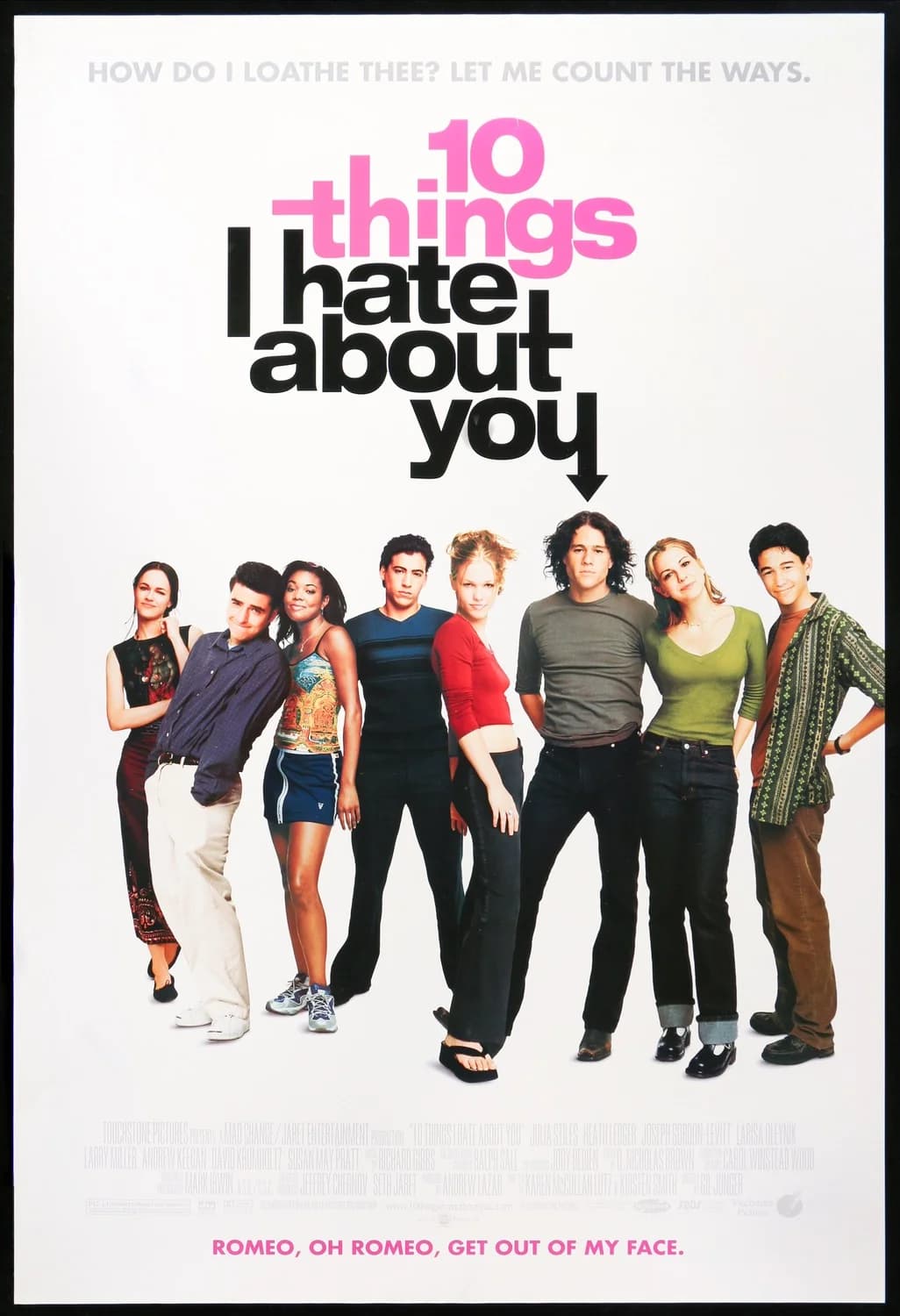
10 Things I Hate About You
Sibling rules, a rooftop serenade and one very stubborn Kat — Shakespeare in a school corridor.
1999 // VHS
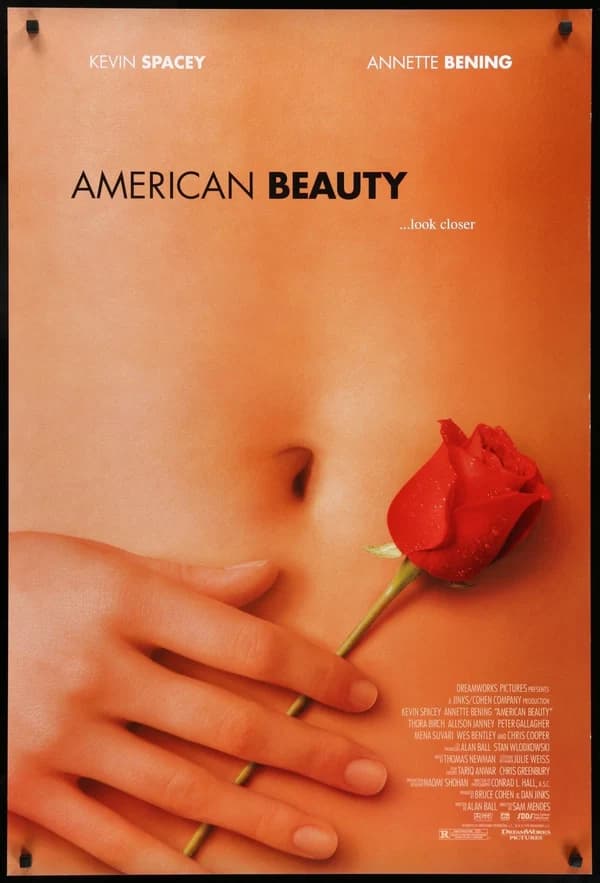
American Beauty
Lester Burnham, suburban rot and a midlife argument that still stings.
1999 // VHS
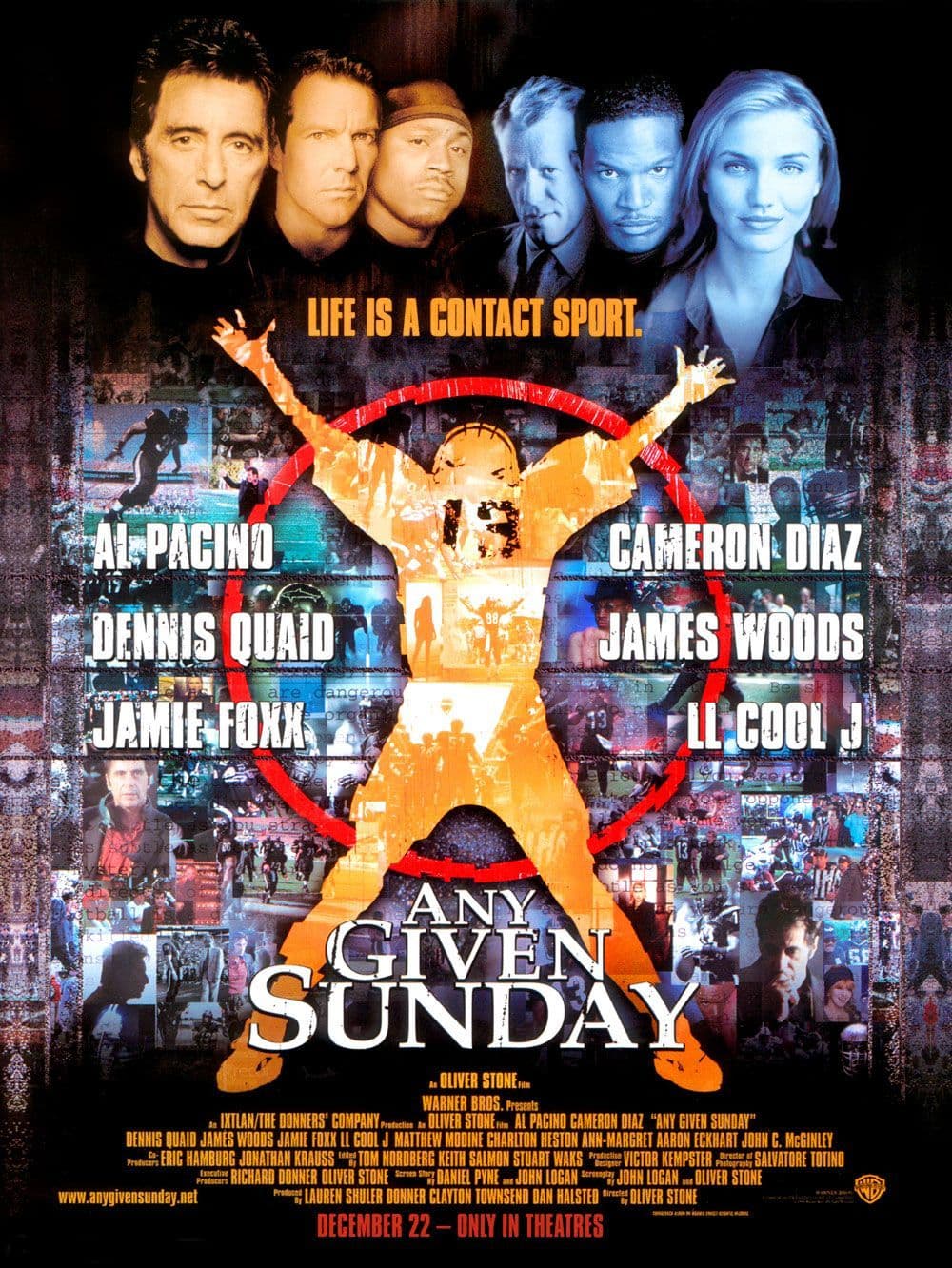
Any Given Sunday
Al Pacino's coach anchors the chaos of a film about football turned into product — loud, messy and oddly persuasive.