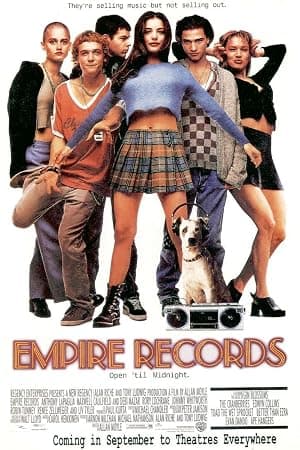
Empire Records
A single chaotic day, a ragged crew of record-shop lifers, and one shop‑floor manager everyone quietly orbits.
// The setup
PLAYBACK STARTED
Empire Records isn't a slick teen anthem so much as a loud, stubborn mood about people who treat a workplace like a family. Set over one increasingly frantic day — missing money, a publicity disaster and a desperate plan to keep the shop independent — Allan Moyle's film clings to its characters more than its plot. That's why Joe Reaves still matters: he gives the chaos a shoulder to lean on.
THE MOVIE
Joseph "Joe" Reaves is still the reason this movie works
Empire Records settles on a clever constraint: the whole film plays out across one hyper‑charged day in a small independent record shop. That compressed timescale works like a pressure cooker — arguments, schemes and musical flourishes all feel urgent because the clock is ticking.
The immediate drama is simple and recognisable: an employee discovers the day's receipts are missing and, in short order, the staff learn the shop may be sold and turned into a chain. One person's impulse — Lucas taking a gamble to replace the money — detonates the day and forces the team to scramble for ways to save the place they care about.
Amid that mess sits Joseph “Joe” Reaves, the manager who acts as the store's quiet linchpin. Allan Moyle's film is loud and messy by design, but Joe is the small stability the ensemble keeps returning to, the anchor that helps the film land its theme about choosing people over corporate sameness.
THE SETUP
The idea that sets Empire Records in motion
There isn't a sprawling plot to untangle here. The film compresses everything into a single, eventful day at an independent record store, and that decision keeps the story tight and impulsive.
The staff are faced with a clear, motivating problem: they need to raise money and stage events to stop their shop from being absorbed by a national chain. That anti‑selling‑out conflict gives the film a political heartbeat without ever becoming a lecture.
A few mechanics drive the action: Lucas's decision to gamble the day's deposit, the ill‑fated publicity stunt around a washed‑up pop star, and a hurried rescue mission involving a live‑TV benefit and a rooftop gig. Those set pieces are less about plot twists than about how this ragged crew reacts under pressure.
Important to remember: the missing deposit kicks everything off; a shoplifting incident escalates into televised chaos; and the story keeps its focus by staying rooted in one day and one community of coworkers.
THE CHARACTER
Why Joseph "Joe" Reaves matters
On paper, Joe is the shop manager — the person people expect to keep things civil. But in practice he does something softer and more useful: he holds the group together. The movie's impulse toward workplace solidarity needs a believable centre, and Joe supplies it.
Empire Records leans on the idea of chosen family; Joe is the adult the others fall back on when plans go awry or tempers flare. He’s not a moral sermon; he’s the human hand that tries to steady the chaos.
Because the film is about a band of colleagues who treat the shop like a refuge, having a character who can listen, broker compromises and quietly carry responsibility is essential. Joe fills that role and, by doing so, makes the film feel like a story about people rather than only about stunts.
Even if the scenes around him are loud and impulsive, Joe gives the ensemble a place to return to — and that consistency is what makes their solidarity believable.
THE PERFORMANCE
Why Rory Cochrane's performance matters
Contemporary critics sometimes struggled with the film as a whole, but Roger Ebert singled out Rory Cochrane — along with Liv Tyler — as having 'real screen presence.'
That little endorsement matters because Lucas is the shop's most combustible element: his decision to gamble the deposit is the day’s inciting choice, and the character needs an actor who can make impulsiveness feel compelling rather than merely reckless.
Ebert's point isn't a blanket appraisal of the movie; it's a reminder that when the central troublemaker is convincing, the film's stakes feel earned even when the plotting gets frantic.
So, whatever else you think of Empire Records, Lucas's choices land because the performance gives the audience someone to watch in the eye when the plan goes off the rails.
UNDER THE SURFACE
Empire Records has more on its mind than the plot suggests
On the surface it's a frantic comedy‑drama about rescuing a shop. Underneath, it’s about rites of passage: the staff are young people navigating adult responsibilities and messy loyalties as they edge toward whatever comes next.
Anti‑corporate feeling threads through the film without becoming a manifesto. The threat of being turned into a sterile national chain makes the characters' attachment to the shop feel political as well as personal — they’re defending a place that defines them.
The idea of workplace solidarity — colleagues as a chosen family — is where the movie keeps finding its heart. When plans fail or tempers flare, the fact that these people stick together is presented as an achievement worth fighting for.
Music and identity are stitched into those themes. The record shop isn’t just a setting: it’s an identity marker for the characters, a place where taste, rebellion and belonging overlap.
PURE 80S
Empire Records could not belong to any other decade
Empire Records arrived in 1995, when record stores still mattered as physical meeting places and soundtrack‑led marketing was a major part of a film’s commercial strategy. That cultural moment shapes the movie’s choices — both narratively and in how it treats music as a communal glue.
Critics at the time often treated the film as a catalogue of songs — a soundtrack in search of a movie — which says as much about 1990s cross‑promotion as it does about the film itself. The soundtrack’s prominence reflects industry habits of the era.
It also sits alongside a wave of 1990s retail‑set, youth ensemble films that focused on slacker culture and workplace life. That context helps explain Empire Records' tone: half comedy, half coming‑of‑age fable about people who hang out where their taste is validated.
Seen this way, the movie reads like a product of its time because the shop it mourns was, in 1995, a place people still relied on to discover music and identity.
WATCHING IT NOW
What has aged — and what hasn't
The film’s teen‑drama energy still lands: its portrait of a group of coworkers who might as well be siblings retains charm because the relationships are direct and easy to follow. The found‑family element feels straightforward even to a modern audience.
Similarly, its celebration of workplace solidarity — people defending a small, independent place against corporate takeover — still reads as a relevant stance. That particular conflict has a timelessness to it: communities resisting homogenisation rarely lose their bite.
Where the film can feel of its moment is in the way it leans on soundtrack hooks and stunt moments to carry the emotional load. That’s very 1990s marketing logic: music can lift scenes, but it can’t always substitute for deeper architecture.
If you watch Empire Records now, you’ll notice it as a brisk, occasionally scattershot snapshot of youth and retail life. Its heart — the crew who keep turning up for each other — is the part that endures best.
THE LEGACY
Why Empire Records still matters
The film flopped in theatres but didn't disappear. Over time it acquired a loyal following — cult status that shows up in annual fan events like 'Rex Manning Day' and speciality screenings that keep its audience engaged.
Home‑video life extended that afterlife: a 2003 'Remix: Special Fan Edition' DVD with extra footage and a later Blu‑ray helped keep conversation going among fans and newcomers alike.
For several cast members the film is an early, often‑cited credit before they moved to bigger profiles, which keeps Empire Records cropping up in retrospectives of their careers.
More recently, the story has been reworked toward the stage: plans for a musical adaptation moved toward a 2024 premiere, showing the property still has life as a piece of theatrical nostalgia and community storytelling.
THE VERDICT
Does Empire Records still hold up?
Short answer: yes — but with caveats. If you want a tight, meticulously plotted drama, this isn’t the film for you. If you want a soundtracked, character‑driven snapshot of a found family fighting to keep its independent space, it’s still worth a watch.
The film’s engine is simple: a missing deposit, a scheme that goes wrong, and a bunch of colleagues scrambling to keep the store from becoming a national chain. That anti‑selling‑out beat still reads as a satisfying reason to root for these people.
Joe Reaves is an essential reason the movie holds together; he’s the stabilising figure around whom the messy plans and noisy personalities orbit. When the plotting gets scattershot, the emotional throughline — coworkers defending their place — keeps the stakes intelligible and human.
Empire Records may feel of its era in how heavily it leans on music and soundtrack hooks, and it certainly suffered with critics at first. But its later cult status, the soundtrack’s commercial note and the way fans kept it alive on home formats prove it has a specific kind of durability: not universal, but prized by those who care about record shops, noisy friendship and the stubborn business of staying independent.
Share this movie
// Keep watching
More movies from the 90s
If Empire Records is your kind of movie, there's plenty more on the shelves worth rewinding.

1995 // VHS
Toy Story
A pull‑string cowboy, a deluded space ranger and a small, very particular war over being loved.
1999 // VHS
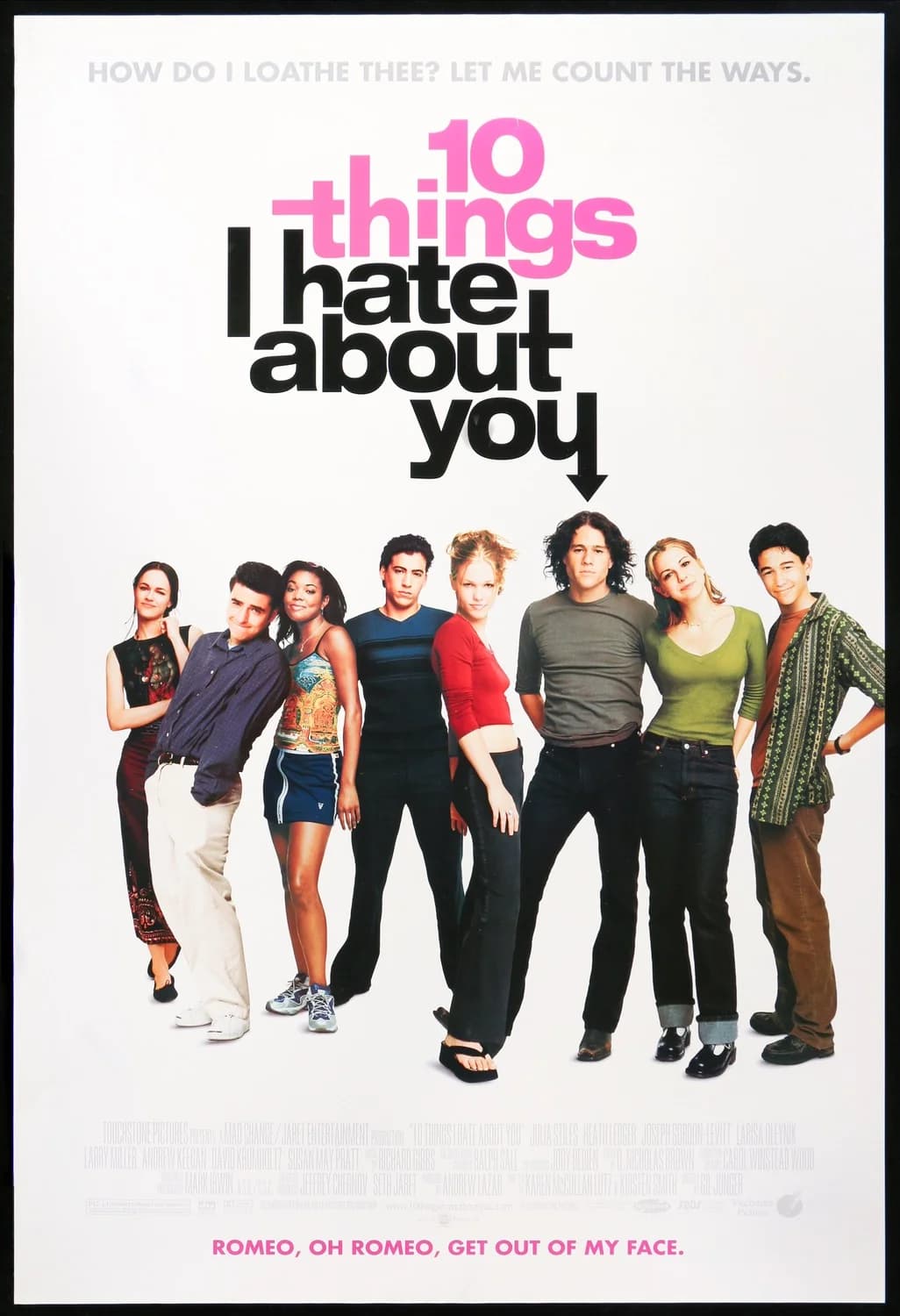
10 Things I Hate About You
Sibling rules, a rooftop serenade and one very stubborn Kat — Shakespeare in a school corridor.
1999 // VHS
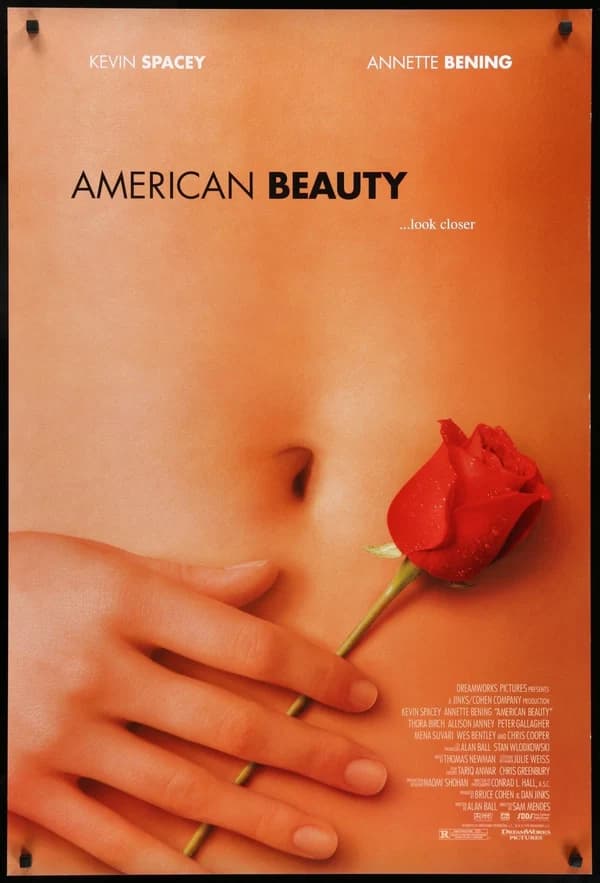
American Beauty
Lester Burnham, suburban rot and a midlife argument that still stings.