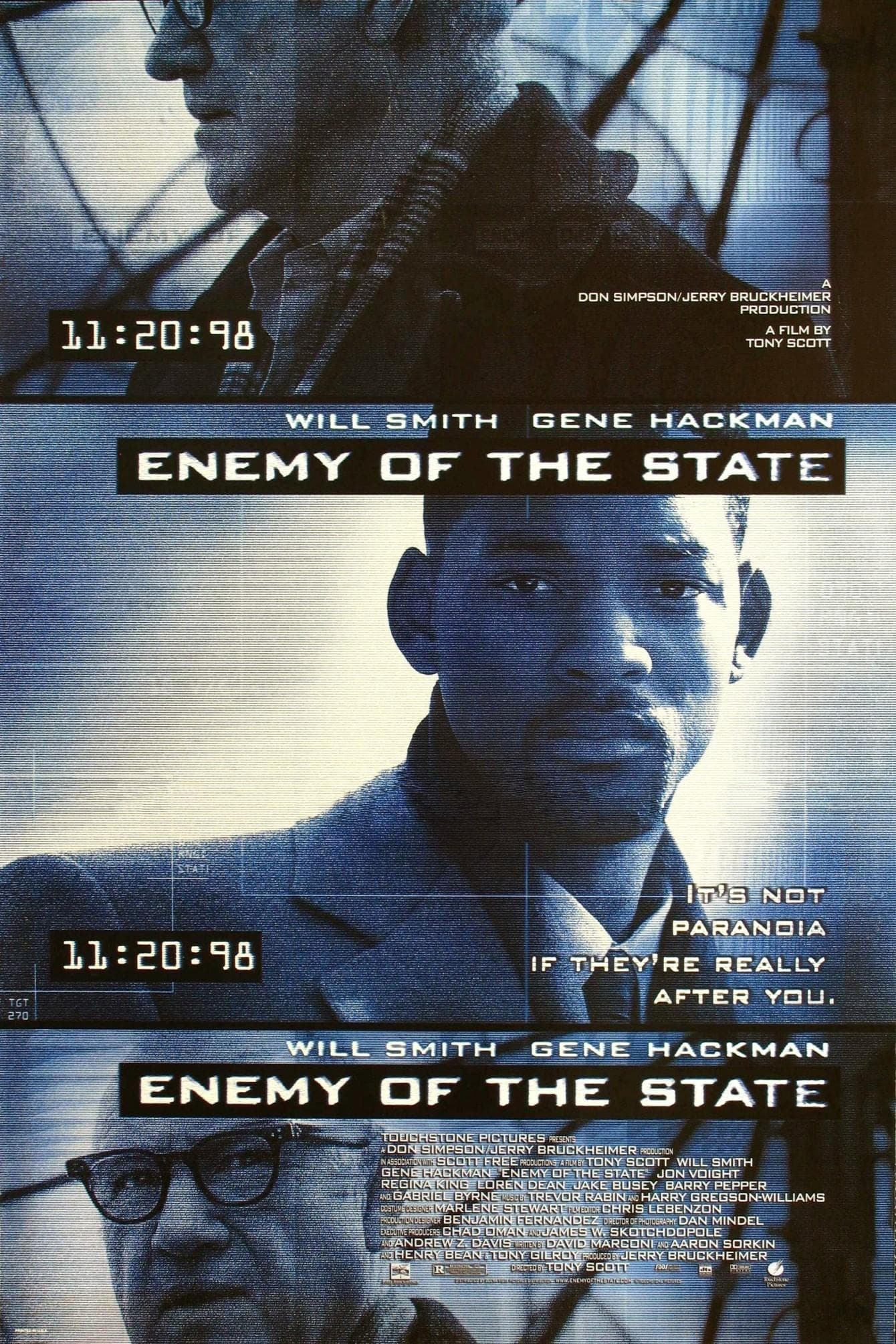
Enemy of the State
A nail‑biting chase movie that doubles as a warning about watching and being watched.
// The setup
PLAYBACK STARTED
Robert Clayton Dean — a sensible Washington labour lawyer — is shoved into a spy movie and refuses to stop being human. Directed by Tony Scott and anchored by a central premise about a secretly placed videotape, Enemy of the State turns the late‑90s anxiety about surveillance into something with teeth and speed.
THE MOVIE
Robert Clayton Dean is still the reason this movie works
There are plenty of things you remember about Enemy of the State — the rush of its action, Tony Scott’s restless camerawork, the sense that somebody, somewhere, is always watching. But what gives the picture its heart is a very ordinary man: Robert Clayton Dean, a Washington, D.C. labour lawyer who finds himself dragged into a battlefield he never asked for.
Dean becomes a target after a videotape showing a congressman’s apparent murder ends up in his possession, and the movie pivots around his single, recognisable aim: keep his family and his life from being erased. That neat, human motivation stops the film from turning into a mere demo reel for surveillance toys.
Played by Will Smith, Dean is the audience’s anchor: he’s the person who has to learn how much of his private life can be taken away and what he will do to stop it. Tony Scott directs the whole thing at full tilt, but it’s Dean’s domestic stakes that make the tilt matter.
THE SETUP
The idea that sets Enemy of the State in motion
The engine of the film is straightforward and mean: a young videographer records what looks like the murder of Congressman Phillip Hammersley and, for reasons that matter to the plot, the tape is placed where Robert Clayton Dean will pick it up. That single object turns a lawyer’s life into a live target.
From there the conflict is clean and relentless. An ambitious NSA official uses the agency’s extraordinary surveillance muscle to frame Dean, damage his career and erase the safe life he’s built. The chase is less about a MacGuffin and more about a man trying to prove he didn’t do the terrible thing he appears to have done.
What keeps the setup clicking is how simply the rules are laid down: tape, frame-up, state resources brought to bear on an ordinary citizen. You don’t need to know every device in the spy kit to feel the squeeze.
There are also cameos and small surprises — a handful of notable uncredited appearances dot the edges of the story — but the plot always comes back to Dean and his attempt to clear his name and expose the cover‑up.
THE CHARACTER
Why Robert Clayton Dean matters
Dean isn’t an ex‑agent, a swaggering loner or a wunderkind hacker. He’s a family man and a labour lawyer; his instincts are protection and prudence. That ordinariness is the clever move — it makes the film’s surveillance apparatus feel invasive, because it’s being used against someone who does normal human things.
Because his priorities are domestic and professional, the stakes feel immediate. When your everyday life — bank accounts, phone calls, your children’s safety — can be weaponised against you, the threat becomes visceral rather than abstract.
The movie’s drama comes from watching Dean try to hold on to those ordinary things while the state-level machinery leans in. That’s what makes him memorable: he’s you, very convincingly placed in a situation where being ordinary is the problem.
THE PERFORMANCE
Why Will Smith's performance matters
What the film needed from its lead was credibility: someone who could sell the panic of being pursued and the stubbornness of a man defending his life. Contemporary reviewers spotted that this was a step beyond the strapline of Smith’s earlier action or comedy parts.
Critics such as Kenneth Turan suggested Smith showed more dramatic range in this role than in his immediately preceding turns, and that matters because the movie’s emotional weight rests on Dean staying believable when everything around him tilts into conspiracy.
Put simply: the film’s stakes only land if Dean feels like a real person, not a plot device. The reviews of the time underline that Smith delivered on that requirement.
UNDER THE SURFACE
Enemy of the State has more on its mind than the plot suggests
On the surface it’s a chase thriller. Underneath it’s an argument about what happens when electronic surveillance moves from tools of the state into instruments that can reach into private life with surgical precision.
The film repeatedly shows how everyday life becomes vulnerable to institutional power — bank records, phone lines, video feeds — turning privacy into something fragile rather than guaranteed.
There’s also a political tension: the story asks whether security systems designed to protect can be redirected into protecting careers and covering crimes. That paranoia about government overreach is threaded through the action, and it gives the set‑pieces an ethical echo.
Gene Hackman’s Brill arrives as a reminder of an older surveillance tradition, a figure who understands the tradecraft and its moral hazards — which places the movie in conversation with earlier films about eavesdropping and consequence.
THE FILMMAKING
How Enemy of the State was put together
Tony Scott’s fingerprints are all over the picture: rapid cutting and kinetic camerawork turn surveillance networks into a cinematic presence you can feel. The movie stages its technology so it’s not merely background — it becomes a visual character.
That restless approach keeps the tension taut. The editing and camera choices make the act of being watched themselves feel dramatic, which is why the film’s thrills and its argument about privacy can coexist without one cancelling the other.
It’s a film that wants to look fast and think fast; Scott gives it both, and the result is a thriller that feels perpetually on the move.
PRACTICAL EFFECTS
The effects work that gives Enemy of the State its physical personality
Some of the film’s big, physical moments were achieved the old-fashioned way. Production notes describe an extended tunnel set built below grade, where several cars were cut, lowered and rebuilt to stage a major sequence.
That same preference for physical staging extends to the chase work more generally: the movie relies on conventional stunt work and practical vehicle effects for its tunnel and chase sequences rather than claiming everything was done digitally.
Those choices give the action a tactile quality; the film’s biggest set-pieces feel like stunts you could almost touch, which helps ground the more technological aspects of the story.
PURE 80S
Enemy of the State could not belong to any other decade
Released in late 1998, the film arrived at a moment when conversations about telecommunications surveillance, expanding databases and privacy legislation were growing louder. It’s very much a product of that late‑90s cultural moment.
Contemporary critics and technology commentators linked the film’s premise to real-world debates about how much data institutions should hold and how that data could be used. The movie took those anxieties and gave them an adrenalised, cinematic form.
Because it tapped into contemporary worries about linking systems and the erosion of privacy, the film reads as a time capsule of late‑90s concerns — even as it pushes those concerns into thriller territory.
THE LEGACY
Why Enemy of the State still matters
The film re-entered the conversation in a big way after later public revelations about mass surveillance, with commentators pointing to it as an early cultural touchstone for widespread unease about watching and being watched.
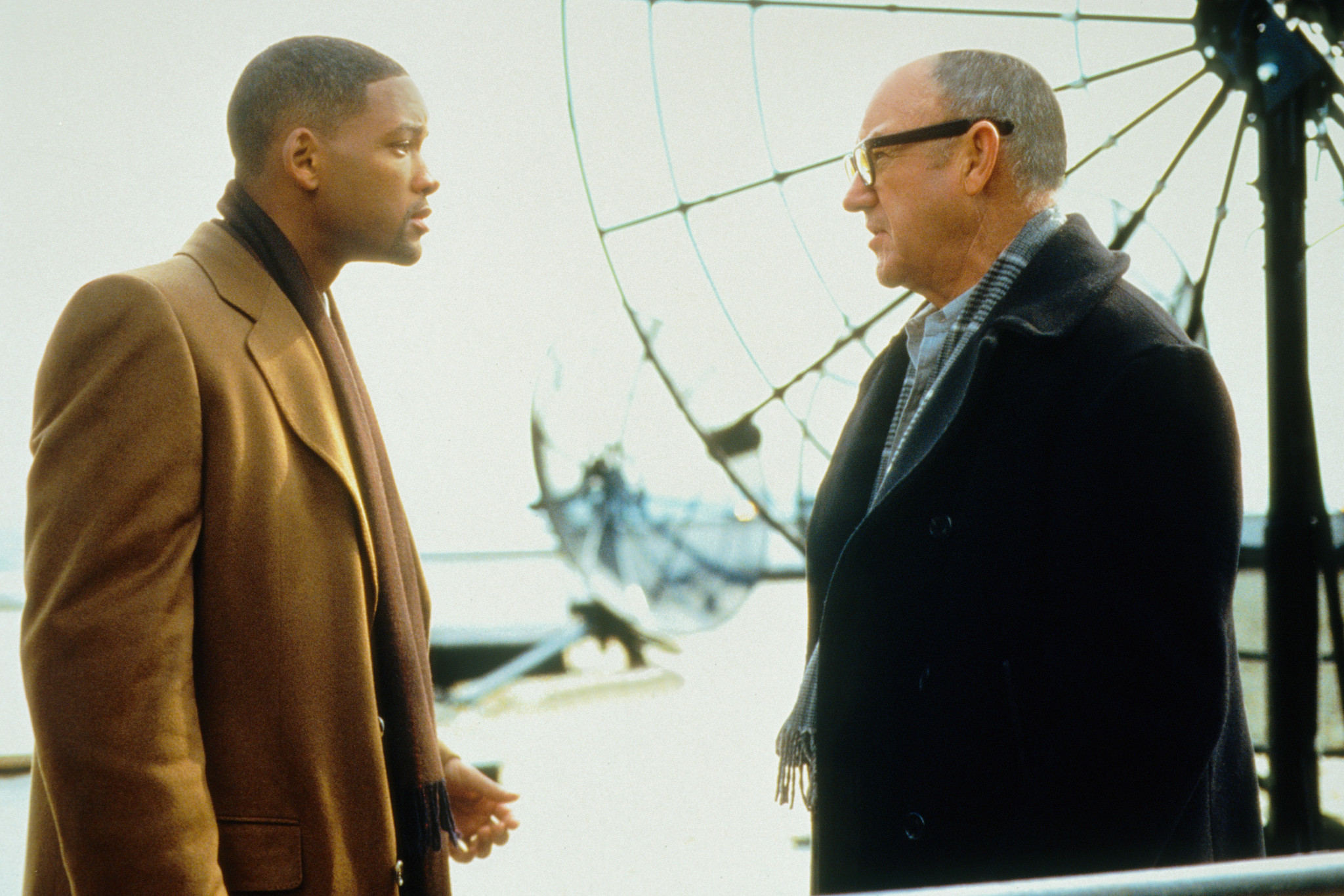
Its depiction of a government agency’s reach even prompted responses from people within the intelligence community — a sign that the film cut close enough to reality to make practitioners nervous about public perception.
There have also been attempts to expand the story beyond the movie, including reports of a television sequel project that involved the film’s original producer. That kind of afterlife shows the premise still feels alive as material for further storytelling.
THE VERDICT
Does Enemy of the State still hold up?
Yes — but with a useful rider. If you want a fast, well-constructed thriller about an ordinary man pitted against institutional power, this still delivers. The story is driven by a clear, dramatic hook: Dean ends up targeted after coming into possession of a surveillance videotape, and the film keeps returning to the tangible ways the state can intrude.
The movie repeatedly uses the tools of mass surveillance — wiretaps, credit interference, video and satellite feeds — as the engine of the plot, and that sustained focus means the film’s central argument remains immediate. It’s not an abstract polemic; it’s a series of practical invasions that the audience can understand.
Tony Scott’s direction and the presence of Gene Hackman’s Brill, the retired surveillance specialist who helps Dean, give the picture both momentum and a moral counterpoint. And contemporary notices that Will Smith showed more dramatic range here underline that the emotional pieces stick when they need to.
So watch it for the breathless action and the steady, human centre. Enemy of the State is a late‑90s thriller that still makes a smart, urgent case about privacy — and that argument is the part that lingers after the chase ends.
Share this movie
// Keep watching
More movies from the 90s
If Enemy of the State is your kind of movie, there's plenty more on the shelves worth rewinding.
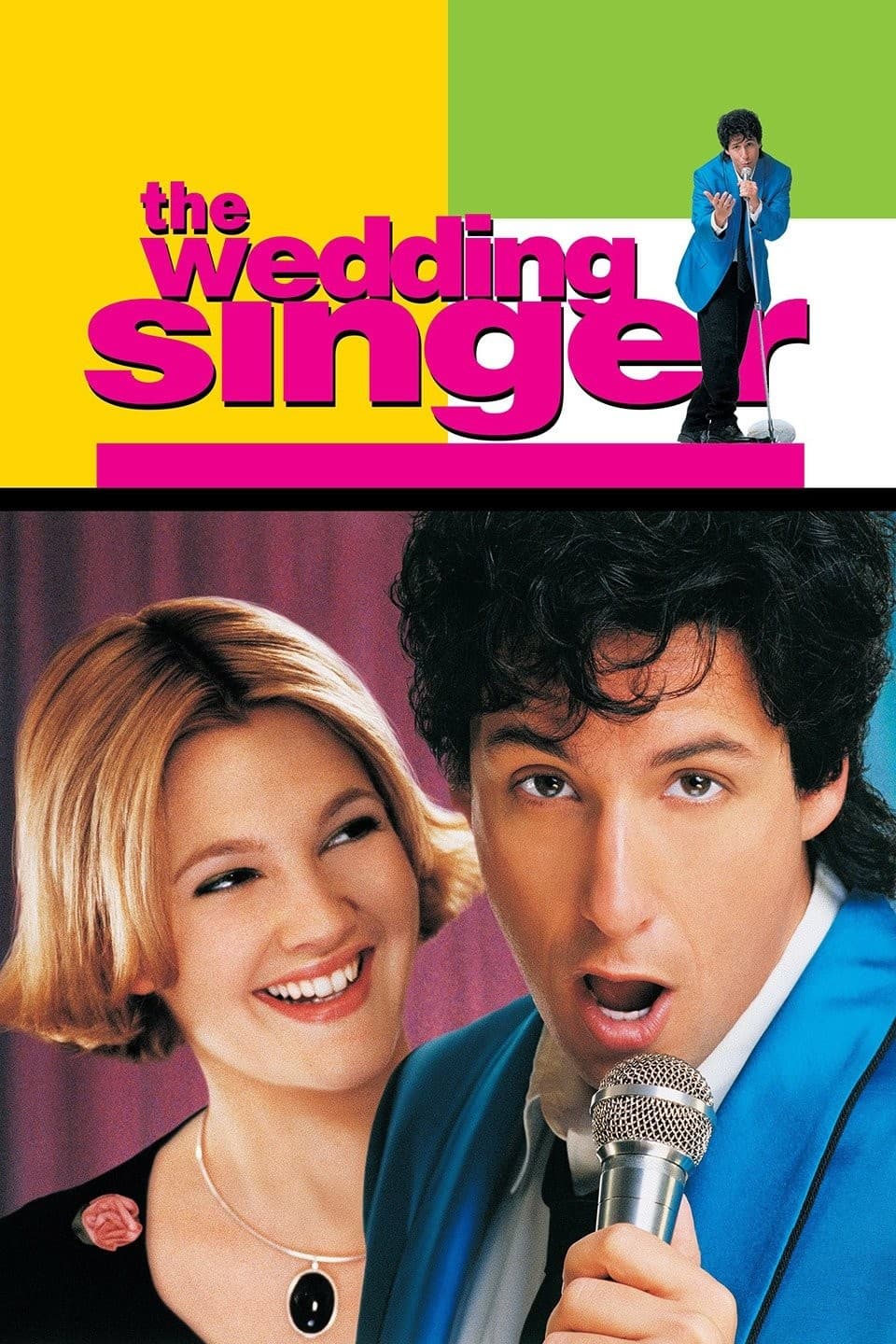
1998 // VHS
The Wedding Singer
A love story wrapped in 1980s pop — and carried by one very earnest wedding crooner.

1998 // VHS
There's Something About Mary
Romantic obsession, awkward masculinity and a hair‑gel gag you can't unsee.
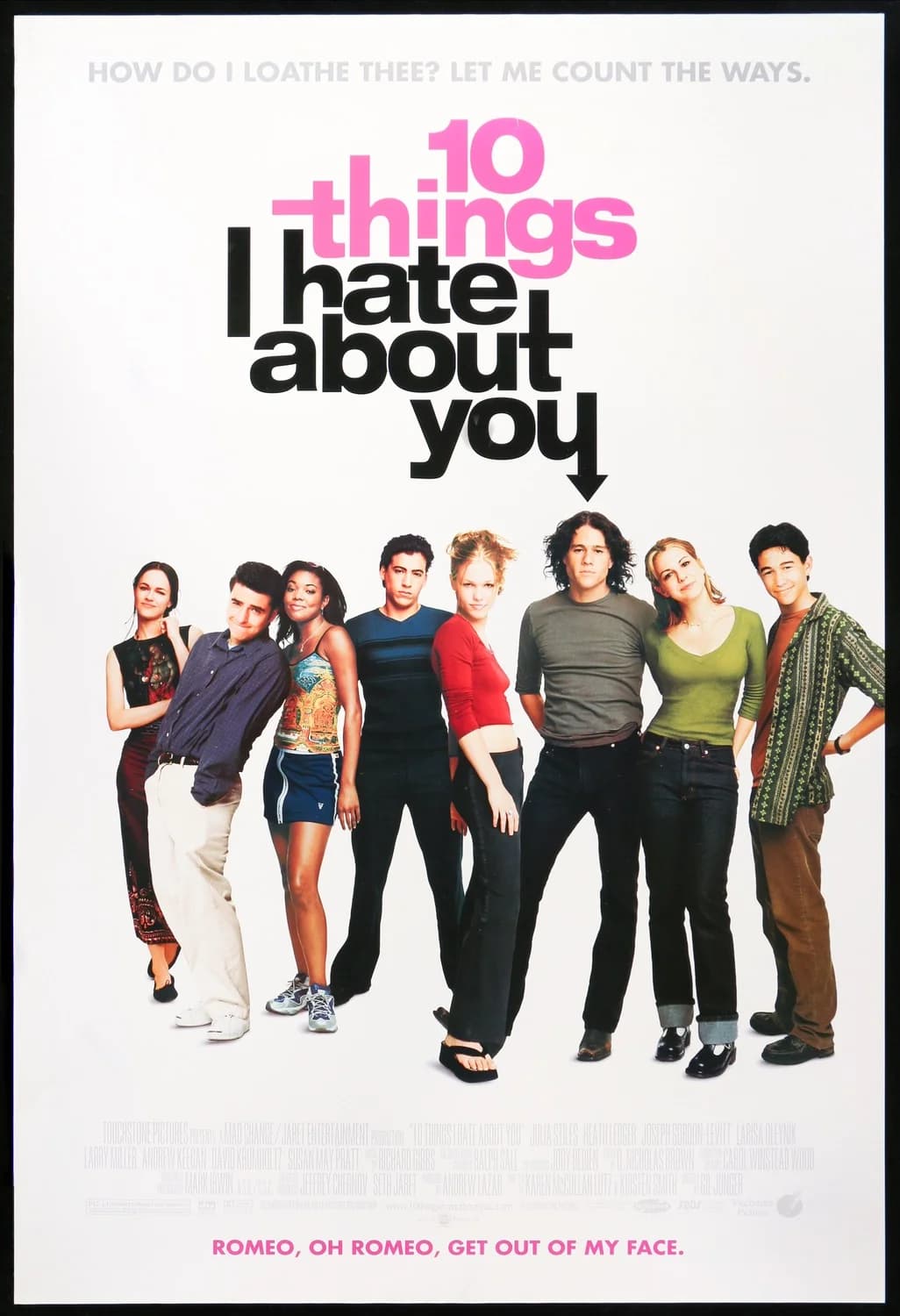
1999 // VHS
10 Things I Hate About You
Sibling rules, a rooftop serenade and one very stubborn Kat — Shakespeare in a school corridor.