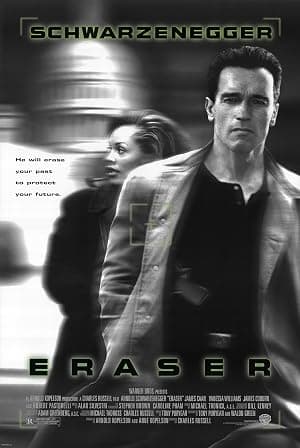
Eraser
A man who erases identities to save lives — and does it with big stunts and blunt force honesty.
// The setup
PLAYBACK STARTED
Eraser is the sort of 90s action picture that announces itself with a job description: ‘I make people disappear.’ It’s a star vehicle for a very specific kind of protector — professional, single-minded and willing to be the last line between a whistleblower and a railgun. Directed by Chuck Russell and fronted by Arnold Schwarzenegger, it’s as much about procedure as it is about explosions.
THE MOVIE
John "The Eraser" Kruger is still the reason this movie works
Talk Eraser and you end up talking about the job. John Kruger isn’t a cop, a spy or a soldier in the usual sense — he’s an elite WITSEC marshal whose trade is making people into new people so they can keep breathing. That premise is simple, vivid and eerily theatrical: erase a life to save it.
The film puts that job on full display when Kruger is assigned to protect Dr. Lee Cullen, a whistleblower with proof that her employer is moving an advanced weapon into the wrong hands. It gives the story both a moral centre and a practical to-do list: protect, relocate, fake an identity, and, when required, fight so hard the audience needs a breather.
All of which is to say: Eraser is, in the clearest way, a star-and-concept picture. Chuck Russell directs, Arnold Schwarzenegger plays Kruger and Vanessa Williams is the scientist at the story’s heart. Combine that cast with the film’s investment in large-scale stunts and you have a movie that still draws attention — if only because its central idea keeps you watching.
THE SETUP
The idea that sets Eraser in motion
At its loosest, Eraser is a man-on-a-mission picture. But the mission isn’t revenge or a personal score — it’s practical and procedural. Kruger’s business is erasing identities and remaking lives so witnesses can testify without getting killed.
The binary at the centre of the film — protector versus conspiracy — gives the plot a reliable forward engine. Kruger’s job puts him at odds with a corporate conspiracy and corruption inside institutions built to protect people, and that conflict keeps the action plausibly grounded.
The film shapes its beats around action mechanics: relocations, fake papers, rapid-fire confrontations and set pieces that force Kruger to improvise. Everything funnels toward a single recurring object of menace — an advanced railgun-like weapon — whose existence explains both the whistleblower’s danger and the conspirators’ desperation.
A small production footnote nods to the film’s production-era anxieties: late in post-production the studio altered on-screen corporate names after a real company objected, a reminder that the movie traded on plausibility even in its fiction.
THE CHARACTER
Why John "The Eraser" Kruger matters
Kruger matters because he makes the movie’s mechanics feel human. He’s not an anonymous government cog; he’s a professional with a creed: protect the witness at almost any cost. That single-minded duty turns routine witness protection into a high-wire act.
The film complicates Kruger’s certainty by giving him personal ties to the conspiracy: his mentor-turned-antagonist introduces a personal grievance that mirrors the institutional betrayal at the story’s centre. It makes his choices feel less like job descriptions and more like moral reckonings.
Around Kruger is a web of loyalties — WITSEC brass, FBI types, corporate security and organised crime — and those competing allegiances are what force him into direct conflict. So he’s memorable partly because he’s very good at what he does, and partly because the people who should help him sometimes have their own agendas.
For the record, this is one of Schwarzenegger’s mid-90s star vehicles, a film that sits comfortably inside his action filmography of the era and makes his screen presence the organising principle of the picture.
THE PERFORMANCE
Why Vanessa Williams's performance matters
Vanessa Williams’s Dr. Lee Cullen is the plot’s moral keystone: the scientist whose evidence turns into everyone else’s problem. Contemporary reviewers singled out Williams for a spirited physical performance, noting that she brings real energy to the action-heavy sequences.
That matters because Cullen is not merely a damsel or a MacGuffin; she’s the person whose knowledge drives the conspiracy and whose survival gives Kruger his purpose. Williams’s presence keeps the stakes personal rather than purely procedural.
In short, the film needs Cullen to be believable as both a scientist in danger and someone who can hold her own in physical jeopardy. The contemporary reception suggests Williams supplied exactly that.
UNDER THE SURFACE
Eraser has more on its mind than the plot suggests
On the surface Eraser is an action movie about protecting a witness. Underneath it’s quietly interested in what protection actually costs. Witness protection isn’t only logistical here — it’s an ethical bargain: you strip someone of their past to buy them a future.
That bargain sits next to institutional rot. The conspiracy isn’t a lone villain; it’s a corporate and bureaucratic tangle that suggests the systems meant to stop crime can also be complicit in it. The film plays that tension straightforwardly, using the thriller format to dramatise corruption rather than philosophise about it.
Technology appears as a moral accelerant. The advanced weapon at the centre of the plot doesn’t just raise the stakes physically; it makes the questions political. Who controls dangerous tools? Who profits from secrecy? Those questions are embedded in the film’s action.
Finally, there’s a simple human note: Kruger’s willingness to risk himself frames the movie as a story about sacrifice. The protector’s job is solitary and hazardous, and that personal cost is threaded through the plot’s confrontations.
THE FILMMAKING
How Eraser was put together
Chuck Russell steers Eraser as a mainstream action director. The film was set up as a studio-scale thriller: a clear premise, a recognisable lead and a technical crew tasked with keeping the pace taut — Adam Greenberg shot it and Michael Tronick edited it.
Those choices add up to a film that privileges momentum and clarity. It’s constructed around readable sequences rather than impressionistic flourishes, which is exactly what the material needs: when you’re juggling witness relocations and conspiratorial reveals, an efficient approach keeps the audience on board.
Sound plays a surprisingly big role in the movie’s identity. The film earned an Academy Award nomination for Best Sound Editing, which underlines how much of its impact comes from careful technical work rather than only from star wattage.
Put simply: the film’s craft choices are functional and unapologetically geared to spectacle — not art-house mystery, but precise, assembled action.
PRACTICAL EFFECTS
The effects work that gives Eraser its physical personality
Critics of the day homed in on the film’s set pieces, describing them as a blend of stunts and special effects and flagging the spectacle as a principal attraction. That mix is the film’s physical personality: big stunts married to effects that sell those moments to the audience.
There’s also a little modern-career trivia: during post-production Warner Bros. digitally altered multiple shots and even redubbed lines to change the on-screen name of a fictional corporation after a real company protested. It’s an instance of 90s studio practicality — tweak the picture rather than litigate the likeness.
In short, the production leaned on demonstrable physical work to make its set pieces land, while also using late-stage digital fixes when the business called for it.
That willingness to combine techniques is exactly why the action reads as intentional rather than random.
PURE 80S
Eraser could not belong to any other decade
Eraser sits squarely in mid-90s Hollywood practice: a summer studio film built around a high-profile action star and a tidy, high-concept hook. That combination — idea first, star second — was a reliable formula for mainstream action at the time.
It also shows the era’s production habits: the picture pairs real stunt work with growing reliance on digital post-production touches. The result feels like a moment when practical filmmaking and early digital tinkering co-existed on purpose.
Finally, the film is part of Schwarzenegger’s 1990s stretch of star vehicles. Placing Eraser next to his other projects of the decade helps you see it as a phase piece in a larger career, not an outlier.
All of which is to say: Eraser is very much a 1996 movie — built for summer, built for spectacle, and built around a dependable screen persona.
THE LEGACY
Why Eraser still matters
Eraser matters today for a few concrete reasons beyond nostalgia. Technically, it earned an Academy Award nomination for Best Sound Editing — a sign that its craft values were noticed by peers, not just audiences.
Commercially and culturally the film has kept a toe-hold: a direct-to-video reboot in 2022 and studio-supported anniversary and 4K home releases show there’s ongoing market interest in the property.
Taken together, those facts don’t make Eraser a touchstone, but they do mark it as a durable genre product: well-made enough to be preserved and repackaged, and interesting enough in premise to be revisited.
THE VERDICT
Does Eraser still hold up?
Short answer: yes — if your baseline is solid, old-school action with a strong central idea. Eraser delivers a clear premise (a marshal who erases identities to save witnesses), a moral anchor in its whistleblower, and enough stunt-driven momentum to justify the runtime.
The film’s strengths are also its limits. It’s built to be an efficient thriller: the action-set-piece mechanics carry the story forward, and the recurring technological threat — the advanced railgun — keeps the stakes concrete rather than abstract. That makes the movie satisfying if you enjoy tidy, purpose-built action.
Actors and characters give the structure texture: Schwarzenegger’s Kruger is defined by duty and a lone-protector ethos, while Lee Cullen functions as the whistleblower whose knowledge fuels the plot. The supporting cast thickens the loyalties and keeps the man-on-a-mission engine from feeling too solitary.
So watch Eraser for the concept and the craft. It’s not trying to be subtle. It is trying to be effective — and on those terms it largely succeeds.
Share this movie
// Keep watching
More movies from the 90s
If Eraser is your kind of movie, there's plenty more on the shelves worth rewinding.
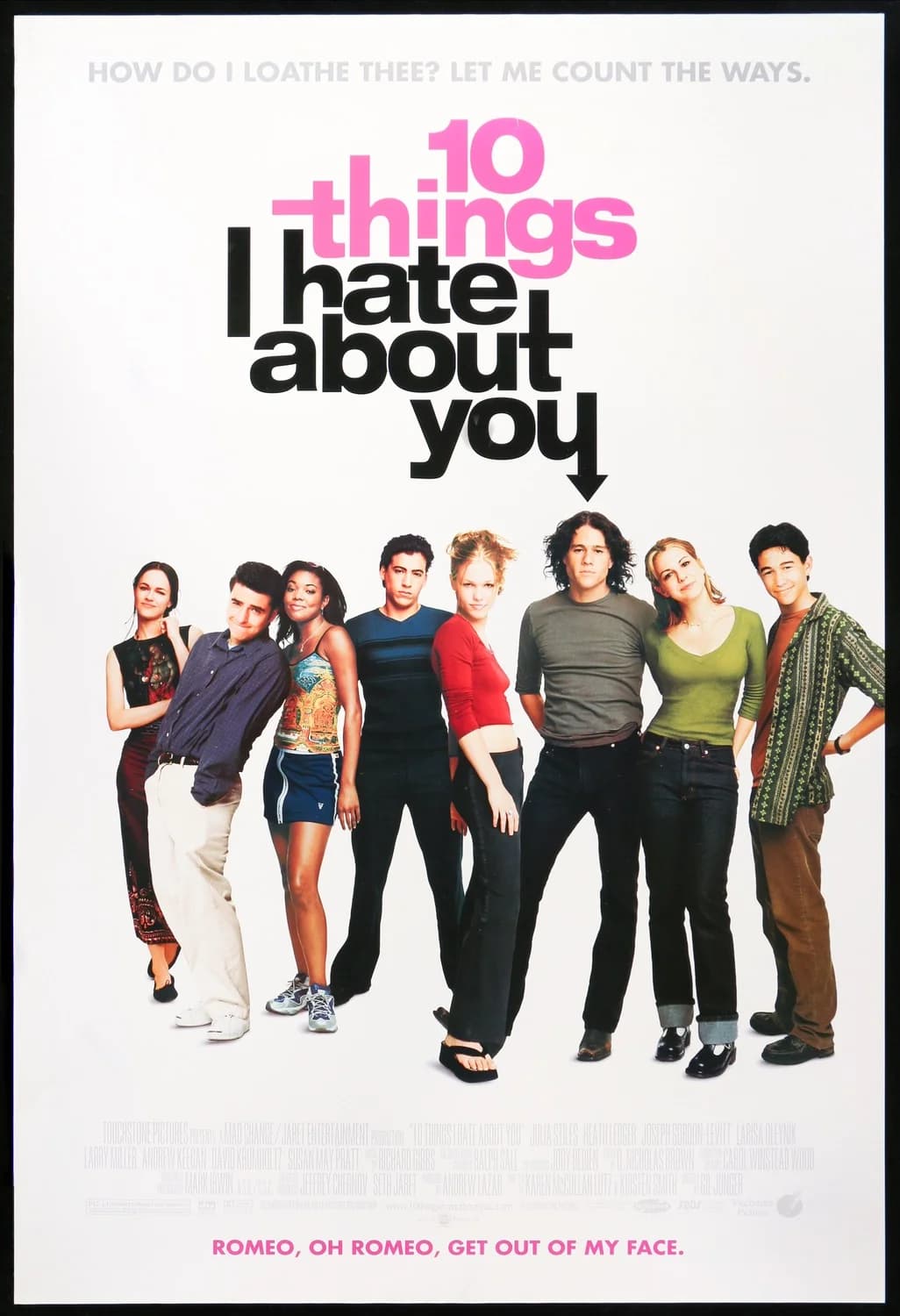
1999 // VHS
10 Things I Hate About You
Sibling rules, a rooftop serenade and one very stubborn Kat — Shakespeare in a school corridor.
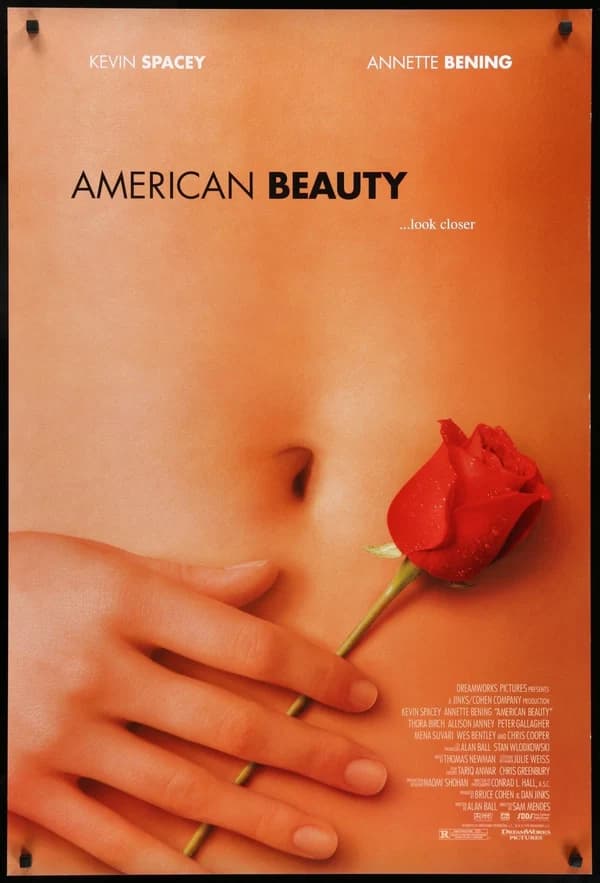
1999 // VHS
American Beauty
Lester Burnham, suburban rot and a midlife argument that still stings.
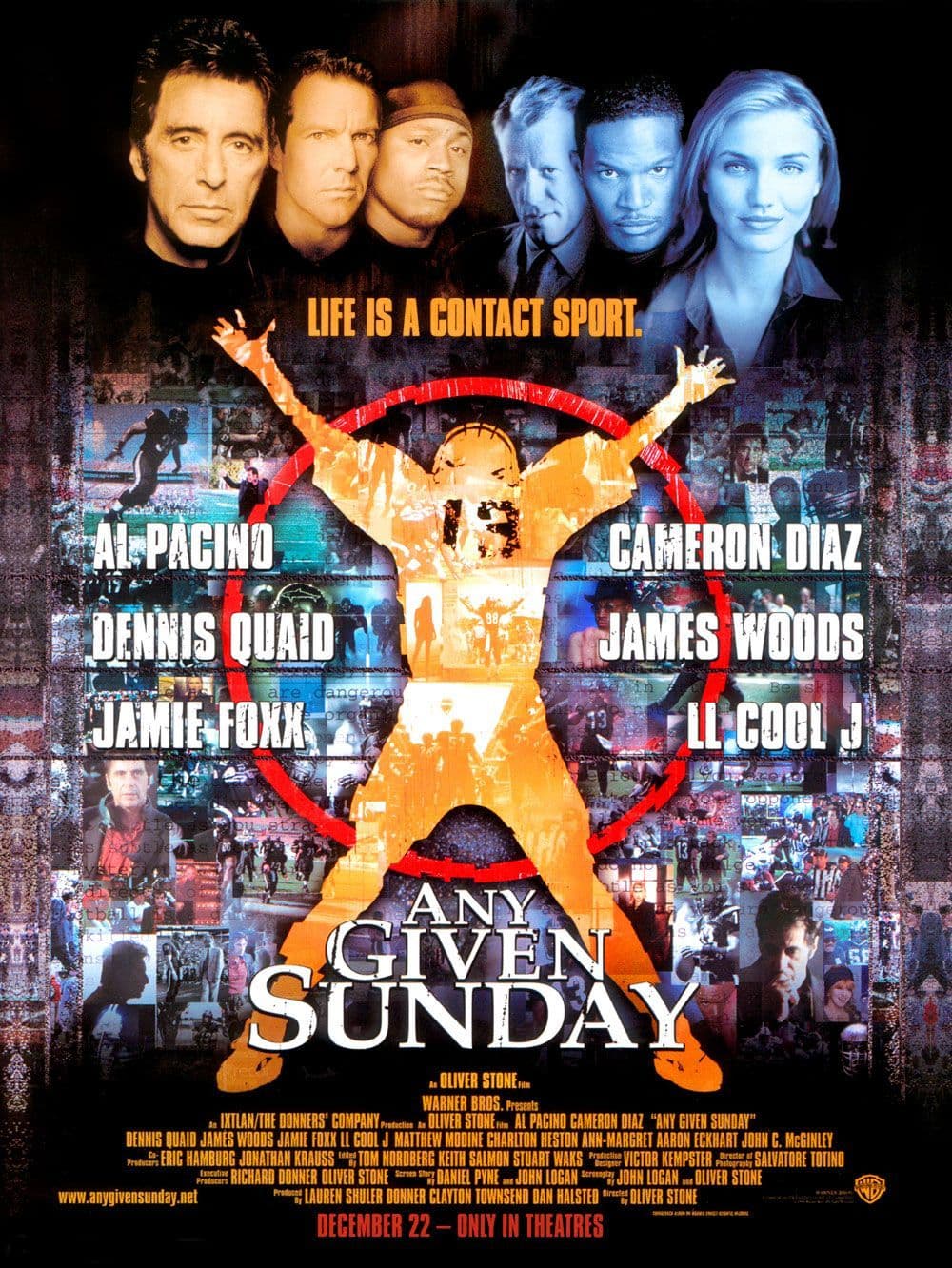
1999 // VHS
Any Given Sunday
Al Pacino's coach anchors the chaos of a film about football turned into product — loud, messy and oddly persuasive.