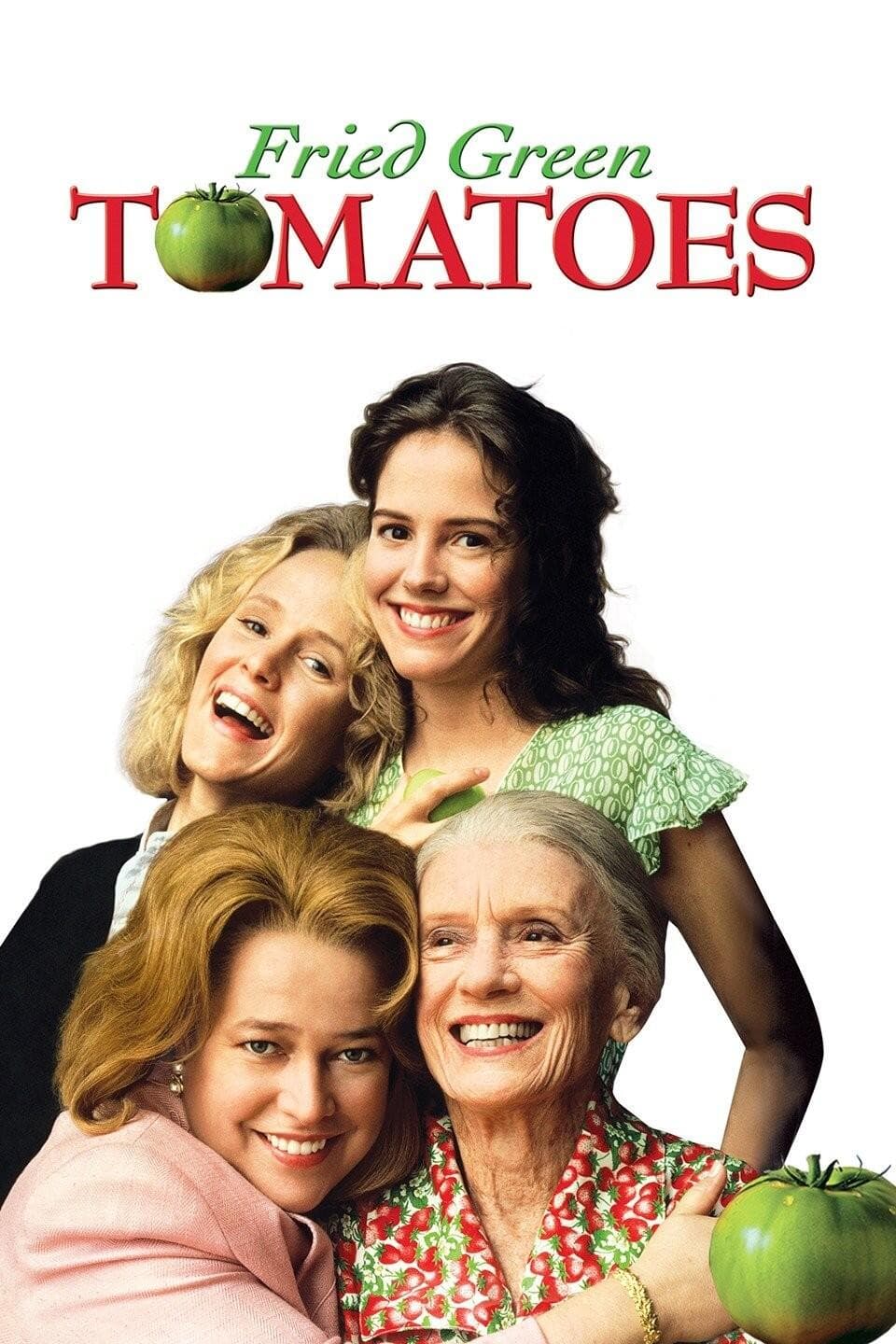
Fried Green Tomatoes
Friendship, stories and a cafe that will not stop gossiping.
// The setup
PLAYBACK STARTED
Fried Green Tomatoes is a movie about how a story can rearrange a life. It gives us a timid middle-aged woman and an elderly raconteur who, between cups of tea, shift a whole town into clearer focus. That quiet alchemy—of listening, remembering and, yes, getting a backbone—is what keeps people coming back.
THE MOVIE
Evelyn Couch is still the reason this movie works
There are plenty of things you remember from Fried Green Tomatoes: a small café that feels like a set of private rules, a courtroom rumour that won’t die, a pair of women at the centre of a whispered mystery. But the film’s steady hinge is Evelyn Couch, a woman whose life the movie quietly rearranges.
Jon Avnet’s adaptation stitches a present-day storyline—Evelyn and Ninny in a nursing home—into long, leisure-filled flashbacks to Whistle Stop. Ninny’s stories don’t merely explain the past; they push Evelyn into decisions she would not have made alone.
That layering—an older woman's memories prompting a middle-aged woman’s transformation—keeps the film feeling like a conversation you’re lucky to overhear. It’s the contrast between generations, and the insistence that friendship changes people, that makes the film worth revisiting.
THE SETUP
The idea that sets Fried Green Tomatoes in motion
The movie runs two timelines at once: a present where Evelyn is drawn into Ninny’s company, and long flashbacks that fill in the town of Whistle Stop and its people. The back-and-forth is patient; the past is allowed to unfurl rather than being shouted at the audience.
Ninny operates like a storyteller for hire: she gives the audience information when it’s useful, and she withholds when suspense is kinder. That narrator-like structure steers the mystery about Ruth’s marriage, Frank Bennett’s disappearance, and the trial that follows.
At the centre of the town is the Whistle Stop Café, a shop that serves fried green tomatoes and functions as social engine, workplace and private stage. The café’s routines and quarrels are where the film’s disputes and loyalties play out.
Behind the scenes the screenplay credit reflects a wrenching moment—Carol Sobieski and Fannie Flagg are both credited after writers’ arbitration following Sobieski’s death—so the film’s voice is the product of collaboration as much as adaptation.
THE CHARACTER
Why Evelyn Couch matters
Evelyn Couch could have been a one-note figure: the timid, middle-aged housewife who needs a makeover. Instead, she’s the film’s living barometer. We arrive with her and we leave changed by what she has learned.
Kathy Bates plays Evelyn, whose life is quietly nudged into motion by the stories she hears in the nursing home. Those stories are not just entertainment; they are practical coaching in how to choose yourself.
Evelyn’s arc depends on the film valuing intergenerational friendship. The contrast—Evelyn and Ninny in the present, Idgie and Ruth in the past—makes clear that empowerment is learned as much as inherited.
It’s also worth noting the adaptation’s choices: the movie keeps certain relationships deliberately ambiguous, and that shaping affects how Evelyn reacts to the past she’s being handed.
THE PERFORMANCE
Why Jessica Tandy's performance matters
Jessica Tandy’s work as Ninny Threadgoode became a talking point the year the film came out. Her turn attracted major awards attention and an Academy Award nomination for Best Supporting Actress.
That recognition matters because Ninny is more than a quaint elderly storyteller—she is the mechanism that rewires Evelyn’s life. The nomination is an industry signal that the role carried weight in the finished film.
UNDER THE SURFACE
Fried Green Tomatoes has more on its mind than the plot suggests
On the surface the film offers a mystery and a small-town chronicle. Underneath, it’s invested in the ways stories shape who we become. Ninny’s memories don’t simply report the past; they reconstruct it so Evelyn can step into a different future.
Female friendship is central. The film presents two pairings—Evelyn with Ninny, Idgie with Ruth—and uses those bonds to show how women provide practical support and radical permission to one another.
There’s also an uneasy, deliberate ambiguity about the relationship between Idgie and Ruth: the film pulls back from the novel’s explicitness and leaves intimacy more hinted than stated. That choice reshapes what the story says about desire and belonging.
Finally, the adaptation’s treatment of Black characters and which parts of the novel survive the cut are part of what the movie asks viewers to notice. The choices made in adaptation speak to what the film chooses to remember and what it sidelines.
THE FILMMAKING
How Fried Green Tomatoes was put together
The film’s crew credits read like a conventional, solid production: Geoffrey Simpson is the director of photography, Debra Neil-Fisher handled the editing, and Barbara Ling is credited as production designer. Those names anchor the finished film’s technical craft.
On the writing front, the screenplay credit is the product of a difficult process: Carol Sobieski and Fannie Flagg are both credited after a Writers Guild arbitration following Sobieski’s death. The result is a script that both preserves and reshapes its source material.
Those practical, credit-level facts matter because they tell you this was a filmed adaptation done by an experienced team—an assembly of professionals aiming to make the novel work as a mainstream movie.
Jon Avnet directed and produced the film, so the adaptation’s choices—what to show and what to leave ambiguous—come with an authorial stamp tied to a clear production hierarchy.
PRACTICAL EFFECTS
The effects work that gives Fried Green Tomatoes its physical personality
There’s a small, memorable stunt that some viewers recall: Mary Stuart Masterson actually climbed into an active beehive to take honey for one sequence. Contemporary reporting noted she wasn’t stung.
More broadly, the production leaned on real locations—Juliette and Zebulon in Georgia—and period production design to recreate the Whistle Stop café and its surroundings. Those on-location choices help the movie feel grounded in a town rather than a soundstage.
Those kinds of practical details—an actor in a hive, a real café location—give the film a tactile quality. They’re the sort of specific touches that audiences register even if they can’t name why a place feels lived-in.
PURE 80S
Fried Green Tomatoes could not belong to any other decade
Released at the very end of 1991, Fried Green Tomatoes arrives with the feel of an early-1990s mainstream film that puts women’s friendships at its centre. That was a recognisable trend at the time—movies that treated female relationships as more than side business.
The film’s willingness to foreground women across generations, and to tell a story where the domestic and the civic intersect, slots it comfortably into that moment. It isn’t a feint toward novelty; it’s part of a larger, decade-specific appetite for stories about women supporting women.
At the same time, the adaptation is rooted in a 1987 novel by Fannie Flagg, so the movie sits between literary source and cinematic trend—an early ’90s picture shaped by both.
WATCHING IT NOW
What has aged — and what hasn't
If you watch the film today, two things are likely to dominate your thinking. First, the adaptation deliberately softens the book’s explicit depiction of Idgie and Ruth as lovers, leaving that relationship more ambiguous on-screen. For some viewers that ambiguity feels like restraint; for others, a missed chance.
Second, critics and scholars have noted how material about Black characters from the novel is reduced or sidelined in the film. That choice has become a focal point of later discussion and shapes how modern audiences parse the movie’s view of community.
What endures, though, is the pleasure of female friendship and storytelling itself. The framing device—an elderly woman who hands down memories to a listener—still reads as a clever engine for character change, especially Evelyn’s.
So the film ages unevenly: its emotional architecture—stories prompting personal transformation—still holds up, while some representational choices look increasingly dated under modern scrutiny.
THE LEGACY
Why Fried Green Tomatoes still matters
The film received concrete industry recognition: Jessica Tandy earned an Academy Award nomination for her role, and the screenplay by Fannie Flagg and Carol Sobieski received awards attention as well, including the USC Scripter Award.
Beyond prizes, the movie got a GLAAD recognition for how it rendered intimacy between women, even while avoiding overt sexual content. That very recognition speaks to the way the film handled queer subtext: noticed, complicated, and debated.
The production had a tangible afterlife for one small southern town. Shooting in Juliette, Georgia encouraged tourism and led to the creation of a real Whistle Stop Café that references the film’s set and story.
And on the soundtrack side, Thomas Newman composed the score while Arthur Baker supervised the soundtrack release—details that contributed to the film’s particular period flavour and how audiences remembered it.
THE VERDICT
Does Fried Green Tomatoes still hold up?
Yes—if you come for the company it keeps. The film’s framing device, an elderly woman who tells stories that reshape a younger listener’s life, still feels clever and effective. Watching Evelyn move from timid to assertive remains the film’s most persuasive pleasure.
But the picture does not age evenly. The decision to make Idgie and Ruth’s relationship ambiguous on-screen and the sidelining of Black characters from the novel are choices that modern viewers will rightly notice and question.
Still, there’s warmth here: the Whistle Stop Café functions as the film’s social engine, and the combination of mystery, comedy-drama and female-buddy storytelling keeps the 130-minute runtime engaging for many viewers.
So should you watch it now? If you want a movie where stories do work on people—where listening can be radical and friendship can be formative—Fried Green Tomatoes remains worth your time. Just be prepared to like it and argue about it afterwards.
Share this movie
// Keep watching
More movies from the 90s
If Fried Green Tomatoes is your kind of movie, there's plenty more on the shelves worth rewinding.
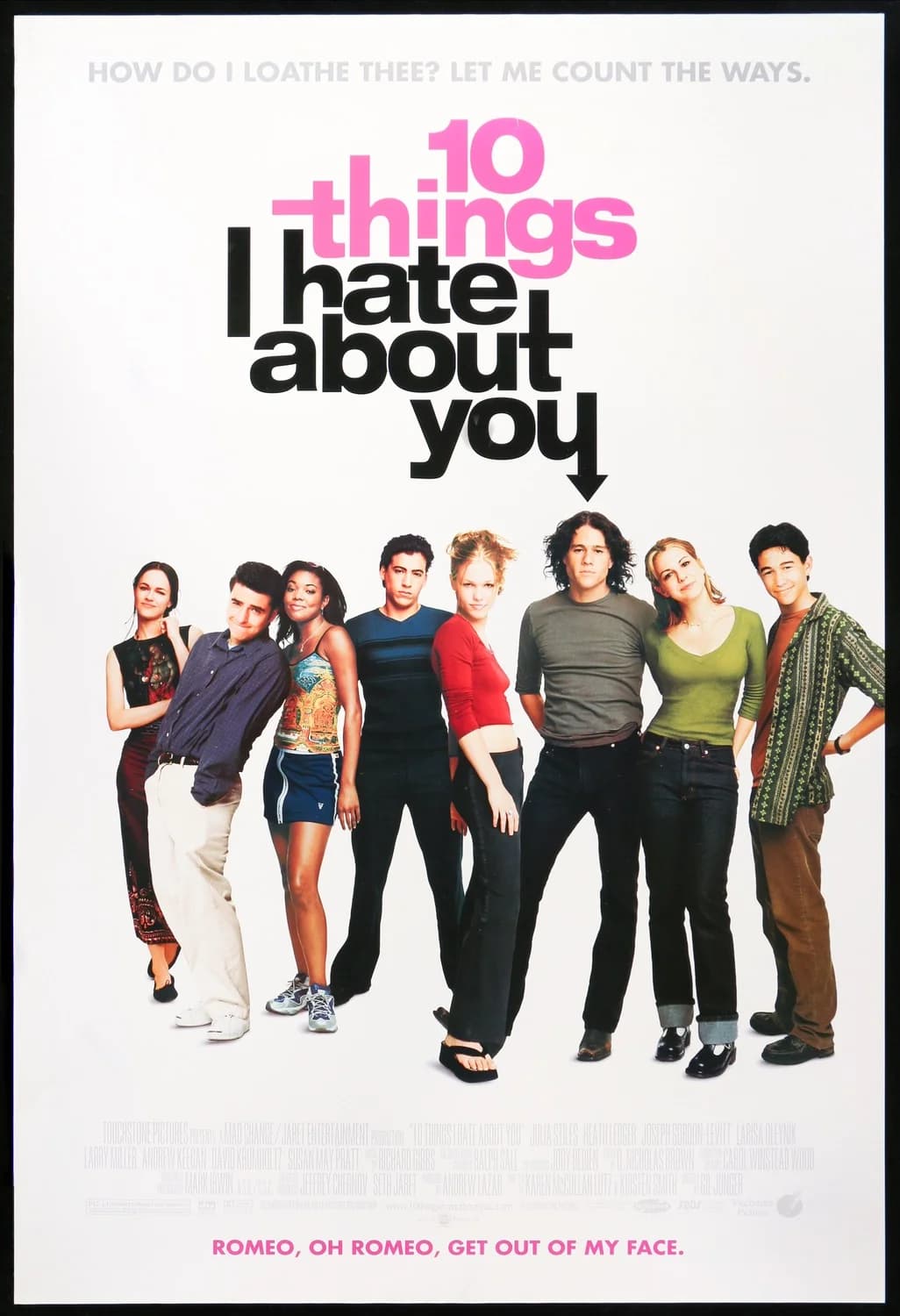
1999 // VHS
10 Things I Hate About You
Sibling rules, a rooftop serenade and one very stubborn Kat — Shakespeare in a school corridor.
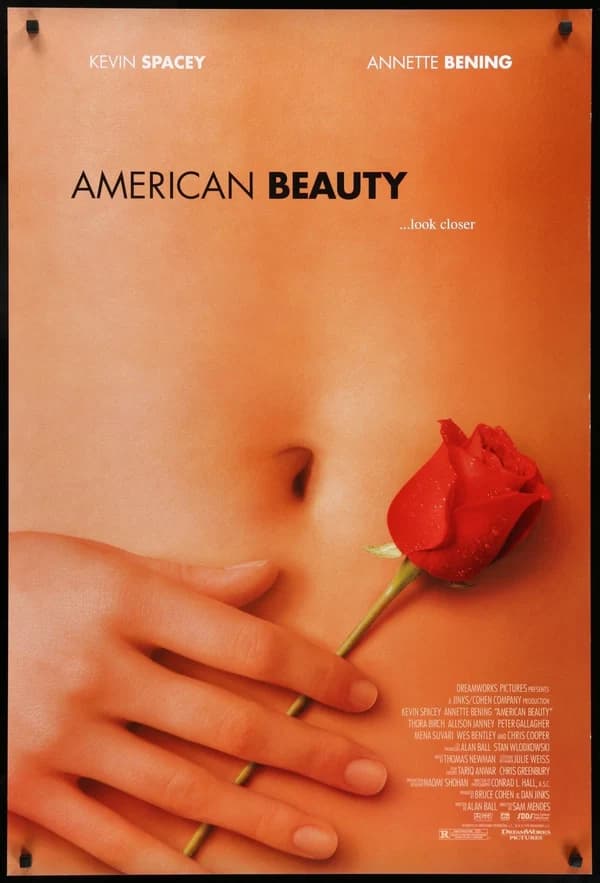
1999 // VHS
American Beauty
Lester Burnham, suburban rot and a midlife argument that still stings.
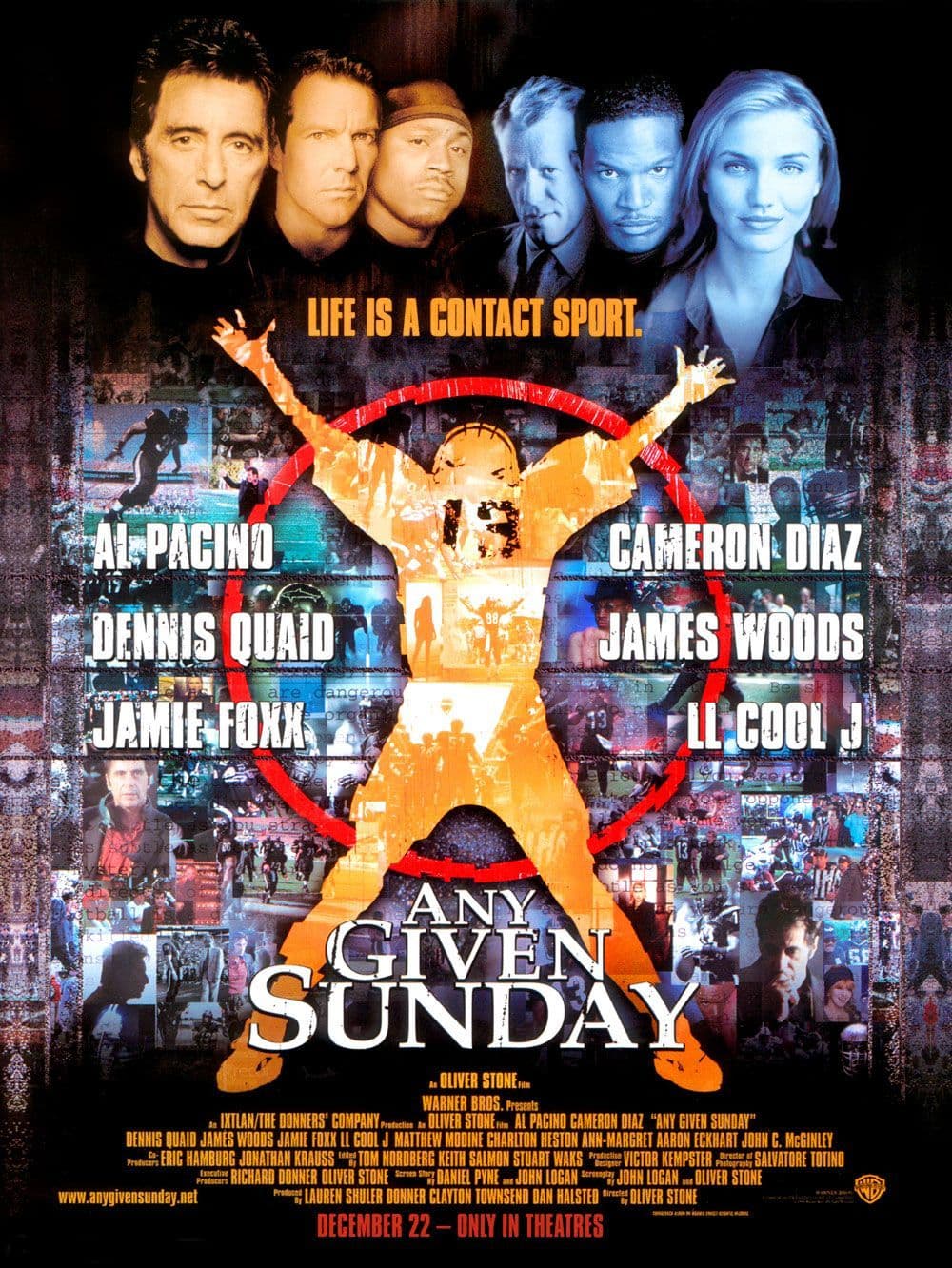
1999 // VHS
Any Given Sunday
Al Pacino's coach anchors the chaos of a film about football turned into product — loud, messy and oddly persuasive.