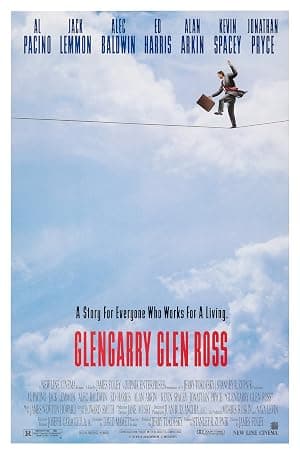
Glengarry Glen Ross
Always be closing: sales, swagger and how persuasion becomes a weapon.
// The setup
PLAYBACK STARTED
Talk to people about Glengarry Glen Ross and they usually start with the voice — a kind of velvet threat. It’s Al Pacino’s Ricky Roma who gives the film its pulse: a salesman whose language runs the office. Under James Foley’s direction, Mamet’s play becomes a compact, uncomfortable drama about what desperation does to men in a performance-driven world.
THE MOVIE
Ricky Roma is still the reason this movie works
If you remember one thing about Glengarry Glen Ross it’s the way someone can talk a room into believing anything. The film is David Mamet’s brutal little machine-workshop of persuasion — a screen adaptation of his 1984 play that sets a handful of real-estate salesmen against each other for the choicest leads.
What pushes the plot is a corporate ultimatum: only the top sellers keep their jobs. That single managerial decision turns bargaining into a siege, and suddenly politeness slides into petty cruelty, and small compromises become criminal ones.
James Foley directs this 1992 transfer from stage to screen with a clarity that keeps the pressure focused on the men in the office. At the centre is Ricky Roma — Al Pacino’s smooth, top-performing salesman — and around him a cast of characters whose careers, appetites and anxieties make the film feel less like a morality play and more like a case study in workplace desperation.
THE SETUP
The idea that sets Glengarry Glen Ross in motion
At its simplest the film stages one corrosive premise: a tight-knit sales office is told there will be a ranking and only the top sellers will stay employed. That single piece of corporate theatre is the pressure valve that makes everything else go haywire.
Because the film keeps its timeline compact, almost all the action is talk, confrontation and the odd desperate plan. The conversations are the engine; the face-offs are where people show their true figures.
Mamet wrote the screenplay for the screen version and expanded the world slightly — adding the figure who comes to deliver that humiliating motivational speech and opening up scenes beyond the confines of a single room. Those choices help the movie feel less like filmed theatre and more like a small, tight thriller about morals on the line.
Around that premise you get a workplace burglary, shifting alliances and the kind of escalating decisions people make when their livelihoods are reduced to numbers on a board.
THE CHARACTER
Why Ricky Roma matters
Ricky Roma is the salesman everyone in the office measures themselves against. He’s the man who can turn a sentence into currency — and that’s the point. The film treats him as the yardstick for persuasion, the person who shows what success looks and sounds like in a world that prizes closing above all else.
That centrality matters because the office hierarchy is built around talk: who can tell the story that convinces someone to sign. Roma’s place at the top keeps the rest of the men scrambling for scraps and reveals how language can also be the sharpest tool of control.
Al Pacino plays Ricky Roma, and his casting is a deliberate choice that keeps the role in focus — the salesman who anchors the office by the power of his pitch.
THE PERFORMANCE
Why Jack Lemmon's performance matters
Shelley Levene’s story is the film’s heartbreak folded into a suit: a once-respected salesman desperate for one more big sale. The performance that carries that character earned festival recognition—Jack Lemmon won the Volpi Cup for Best Actor at Venice for his role.
That award signals how central Levene’s arc is to the film’s emotional architecture. He’s the man whose decline gives the stakes a human face; without that, the office might read as mere economics instead of a moral mess.
Lemmon’s win was part of the movie’s festival life on the 1992 circuit, the sort of external validation that underlines how seriously the film took its acting showcase.
UNDER THE SURFACE
Glengarry Glen Ross has more on its mind than the plot suggests
On the surface it’s a story about selling property. Beneath that it’s about what a system that rewards only the winners does to the rest of us. Performance-based evaluation doesn’t just sort people; it pushes them into corners where moral compromise becomes a survival tactic.
There’s a clear streak of desperation here: men who once had dignity now measuring their worth in leads and closed deals. That pressure reshapes relationships, making co-workers into rivals and friends into threats.
Language is another weapon. Persuasion in this world isn’t neutral — it’s an instrument of power. The men who manipulate speech control outcomes; the rest are at risk of being consumed by their own rhetoric.
And threaded through all of it is a strain of workplace masculinity that’s brittle and performative. Ego, status and the need to be seen as ‘successful’ push characters toward choices they might otherwise avoid.
THE FILMMAKING
How Glengarry Glen Ross was put together
The movie often feels claustrophobic by design. Juan Ruiz Anchía is credited as the cinematographer, and the visual choices lean into an oppressive office mood — a look that keeps the pressure of the scenes tightly focused on the men and their exchanges.
Those production choices make the film read less like a stage recording and more like a compact, cinematic chamber piece: everything is meant to funnel attention toward what people say and how they say it.
It helps that the production rehearsed for several weeks before shooting began, which is the sort of prep that lets actors live inside Mamet’s dense, rhythmical dialogue rather than simply racing through it.
PURE 80S
Glengarry Glen Ross could not belong to any other decade
This is a film that sits between two eras: it’s a 1992, star-driven adaptation of a high-profile 1980s play. That positioning matters — the film’s financing and distribution follow an early-1990s pattern where independent production and international partners sat alongside studio distribution.
The result is a movie that looks and feels neither purely studio-bound nor entirely indie. It carries a seriousness of purpose, the kind of project that could mount a major ensemble and treat an actors’ showcase as its main selling point.
Mamet’s play was always tightly cast for theatre; taking that material into the early-90s film landscape meant leaning on name actors and a production model that brought together several funding sources to make the project possible.
THE LEGACY
Why Glengarry Glen Ross still matters
Part of the film’s afterlife is plain in the awards and attention it received: Jack Lemmon’s Volpi Cup win at Venice and Al Pacino’s Academy Award nomination are reminders that critics and industry took the acting seriously.
The screenplay and Mamet’s adaptation also got formal recognition in writing circles, which underlines how much the dialogue itself is the movie’s calling card.
There’s also the way the picture has been packaged and revisited: a tenth-anniversary home-video release included a short documentary about the film’s most famous speech and its sales-culture context, which points to continuing interest in that central moment and the language around it.
All of this keeps the film visible — not because it changed cinema at large, but because it remains a useful reference for how a tightly written, actor-centred piece deals with the corrosions of a commission-driven world.
THE VERDICT
Does Glengarry Glen Ross still hold up?
Yes — if what you want is a compact, combustible study of persuasion and pressure. The movie takes Mamet’s stage piece and, in a neat film-only move, adds a corporate emissary whose humiliating speech sets the stakes, so the workplace cruelty reads as deliberate and engineered rather than accidental.
Its short runtime keeps the momentum taut: a few confrontations, some conversations and a burglary are enough to show how a ranking system can turn colleagues into predators and push people toward moral compromise.
Central to the film’s longevity is its language. Ricky Roma exists to show how speech can be used as an instrument of power, and the men around him — including Shelley Levene, whose performance was recognised at Venice — give those stakes a human cost.
So watch it. It’s a 100-minute, 1992 drama directed by James Foley that still works as a lesson in how systems designed to reward only the winners can warp behaviour. It’s not pleasant company — and that’s precisely why it’s worth spending an evening with.
Share this movie
// Keep watching
More movies from the 90s
If Glengarry Glen Ross is your kind of movie, there's plenty more on the shelves worth rewinding.
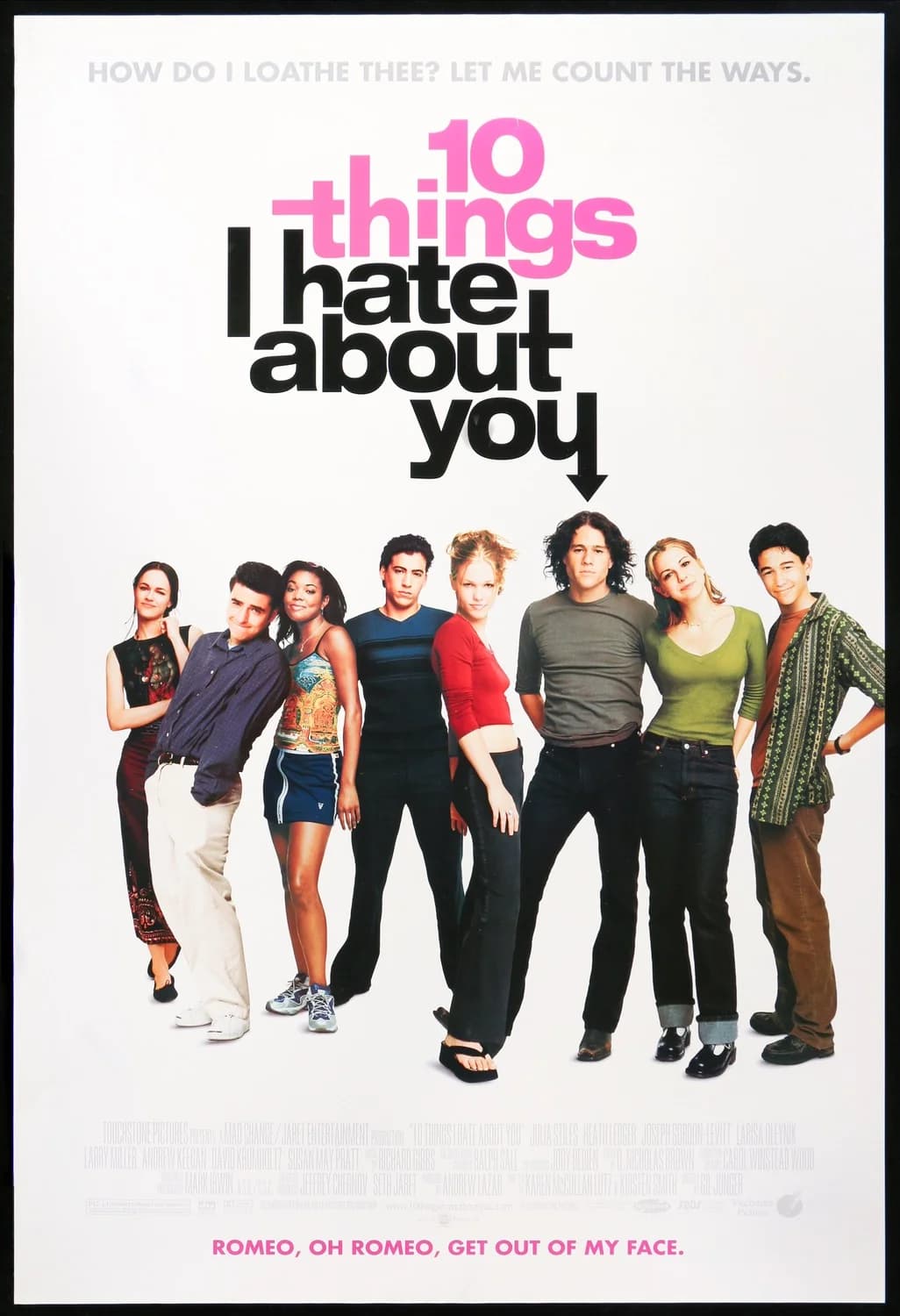
1999 // VHS
10 Things I Hate About You
Sibling rules, a rooftop serenade and one very stubborn Kat — Shakespeare in a school corridor.
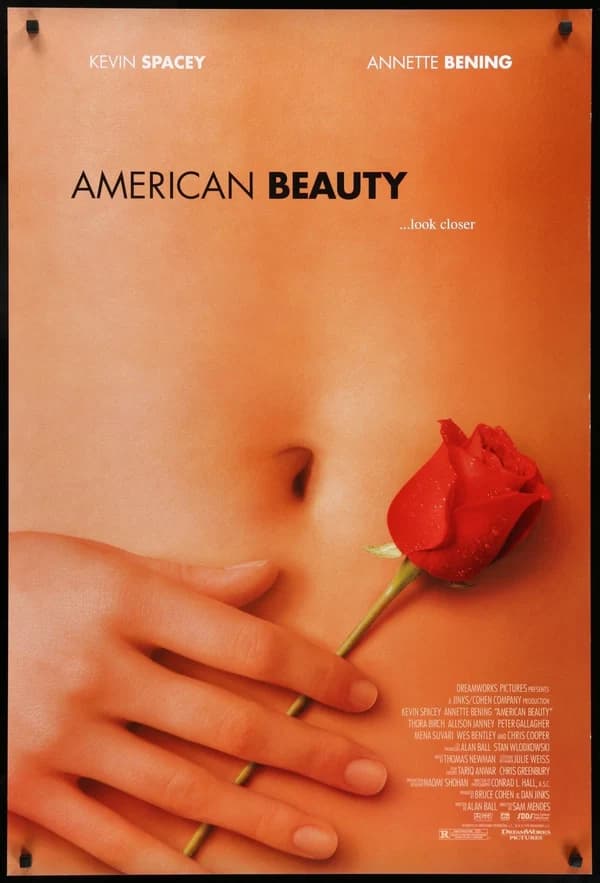
1999 // VHS
American Beauty
Lester Burnham, suburban rot and a midlife argument that still stings.
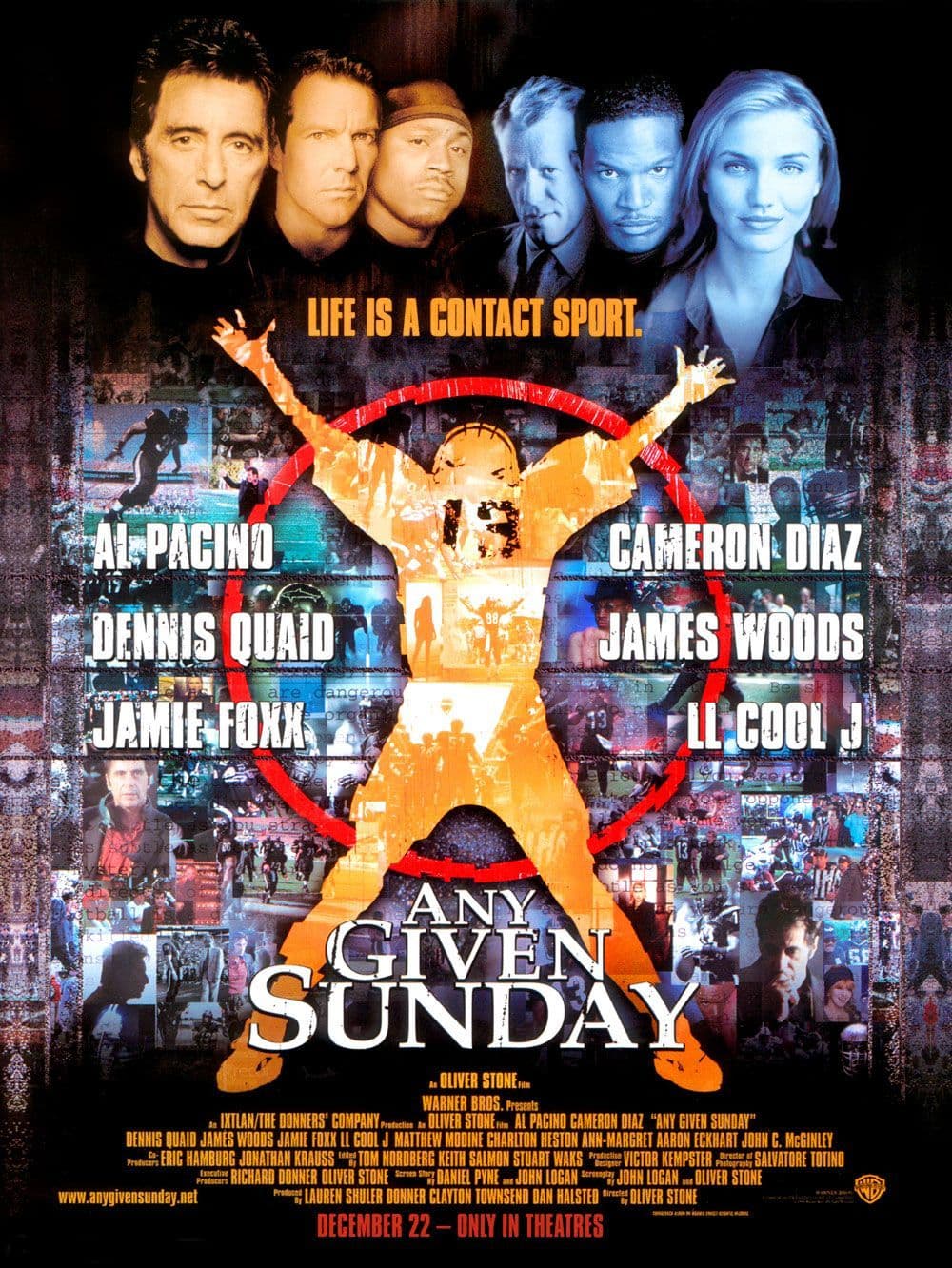
1999 // VHS
Any Given Sunday
Al Pacino's coach anchors the chaos of a film about football turned into product — loud, messy and oddly persuasive.