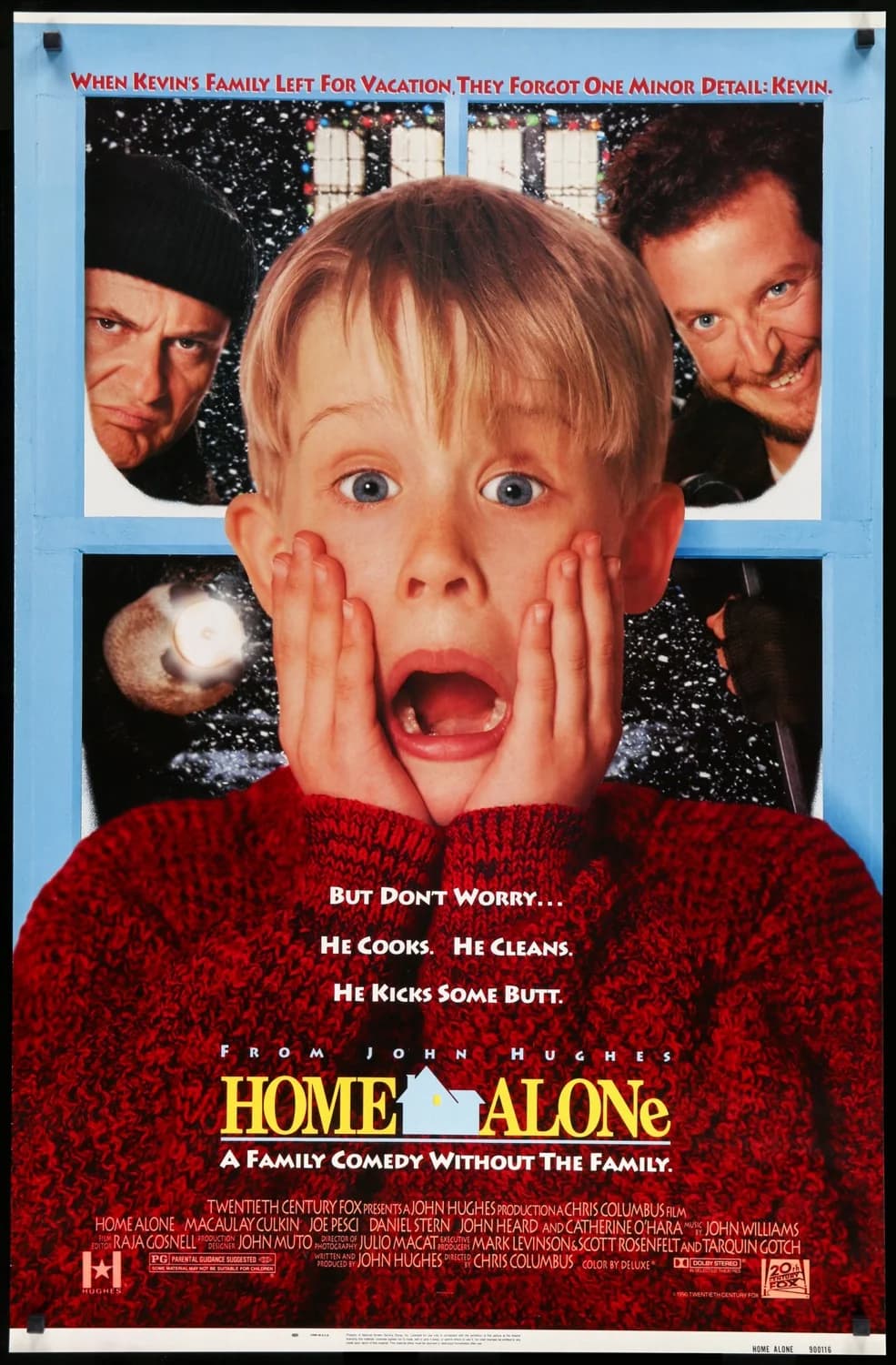
Home Alone
An eight-year-old left at home, a house full of traps and a film that still asks whether independence can coexist with forgiveness.
// The setup
PLAYBACK STARTED
There are movies you remember as moments — a gag, a scream, a Christmas tune — and then there is Home Alone, which people still bring up because it hangs around the memory as a proper character: Kevin McCallister. Chris Columbus’s 1990 family comedy pairs childish mischief with a surprisingly tender centre, and that odd mix is exactly why it’s worth revisiting.
THE MOVIE
Kevin McCallister is still the reason this movie works
The central image is simple and unforgettable: a large suburban family piles into cars, boards a plane and — through a combination of chaos and human error — leaves an eight‑year‑old behind. That setup starts the film’s mischief but it’s Kevin who turns absence into story.
Kevin begins by enjoying the freedoms of an empty house, but the gag gets teeth when two burglars pick the neighbourhood and Kevin becomes the sole defender of the family home. The movie rides that tension, switching between inventive booby traps and a quieter emotional pull.
The reason most viewers keep talking about Home Alone is Kevin himself — written to be inventive, resourceful and unexpectedly vulnerable. Put simply: the film is built around a child’s makeshift heroism and the sense that he’s trying to get back to the people he loves.
THE SETUP
The idea that sets Home Alone in motion
At its most economical, Home Alone gives us two things: a house that needs defending and a kid who decides to defend it. That decision converts childish ingenuity into a series of set pieces.
The central conflict is a battle of wits. Kevin turns everyday objects into improvised defences, forcing a pair of would‑be burglars into an escalating catalogue of slapstick misfortune.
Those trap sequences supply the comedy engine — the film asks you to enjoy physical spectacle — but it keeps circling back to a softer strand about family, community and reconciliation. The emotional beats stop the movie from being only a string of gags.
Even small, clever touches — like a black‑and‑white gangster short Kevin uses as a prop to intimidate intruders — do double duty: they raise the laugh level while helping move the plot along.
THE CHARACTER
Why Kevin McCallister matters
Kevin’s appeal is obvious once you stop treating him as just ‘the kid’ and start treating him as a person trying to solve problems. The screenplay frames him as inventive and resourceful, which gives the film permission to keep surprising us.
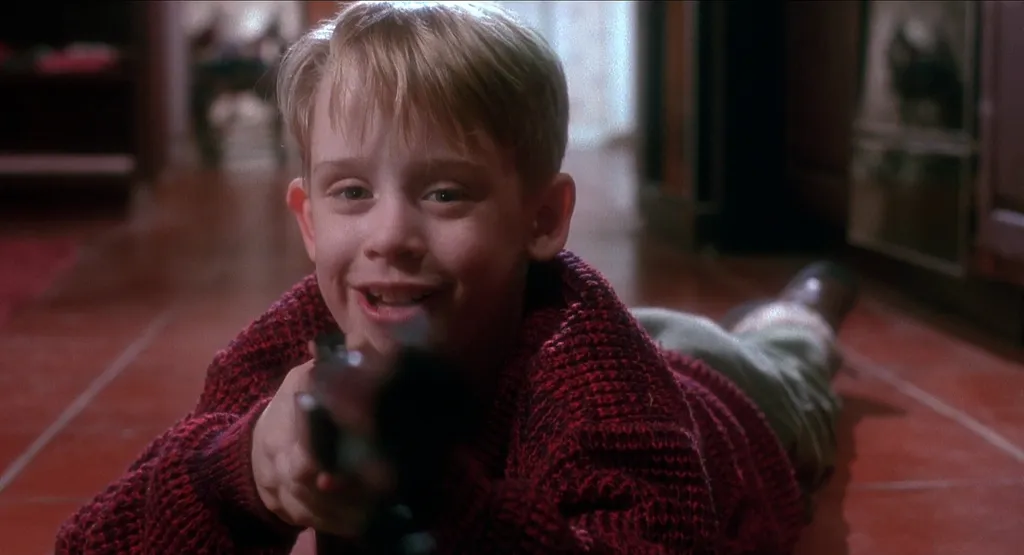
He isn’t invulnerable. The script also allows him to feel small and scared — that vulnerability keeps the traps from feeling gratuitous and makes the family reunion genuinely desired rather than incidental.
Because it’s a family movie at heart, Kevin’s choices have to land emotionally as well as comically. His resourcefulness drives the slapstick, but his longing drives the story home.
And that balance — crafty independence tied to sincere wanting — is what lodges the character in viewers’ memories.
THE PERFORMANCE
Why Macaulay Culkin's performance matters
Contemporary reviewers singled out Macaulay Culkin’s turn as a reason the film works, noting his ease in both comic and more tender moments.
That kind of response matters because a film built on a child’s cleverness collapses quickly if the central performer can’t sell both the scheming and the loneliness.
So while the traps and the pratfalls give the movie its visual jokes, the performance is the thing that persuades us to care about the payoff.
UNDER THE SURFACE
Home Alone has more on its mind than the plot suggests
On the surface, the movie is a comedy of physical gags. Beneath that, it’s surprisingly fixated on childhood independence — the idea of a kid having to make adult decisions, poorly and bravely, while no grown‑ups are watching.
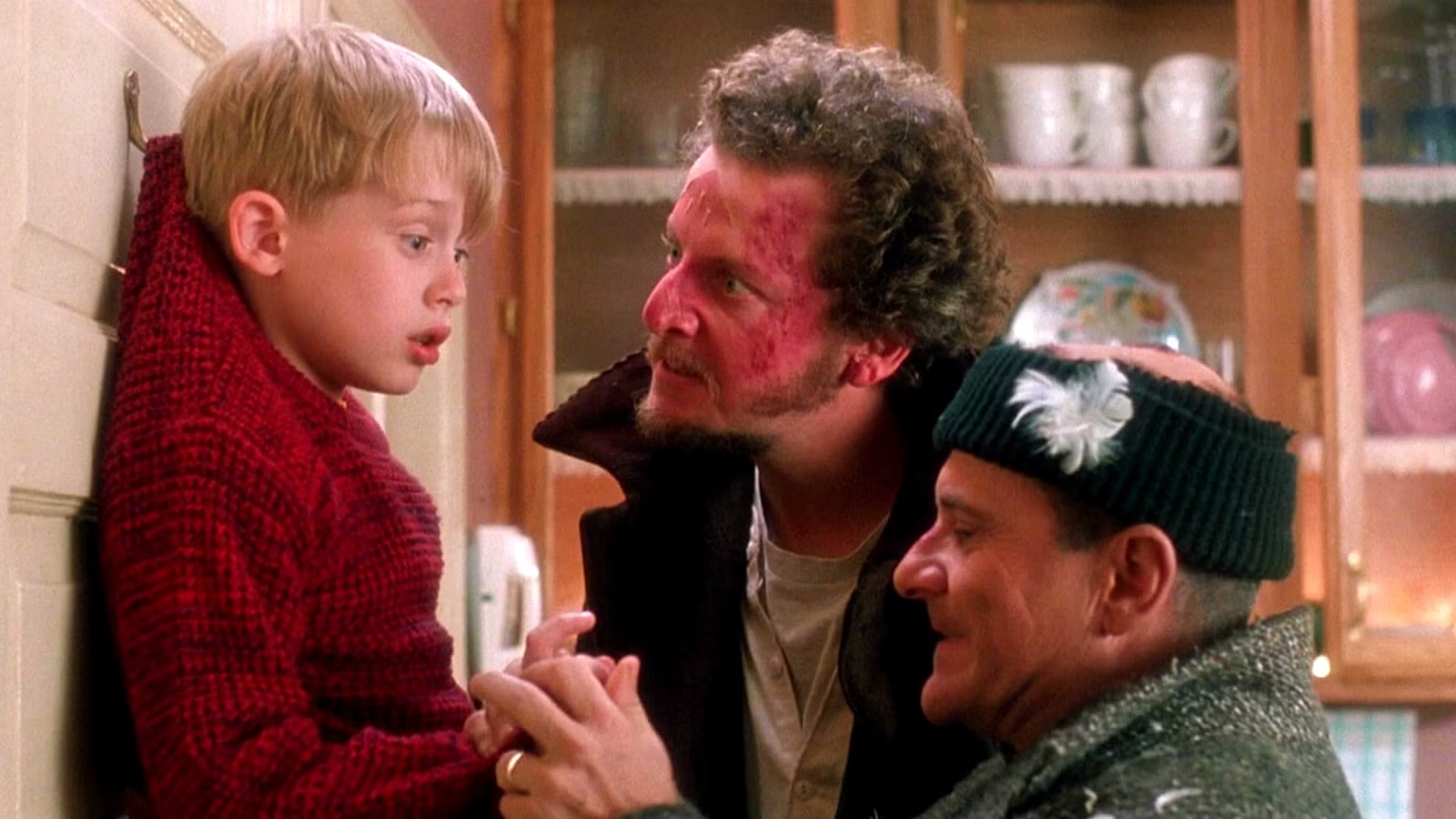
It’s also a film about family and forgiveness. The comic violence is offset by an emotional arc that wants you to believe the whole mess ends with people patched back together.
There’s another strand about suburban safety: the home is meant to be secure, and the film toys with the anxiety of that ordinary assumption being broken.
And because it’s so upfront about its physical humour, slapstick is more than style here; it’s the language the film uses to let Kevin fight back and to let the audience laugh without losing sight of the heart beneath.
PRACTICAL EFFECTS
The effects work that gives Home Alone its physical personality
Most of the movie’s memorable physical business isn’t cosmetics or trickery on a screen — it was achieved with on‑set stunt work and practical special‑effects support.
That practical approach is why the traps feel tactile: they land as physical collisions rather than illusionistic flourishes.
Contemporary reviews also highlighted how much the film depends on those crews to stage the slapstick convincingly, which makes the sequence work as both comedy and spectacle.
PURE 80S
Home Alone could not belong to any other decade
Though it arrived in late 1990, Home Alone caught the moment’s appetite for broad family comedies and became a defining blockbuster of the early ’90s.
Its success at the box office during that period helped make the film a shared holiday experience for families — the kind of picture that lived on television and in VHS tapes as much as in cinemas.
That timing matters: the movie sits on the cusp of decades, but its combination of family sentiment and big, accessible jokes feels very much like the turn‑of‑the‑decade mainstream filmmaking of the era.
WATCHING IT NOW
What has aged — and what hasn't
The film’s running length and structure still hold up: it’s a 103‑minute family comedy that knows when to push the joke and when to pull back for feeling.
Some elements feel of their time — the film is very much a product of its 1990 release and the mainstream family movie machinery behind it — but that doesn’t automatically make it stale.
The emotional strand about family and forgiveness remains clear. If you respond to stories where a kid’s misadventures end in reconnection, those beats still land.
And because the film’s pleasures are mostly narrative and character‑led rather than dependent on fleeting trends, it retains a surprising amount of life for a modern viewer.
THE LEGACY
Why Home Alone still matters
Home Alone was the first entry in a franchise and directly led to a sequel that picked up the same story and characters, which helps explain why the film’s central beats keep getting revisited.
Its music also found recognition: the score and the song 'Somewhere in My Memory' received Academy Award nominations, which is an uncommon nod for a picture rooted in broad comedy.
And on release the film was a major commercial success, which is part of why it keeps turning up in discussions about notable family holiday films from the early ’90s.
THE VERDICT
Does Home Alone still hold up?
Yes — and not just for a nostalgia fix. The film’s premise is compact and effective: a family trip gone wrong leaves Kevin alone, and he must defend his house against two burglars. That smart, simple idea keeps the movie driven and clear.
The booby‑trap set pieces supply the laughs and spectacle, while the sentimental subplot about family and reconciliation gives the film a real emotional finish line. Put together, the comedy and the heart balance one another well.
Macaulay Culkin — who plays Kevin and whose work was praised on release — is central here: the picture depends on someone who can sell both the scheming and the wanting. When that balance works, the whole thing holds up.
If you’re wondering whether to watch it now: if you like a film that mixes playful slapstick with straightforward family feeling, Home Alone still delivers. It’s a movie about a kid learning to be resourceful and, ultimately, about everyone finding their way back to each other — which is a tidy trick for a Christmas picture to pull off.
Share this movie
// Keep watching
More movies from the 90s
If Home Alone is your kind of movie, there's plenty more on the shelves worth rewinding.
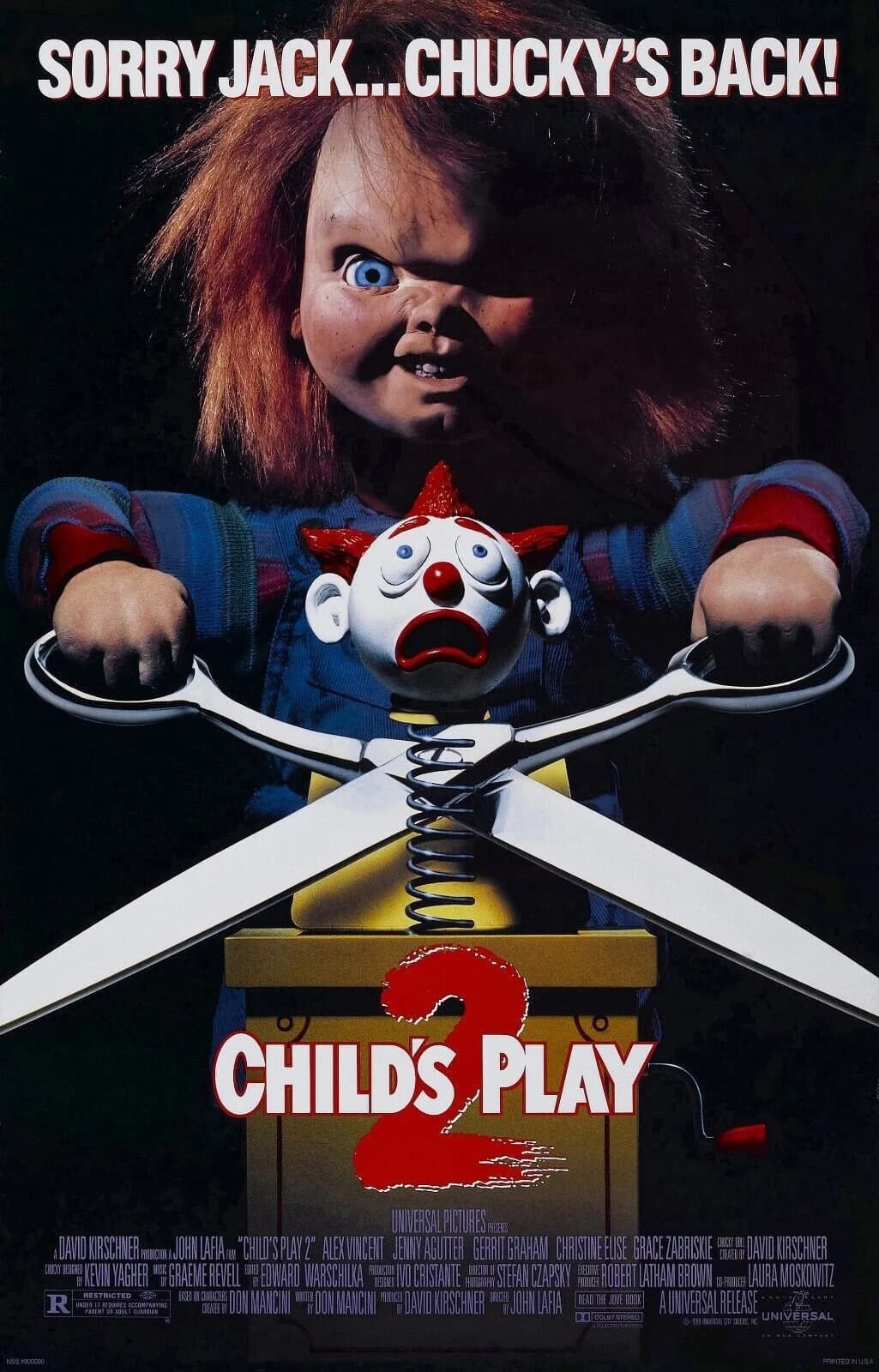
1990 // VHS
Child's Play 2
A repaired Good Guy, a frightened boy and a very bad warranty.
1990 // VHS
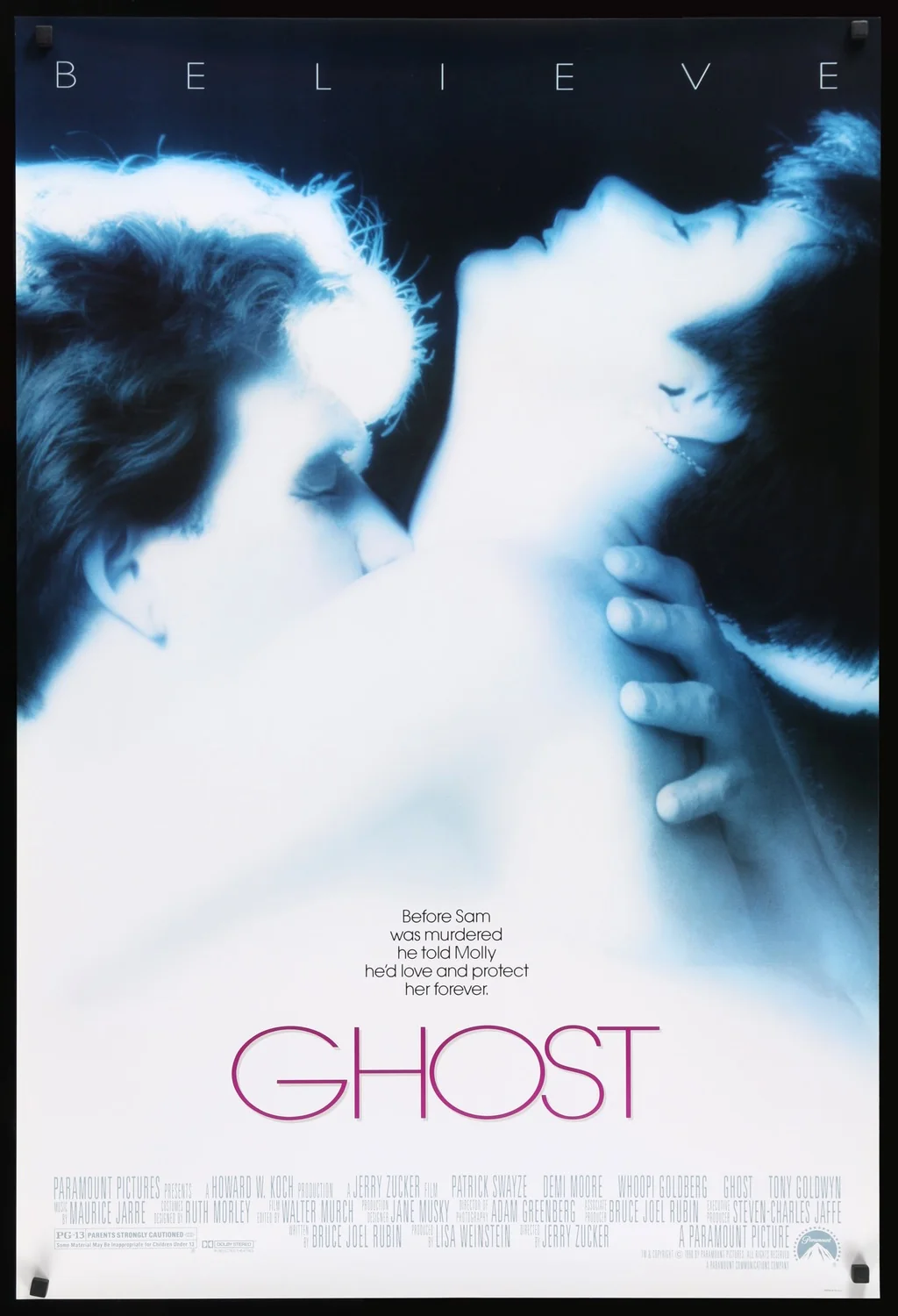
Ghost
A murder mystery disguised as a love story — with a man who won’t stop watching over the person he loves.
1990 // VHS
Goodfellas
Goodfellas: family and greed, and why this 1990 movie still matters.