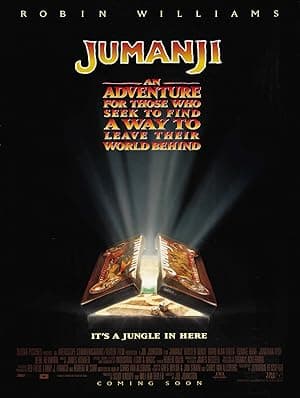
Jumanji
A board game that cheats time — and a man who never stopped waiting for someone to roll the dice.
// The setup
PLAYBACK STARTED
Remember the attic, the dust, and that single roll that changes everything? Jumanji is that particular childhood panic and thrill stretched into a family-sized spectacle, centred on a man who spent decades waiting for rescue. Revisit it and you’ll find a film that’s equal parts jungle chaos and a surprisingly tender story about what happens when a childhood is put on hold.
THE MOVIE
Alan Parrish (adult) is still the reason this movie works
You can describe Jumanji as a fantasy-adventure where a board game spills jungle hazards into a suburban town, and you wouldn’t be wrong. But that’s only half the picture. What makes the film hang together is that the chaos always bounces off a very human pain: a boy trapped inside a game, returned decades later as a man whose missing childhood shapes everything he does.
The setup is deliciously simple. Two modern children find an old board in an attic and start to play; each roll brings another element of the jungle into the real world, and the board’s effects don’t stop until the game is finished. That mechanics-first idea gives the movie momentum — and a neat moral structure: actions have consequences, and someone has to see them through.
Joe Johnston stages all of this with a clear sense of audience: it’s a family film with teeth and heart, and Robin Williams as the adult Alan Parrish is the reason you care when the next disaster rolls up the street.
THE SETUP
The idea that sets Jumanji in motion
The central conceit is neat and very easy to explain: Jumanji is a board game that literally brings the jungle to you whenever someone rolls the dice. It’s an elegant bit of magical realism because the rules are clear; that clarity is what lets the film ratchet up danger without losing the audience.
Each roll produces a new problem that must be dealt with, and those problems keep stacking. The game’s logic — you must finish playing to remove the effects — gives the film an internal clock and a genuine sense of responsibility. It stops being just spectacle and starts to feel like work.
Most of the tension comes from that double duty: surviving the next supernatural hazard while also finishing a game whose finish line is the only cure. For a family film, it’s a tidy way to make consequences feel immediate and visible.
Adapting Chris Van Allsburg’s short picture book into a feature required stretching the idea into a longer story with new adult characters and extended plotlines, and the game’s simple rules conveniently hold everything together.
THE CHARACTER
Why Alan Parrish (adult) matters
Alan Parrish isn’t memorable because he survives a stampede; he’s memorable because we can see what he lost. The film opens the emotional book on him: a child who was swallowed by a game and reappears decades older, carrying the loneliness and arrested development that come from having your life paused.
That missing childhood shapes his choices. The film uses Alan to make the central fantasy feel costly rather than fun — somebody paid a price for the adventure, and waking him up brings not just spectacle but real human consequences.
The movie also keeps the stakes personal. Alan’s unresolved history with Sarah Whittle gives his return a human focus amid the animals and chaos, while a recurring figure of threat — the hunter Van Pelt — keeps his world dangerous in a way that echoes both his past and his family story.
And, crucially, the role is played by Robin Williams, which anchors the part with star presence and a recognisable weight that the screenplay can play off.
THE PERFORMANCE
Why Robin Williams's performance matters
Contemporary reactions singled out Williams as the film’s emotional anchor. Reviewers noticed that, when the script needed steadiness, he supplied a more restrained, plaintive side that sat beside the film’s broader comic moments.
Put simply: the movie relies on his ability to make an audience care about a man who’s spent years waiting in a jungle. That plea for sympathy is what lets the madness of a stampede or a monsoon land with some weight rather than feeling like pure set dressing.
Because the rest of the film oscillates between family comedy and action set pieces, having a performance that can switch registers without collapsing into caricature is important. Contemporary coverage repeatedly pointed to that balance as a strength.
So while Jumanji is noisy and busy, Williams gives it a readable emotional spine.
UNDER THE SURFACE
Jumanji has more on its mind than the plot suggests
On the surface it’s a fantasy romp about animals on the loose. Underneath, the film keeps circling a handful of small, insistent ideas: a lost childhood, how we live with consequences, and the stubborn line between imagination and the real mess it creates when fantasy spills into ordinary life.
Alan’s story is essentially an interrupted coming-of-age. The film lets that interruption be felt — not just through melodrama but through the practical business of having to grow up late and learn responsibility under bizarre conditions.
There’s also a tidy moral through-line: the game’s rules force players to finish what they start. That turns the film into a story about facing consequences instead of running from them, which is a surprisingly mature stance for a big-effects family movie.
Finally, reunion and the chance for redemption animate more than just romantic beats. Alan’s return prompts characters to reconnect, and those reconnections are what give the spectacle an emotional exit strategy rather than ending on a meaningless action flourish.
THE FILMMAKING
How Jumanji was put together
One of the film’s quieter achievements is the way ordinary suburban spaces become invaded. Production designer James Bissell uses progressive set dressing to make the Parrish house and the town feel slowly taken over by the jungle, which helps the movie sell the central idea without a constant reliance on cutaways or exposition.
That gradual encroachment is a smart choice: it keeps the viewer oriented while the plot piles on new hazards. Because the world changes visibly as the board is played, the production design becomes a kind of running gag and a shorthand for stakes.
Joe Johnston’s direction often treats those changes like physical punctuation — a vine here, a patch of sod there — so that spectacle always ties back to place, and the audience can track cause and effect without losing the story thread.
The result is a family adventure that looks, in small ways, like it was assembled to make sure the set-pieces always felt rooted in the same house and town the characters actually lived in.
PRACTICAL EFFECTS
The effects work that gives Jumanji its physical personality
Jumanji feels tactile because it leans heavily on real things being on set. Multiple practical and animatronic vendors supplied creature and mechanical work, so actors were often reacting to physical props rather than empty air.
Names like Amalgamated Dynamics and Jim Henson’s Creature Shop appear on the credits for a reason: the movie needed hands-on puppetry and mechanical devices where close interaction mattered, and those teams provided the literal nuts and bolts.
That practical layer sits beside the computer graphics; the film mixes real-world puppets, mechanical devices and animals with digital elements, which gives many sequences an oddly stubborn physicality.
For a family adventure that wants kids to gasp and parents to believe, having creatures that can be touched — or at least convincingly touched on screen — makes a lot of difference.
PURE 80S
Jumanji could not belong to any other decade
Jumanji sits squarely in a mid-1990s moment when big studio family films routinely blended practical animatronics with increasingly sophisticated computer graphics. That hybrid approach gives the movie a particular texture that belongs to that era.
It’s also of a piece with the decade’s appetite for effects-driven holiday releases that mixed star vehicles and spectacle. Anchoring a family-adventure in a recognisable star turn was a very 1990s way of reassuring adult viewers as the kids watched the chaos unfold.
The production made use of Vancouver-area infrastructure and North American locations, which by the 1990s had become a go-to base for effects-heavy shoots — a practical decision that shaped how and where the movie could stage its set-pieces.
Finally, the film’s decision to stretch Chris Van Allsburg’s short picture book into a full-length movie with additional adult characters reflects how 1990s adaptations often expanded a compact premise into something that could carry both spectacle and an emotional through-line.
WATCHING IT NOW
What has aged — and what hasn't
At its core Jumanji is a family film, and those bones are durable. The idea of a simple game forcing grown-ups and children alike to own their decisions remains a tidy, teachable through-line that still works in mixed company.
Adapting a short picture book into a feature meant the writers introduced more adult characters and longer plotlines; that expansion gives the movie emotional material to hang on, rather than relying purely on one jokey premise stretched too thin.
Because the narrative balances novelty dangers with recognisable human stakes — reconnection, responsibility, lost time — much of the film’s emotional argument translates across decades.
If you watch it now with the right expectations — as a family adventure with an emotional core rather than a relentlessly modern blockbuster — it generally still does the job it sets out to do.
THE LEGACY
Why Jumanji still matters
Part of Jumanji’s afterlife is straightforward: it led to an animated series that ran from 1996 to 1999 and helped keep the movie’s premise in circulation for a younger audience.
It’s also the narrative seed for a small cluster of related projects: another Van Allsburg adaptation (Zathura) and studio sequels and reboots beginning with the 2017 film, which treated the original as a point of departure for new ideas.
Taken together, those follow-ups make the 1995 film the origin point for a multi-decade franchise — not because it was the most polished effects show of its era, but because its premise proved durable enough to be reworked in other formats and tones.
THE VERDICT
Does Jumanji still hold up?
Yes — with a caveat. If you’re after a modern blockbuster that never pauses for breath, this isn’t it. But if you want a family adventure that pairs wilful spectacle with a real emotional through-line, Jumanji still works. The board’s simple rule — each roll brings a new hazard, and finishing the game removes its effects — keeps the plot focused, while that mechanic also turns every dice throw into a moral and practical problem to be solved.
Robin Williams’s presence as Alan Parrish matters here. The story depends on the idea that this man paid a price for an interrupted youth; when the film reunites him with present-day characters — the siblings who restart the game, and Sarah Whittle, his childhood friend — the stakes stop being abstract and become recognisably human. Even the antagonist setup (Van Pelt doubling as a figure tied to Alan’s family) keeps the threat personal rather than anonymous.
Technically, the movie mixes on-set practical creature work with computer graphics, which gives many set-pieces a tactile quality that still reads well in places. And because the screenplay balances spectacle with the duty of finishing what you started, the film’s emotional beats land with more than flash: there are consequences that characters must face before the credits roll.
So should you watch it? If you want to revisit a 1995 family film that remembers to care about who gets hurt and why, bring the kids or watch it alone. Jumanji’s jungle is loud and occasionally daft, but under the noise is a story about a man trying to be the person he never got to grow into — and that’s a reason to roll the dice one more time.
Share this movie
// Keep watching
More movies from the 90s
If Jumanji is your kind of movie, there's plenty more on the shelves worth rewinding.
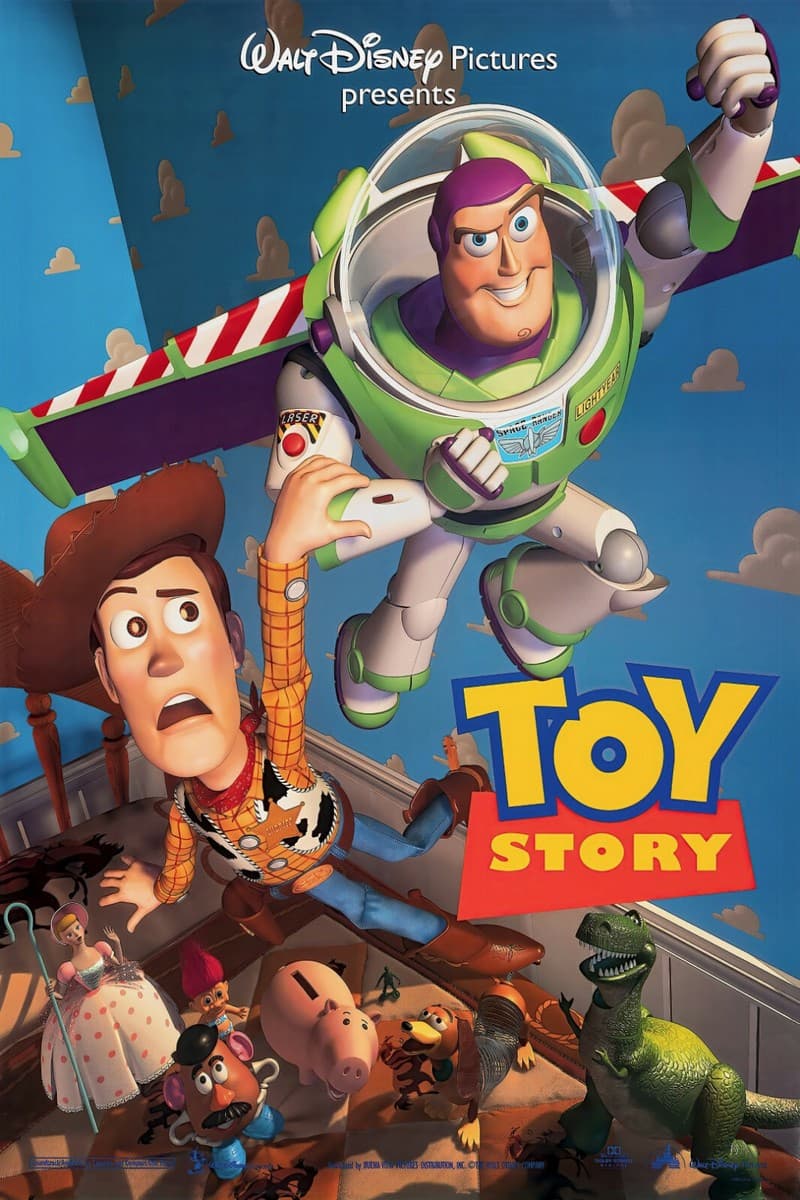
1995 // VHS
Toy Story
A pull‑string cowboy, a deluded space ranger and a small, very particular war over being loved.
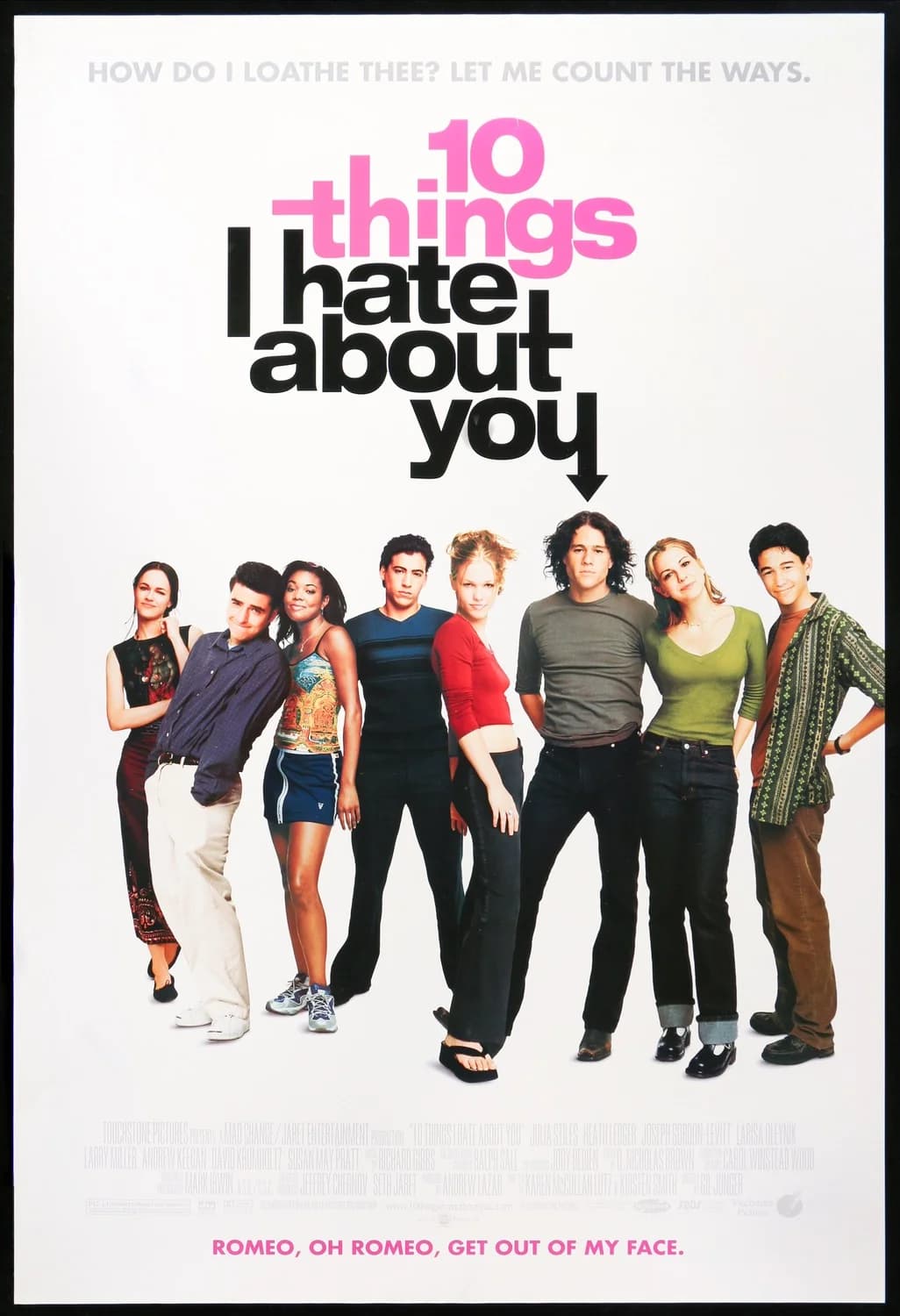
1999 // VHS
10 Things I Hate About You
Sibling rules, a rooftop serenade and one very stubborn Kat — Shakespeare in a school corridor.
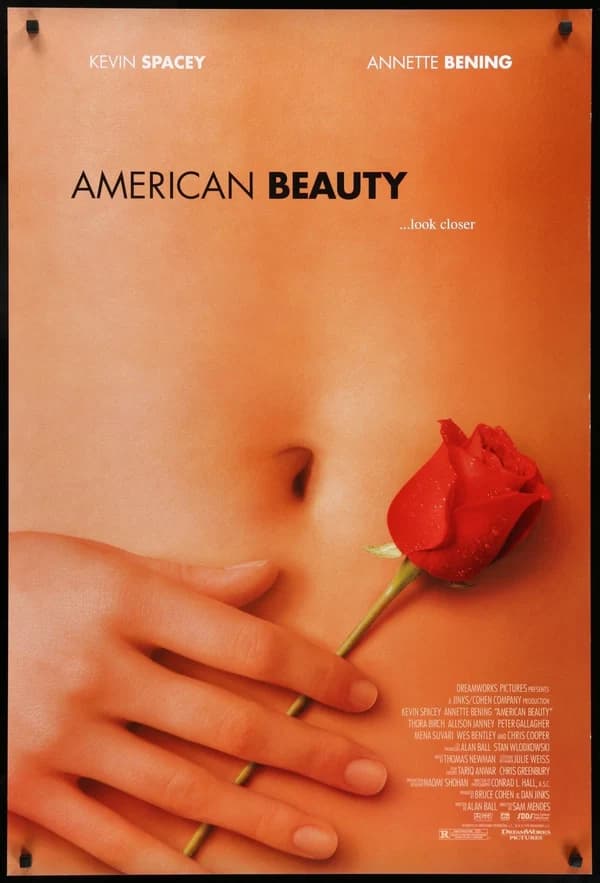
1999 // VHS
American Beauty
Lester Burnham, suburban rot and a midlife argument that still stings.