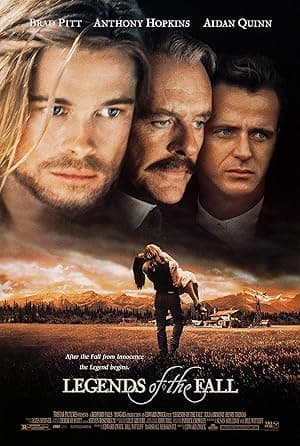
Legends of the Fall
Brotherhood, grief and a wild middle son on a Montana ranch.
// The setup
PLAYBACK STARTED
Legends of the Fall still gets people talking because it centres on a kind of irresistible mess: a family, a war, and one son who behaves as if the rules were optional. Edward Zwick took Jim Harrison’s novella and turned the Ludlows’ long, sad sweep across the early twentieth century into something that feels big and personal at the same time. Watch it for Tristan—the troublemaker who keeps dragging everyone into the story’s storm.
THE MOVIE
Tristan Ludlow is still the reason this movie works
People still bring up Legends of the Fall because it’s a family epic that keeps returning to a single, combustible relationship: three brothers on a Montana ranch whose loyalties and rivalries survive war, loss and terrible choices. Zwick’s film draws its drama from that domestic scale and then lets it collide with history.
What propels the plot is simple and stubborn — a three-brother dynamic, a love triangle involving Susannah, and the ripple effects of Samuel’s deployment and death. Those elements are the engine; everything else is the smoke and sparks.
And at the front of the train is Tristan Ludlow, the wild, impulsive middle son played by Brad Pitt. His appetite for risk and for nature keeps the film moving, while the production around him — notably the celebrated cinematography — gives everything the kind of sweep that lets a family story feel like an era.
THE SETUP
The idea that sets Legends of the Fall in motion
At its heart the film is a tidy enough proposition: it follows the Ludlow family on a Montana ranch across the early twentieth century, tracking the years before, during and after World War I. That timeframe lets private life and public catastrophe overlap — which is where the drama lives.
The narrative rests on three main story levers. First, the brothers: a responsible eldest, a dangerous middle, and a young idealist. Second, a love triangle that tests loyalties and fractures the household. Third, the consequences of Samuel’s deployment and death, a loss that reshapes everyone’s paths.
Those pieces give the film clarity. You can watch Legends of the Fall without getting lost in plot mechanics because the core conflicts are emotional and immediate: family, love, guilt.
That clarity is also why the film often feels operatic. The personal choices are large enough to be seen from a distance, which is exactly the scale the movie wants.
THE CHARACTER
Why Tristan Ludlow matters
Tristan is the character the whole film orbits. He’s the middle son whose love of risk and of the wild parts of life makes him unpredictable — and magnetic. That unpredictability is not just window dressing; it’s the reason major events in the story happen.
He’s set up in direct contrast to Alfred, the dutiful older brother. That pairing—one steady, one combustible—keeps the family drama legible. When Tristan moves, the household trembles.
Samuel’s youthful idealism and the choices he makes send shockwaves through Tristan’s life, turning grief and guilt into an ongoing force that reshapes his wanderings. Tristan doesn’t just react to loss; he’s shaped by it.
Even Colonel William’s decision to withdraw from public life and raise his sons on the ranch matters here. His disillusionment with military policy and his parenting choices create the conditions in which Tristan’s particular brand of recklessness can flourish.
THE PERFORMANCE
Why Brad Pitt's performance matters
Contemporary critics repeatedly pointed to Brad Pitt when they discussed the film; reviews singled out his turn as a key element of the movie’s impact. That attention matters because Tristan is the film’s emotional fulcrum — so the way an audience experiences the story rides on how convincing that centre feels.
Put simply: the narrative asks the viewer to follow Tristan into some dark, impulsive places. If the performance didn’t give the character a tether, the whole emotional experiment would drift.
At the time, critics paired praise for Pitt with praise for the film’s visual treatment, while also noting the screenplay’s tendency toward melodrama. So the conversation around the performance has always been linked to the film’s scale: acting and image working together.
Whether you’re watching for star-making charisma or character complexity, the contemporary notice the performance received explains why it became a talking point when the film came out.
UNDER THE SURFACE
Legends of the Fall has more on its mind than the plot suggests
On the surface it’s an elemental family drama. Underneath, the movie keeps returning to brotherhood: how men hold together, how loyalties bend and how those same loyalties can snap. The three brothers are not just plot points; they’re a study in how family shapes identity.
Grief and guilt run through Tristan’s arc like a current. The film shows how loss doesn’t end with a funeral: it’s a practical, ongoing influence that alters behaviour and decisions, often in ways that make things worse.
There’s also a steady tension between nature and civilisation. The ranch, the rivers and the wilderness are not backdrop alone; they’re a space Tristan loves and where he feels most himself. That pushes against institutional worldviews—especially those shaped by war and its rules.
Finally, the film says something about masculinity: stoicism, duty and violence are presented as family inheritance. The characters are wrestling with what it means to be a man after cataclysmic events—how to carry pain and what to do with it.
THE FILMMAKING
How Legends of the Fall was put together
A big part of why the film feels like an event is the visual design. John Toll was the director of photography, and his work here won the film the Academy Award for Best Cinematography. That recognition matters — the camera doesn’t just record the story, it shapes how we feel its scale.
Location shooting in Alberta and British Columbia stood in for Montana, and the production leaned into wide vistas and natural environments. Those choices let the movie stage intimate family scenes against genuinely expansive settings.
The effect is that private anguish and epic scenery live in the same frame. That combination is precisely why many viewers remember the film as a sweeping period piece rather than just a domestic drama.
Contemporary responses tended to cite the film’s visuals alongside the performances; it’s the pairing of image and character that gives the picture much of its power.
PRACTICAL EFFECTS
The effects work that gives Legends of the Fall its physical personality
When the film moves into World War I sequences it does so by building trench and battlefield environments on location, rather than relying on studio-bound illusion. Those constructed locations give the battle scenes a tangible, roughened texture.
The production also employed large numbers of local extras and some military personnel to populate those sequences. That scale — real people in muddy lines and trenches — helps the action read as physically present rather than purely cinematic shorthand.
Because these scenes were staged in the open and mixed with real crowds, the film’s war moments feel immediate in a way that supports the family drama rather than overwhelming it.
Practical staging like this keeps the material grounded even when the emotional beats climb toward melodrama.
PURE 80S
Legends of the Fall could not belong to any other decade
Released at the end of 1994 with a wider roll-out in January 1995, the film came at a moment when historical and epic filmmaking were enjoying a second wind. Audiences were ready for big, period storytelling that married spectacle to emotion.
For Brad Pitt it was a pivotal moment too; the picture contributed to his move into leading-man territory in the mid-1990s. The timing matters because the movie’s success fed into how Pitt’s career reshaped itself in the decade that followed.
The film’s commitment to large-scale staging and picturesque cinematography is very much of that era: grand gestures, big settings and a confidence that an audience would take the emotional leap the story asks for.
So while the material reaches back in time, its production instincts — scale, star-building and cinematic sweep — are unmistakably 1990s in spirit.
WATCHING IT NOW
What has aged — and what hasn't
The aspects that tend to hold up best are the ones you can see: the cinematography and the way the film was presented on home video. Restorations and reissues have emphasised John Toll’s photography, which still gives the film its visual punch.
The central family story — that tangle of brotherhood and loyalty — continues to read clearly. The emotional logic of brothers divided by duty and desire is not a period joke; it translates across generations.
What’s trickier now is how openly the film indulges melodrama. Modern audiences often expect tighter emotional restraint, so some of the bigger gestures can feel dated, even if they were sincere in intention.
But if you respond to a grand, tragic family romance, the film’s core will still find you; the visuals and the family conflicts remain the strongest threads.
THE LEGACY
Why Legends of the Fall still matters
Part of the film’s afterlife is tangible: John Toll’s work earned the film the Academy Award for Best Cinematography, and that recognition cements the picture’s reputation as a visually ambitious piece.
The movie was a commercial success and, importantly, helped raise Brad Pitt’s profile as a leading actor. That career momentum is a practical legacy — the film mattered to the people involved, not just to audiences.
Sony Pictures Home Entertainment’s decision to produce a 4K Ultra HD restoration for a milestone release shows there is sustained home‑video interest and a desire to preserve the picture for future viewers.
Between the award recognition, the star-making element and continued restoration, Legends of the Fall has kept enough breathing room in public memory to be rediscovered without being forced back into view.
THE VERDICT
Does Legends of the Fall still hold up?
Yes — if you’re willing to sit through big feelings served with big vistas. The film adapts Jim Harrison’s novella into a sweep that trades subtlety for scale: a three-brother dynamic, a love triangle and the aftershocks of Samuel’s fate drive everything, and those are tidy, durable dramatic engines.
Tristan is the movie’s motor. He’s the wild middle son whose attraction to risk and to the natural world moves the plot, and the film depends on that volatility. Alfred’s steadiness as the foil and Colonel Ludlow’s withdrawal from public life give the story its moral ballast.
The visual side still rewards. John Toll’s cinematography is a clear reason to watch — the photography won an Academy Award for a reason — and contemporary notice of Brad Pitt’s star-making turn explains why the performance remains a talking point.
If you expect restrained nuance on every page, you’ll be frustrated. If you want a romantic, sometimes overwrought family epic that looks fantastic and centres on a dangerously charismatic protagonist, Legends of the Fall is very much worth revisiting.
Share this movie
// Keep watching
More movies from the 90s
If Legends of the Fall is your kind of movie, there's plenty more on the shelves worth rewinding.
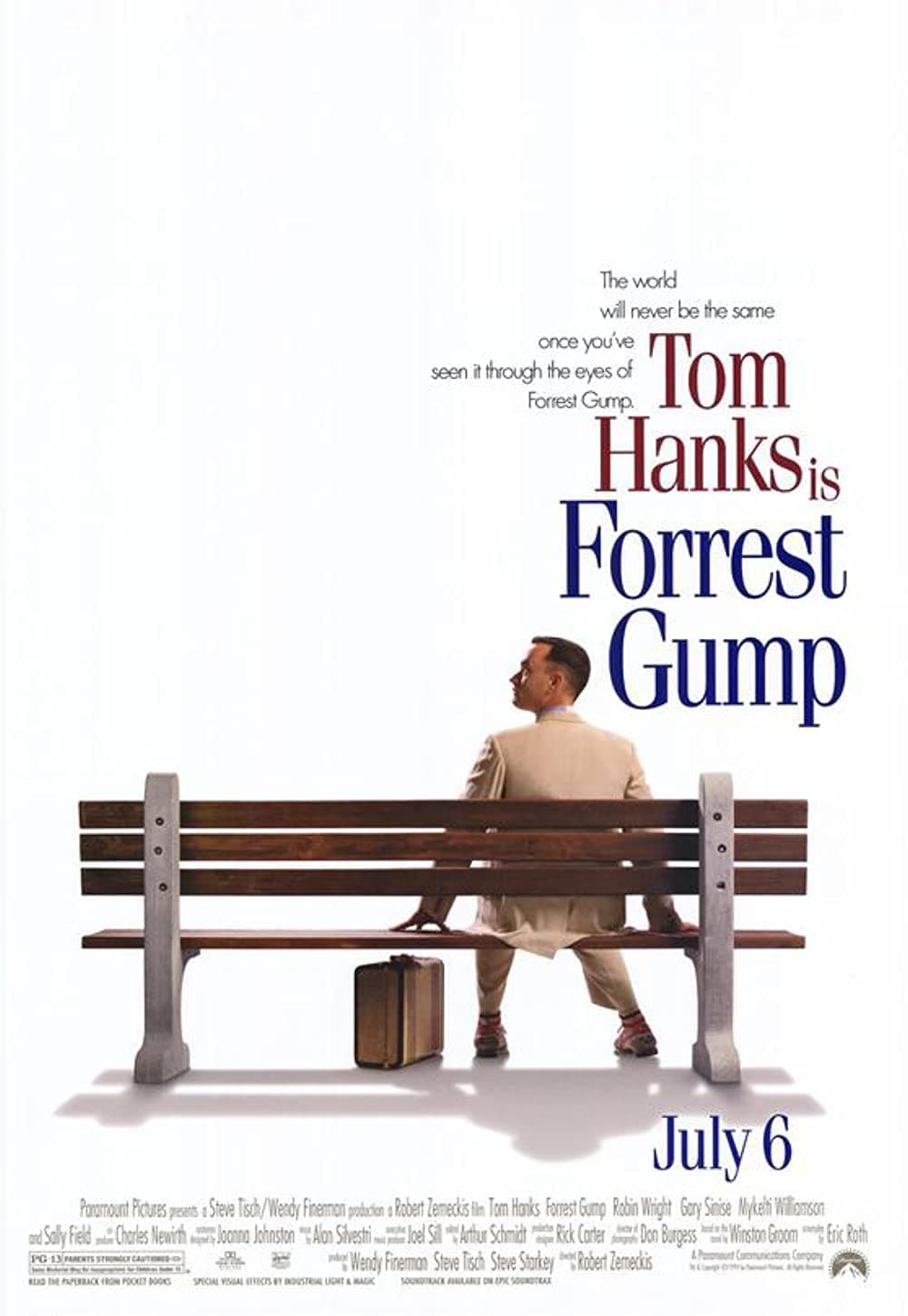
1994 // VHS
Forest Gump
A man on a bench who refuses to make history anything more complicated than a story worth telling.
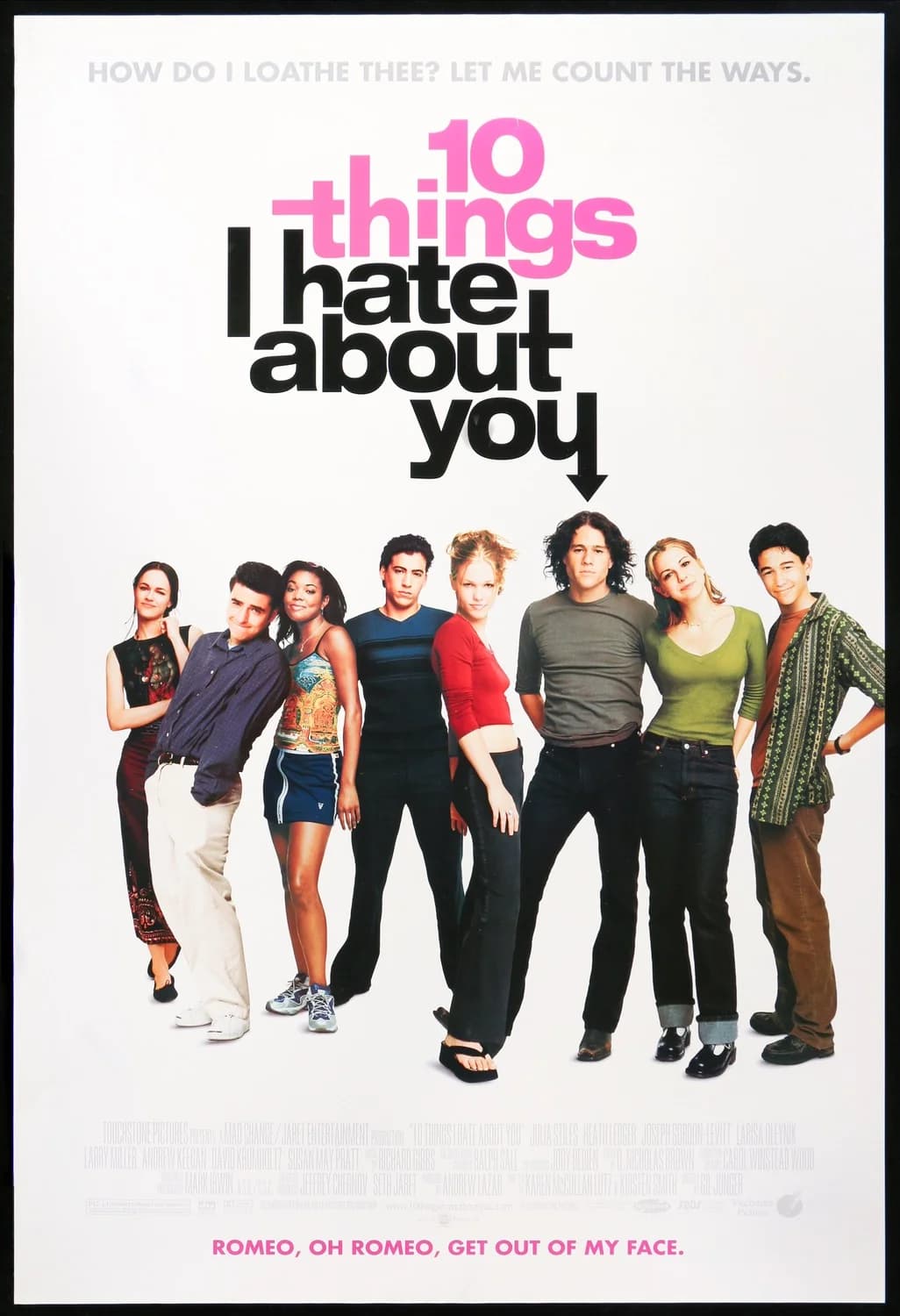
1999 // VHS
10 Things I Hate About You
Sibling rules, a rooftop serenade and one very stubborn Kat — Shakespeare in a school corridor.
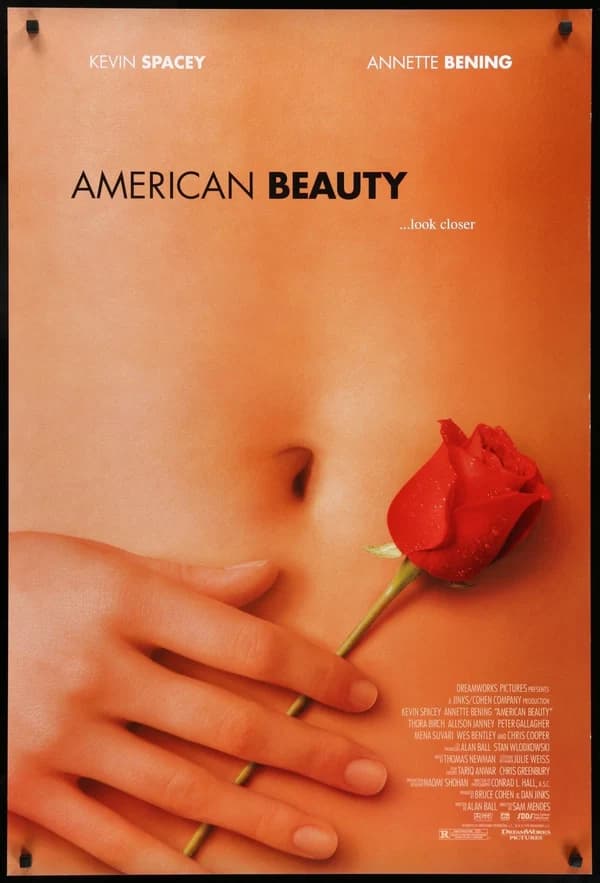
1999 // VHS
American Beauty
Lester Burnham, suburban rot and a midlife argument that still stings.