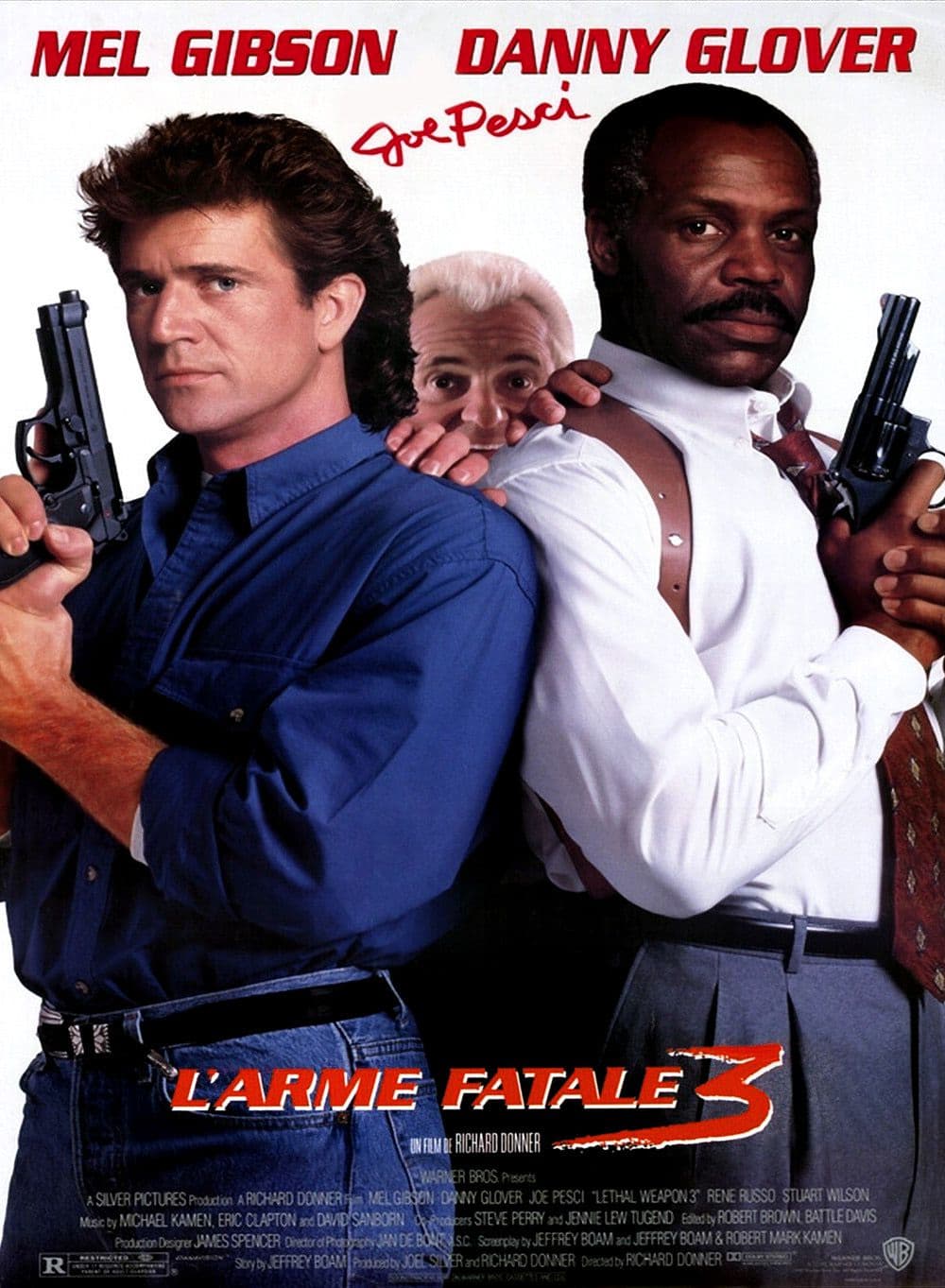
Lethal Weapon 3
A proper buddy picture: Riggs, loyalty — and an opening explosion that really was a demolition.
// The setup
PLAYBACK STARTED
If Lethal Weapon 3 is remembered for anything immediate, it’s that opening: a public-action moment that genuinely required a city hall to come down. From there the film settles into what the series does best — risky Riggs and cautious Murtaugh trying to hold the line while the world around them gets louder. Richard Donner keeps the engine tuned to friendship as much as to firepower.
THE MOVIE
Martin Riggs is still the reason this movie works
Talk about starting with a bang. Lethal Weapon 3 throws its audience straight into a public-action set piece that wasn’t faked on a soundstage — the production used the real demolition of Orlando’s old City Hall to stand in for the story’s opening explosion. It announces, from the off, that this will be a big, physical sequel.
That spectacle only matters because of who’s watching it: Martin Riggs, the unpredictable partner who treats danger like a dare and somehow makes it useful. The plot — about a theft of confiscated police weapons that escalates into an arms-trafficking racket — is the sort of scaffolding that lets Riggs’ risk-taking sit against Roger Murtaugh’s steadiness.
Richard Donner, back behind the wheel for a third time, keeps the film moving at the right pace for what it wants to be: a star-led, action-heavy buddy cop movie that still centres on partnership and loyalty rather than puzzle-box plotting.
THE SETUP
The idea that sets Lethal Weapon 3 in motion
At its simplest, Lethal Weapon 3 asks two things of its heroes: find the guns and stop whoever is using police know-how to traffic them. That theft of confiscated weapons is the neat little engine that turns routine police work into something much larger and more dangerous.
The film wastes no time turning the investigation into spectacle. The opening demolition leads into a plot that layers undercover work with internal-affairs scrutiny and a couple of set pieces designed to test the partners — an armoured-vehicle chase that goes the wrong way, and a final confrontation on a construction site.
The antagonist isn’t a shadowy foreign mastermind so much as a corrupt ex-cop who weaponises inside knowledge. Putting a former officer at the centre of the scheme gives the story a way to interrogate police procedure and trust without turning into a courtroom drama.
All of this slots neatly into a series-format approach: big set pieces, buddy dynamics up front, and enough procedural grounding to make the action feel like it matters to the characters rather than just the audience’s adrenaline.
THE CHARACTER
Why Martin Riggs matters
Riggs matters because he’s the wild card that the whole movie orbits. Mel Gibson is credited as the part’s actor, but more importantly the character is written as someone whose impulse to take personal risks keeps dragging the case out of neat procedure and into actual danger.
That volatility is useful on-screen. It makes him unpredictable in confrontations with the villain and keeps the rest of the cast — especially his partner — honest. The constant tension between his recklessness and the need to follow police procedure gives the film something to argue about beyond bullets and chases.
Roger Murtaugh’s role as the family man on the verge of retirement matters precisely because it contrasts with Riggs. Murtaugh’s loyalty and sense of duty are what pull him back into the fight; he’s the anchor, the reason Riggs’ behaviour has consequences instead of being merely entertaining.
The inclusion of Lorna Cole as an internal-affairs investigator who becomes both ally and romantic partner for Riggs adds another beat: she’s proof that the world around them can be professional and personal at once, and that Riggs’ impulsiveness is meeting an equal rather than just causing chaos.
THE PERFORMANCE
Why Rene Russo's performance matters
Rene Russo’s casting as Lorna Cole brought a slightly different energy into the partnership equation. Contemporary reviewers pointed to her presence and her action work as elements that stood out within the film.
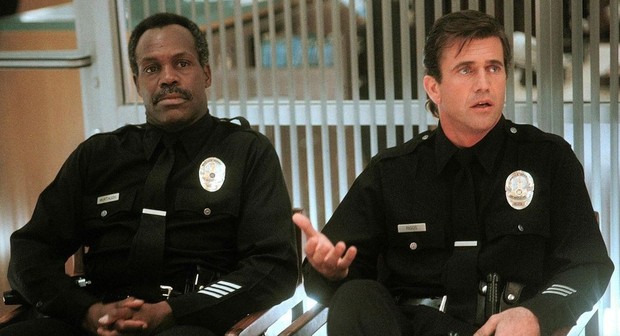
That attention matters because Lorna Cole isn’t window dressing: she’s an internal-affairs investigator with the chops to hold her own in physical confrontations and in argument. Reviewers noticing her work suggests the role read clearly on screen.
Having an established internal-affairs figure who is also a credible fighter changes the balance. She’s not there to apologise for the rules; she can enforce them and complicate Riggs’ choices at the same time.
In short: critics at the time flagged Russo as a meaningful addition — and the movie relies on her being both a foil and a partner rather than a peripheral romantic subplot.
UNDER THE SURFACE
Lethal Weapon 3 has more on its mind than the plot suggests
On the surface it’s a crime-action movie about stolen police weapons. Beneath that surface are clearer, human-sized concerns: this is a film about partnership — two very different approaches to policing that have to work together.
Police procedure and corruption sit at the heart of the story. Making the antagonist a former cop foregrounds the risk when institutional knowledge is turned against the public, and it forces the leads to reckon with how their badges and training can be weaponised.
Retirement, family and duty is a recurring note. Murtaugh’s near-retirement gives the film stakes beyond the immediate case: it’s a choice between walking away to protect a family and staying in to safeguard others.
Finally, recovery from trauma threads through the series and this installment keeps that line intact. The movie stages action so the characters’ personal baggage is not just backstory but something that affects how they act in the moment.
PRACTICAL EFFECTS
The effects work that gives Lethal Weapon 3 its physical personality
This film leans on physical, properly practical work to sell its set pieces. Most famously, the opening blast used the actual demolition of Orlando’s old City Hall — the studio paid for the building to be fitted with explosives and brought down — so what you see is literally a building coming down for the sequence.
That commitment extends to the climax, which was shot in an unfinished housing development prepared for controlled burning. The production coated the houses in flame retardant and ran propane lines so they could light, reignite and, crucially, reshoot the sequence when needed.
These are not digital stand-ins; they are real, dangerous-looking environments staged so the actors and stunts could play against authentic, reactive elements.
The practical approach gives the film a physical personality: when smoke fills a scene or a set creaks under a stunt, the audience senses that gravity in a way a composited effect often can’t replicate.
PURE 80S
Lethal Weapon 3 could not belong to any other decade
Released in May 1992, the film arrived in a summer landscape built for sequels and big set pieces — the movie is very much a product of that early-90s blockbuster agenda and was one of the better-performing summer releases that year.
It follows a clear late-80s/early-90s template: franchise follow-ups that prioritise escalating physical spectacle and a star-driven buddy dynamic over reinvention. The series knew what it was good at and doubled down.
Being the third entry in a series that began in 1987 ties it directly to a particular commercial moment: audiences were used to returning to familiar partnerships, and the film trades on that comfort while still trying to up the ante on stunts.
So while the movie uses the decade’s appetite for bigger action, it also demonstrates how those sequels kept returning to character dynamics as their real selling point — not just explosions.
WATCHING IT NOW
What has aged — and what hasn't
What holds up best is the central partnership. The Riggs–Murtaugh dynamic — risk and steadiness, grief and family, impulse and responsibility — remains a tidy, watchable engine, and contemporary reviewers at the time noted the film’s return to that series-format plotting.
The set pieces, too, still deliver in a visceral way because they were staged as real, physical happenings. They’re not archival curiosities; they’re sequences designed to get a pulse racing.
What’s more likely to feel dated is the assumption that escalating spectacle alone will carry a sequel. The film leans on big moments rather than deepening its themes, so viewers hoping for profound reinvention might find it comfortably familiar instead.
But if you come for the partnership and the idea of retirement, family and duty getting tested by the job, those elements remain comprehensible and emotionally readable for a modern audience.
THE LEGACY
Why Lethal Weapon 3 still matters
Part of why the film has a place in memory is simply that it kept the franchise moving — it was the third instalment and the business success around it helped secure a fourth film later in the decade.
That commercial continuity matters because it kept Riggs and Murtaugh visible in popular culture for a sustained stretch, rather than letting them fade after a couple of hits.
The movie’s legacy is therefore pragmatic: it’s proof that an established action series could still draw an audience if it delivered on the pair’s chemistry and on spectacle.
Put another way, its afterlife is less about a single unforgettable line or sequence and more about continuing the conversation the series began — keeping the duo alive for another chapter.
THE VERDICT
Does Lethal Weapon 3 still hold up?
Yes — if your interest is the partnership and a well-staged series of set pieces. The film’s core is simple: Riggs and Murtaugh chase a theft of confiscated weapons that expands into an arms-trafficking operation, and the movie is organised around that central premise.
It still feels immediate in moments because the production committed to practical spectacle — from the genuine demolition used in the opening sequence to the climactic burn at an unfinished housing development — and those choices give the action an honest heft.
If you want a sequel that reinvents its characters, this won’t satisfy. But if you want a big, crowd-pleasing entry that respects the Riggs–Murtaugh relationship while delivering wrong-way chases and a construction-site showdown, it does the job it set out to do.
So watch it for the partnership, the physical stunts and the way the film keeps testing loyalty against duty. Lethal Weapon 3 isn’t quietly brilliant; it’s reliable in the way a good buddy cop movie should be — loud, loyal and unapologetically physical.
Share this movie
// Keep watching
More movies from the 90s
If Lethal Weapon 3 is your kind of movie, there's plenty more on the shelves worth rewinding.
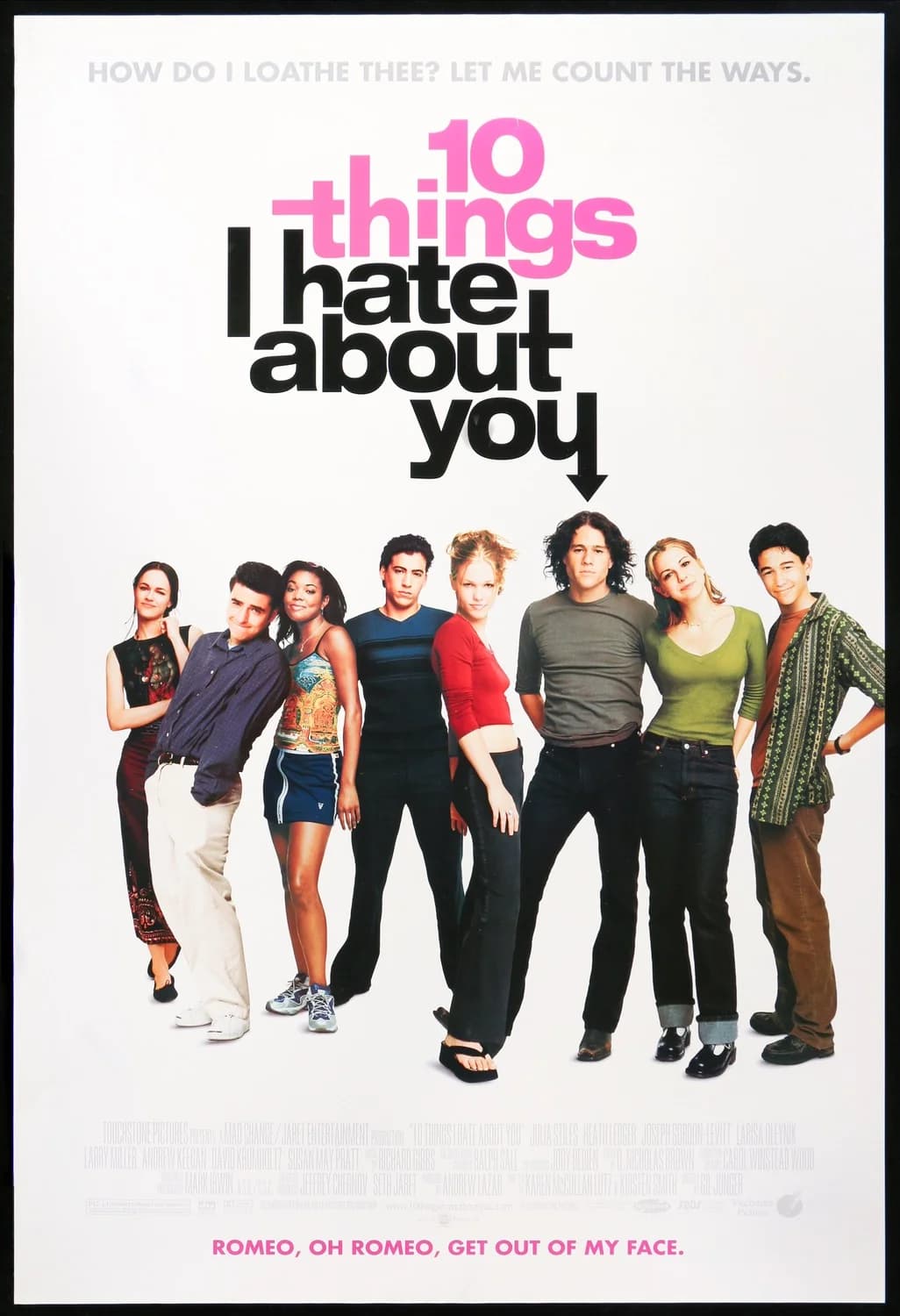
1999 // VHS
10 Things I Hate About You
Sibling rules, a rooftop serenade and one very stubborn Kat — Shakespeare in a school corridor.
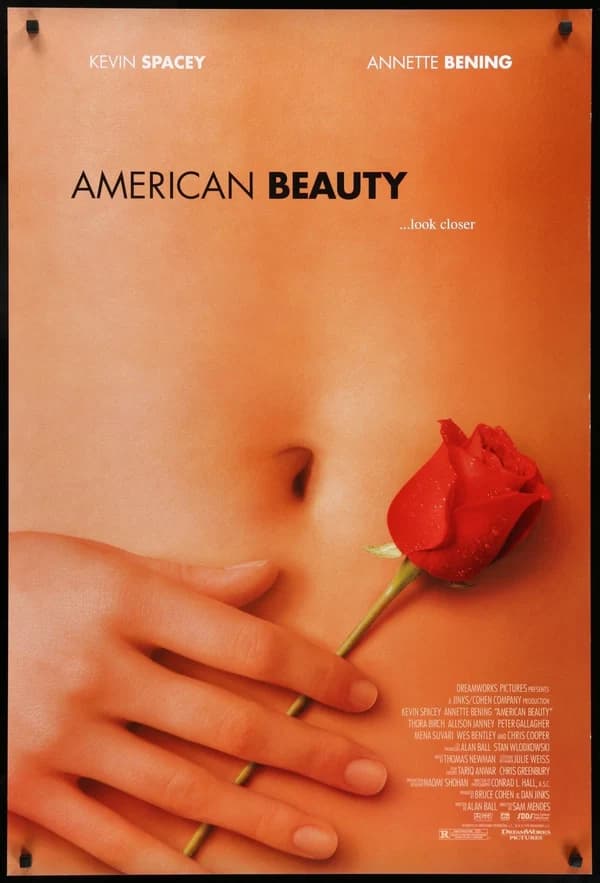
1999 // VHS
American Beauty
Lester Burnham, suburban rot and a midlife argument that still stings.
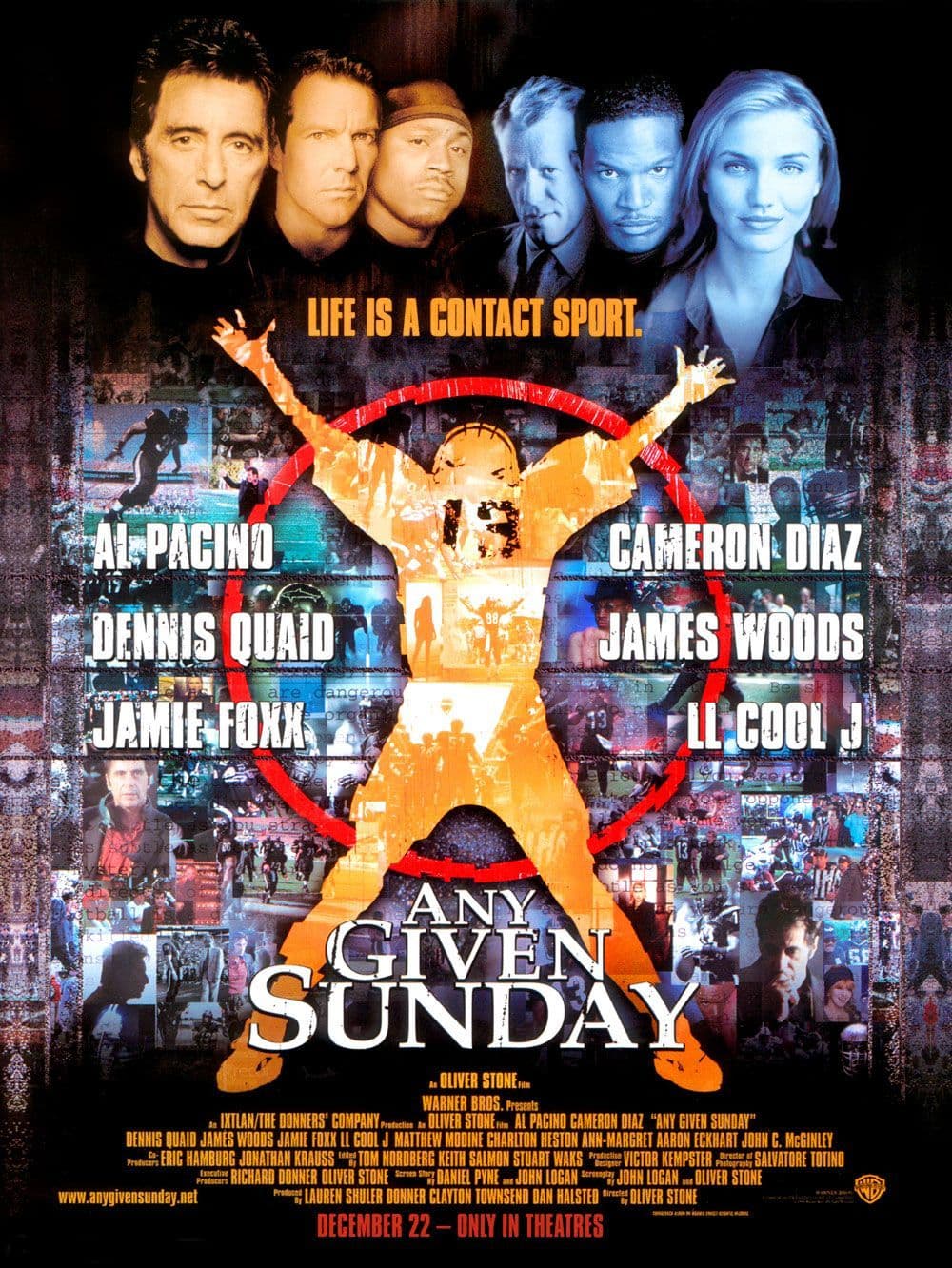
1999 // VHS
Any Given Sunday
Al Pacino's coach anchors the chaos of a film about football turned into product — loud, messy and oddly persuasive.