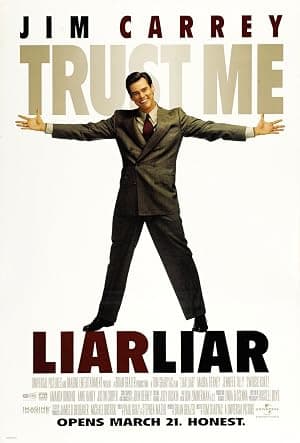
Liar Liar
A father who can't lie for one day — truth, chaos and a very determined five-year-old.
// The setup
PLAYBACK STARTED
Think of Liar Liar and you instantly picture a man caught between a career and his kid — except this time the man literally can’t fib. Tom Shadyac funnels that single, absurd idea into an 87-minute sprint about promises, consequences and whether telling the truth always makes things better. It still cracks up and tugs a little, mostly because Fletcher Reede is written and staged to be impossible to ignore.
THE MOVIE
Fletcher Reede is still the reason this movie works
The blunt fact that gets people talking about Liar Liar isn’t marketing or box office — it’s Fletcher Reede. He’s a successful Los Angeles lawyer who lies habitually, and those habitual lies are what the film spends its time pulling apart.
That’s where Max’s birthday wish comes in: on his fifth birthday the boy wishes his dad couldn’t tell a lie for one day, and the wish immediately takes effect. Turn that crank and the movie’s high-concept machinery fires up: honesty as a comedic constraint.
Tom Shadyac directs this compact, 87-minute comedy, and the whole thing is shaped around that central clash — a work‑obsessed man forced into a day of brutal candour until his priorities finally shift toward his son.
THE SETUP
The idea that sets Liar Liar in motion
The film’s premise is deliciously simple: a five‑year‑old’s wish makes his dad incapable of lying for 24 hours, and that impossibility turns everyday white lies into escalating problems.
What's clever is how the truth constraint lands on the worst possible day for Fletcher — a career-making trial where dishonesty would normally grease the wheels of his success. That collision is the engine of the comedy.
Key mechanics prop the idea up: the enforced honesty clock, a courtroom case (Fletcher’s client is Samantha Cole) that becomes the obvious test of his condition, and the personal task of repairing his relationship with Audrey and Max.
From impounded cars to courtroom candour and public humblings, the film ramps situations so the central idea keeps nudging Fletcher toward a reconciliation-focused finish.
THE CHARACTER
Why Fletcher Reede matters
Fletcher is the movie’s lever: a driven, ambitious lawyer whose professional hunger regularly costs him family time and broken promises. That imbalance is the behaviour the film wants to correct.
He isn’t a blank case file; his habits and choices set up the whole moral problem. The enforced truth doesn’t just cause gags — it exposes how he’s been prioritising career over being present for his child.
Max functions as the emotional catalyst. His birthday wish is the narrative device that forces Fletcher’s transformation and makes the stakes personal rather than merely professional.
Because the story insists Fletcher change where it hurts — his relationships — he becomes memorable as a character who has to choose between the life he’s built and the people he’s failing.
UNDER THE SURFACE
Liar Liar has more on its mind than the plot suggests
On the surface it’s a gag: a man who can’t lie. Underneath, the film keeps returning to honesty and deceit — not as abstract morality, but as the small, everyday bargains that let someone avoid facing up to themselves.
It’s also squarely about work versus family. Fletcher’s professional life and need to climb are shown in opposition to the simple, persistent demands of parenthood.
Personal redemption is the emotional engine: the story isn’t content with exposing Fletcher’s faults, it insists on a believable path toward prioritising his son and repairing what’s been broken.
Finally, the enforced-truth conceit teases at the ethical limits of professional behaviour. When honesty collides with client loyalty and courtroom tactics, the movie uses comedy to ask where a lawyer’s professional obligations should end.
THE FILMMAKING
How Liar Liar was put together
The credits tell you something straightforward about how this film was assembled: Russell Boyd is listed as director of photography, Don Zimmerman as editor, and Linda DeScenna as production designer. Those are the people who shape the look, rhythm and physical spaces the comedy plays in.
Naming an editor and production designer matters because this is a tightly paced 87‑minute picture — choices about cutting and set layout directly affect how jokes land and how quickly the story moves.
Tom Shadyac’s direction ties those elements together around a single central idea, keeping the film lean and focused on the escalating consequences of Fletcher’s candour.
In short: the filmmaking credits point to a deliberately compact, professionally mounted studio comedy built to keep momentum and support the high‑concept premise.
PRACTICAL EFFECTS
The effects work that gives Liar Liar its physical personality
Liar Liar’s physical comedy leans on real stunt coordination: Mickey Gilbert is credited as stunt coordinator, which signals organised on-set stunt work for the film’s pratfalls and action beats.
At the same time the credits list Jon Farhat as visual effects supervisor and Burt Dalton as special effects coordinator, indicating modest on-set and post-production effects support rather than a reliance on large-scale digital effects.
Together this mix—stunt coordination plus measured VFX and special-effects oversight—lets the film play its physical set pieces with confidence: they’re planned, achievable and geared to back the comedy rather than be the point of it.
Those production roles underline that Liar Liar is a studio comedy that uses practical staging and modest effects to serve sight gags and set‑piece business.
PURE 80S
Liar Liar could not belong to any other decade
Liar Liar fits a clear 1990s pattern: it’s a star-driven, high‑concept comedy that rests on one easily-stated premise — a lawyer who can’t lie for a day — and builds everything around that gag.
The way the studio rolled it out matters too: Imagine Entertainment and Universal opened it very wide (2,845 U.S. theatres), a distribution move typical of late‑90s studio comedies aiming to make the most of a single marquee idea and a big star.
Jim Carrey’s presence ties it to a run of films that helped define that era’s comedy persona — Liar Liar slots neatly into the catalogue of 1990s films built around a single star’s particular energy.
So while the film isn’t a period exercise, it’s very much a creature of its moment: a compact, marketable premise wrapped around a bankable performer and studio machinery.
THE LEGACY
Why Liar Liar still matters
At release the film set a then‑record for the largest March opening weekend and went on to be a substantial commercial success, earning roughly $302.7 million worldwide — a clear signal that the premise and the packaging connected with audiences.
Contemporary coverage and later summaries treat the film as a notable commercial hit in the Tom Shadyac–Jim Carrey run; it’s part of the story of 1990s high‑concept studio comedy.
The film also received mainstream awards attention, including a Golden Globe nomination for its lead and industry recognition for composer John Debney, which shows it had some crossover visibility beyond pure box office chatter.
Finally, multiple home‑video reissues — including a remastered 25th Anniversary Blu‑ray — keep Liar Liar available to new viewers and collectors, so its presence hasn’t quietly vanished from the catalogue.
THE VERDICT
Does Liar Liar still hold up?
Short answer: yes — for what it sets out to do. The film’s central contrivance (a five‑year‑old’s wish that his father cannot lie for a day) still makes for a compact and effective comic engine that forces Fletcher to face the cost of his behaviour.
That enforced‑truth clock lands on a career‑making day and a courtroom case that stresses ethical lines; the collision of personal and professional stakes gives the jokes some bite and prevents the story from being purely gag‑driven.
At 87 minutes the movie rarely lingers. It stages escalating consequences for Fletcher — from impounded cars to public humiliations — and funnels them toward repairing relationships with Audrey and Max, which keeps the emotional throughline tidy and readable.
If you’re deciding whether to revisit it, think of Liar Liar as a brisk, well‑packaged example of 1990s, star‑led high concept: it still makes you laugh, it still makes you wince, and it still asks whether a man can learn to be honest when it matters most.
Share this movie
// Keep watching
More movies from the 90s
If Liar Liar is your kind of movie, there's plenty more on the shelves worth rewinding.
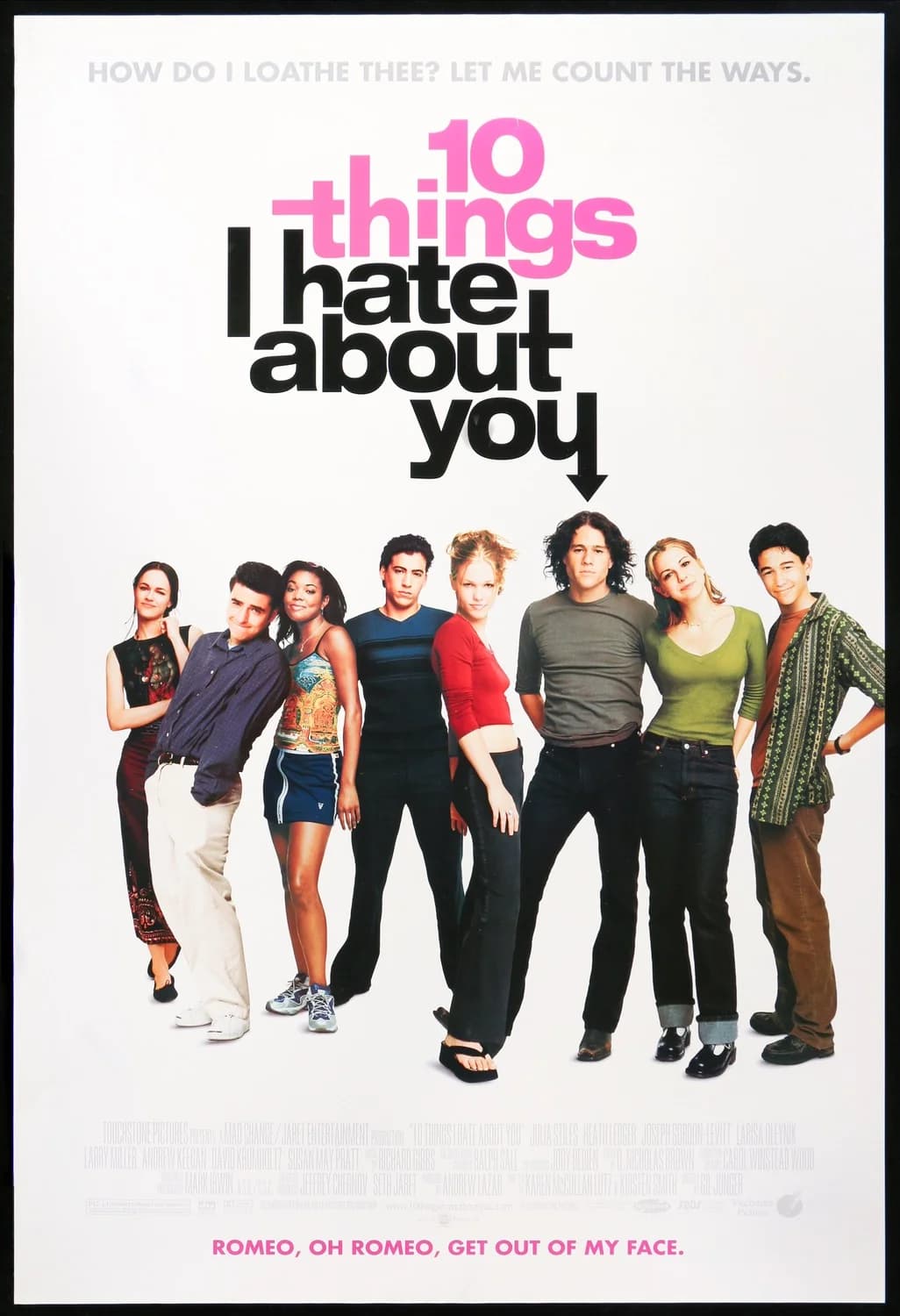
1999 // VHS
10 Things I Hate About You
Sibling rules, a rooftop serenade and one very stubborn Kat — Shakespeare in a school corridor.
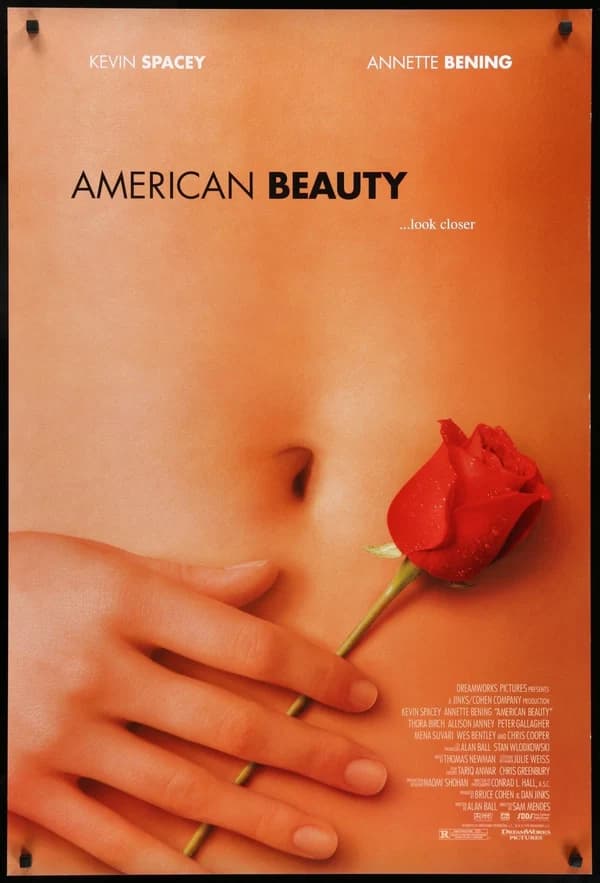
1999 // VHS
American Beauty
Lester Burnham, suburban rot and a midlife argument that still stings.
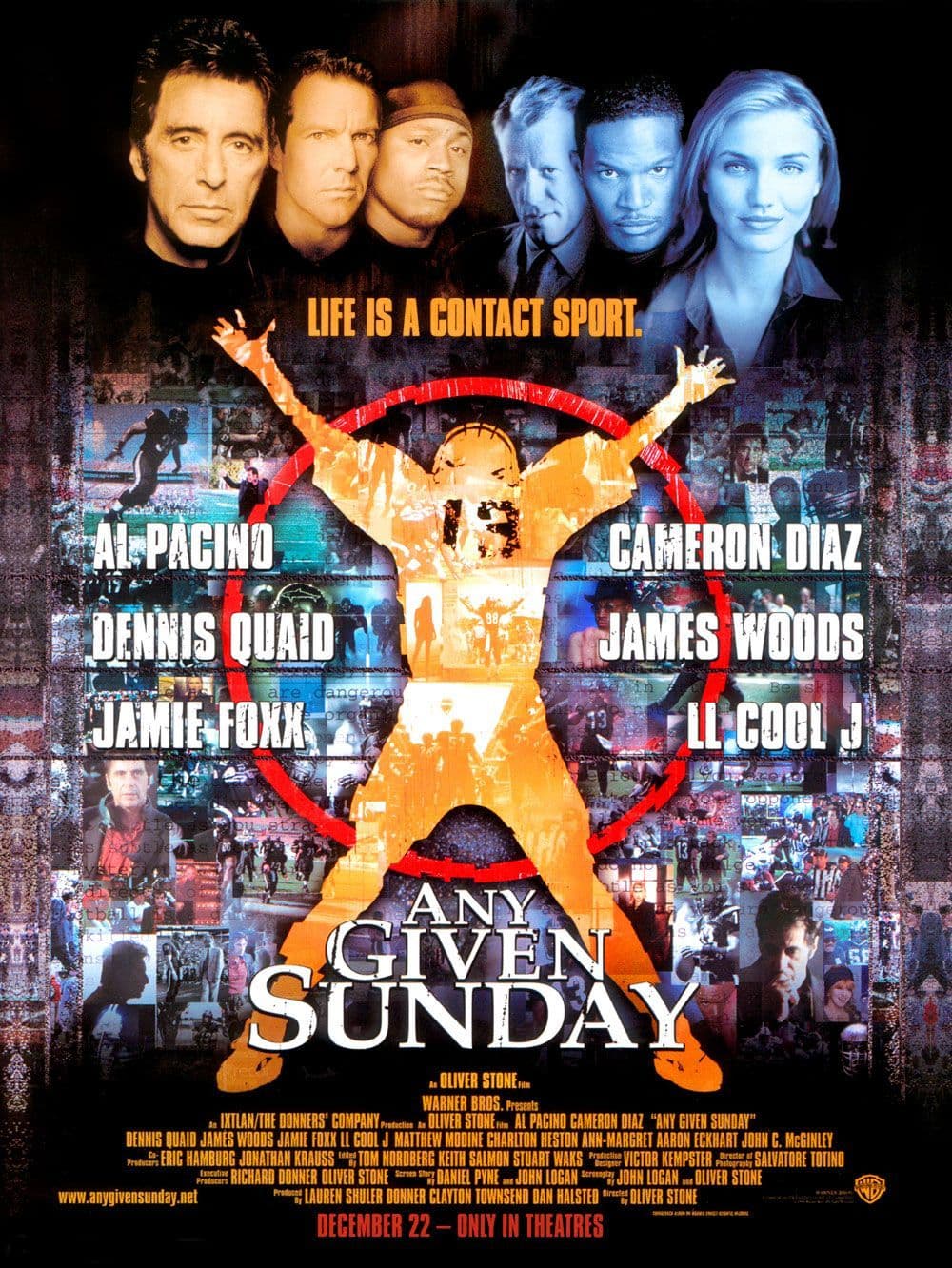
1999 // VHS
Any Given Sunday
Al Pacino's coach anchors the chaos of a film about football turned into product — loud, messy and oddly persuasive.