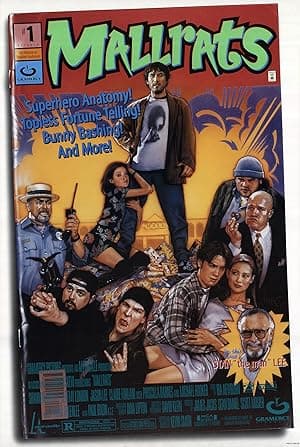
Mallrats
A movie about dudes, a mall and a game show — and Brodie Bruce keeps the whole thing fun.
// The setup
PLAYBACK STARTED
Mallrats is not subtle. It is loud, nerdy and proudly juvenile — and that’s precisely why people keep coming back. Kevin Smith built a movie around two blokes stuck in a mall after breakups, then let one of them, Brodie Bruce, do the heavy lifting: pop-culture-fuelled grumbling that somehow feels like friendship in motion.
THE MOVIE
Brodie Bruce is still the reason this movie works
Mallrats is a film about getting dumped and refusing to move on — literally. It follows two best mates, Brodie Bruce and T.S. Quint, who spend a day wandering the mall after both are left by their girlfriends.
That set-up hands the film a simple engine: wounded pride, boozy bravado and a lot of petty scheming. Brodie is the loudest of the pair — a slacker who lives in pop-culture references and lets his bruised ego dictate his next move — and Jason Lee plays him as the centre of the movie’s social gravity.
Directed by Kevin Smith and running roughly 94 minutes, Mallrats didn’t conquer the box office in 1995. What it did, over time, was find a crowd who liked how it smelled — equal parts fandom, friendship and mall mischief — and that slow-burning affection is why the film still turns up in conversations about Smith’s early universe.
THE SETUP
The idea that sets Mallrats in motion
The premise is cheerfully straightforward: two guys get dumped and park themselves inside a shopping centre. One of those breakups — T.S.’s — happens because his girlfriend Brandi chooses to appear on her dad’s dating game show, rather than go on a planned trip with him. That slight becomes the film’s spark.
From there the mall itself becomes the story’s playground. A mall-hosted show called Truth or Date gives the protagonists a motive and a place to turn private hurt into public chaos. It’s the sort of set piece that lets the personal and the performative collide.
Brodie and T.S. don’t go it alone. They rope in familiar faces from Kevin Smith’s world — Jay and Silent Bob — to sabotage the game show, and those hijinks drive many of the comic escalations.
Meanwhile smaller threads — a teen studying male sexuality, the ridiculous Magic Eye gag, and a subplot involving Shannon Hamilton — stitch the day together and raise the stakes as the mall’s ordinary order slips toward on-air pandemonium.
THE CHARACTER
Why Brodie Bruce matters
Brodie Bruce is the film’s emotional weather. He’s a slacker and a pop-culture obsessive whose pride and romantic insecurity push him into daft, performative gestures. That combination keeps scenes from settling into mere plot mechanics — he gives the chaos a human complaint to orbit around.
He’s not trying to be admirable. He’s sulky, petulant and territorially defensive about his friendships and his ego. Those traits turn routine mall banter into something oddly watchable: you can see where his choices come from, even if you don’t approve.
Brodie also anchors the movie’s view of male camaraderie. The film cares about how mates prop each other up — or lead each other astray — and Brodie’s decisions are where that loyalty gets tested and, sometimes, rewarded.
Finally, Brodie’s place in Mallrats matters because the film is part of a larger playground. It’s the second picture in the View Askewniverse and shares recurring characters like Jay and Silent Bob, so Brodie sits inside a fan-friendly continuity rather than a one-off sketch.
UNDER THE SURFACE
Mallrats has more on its mind than the plot suggests
On the surface Mallrats is a slacker comedy full of pranks and mall-based nonsense. Underneath, it’s about male friendship — the way blokes perform toughness and tenderness in messy fits of loyalty.
It’s also a movie about how people use pop culture as a social language. Brodie and his friends talk at length about films, comics and trivia; fandom isn’t an aside, it’s the material they use to understand themselves and each other.
There’s a throughline about romantic reconciliation too: relationships are handled like scores to be settled, awkwardly enacted in public. The game-show sequences sharpen that idea — private grievances turned into televised spectacle.
And, of course, the mall itself acts as a mirror for consumer and youth culture: a place that’s simultaneously trivial and charged with social meaning, where identity gets negotiated across food courts and shopfronts.
PURE 80S
Mallrats could not belong to any other decade
Mallrats sits squarely in the 1990s slacker and teen-comedy strand. The idea of an entire day spent drifting through a shopping centre — and making a minor personal crisis into a public stunt — taps into a very '90s way of imagining youth culture.
It also follows a pattern from the decade: films that failed to find big theatrical audiences but built afterlives on home video and soundtracks. Mallrats did exactly that, trading a quiet cinema run for long-term fandom.
That later life matters: elements that felt niche in 1995 — shared-universe characters, obsessive pop-culture talk — became strengths once fans could revisit the film on tape or DVD.
So while Mallrats wears its decade on its sleeve, the connection is less about style and more about how the movie’s social world and distribution history belong to the 1990s moment.
WATCHING IT NOW
What has aged — and what hasn't
Mallrats’ strongest surviving feature is its sense of belonging: the film feels like one extended conversation among friends. That quality is durable. Friendship and the slacker camaraderie at the heart of the script still read as recognisable human behaviour rather than a period gag.
Where the film’s afterlife really shows is in its home-media story. Anniversary releases and collector editions — including a 25th-anniversary Blu-ray — have brought back extra footage and restored lines, which lets modern viewers see a fuller version than cinema audiences did in 1995.
That restoration process has encouraged reassessment. A movie that underperformed on opening weekend has been reshaped into a cult favourite through repeat viewings and bonus material.
All that said, the film’s pleasures are specific: it rewards people who enjoy banter, fannish asides and the odd bit of televised chaos. If that style appeals, Mallrats still lands. If you want subtlety, you might find it less congenial.
THE LEGACY
Why Mallrats still matters
Mallrats matters because it helped define a corner of Kevin Smith’s universe and because it found its audience slowly, through repeat viewings at home. That later affection is the clearest reason people still talk about the film.
The movie’s afterlife has been actively curated: a 10th-anniversary double-sided DVD and a 25th-anniversary Blu-ray from Arrow Video restored alternate and extended cuts, giving fans more material to dissect and enjoy.
The film’s theatrical disappointment didn’t erase its cultural footprint; instead it became the kind of underdog that grows a loyal following over time through VHS, DVD and collector releases.
Smith has periodically mentioned a sequel in public comments, but as of the latest archival re-releases no feature sequel had been produced — which only deepened the film’s status as a cult object rather than a mainstream franchise cornerstone.
THE VERDICT
Does Mallrats still hold up?
Yes — with qualifications. If you like films that are congenial hangouts rather than tight, plot-first comedies, Mallrats still rewards. Its day-at-the-mall conceit — two mates nursing breakups, scheming to hijack a mall game show, and rope in Jay and Silent Bob to help — gives the movie a simple, combustible shape.
What keeps it watchable is the mixture of personal embarrassment and public spectacle: the Truth or Date show transforms private grievance into a very public problem, and that contrast still produces genuinely funny and uncomfortable moments.
Where it might not land is if you expect slick romantic-comedy polish or modern sensibilities about every joke. Mallrats is squarely a product of its time and temperament: prone to excess, fond of gag-heavy subplots (from the Magic Eye running joke to the Tricia research thread), and happy to let the mall be a stage for escalating nonsense.
So go see it if you enjoy slacker camaraderie, fannish chatter and the idea of Brodie Bruce sulking his way through chaos. If that sounds like your sort of afternoon, Mallrats still does the job — a messy, affectionate comedy that knows the value of having mates to moan with.
Share this movie
// Keep watching
More movies from the 90s
If Mallrats is your kind of movie, there's plenty more on the shelves worth rewinding.
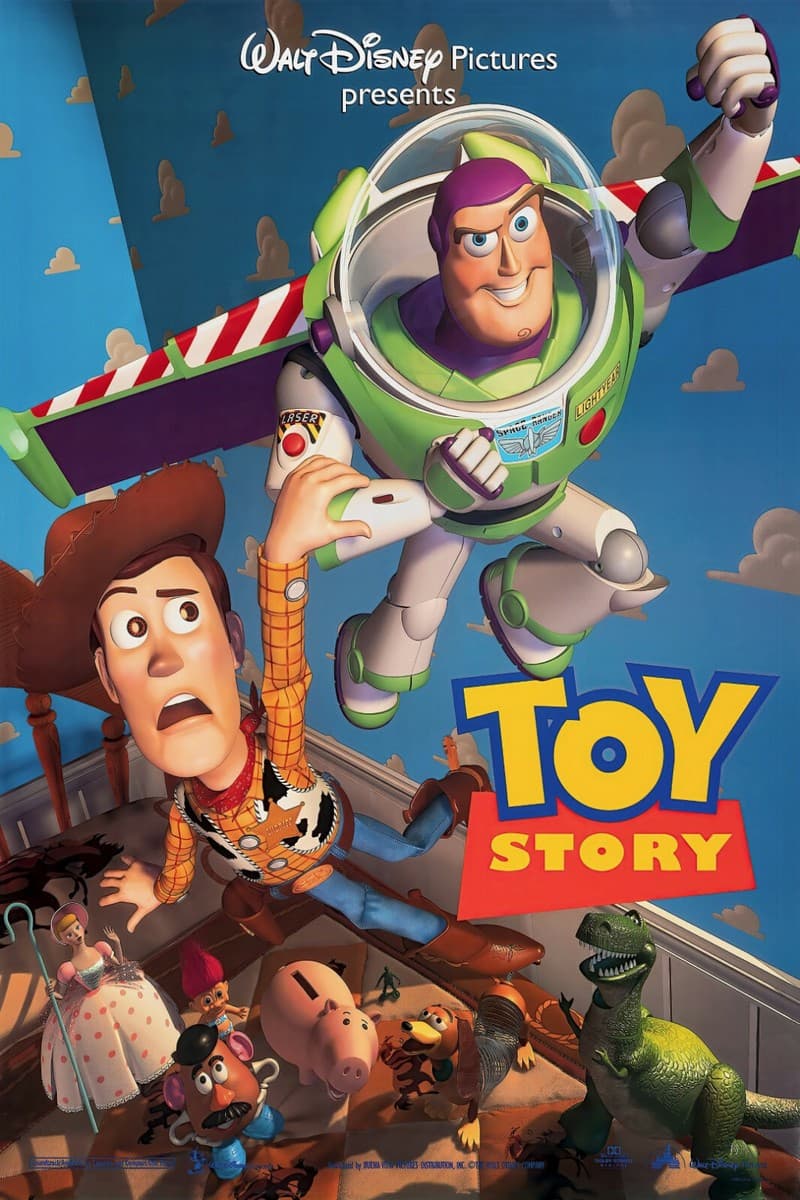
1995 // VHS
Toy Story
A pull‑string cowboy, a deluded space ranger and a small, very particular war over being loved.
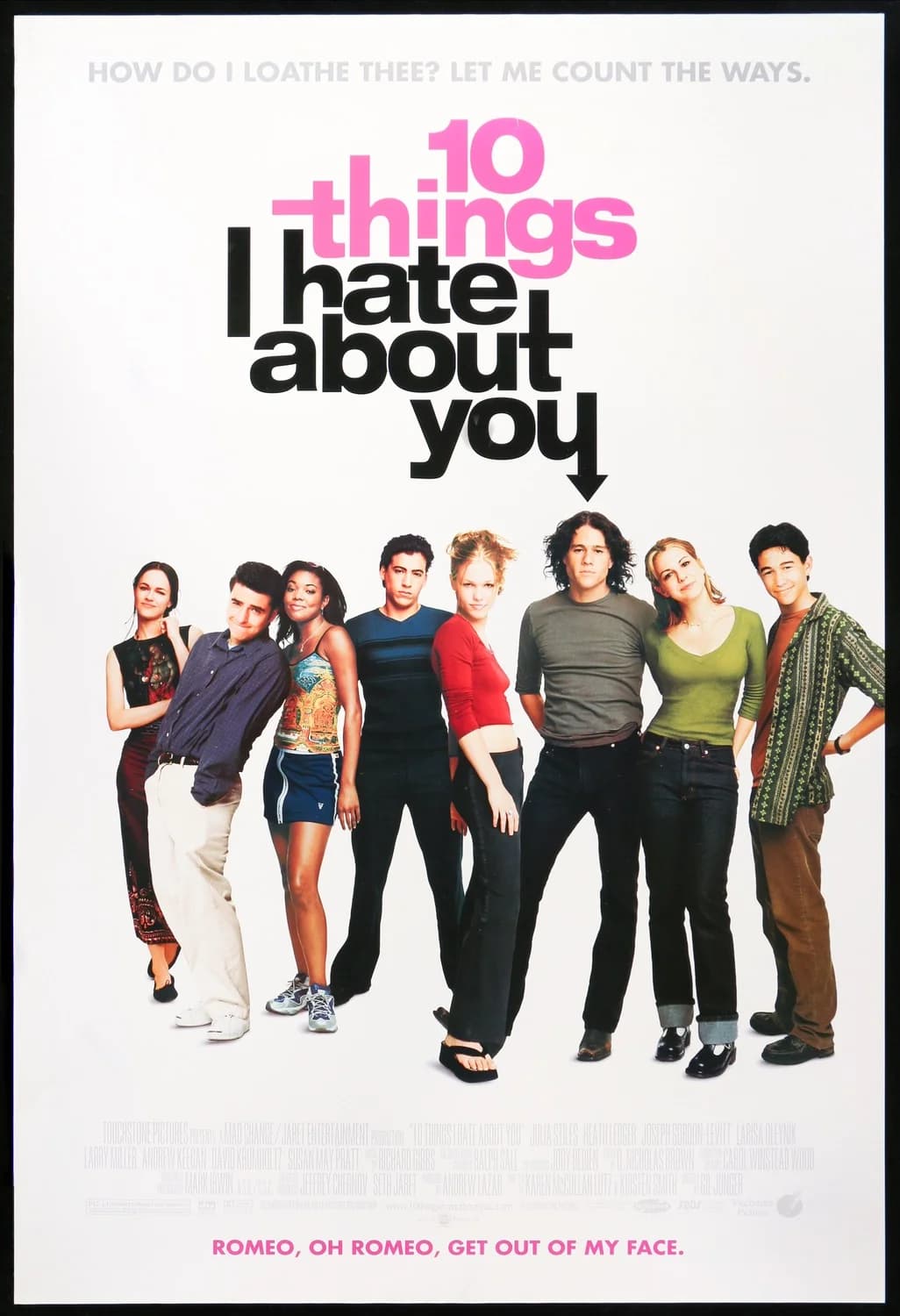
1999 // VHS
10 Things I Hate About You
Sibling rules, a rooftop serenade and one very stubborn Kat — Shakespeare in a school corridor.
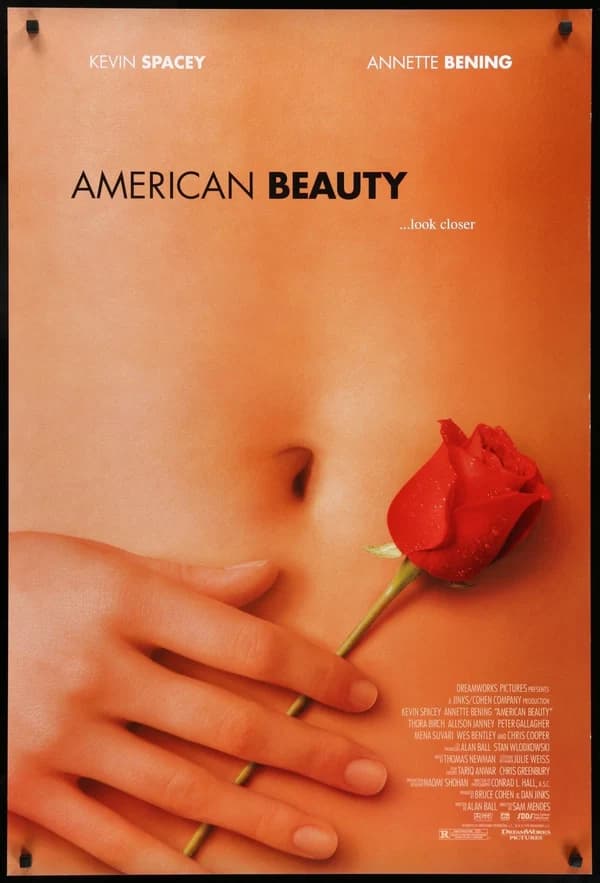
1999 // VHS
American Beauty
Lester Burnham, suburban rot and a midlife argument that still stings.