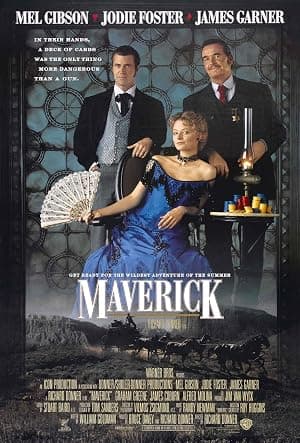
Maverick
Poker, polish and one hell of a riverboat hustle.
// The setup
PLAYBACK STARTED
Maverick is the sort of film that announces itself with a grin: a charming card-shark on a mission to reach a winner-takes-all poker game aboard a paddle steamer, and a series of cons that keep the wheels — and the jokes — turning. Richard Donner steers a cast that leans into showmanship, which means this is less about gritty Western myth-making and more about theatrical tricks, matchmaking and the pleasure of a well-executed hustle. If you like your Westerns playful and your capers clever, it still has a lot to offer.
THE MOVIE
Bret Maverick is still the reason this movie works
The film’s engine is unapologetically simple: Bret Maverick needs cash to buy into a high-stakes, winner-take-all five-card-draw poker tournament aboard the paddle steamer Lauren Belle. That single objective — and the outfit of scams he assembles to reach it — gives the movie a neat spine and permission to roam.
Along the way Maverick’s shortfall in funds lands him in Crystal River, where he runs into Annabelle Bransford and the lawman Zane Cooper, and the story keeps unspooling as a pleasing series of set-pieces built around cons, disguises and theatrical gambits. It’s the kind of episodic structure that lets the cast (and the screenplay) show off tricks instead of grinding through grim drama.
Directed by Richard Donner and starring Mel Gibson as the titular gambler, Maverick wears its genres proudly: it’s a Western in costume and a comedy in spirit, all tied together by a cast that includes Jodie Foster and the original TV Maverick, James Garner.
THE SETUP
The idea that sets Maverick in motion
At heart the movie is a caper with a single, obvious goal: assemble $25,000 to buy into a no-nonsense poker tournament and survive the riverboat’s winner-take-all rules. That goal neatly explains a lot of otherwise flamboyant behaviour.
The screenplay treats cons, disguises and staged gambits as the film’s currency. Whether it’s tricking a bank manager or staging an elaborate hunt to separate an archduke from his money, the movie keeps returning to schemes that show off craft over brute force.
Those gambits are where danger becomes comic jeopardy: ambushes, locked rooms and the occasional rattlesnake setup are presented as obstacles to be laughed at and outwitted rather than grim threats to be endured.
Because the tournament is both the prize and the threat — cheating is harshly punished and only one player can come away with the purse — the film’s episodic cons always feel like steps on a single road rather than unrelated sketches.
THE CHARACTER
Why Bret Maverick matters
Bret Maverick matters because he’s the movie’s constant: an identifiable personality with a clear appetite. He isn’t some mysterious drifter; he’s driven by a specific, straightforward wish — to prove he can win at poker and take the large purse — and that gives his flirts, deceptions and escapes shape.
That single desire makes him a useful dramatic compass. Everything he does — from elaborate cons to fast-talking escape routes — is measured against whether it gets him closer to that entrance fee.
The script also composes him against a figure who could be a father or a mentor in Zane Cooper, a deliberately ambiguous dynamic the film allows to hover. That uncertainty keeps Bret from being just a cheeky rogue: he’s someone whose choices sit beside a voice of authority, and the tension matters to the plot.
Finally, the people he meets — characters like Joseph and Angel — are not just window-dressing. They present moral tests: moments of debt, reciprocity and obligation that tease at Maverick’s limits without turning the film seriously earnest.
THE PERFORMANCE
Why Mel Gibson's performance matters
Observers at the time picked out Gibson and Foster for bringing energy to their roles, which is the exact currency Maverick needs. The film depends on performers who can sell a con and the confidence that comes with it; when the leads lean into that spirit, the movie breathes.
James Garner’s presence is also doing work beyond a cameo: he’s a reminder of where the character came from, explicitly referencing the TV series and giving the film a wink of lineage that keeps Bret’s swagger anchored to an older tradition.
UNDER THE SURFACE
Maverick has more on its mind than the plot suggests
On the surface it’s a succession of cons and poker hands. Underneath, the movie keeps returning to the idea of deception as performance: lying as theatre and showmanship as survival. That makes the film less about morality and more about craft.
Because so much rests on trickery, showmanship becomes a theme in its own right. The film is interested in the spectacle of the con — the mise-en-scène of persuasion — and how charm can be a practical tool rather than merely a personality trait.
There’s also a neat emotional counterweight in the film’s refusal to pin down the relationship between Maverick and Zane Cooper. Is Cooper a surrogate father, a judge, or both? The ambiguity keeps the movie playful without letting it flatten into pure farce.
And throughout, the film winks at classic Western tropes without trying to rework them into something dark or revisionist. Nostalgia is present, but it’s worn like a costume rather than treated as doctrine.
THE FILMMAKING
How Maverick was put together
Maverick isn’t a flashy experiment in style; it relies on steady, experienced hands behind the camera. The film lists Vilmos Zsigmond as director of photography and Stuart Baird among the editors, which gives it a reliable technical backbone — the sort of craftsmanship that lets a caper look polished without calling attention to itself.
That kind of technical leadership helps the movie sell its theatrical gambits. If you’re asking audiences to accept disguises, set-piece chases and riverboat poker rooms, you want the mechanics to be invisible; this is the work that makes spectacle feel seamless.
PRACTICAL EFFECTS
The effects work that gives Maverick its physical personality
The riverboat sequences are rooted in practical choices: the sternwheel tugboat Portland was redressed to stand in for the Mississippi-style gambling steamer. That sort of tangible set dressing helps the film feel lived-in — you can tell the production wanted a real boat rather than a flat backdrop.
Even small, sensible production details had consequences. The decorative chimneys and artificial smoke used for the paddle-steamer scenes required regulatory approvals because of air-quality rules in Washington and Oregon — proof that the team went to practical lengths to sell the environment.
PURE 80S
Maverick could not belong to any other decade
Released in 1994, Maverick belongs to a moment when Hollywood liked reviving TV properties for broad, family-friendly audiences. The film’s willingness to be cosy, crowd-pleasing and recognisably televisual feels very much of that era.
That decade also loved cross-genre casting as a way to widen appeal. Maverick’s production assembled veteran Western actors and contemporary country-music figures in cameos, which reads like a calculated nod to both older fans and newer audiences.
And on a commercial level the film’s success at the box office — opening at number one and earning well over $100 million domestically — underlines that studios in the early ’90s still believed there was an appetite for a mainstream, amiable Western-comedy hybrid.
WATCHING IT NOW
What has aged — and what hasn't
For viewers who enjoy lighthearted, family-friendly capers, Maverick mostly still registers. Contemporary and later reviews singled out the film’s comic, cast-driven pleasures, and that’s the crowd this movie still courts comfortably.
Where it may feel less sharp now is in its refusal to complicate the tone. The film prefers the neat pleasures of cons and showmanship to deep moral reckoning, which is exactly what some viewers want and what others might find anachronistic.
The ambiguity around family and mentorship — the film’s quieter emotional undercurrent — survives the years better than the flashier moments. When the jokes slow, that tension gives the film a small, surprising heart.
THE LEGACY
Why Maverick still matters
Maverick left a modest footprint with a mix of commercial muscle and a bit of industry recognition: it was a strong box-office performer among 1990s Westerns and even picked up an Academy Award nomination for Best Costume Design, which underlines how much care went into the film’s period look.
Its success is often mentioned when conversations turn to how the 1990s tried to revive classic genres for mainstream audiences — Maverick is a practical example of that strategy: a comfortable blend of old-school material and modern star power.
And, because the film leaned into playful merchandising, it even inspired a licensed pinball machine in 1994 — a small cultural footnote, but one that says something about the film’s effort to be seen as family entertainment rather than a niche western curiosity.
THE VERDICT
Does Maverick still hold up?
If you’re after a sleek, thoughtful reinvention of the Western you’ll be disappointed. But if you want a witty, well-crafted caper about a gambler trying to buy his way into a riverboat poker tournament, this still hits the mark. The central conceit — Bret Maverick’s hunt for the $25,000 entry fee and the staged gambits he uses to get it — is straightforward and reliably entertaining.
The film’s pleasures are cast-driven and structural: the interplay between Maverick and Annabelle oscillates between partnership and flirtation, the tournament aboard the Lauren Belle gives the story a ticking, winner-take-all pressure, and the repeated cons keep things moving with a light, theatrical touch.
There are moments of genuine crafty delight — staged hunts, locked rooms and comic jeopardy where danger is played for laughs — and a loose emotional thread in the ambiguous mentor/son dynamic with Zane Cooper that prevents the film from being entirely froth.
So should you watch it now? Yes, if you enjoy a confident caper with a generous sense of showmanship and a cast that knows how to sell a stunt. It won’t rewrite the Western, but it’ll give you charm, polish and a lesson in how to make a con look like a performance.
Share this movie
// Keep watching
More movies from the 90s
If Maverick is your kind of movie, there's plenty more on the shelves worth rewinding.
1994 // VHS
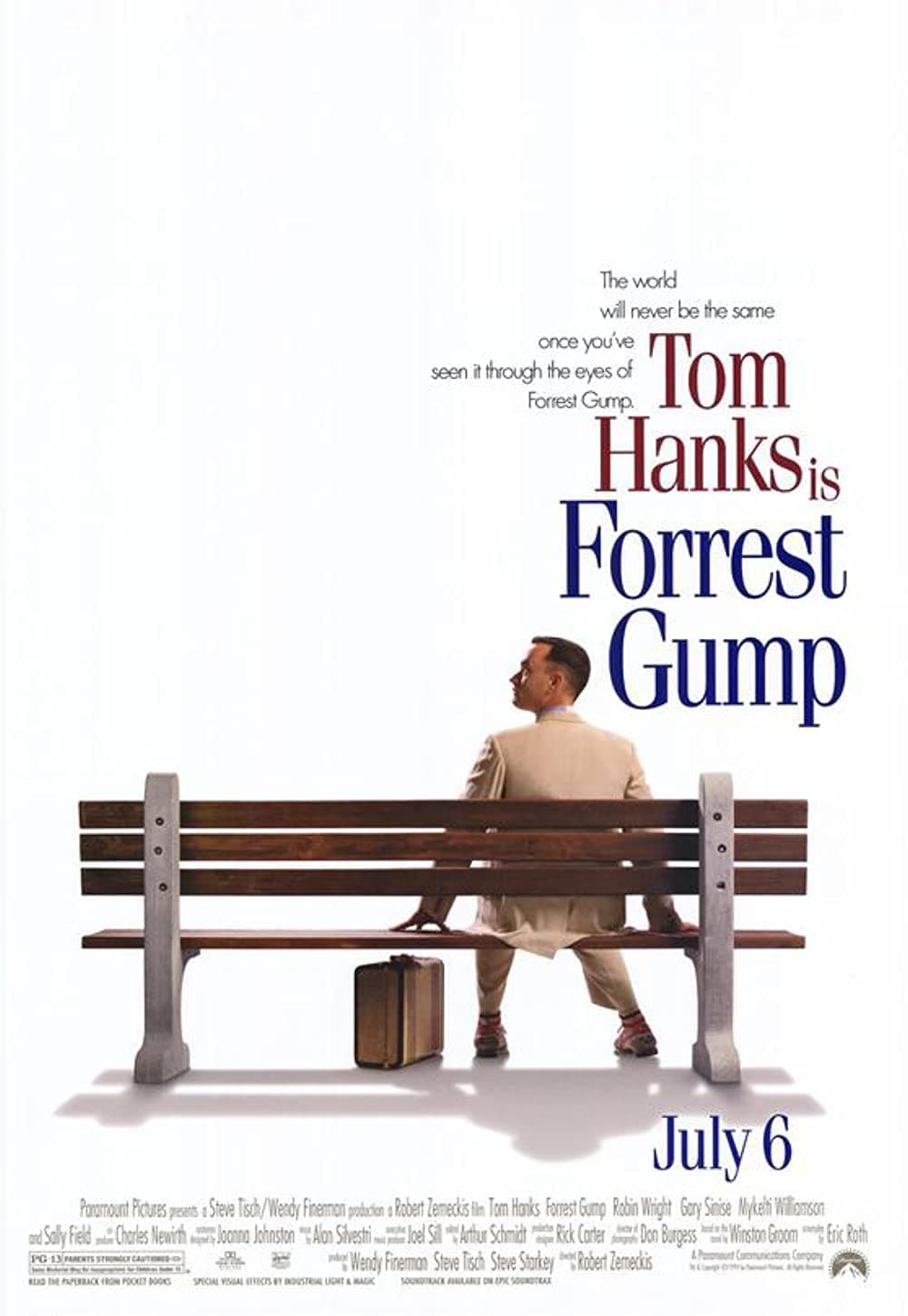
Forest Gump
A man on a bench who refuses to make history anything more complicated than a story worth telling.
1999 // VHS
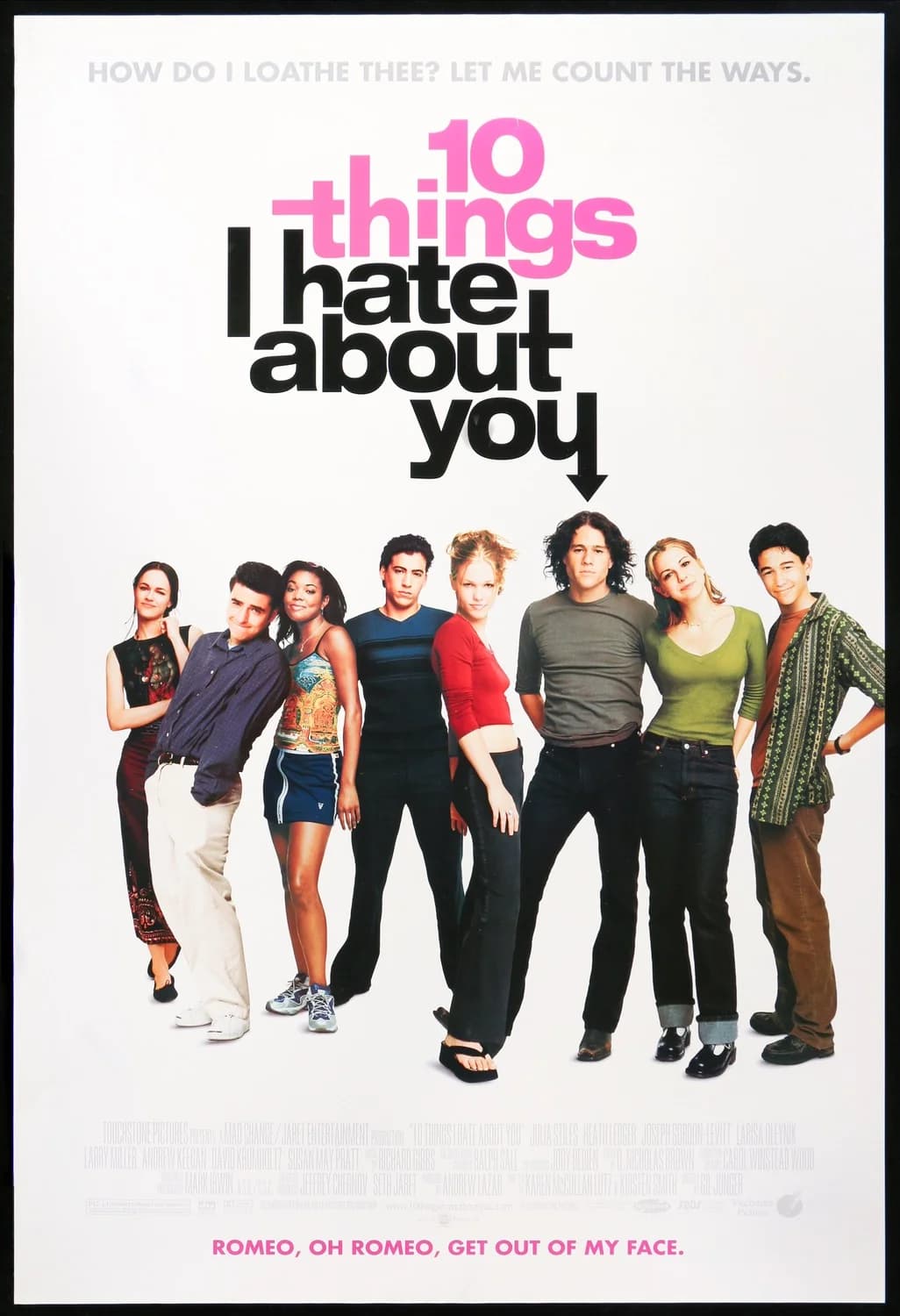
10 Things I Hate About You
Sibling rules, a rooftop serenade and one very stubborn Kat — Shakespeare in a school corridor.
1999 // VHS
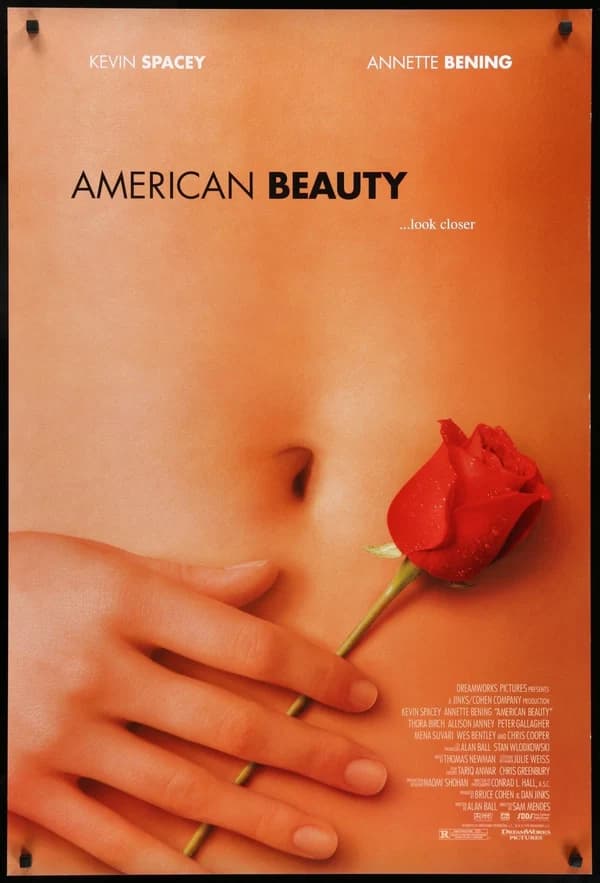
American Beauty
Lester Burnham, suburban rot and a midlife argument that still stings.