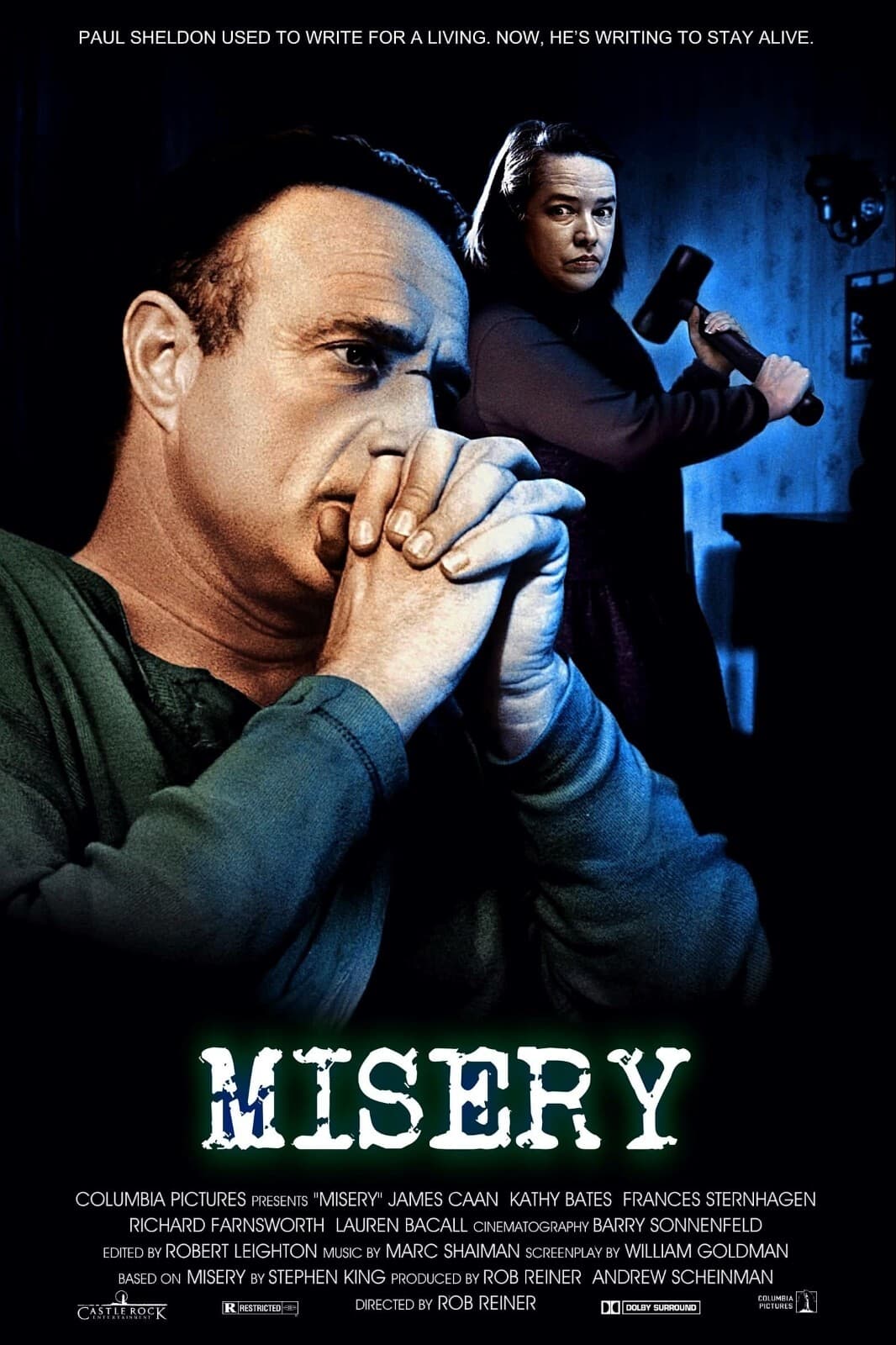
Misery
An author, his biggest fan, and a house you can’t simply walk out of.
// The setup
PLAYBACK STARTED
Misery is the sort of movie that tightens the throat without needing a scream. Rob Reiner took William Goldman's lean screenplay and turned a two-person trap into 104 minutes of escalating menace — a study of control, fandom and what happens when admiration becomes ownership.
THE MOVIE
Paul Sheldon is still the reason this movie works
Paul Sheldon is the engine. He’s a bestselling novelist who, after a car crash, wakes up drugged and confined in the care of a woman who claims to have saved him. That setup is tiny, intimate and instantly urgent.
The urgency comes from a single crack: Annie Wilkes discovers Paul has killed her favourite character in his new manuscript and, instead of being grateful, she decides she owns him. What follows is less about big-set thrills and more about possession — a fan’s black-and-white moral logic turned violent.
All of this is held together by a director who knew how to keep the pressure on. Rob Reiner directs; James Caan is the trapped writer; Kathy Bates is the nurse with a kindness that can flip into brutality. The film comes in at a compact 104 minutes and was released in 1990 — and yes, one of its most talked-about bits is the practical, brutal hobbling sequence that remains painfully specific in viewers’ memories.
THE SETUP
The idea that sets Misery in motion
On paper it’s simple: a writer is trapped and must survive. The central conflict is Paul’s attempt to stay alive and find a way out while Annie enforces her demands about his writing and punishes perceived betrayals.
What the film does cleverly is resist spreading the story too thin. It keeps the engine small — mostly two people in a house — but allows tiny, outside-world threads to sneak in: a publicist, a worried editor, local officials. Those threads stop the film from becoming claustrophobia for its own sake; they offer pressure valves and complications.
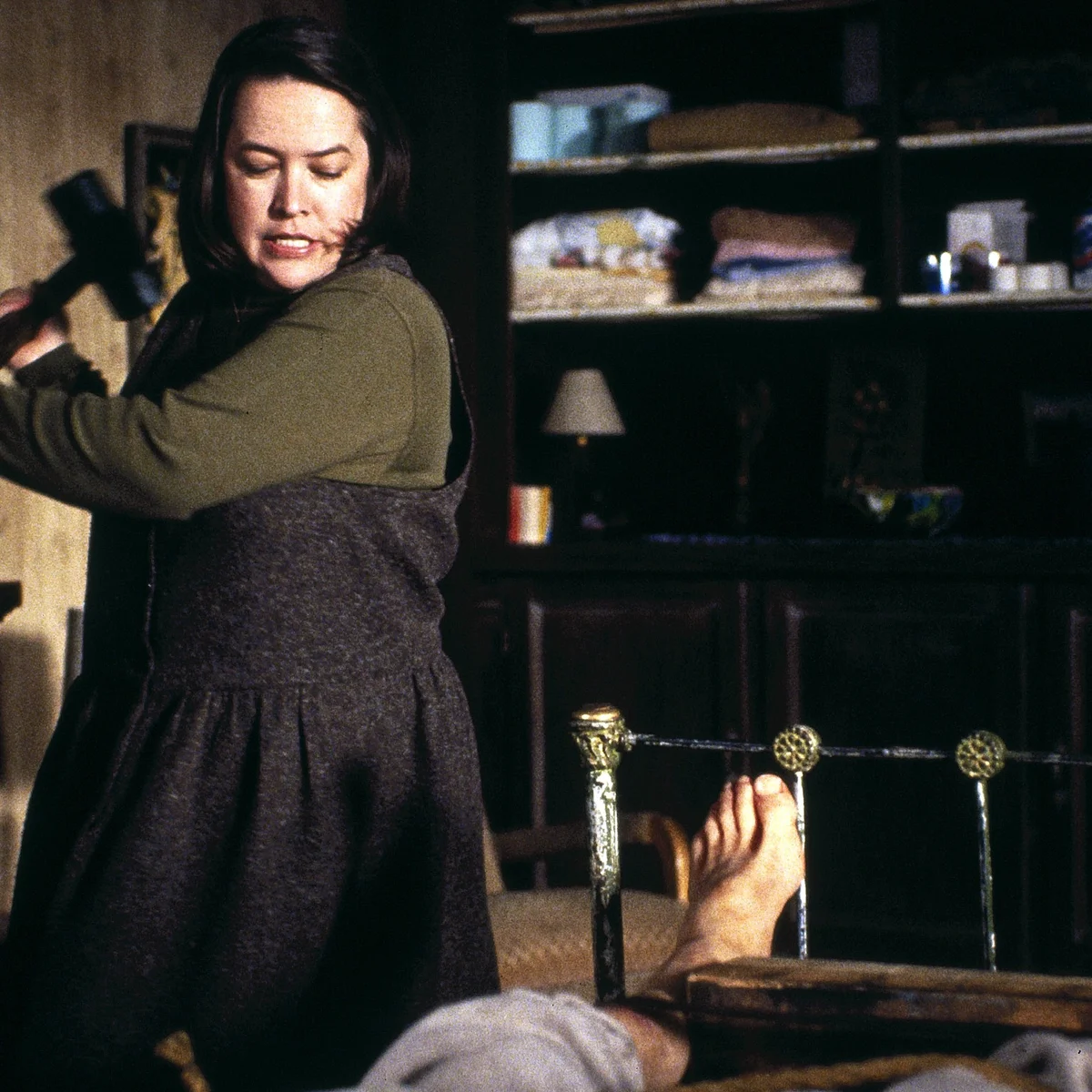
The tools the story uses are plain and effective. Isolation, limited mobility and Paul’s dependence on Annie for medical care make every decision asymmetrical: he can plan, he can resist in small ways, but he is always physically and practically beholden to the person who holds him.
There’s also a backstage practical point: Stephen King wasn’t instantly sold on selling the rights. He accepted the pitch after Rob Reiner — whose earlier adaptation Stand by Me King had praised — became attached, which helped the project keep its faithfulness to the novel’s concentrated drama.
THE CHARACTER
Why Paul Sheldon matters
Paul Sheldon is not just the film’s most obvious victim; he’s its emotional fulcrum. James Caan plays him, and the script gives him something that matters: a voice that’s tired of the formula that made him rich.
He’s a bestselling writer who resents his own formulaic 'Misery' novels. That resentment matters because it makes his captivity more than physical — there’s a clash of artistic will here, a writer who has grown out of his own creation and a fan who won’t allow that evolution.
Because Paul is at once clever, wounded and constrained, the film’s dramatic options expand. He can’t fight with fists. He fights with wit, with negotiation, with small acts that try to reclaim agency. It keeps the movie tense in a way that a purely action-oriented hero could never match.
In short: Paul matters because he’s the person the audience can root for and imagine ourselves as — not because he’s a superhero, but because he is stubborn, humane and trapped.
THE PERFORMANCE
Why James Caan's performance matters
A lot of the film’s pressure comes from how physically limited Paul is. Critics and contemporary coverage noted that James Caan’s work is largely physical and reactive — the performance of someone reduced to endurance.
That matters because the camera spends much of the film on a man who can’t simply walk away. The smallest gestures — a look, a flinch, a breath — become the language of survival.
Being the audience’s anchor in that state requires a kind of economy. Caan’s portrayal keeps us connected to the story’s stakes without requiring big speeches or melodrama.
When the film tightens, it’s often because Paul looks like he’s about to run out of options. That’s the performance’s job, and it’s a structural necessity of the story.
UNDER THE SURFACE
Misery has more on its mind than the plot suggests
On the surface Misery is a containment thriller. Underneath, it’s a film about what happens when admiration hardens into ownership. The movie keeps returning to obsessive fandom and the moment fan entitlement becomes criminal violence.
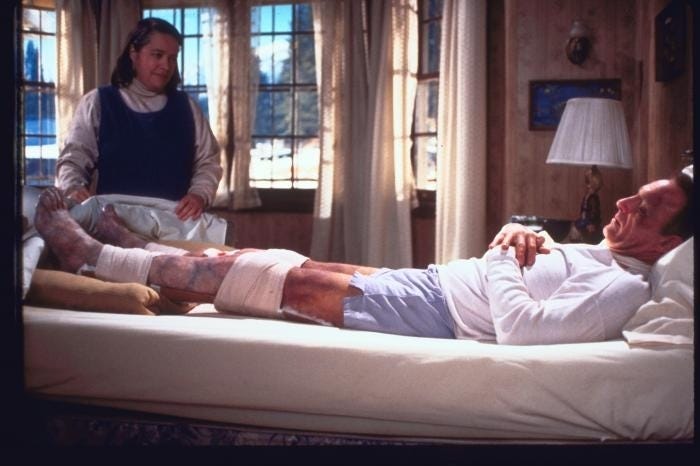
It’s also a study of asymmetric power. Paul’s physical incapacitation creates dependence; that dependence becomes the tool Annie uses to rewrite his life and work. Power here isn’t dramatic explosions — it’s the quiet control of meals, medicine and manuscript pages.
Authorship versus audience is another thread. Paul resents the series that made him rich; Annie believes she has a say in how that world should go on. Their argument is about who decides what stories are for and who gets to demand their satisfaction.
And isolation amplifies everything. A remote house and the lack of easy help sharpen small cruelties into existential threats. The film’s ideas are simple, but they’re the sort of simple ideas that hurt the most when they’re staged so cleanly.
THE FILMMAKING
How Misery was put together
A lot of Misery’s personality comes down to how it’s shot. Barry Sonnenfeld is credited as director of photography and the film leans on tight framing and controlled lighting to underline the sense of claustrophobia.
Those choices make rooms feel smaller and options feel narrower. When the camera rarely offers a wide escape route, the audience accepts the trap as real.
The filmmaking also knows when to be precise and when to obscure. The production’s best-documented practical-effects sequence — the hobbling — was executed with techniques designed to sell a brutal impact without explicit on-camera dismemberment.
That combination — careful camera choices and discreet practical work — is what keeps the film visceral without feeling gratuitous.
PRACTICAL EFFECTS
The effects work that gives Misery its physical personality
If you remember a single shock from Misery, it’s likely the hobbling. That sequence was achieved with practical prosthetics and special-makeup rather than any digital trickery.
Makeup and effects teams created life-cast prosthetic elements and relied on carefully staged camera coverage to sell the ankle-breaking impact while keeping graphic dismemberment off camera.
Supplemental interviews included on home-video releases go into the nuts-and-bolts: careful shot selection, prosthetic make-ups and timing were all part of making the moment feel real while protecting audiences and actors from explicit gore.
The result is a scene that feels tactile — unpleasant in a way that’s harder to forget precisely because it’s physically convincing, not merely suggested.
PURE 80S
Misery could not belong to any other decade
Misery sits in a late-80s/early-90s stretch of Stephen King adaptations. It’s part of that specific moment when filmmakers were still figuring out how to translate King’s psychological nastiness into mainstream cinema.
That timing mattered: Stephen King agreed to sell the rights after Rob Reiner — whose earlier adaptation Stand by Me King had praised — became attached, which helped keep the adaptation faithful to the novel’s compact cruelty.
It also reflects a tendency of the era toward character-driven thrillers. Misery is mostly interior and sharply performance-led rather than an effects-driven spectacle — a shape that felt at home at the turn of the decade.
Released in 1990, it occupies a moment when mainstream horror could still be intimate and unnerving without needing to expand into blockbuster scale.
WATCHING IT NOW
What has aged — and what hasn't
Watching Misery now, two things still land: the central performances and the tactile practical-effects work. Retrospectives and home-video supplements repeatedly point to those elements as retaining their potency.
Commentary and supplemental interviews included on modern home-video releases frame the film as a durable example of mainstream psychological horror anchored by a single, showstopping turn.
That durability is practical: a contained story, a handful of characters, and a technique-first approach to physical shocks mean the movie doesn’t date itself with gadgetry or trends.
Put bluntly: the things that made Misery effective in 1990 — performance focus, character stakes and hands-on effects — are the very things that help it survive watching today.
THE LEGACY
Why Misery still matters
Part of Misery’s afterlife is undeniably tied to its awards headline: Kathy Bates won the Academy Award for Best Actress for her portrayal of Annie Wilkes, a rare acting Oscar connected to a Stephen King picture.
Annie herself has kept showing up in conversations about film villains; she was later ranked among AFI’s list of top film villains, which speaks to the character’s staying power in our shorthand about screen menace.
The story’s life didn’t stop with the movie. William Goldman’s dramatization has also been produced on stage; a high-profile Broadway production opened in 2015 starring Laurie Metcalf and Bruce Willis, underscoring the material’s theatrical strength.
Between award recognition, cultural memory of a specific character, and a script that adapts readily to other forms, Misery has maintained a presence that’s about craft as much as notoriety.
THE VERDICT
Does Misery still hold up?
Yes — and not for nostalgic reasons. The film’s premise is straightforward: a novelist rescued from a crash wakes in the care of a woman who imprisons him when she dislikes the direction of his work. From that premise springs a clear, relentless conflict: his attempt to survive and escape while she punishes perceived betrayals.
That clarity is an asset. The story uses isolation, limited mobility and Paul’s dependence on Annie for medical care to create sustained suspense, and those mechanics don’t age. They’re structural devices, not fashion.
You’ll watch it for the central pairing — James Caan as the trapped writer and Kathy Bates as the woman who enforces her will — and for the filmmaking and effects that make certain moments uncomfortably specific. The hobbling scene, the camera’s refusal to give easy exits, the script’s small power-play scenes: they still sting.
If you’re wondering whether to watch Misery today, think of it as a tight, expertly assembled pressure cooker. It’s compact, it has a plan and it executes it. That’s as good a reason as any to press play.
// Featured in
More about Misery
Share this movie
// Keep watching
More movies from the 90s
If Misery is your kind of movie, there's plenty more on the shelves worth rewinding.
1990 // VHS
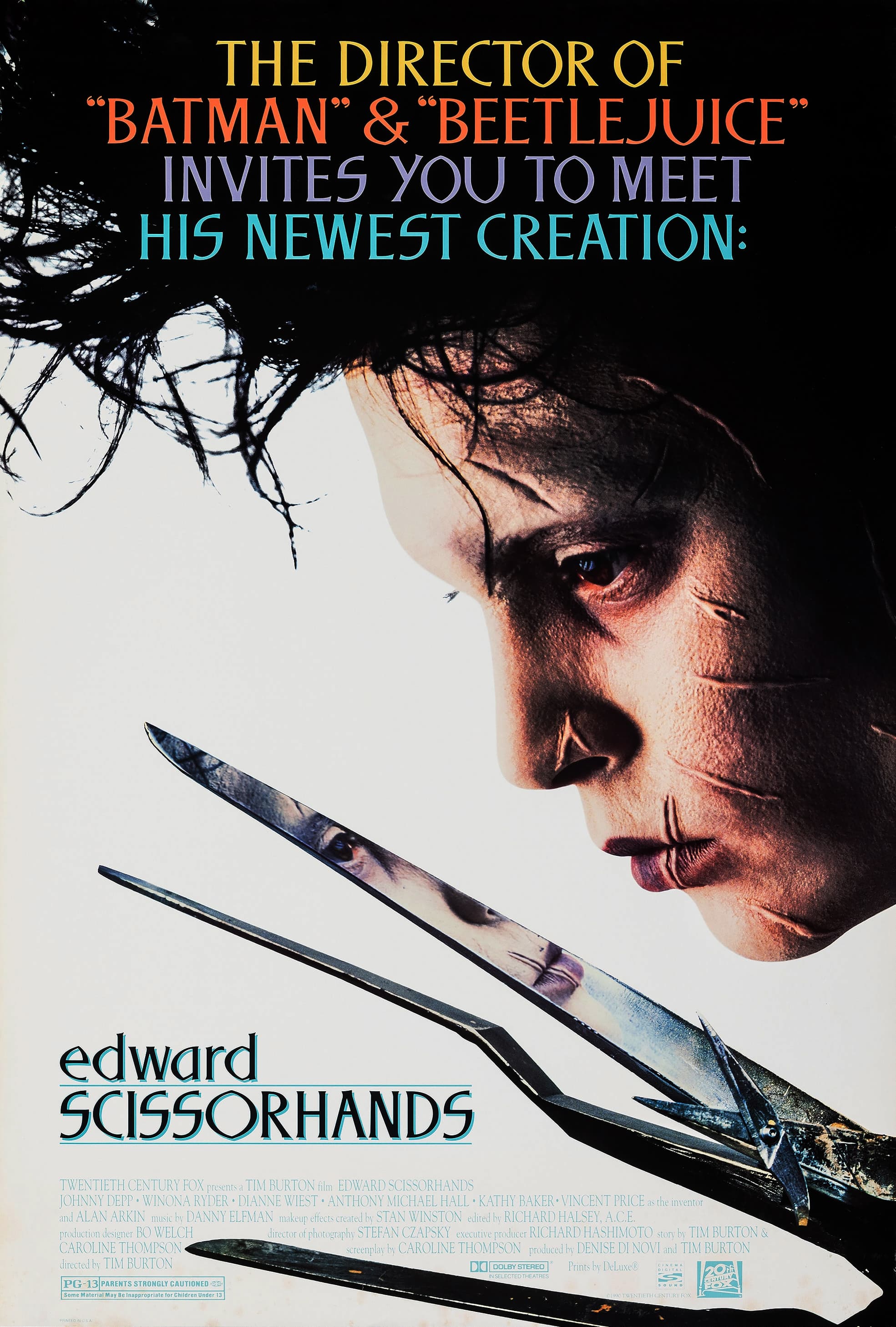
Edward Scissorhands
A fairy tale about a man who can’t quite touch the world — and the neighbourhood that can’t quite handle him.
1990 // VHS
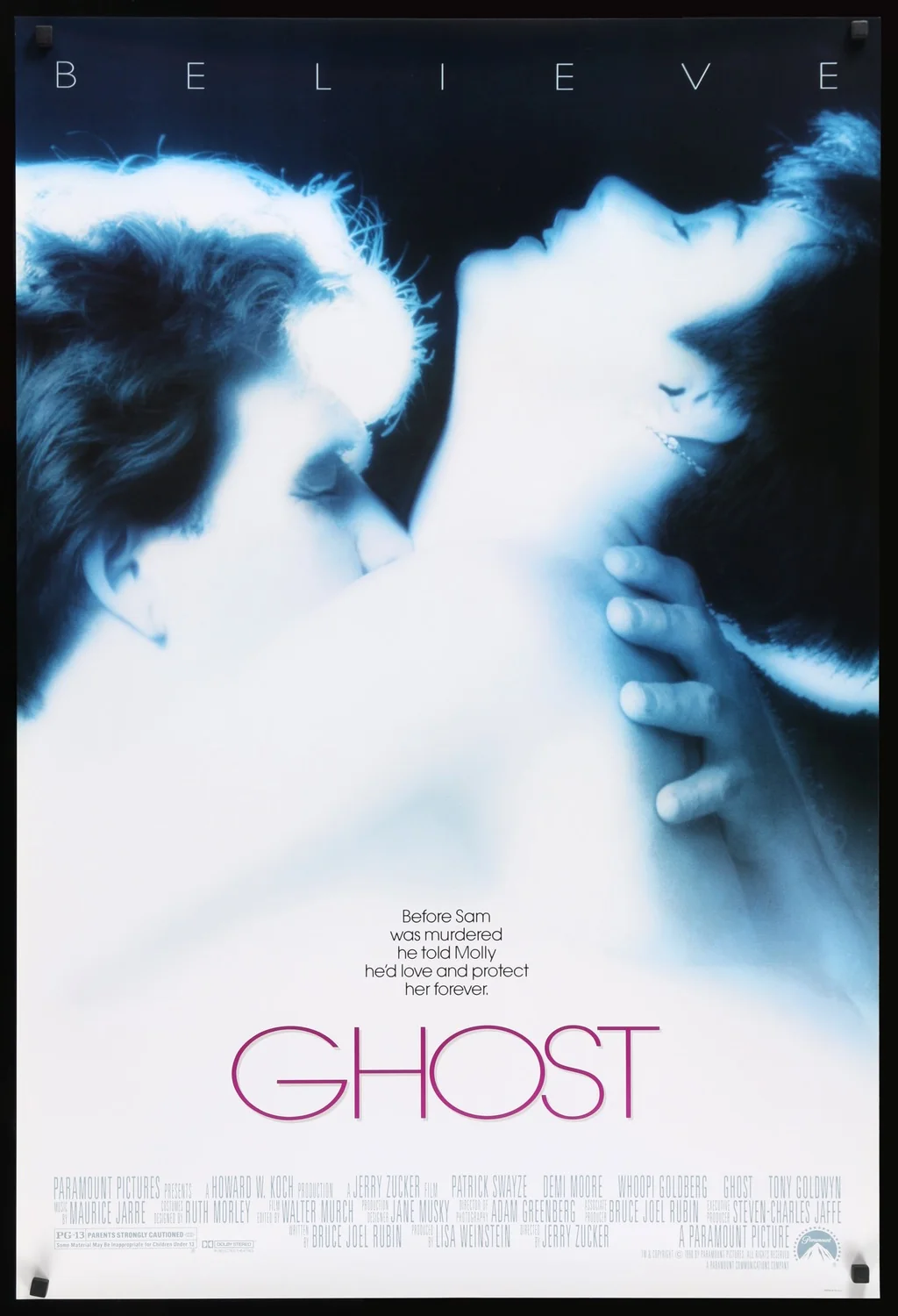
Ghost
A murder mystery disguised as a love story — with a man who won’t stop watching over the person he loves.

1990 // VHS
Total Recall
Memory, muscle and a very faulty holiday package — with Mars on the itinerary.