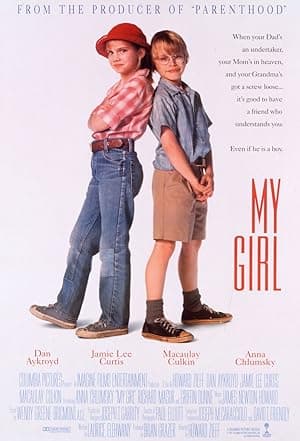
My Girl
A coming‑of‑age about grief, friendship and a girl who refuses to be polite about death.
// The setup
PLAYBACK STARTED
My Girl centres on Vada Sultenfuss, an eleven‑year‑old who lives in a funeral home and treats mortality like homework. Directed by Howard Zieff and anchored around a friendship that turns devastating, it’s the kind of family film that decided to have serious conversations straight away, not ten minutes before the credits.
THE MOVIE
Vada Sultenfuss is still the reason this movie works
People still talk about My Girl because its centre is an unmistakable child: Vada Sultenfuss. Set in the summer of 1972, the story pins us to an eleven‑year‑old who lives in a funeral parlour and has an obsession with the mechanics of death.
That setup could easily become mawkish, but the film keeps coming back to Vada’s personality — precocious, blunt and shaped by the fact her mother died soon after she was born — so the subject matter never feels decorative. Howard Zieff directs a picture that gives her the space to be inquisitive rather than simply tragic.
Anna Chlumsky plays Vada, and the movie’s willingness to let a child lead on grief, friendship and the awkwardness of growing up is why viewers keep returning to it.
THE SETUP
The idea that sets My Girl in motion
On paper the premise is simple: an eleven‑year‑old girl in a small Pennsylvania town, the daughter of a widowed funeral director, trying to make sense of adulthood’s crueller facts. That location — both literal and emotional — shapes everything the film does.
A clear plot strand arrives when Shelly DeVoto takes a job at the funeral home and begins to change the household’s rhythms, providing Vada with an adult who operates differently to her distant father.
The film also contains a brusque, defining event offscreen: an accidental disturbance of a beehive that leads to Thomas J.’s fatal allergic reaction. The movie chooses to show the consequences — the discovery and the open casket — rather than the moment itself.
All of this matters because the central arc is about learning to live with mortality: Vada must confront loss, and in the process her relationship with her emotionally distant father starts to loosen and deepen.
THE CHARACTER
Why Vada Sultenfuss matters
Vada isn’t just the protagonist; she’s the lens. The film hangs its questions — about mortality, about why adults withhold certain truths — off her inquisitive, sometimes grim humour. That mixture of curiosity and hurt gives every scene a particular voltage.
Her home life matters to understanding her: her father runs the town funeral parlour and, at first, isn’t emotionally forthcoming. That distance explains why Vada both craves grown‑up answers and distrusts the soft ones she’s offered.
Her friendships push the story forward. Thomas J. is a shy, devoted companion whose presence and subsequent death force Vada to confront things she’d previously treated like puzzles. And Shelly DeVoto, the new cosmetician, arrives as an adult foil who opens different possibilities in the household.
Put simply: Vada’s contradictions — brave and vulnerable, funny and bewildered — give the film a character to follow rather than a plot to watch.
THE PERFORMANCE
Why Anna Chlumsky's performance matters
When My Girl arrived, reviewers repeatedly pointed to Anna Chlumsky’s debut as something that stood out. Contemporary notices described her turn as unusually layered for a child actor.
That kind of attention matters here because the whole film depends on Vada feeling like a real, complicated kid rather than a collection of plot needs. The film asks her to be blunt about death, coquettish about first feelings and stubbornly honest in family rows — a lot to carry.
Having a lead that drew that sort of reaction on release explains why the movie could ask audiences to inhabit difficult material without softening it into sentiment alone.
In short: the performance’s reception at the time helps explain why Vada survives the film’s tonal gambles.
UNDER THE SURFACE
My Girl has more on its mind than the plot suggests
On the surface My Girl is a coming‑of‑age comedy‑drama about a child’s summer. Underneath it’s preoccupied with how you learn to live after loss. The film deliberately ties growing up to bereavement: Vada’s education in adulthood comes through learning how to grieve.
Mortality is more than a plot device here; childhood curiosity about death drives many of Vada’s questions and choices. The film treats that curiosity seriously rather than punishing or simplifying it.
Family communication — or the lack of it — is another running note. Vada’s father begins emotionally distant, and the story charts how their conversations, or the absence of them, shape both their recovery.
And friendship is crucial: first crushes, fierce loyalties and the sudden absence of a close companion all test what it means to be eleven. Those elements make the film feel like a portrait of a child forced to grow up faster than she should.
THE FILMMAKING
How My Girl was put together
Howard Zieff directed the picture, supported by a crew that included Paul Elliott as cinematographer and Wendy Greene Bricmont in the editing chair. Those names anchor the film’s technical credits and point to a professional team shaping its tone.
The decision to stage the funeral‑home interiors on a sound stage is the kind of production choice that keeps the domestic world consistent and manageable while the story explores delicate emotional beats.
A contemporary detail with present‑day consequences: the cinematographer approved a Dolby Vision/HDR grade for a 4K scan from the original negative when the film was restored in 2025. That restoration underlines the care taken now to present the film as it was intended.
Those production facts show a picture constructed by experienced hands — the kind of craftsmanship that quietly supports the performances and the story’s tougher scenes.
PRACTICAL EFFECTS
The effects work that gives My Girl its physical personality
The production lists a named technical adviser for bees and credited stunt coordinators, which tells you the filmmakers treated any scenes involving insects and physical danger with on‑set protocols.
Crucially, the fatal incident with the bees is not staged for the camera. The film elects to show the aftermath instead — the discovery and the open casket — which is a deliberate practical choice about what to show and what to keep offscreen.
That approach changes the film’s physical personality: it relies on reaction, staging and the materiality of a funeral setting rather than attempting a dramatic on‑screen re‑creation of the accident.
In other words, the production choices around bees and the decision to present the consequences rather than the event itself give the film a restrained, more emotional approach to danger.
PURE 80S
My Girl could not belong to any other decade
Released in late 1991, My Girl sits in an early‑1990s wave of mainstream family films that were willing to handle big subjects — like death — head‑on, rather than keeping everything polite and harmless.
That placement in the holiday season, and the studio’s decision to position it where families might see it, meant the film entered a cultural conversation about how children’s pictures could be honest about hard things.
Its commercial success at the time and continued references in later discussions show it became, for many viewers, a shorthand example of that early‑90s family drama tendency.
So while the story is set in 1972, the movie’s production and release firmly mark it as very much a product of its moment in 1991.
WATCHING IT NOW
What has aged — and what hasn't
There are practical signs the film still matters: studios invested in preservation and in 2025 issued a 4K Ultra HD restoration scanned from the original camera negative, which suggests ongoing commercial and archival interest.
The emotional components — the friendship at the movie’s heart and the way family members talk (or fail to talk) about loss — remain clear and immediate, because they’re built into character relationships rather than being period dressings.
The film’s choice to present Thomas J.’s death via its aftermath still reads as a courageous tonal decision: it forces the audience into Vada’s perspective without spectacle, and that restraint tends to age better than melodrama.
That said, the conversation the film sparked on whether a family picture should depict death so bluntly is part of its history; that argument is still legible when you watch it today, sometimes uncomfortably so, but also with a logic that isn’t merely nostalgic.
THE LEGACY
Why My Girl still matters
Part of the film’s afterlife comes from how central Thomas J.’s death has become to the way people remember the movie: that moment — or rather its aftermath — defines the emotional stakes and keeps conversations about the film focused and visceral.
The existence of a 1994 sequel that follows Vada’s next chapter is further evidence the lead character registered strongly enough at release to warrant a continuation.
Studio activity around the title, including a careful 4K restoration and reissue, shows My Girl continues to be treated as a title worth preserving and presenting to new audiences.
All of which means the film’s memory rests on a tight combination of character focus, a daring tonal choice about grief, and ongoing availability for viewers to reassess.
THE VERDICT
Does My Girl still hold up?
Yes — with a caveat. If you’re prepared for a family film that treats grief seriously and centres an eleven‑year‑old’s point of view, My Girl remains effective. The movie’s central arc is about Vada learning to live with mortality, and that business is handled plainly rather than sentimentally.
The choice to keep the bee‑sting accident offscreen and show its consequences — most notably Thomas J.’s open casket — still hits hard and is the decisive emotional pivot for the film. It’s not an easy watch, but it’s honest about what it asks of its audience.
Practical details — the 102‑minute runtime, the 1991 release and Howard Zieff’s steady direction — make it a compact picture that does what it sets out to do without bloat. Anna Chlumsky’s Vada anchors the film’s risks and returns the viewer to the story’s difficult questions.
If you’re after light nostalgia only, this isn’t your picture. But if you want a coming‑of‑age drama that doesn’t flinch from loss and gives you a real child at its centre, My Girl is worth revisiting.
Share this movie
// Keep watching
More movies from the 90s
If My Girl is your kind of movie, there's plenty more on the shelves worth rewinding.
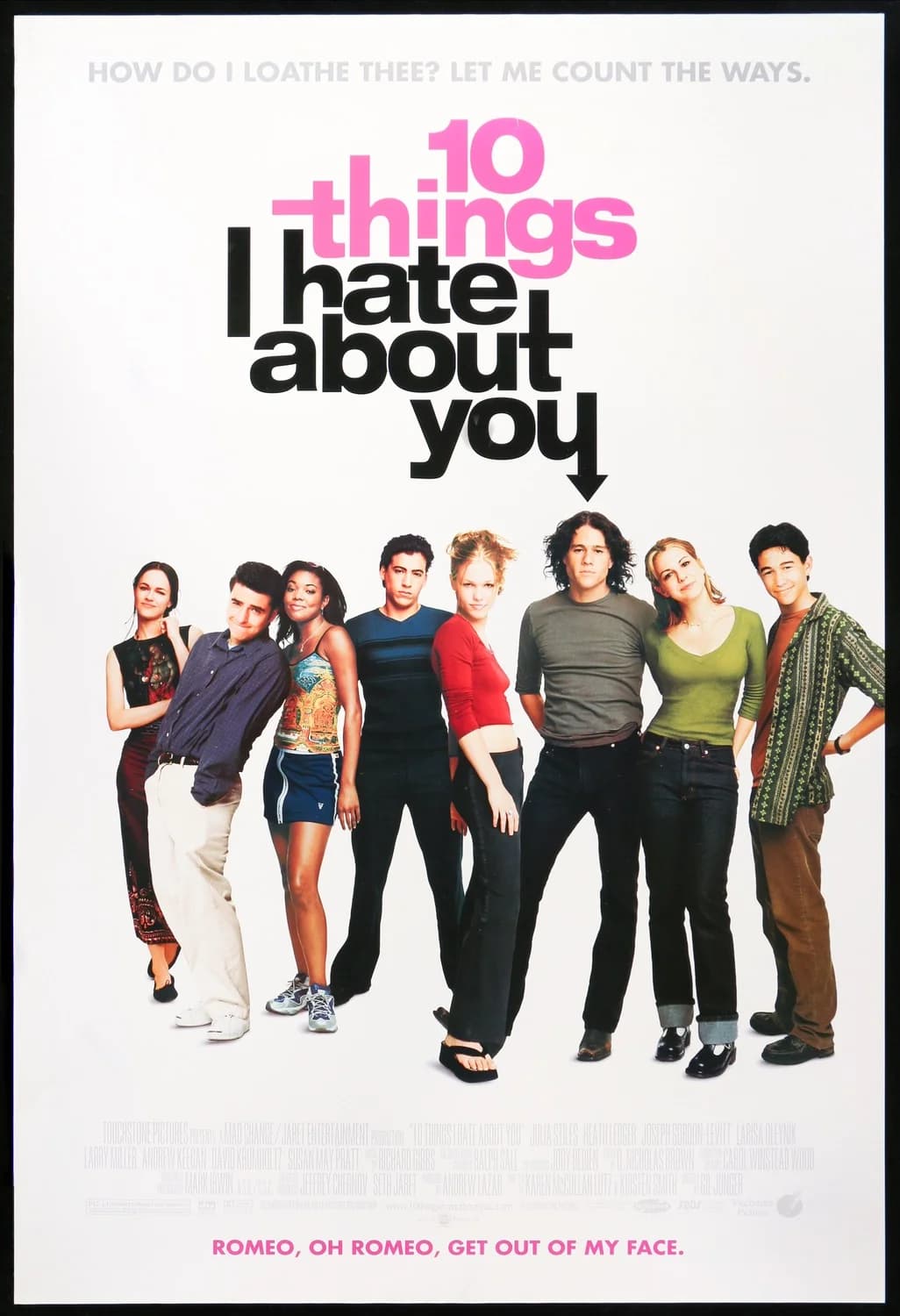
1999 // VHS
10 Things I Hate About You
Sibling rules, a rooftop serenade and one very stubborn Kat — Shakespeare in a school corridor.
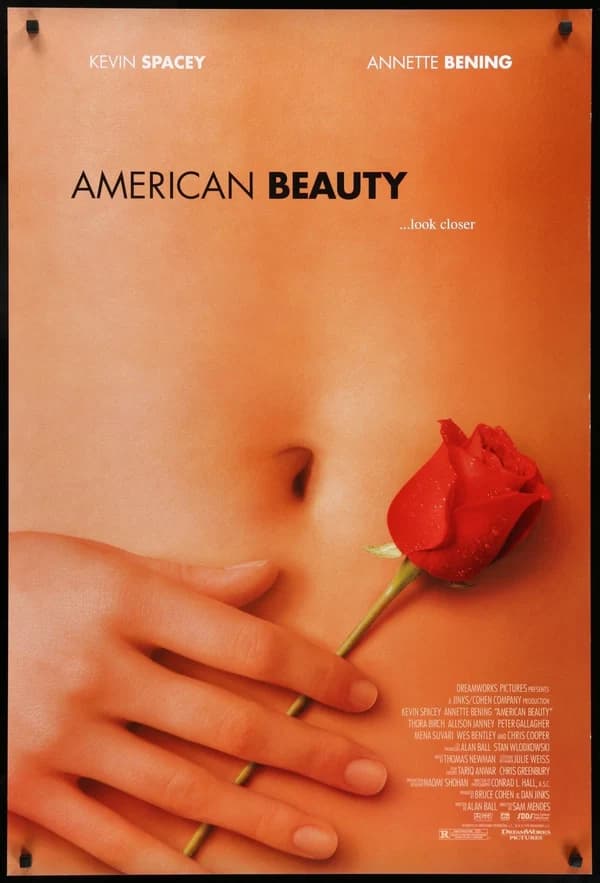
1999 // VHS
American Beauty
Lester Burnham, suburban rot and a midlife argument that still stings.
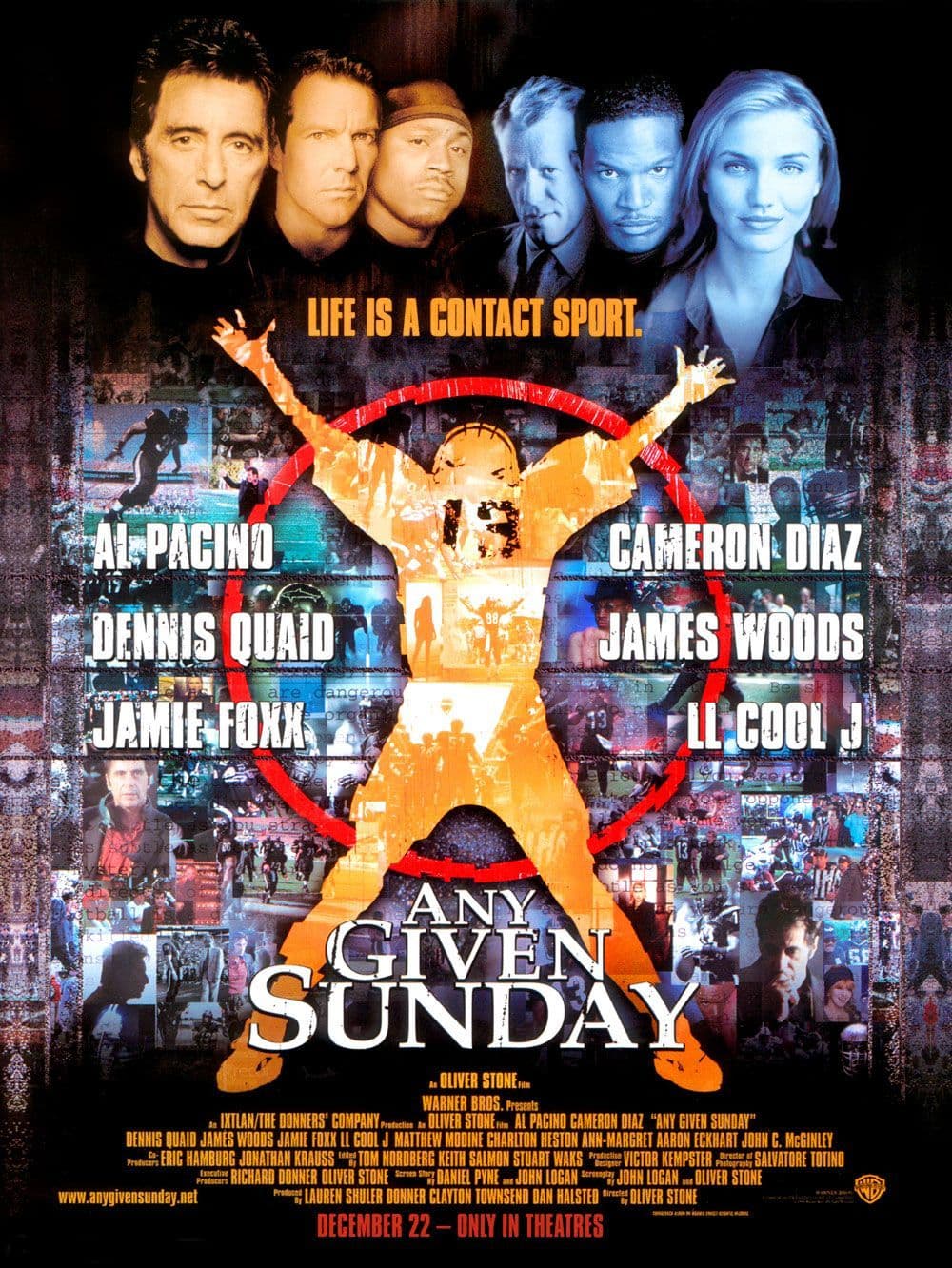
1999 // VHS
Any Given Sunday
Al Pacino's coach anchors the chaos of a film about football turned into product — loud, messy and oddly persuasive.