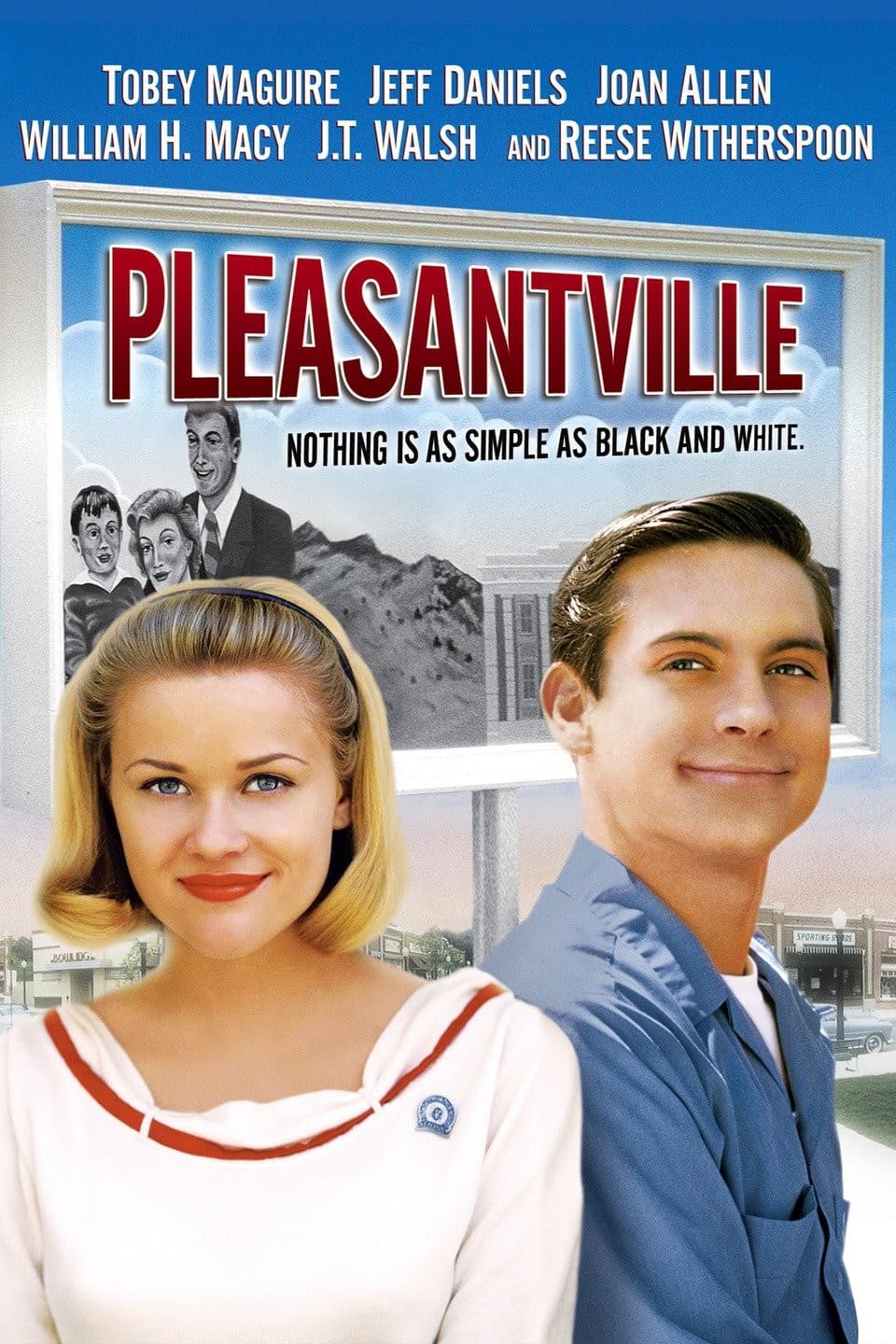
Pleasantville
A black‑and‑white town learns to blusher — and a teenager who knows the script is the only person trying to keep order.
// The setup
PLAYBACK STARTED
Pleasantville still feels like a film that wants to argue with you. It’s a late‑90s fantasy about two modern teenagers who literally get pulled into a 1950s sitcom; the trick is that once they’re inside, the show’s perfectly ordered world starts to respond to messy human feelings. David — the kid who can recite the plot — is at the centre of all of it.
THE MOVIE
David is still the reason this movie works
Remember the sensation of knowing every line in a favourite TV show? Pleasantville takes that pleasure to its logical extreme. Two modern teenagers step through a strange repairman’s trick and a special remote and end up inside a 1950s black‑and‑white sitcom — a place where everything has already been written.
That setup makes David more than a protagonist: he’s the audience’s avatar. He’s a media‑obsessed teenager whose encyclopaedic knowledge of the Pleasantville show becomes the map the siblings use to keep events 'on script' while they search for a way home. It’s a neat little problem: what happens when the viewer becomes a participant?
Gary Ross wrote and directed the film that stages this argument, and he did it in 1998 with a cast that includes Tobey Maguire as David and Reese Witherspoon as his sister, Jennifer. The movie’s bold visual shorthand — people and places clicking from black‑and‑white into colour as they encounter new ideas — gives the whole thing a parable’s clarity without pretending to be simple.
THE SETUP
The idea that sets Pleasantville in motion
The premise is refreshingly straightforward: two present‑day siblings are transported into the tidy world of a 1950s sitcom after they encounter a mysterious TV repairman and a remote that does more than change channels.
Once inside, they can’t announce that they’re from the future. For a while they have to pretend to be the show’s teenage son and daughter. That constraint creates gentle comedy and a steady tension: the longer they stay, the more they must act like the parts they’ve inherited.
David’s particular usefulness is practical. Because he has watched the sitcom obsessively, he knows the scripts and uses that knowledge to steer events. It’s an ingenious little engine — the fan who knows the rules trying to keep a fiction running exactly as advertised.
And because the film keeps the stakes emotional rather than epic, the setup never feels like a gimmick that outstays its welcome; it’s the machine that makes the moral questions move.
THE CHARACTER
Why David matters
David matters because he is the film’s point of connection between two worlds: modern viewers and an idealised, televised past. He’s the kid who knows the show, and that knowledge makes him both useful and fragile — useful because he can predict what should happen next, fragile because people don’t always behave like scripts.
That tension is where the story does its work. David’s attempts to keep things 'on script' expose how brittle the sitcom’s perfection is; when real human responses — curiosity, fear, desire — start to appear, the neat lines smudge into colour.
Tobey Maguire plays David, and the film keeps his role uncluttered: he’s the guide, the reluctant expert, and the character whose media literacy is suddenly the town’s practical resource. It’s a small-handed but decisive narrative job, and the movie knows it.
Ultimately, David is a reminder that familiarity with an image doesn’t equal control over the life behind it. That’s a useful nudge in a film about nostalgia and the costs of keeping things forever tidy.
THE PERFORMANCE
Why Joan Allen's performance matters
Joan Allen’s turn as Betty Parker attracted notable critical attention at the time, winning multiple critics’ awards. That kind of recognition isn’t decoration; it signals that the role has real emotional weight in a film that could easily have reduced its adults to caricature.
Betty’s changes are central to the movie’s argument about repression and awakening, and the fact that critics singled out the performance suggests it helped the film travel from a clever premise to something affecting.
It’s worth remembering that Pleasantville’s drama pivots on ordinary people noticing extraordinary things. When critics focused on Allen, they were marking the moment the movie asked its audience to take the town’s small revolutions seriously.
UNDER THE SURFACE
Pleasantville has more on its mind than the plot suggests
On the surface it’s a fantasy-comedy about teenagers in a sitcom. Underneath it’s fussing with a handful of late‑20th‑century obsessions: the risk of mistaking an image for reality, the cost of enforced conformity, and what happens when private feelings refuse to stay polite.
Nostalgia versus reality is the film’s recurring argument. The neat comfort of a televised past is seductive, but the movie keeps nudging at the seam: perfection here depends on what’s been left out.
Closely tied to that is repression and awakening. As the town’s people encounter new ideas and emotions, they shift — literally — from black‑and‑white into colour. The colour changes work as shorthand: intellectual or emotional discoveries are shown as visual life entering a flat image.
And because the whole adventure begins with media — a television, a remote, a repairman — the film keeps asking how media shapes our expectations of the world. If you consume only tidy pictures, what happens when messier realities arrive?
THE FILMMAKING
How Pleasantville was put together
Pleasantville’s argument is partly visual. The production credits give a clue to how carefully that was assembled: John Lindley handled cinematography, Jeannine Oppewall ran production design, William Goldenberg edited and Randy Newman provided the score. Those roles are the scaffolding for a movie that needs both theatrical sets and intimate moments to land.
The film’s craft sensibilities were recognised at the Academy Awards — it picked up nominations that reflected the look and the music. That’s useful to know because the design and score are not background flourishes; they’re integral to how the town’s transformations read on screen.
PURE 80S
Pleasantville could not belong to any other decade
Pleasantville sits firmly in a late‑1990s cultural mood that kept looking back to interrogate the myth of 1950s suburbia. At the time critics were interested in stories that treated television and nostalgia as subjects, not just aesthetics.
Technically, the film also belongs to that decade because of how it was made. The production used early large‑scale digital intermediate techniques — frames were scanned and colour work was done in post — so the movie’s black‑and‑white to colour shifts were executed as a postproduction choice at a scale that was new for mainstream features.
That combination — an argument about mediated reality and a willingness to use then‑new postproduction tools to make the argument visible — ties Pleasantville to its moment. It’s very much a 1998 film in what it wants to say and how it chose to show it.
WATCHING IT NOW
What has aged — and what hasn't
At heart, Pleasantville is a teen story about two contemporary teenagers who find themselves in a 1950s sitcom. That basic shape still reads clearly; the teenage perspective gives the film a built‑in urgency that escapes sentimentalising the past.
The visual device — people and places shifting from black‑and‑white into colour as they encounter new feelings and ideas — still does most of the heavy lifting. It’s a simple metaphor, but simple metaphors help films speak across generations.
So if you watch it now, what remains legible is the premise and the film’s choice to show change as a literal brightening. That choice keeps the argument direct: this is about discovering things that were missing from a supposedly perfect picture.
THE LEGACY
Why Pleasantville still matters
The film collected a handful of formal honours — it received three Academy Award nominations that recognised the film’s look and score. Those nominations underline that the movie’s design and music were considered part of its argument, not just nice touches.
Beyond the awards, Pleasantville is often mentioned in discussions about the early days of large‑scale digital intermediate work. It’s one of the mainstream features people point to when talking about scanning frames and doing selective frame‑by‑frame colour work in postproduction.
Critics’ recognition for acting and design also helped give the film a reputation that outlived its initial run. Contemporary plaudits for performances and production values kept conversations about the movie focused on its craft, even as commercial returns lagged behind expectations.
THE VERDICT
Does Pleasantville still hold up?
Yes — with a small, honest caveat. Pleasantville is a parable as much as it is a movie: it stages a town‑wide transformation so we can see how personal awakenings add up to social change. When characters discover books, rain, art or new feelings, the film literally lets colour in, and that image still carries punch.
Its central engine — two modern teenagers trying to navigate a show they once only watched — keeps the stakes human and intelligible. David’s media know‑how grounds the plot; it also gives the movie a way to interrogate nostalgia without becoming merely nostalgic itself.
Technically and aesthetically it’s also worth watching: the colour‑grading work and the production design were part of the point and are still interesting to observe. And the critical attention paid to some performances and the design helped keep the film in the conversation beyond its theatrical run.
If you’re heading back to Pleasantville now, go for the idea more than the spectacle. It’s a smart, tidy fable about conformity and curiosity — and it still remembers to get its hands dirty when the paint starts to run.
Share this movie
// Keep watching
More movies from the 90s
If Pleasantville is your kind of movie, there's plenty more on the shelves worth rewinding.
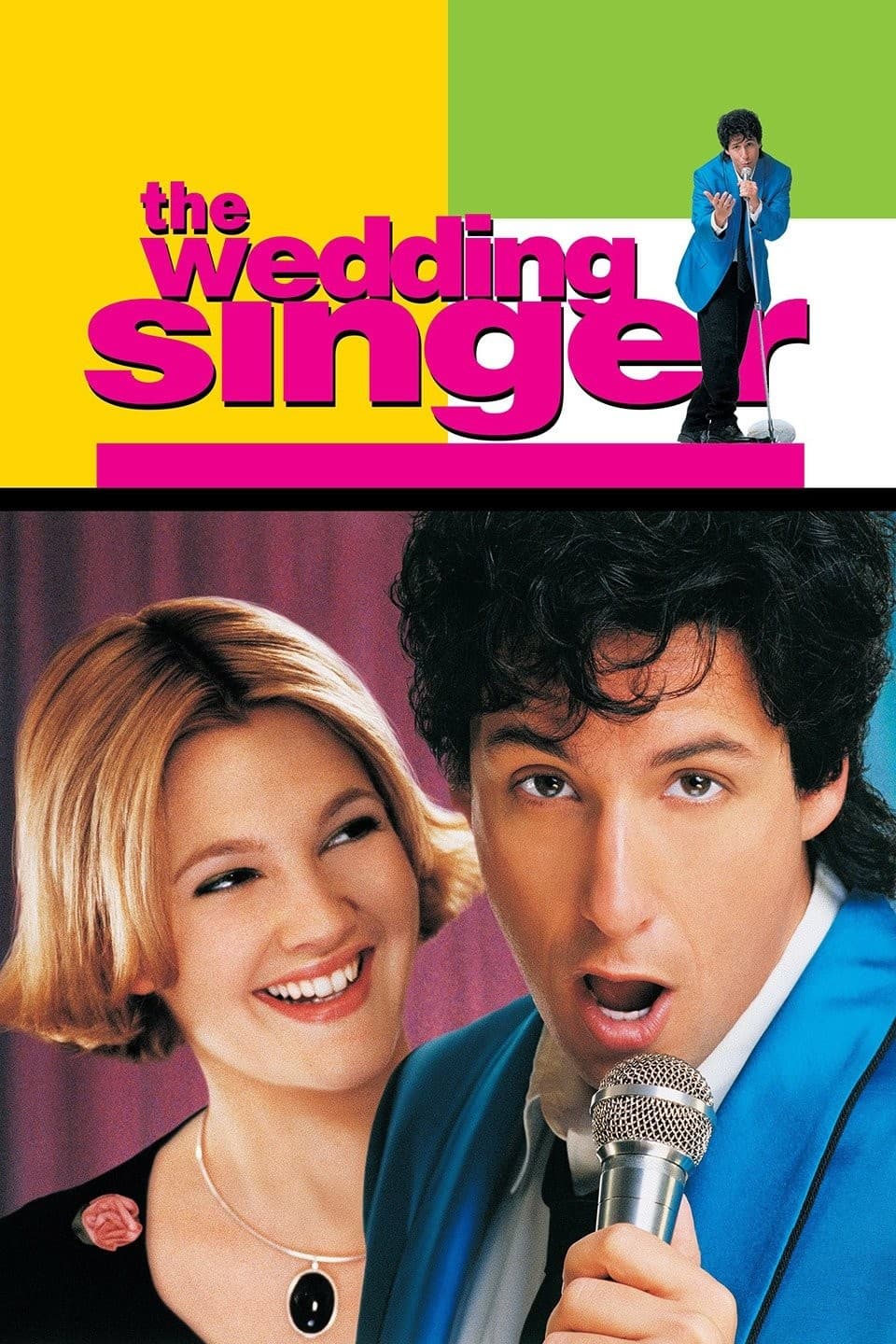
1998 // VHS
The Wedding Singer
A love story wrapped in 1980s pop — and carried by one very earnest wedding crooner.
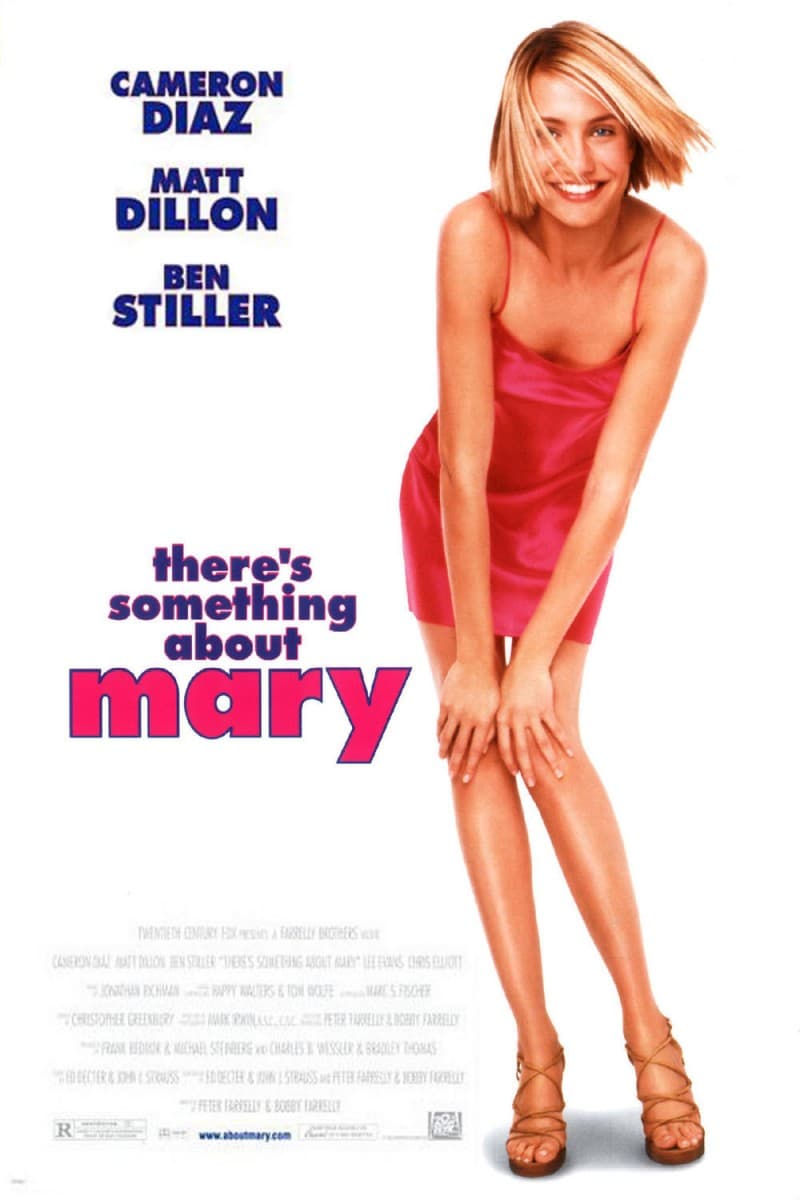
1998 // VHS
There's Something About Mary
Romantic obsession, awkward masculinity and a hair‑gel gag you can't unsee.
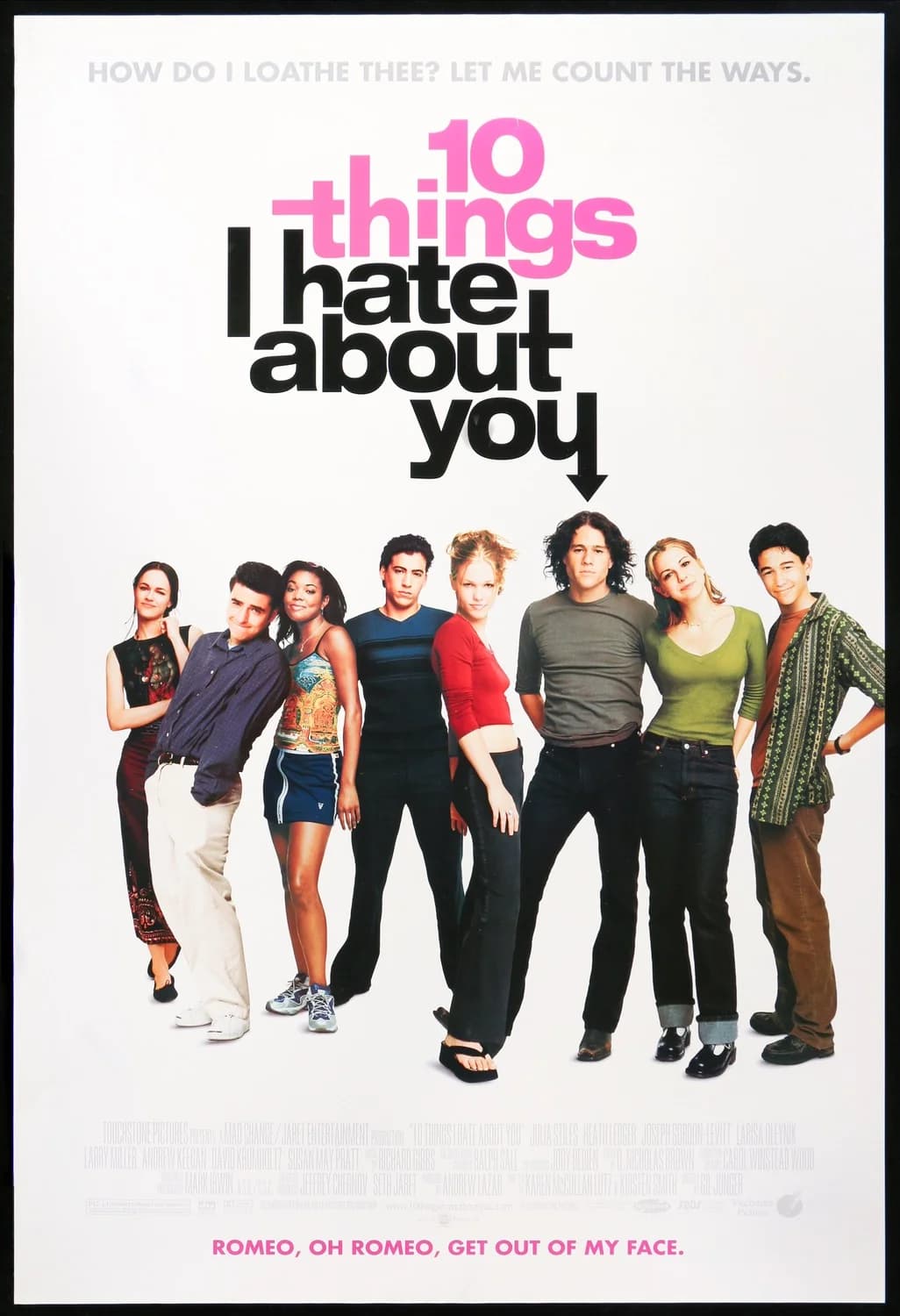
1999 // VHS
10 Things I Hate About You
Sibling rules, a rooftop serenade and one very stubborn Kat — Shakespeare in a school corridor.