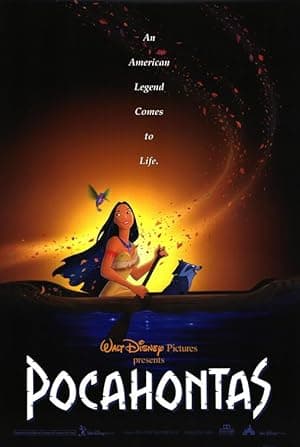
Pocahontas
A Disney musical about curiosity, conflict and a face-off between trees and treasure.
// The setup
PLAYBACK STARTED
Pocahontas doesn't sneer at its big themes — it leans into them. Between its sweeping songs and a title character who wants to talk to trees, the film still feels like an unusually serious fairy tale for families, the sort that asks you to care about other people and the planet without turning into a lecture.
THE MOVIE
Pocahontas (speaking voice) is still the reason this movie works
People talk about Pocahontas because it tries to do a lot at once and, often, it does it honestly. At its centre is a meeting: the Powhatan people and English settlers at Jamestown, collision course stuff that the film turns into a story about understanding rather than a dry history lecture.
That meeting is the inciting incident — colonists arrive looking for land and resources, which sets up tensions and the threat of violence. The movie gives that enormous setup a simple human hinge: a curious, independent young woman who wants to bridge cultures rather than widen the gap.
Directors Mike Gabriel and Eric Goldberg steer an 81-minute animated musical that pairs Irene Bedard’s speaking voice for Pocahontas with Judy Kuhn on the songs, while familiar names such as Mel Gibson (John Smith) and Linda Hunt (Grandmother Willow) occupy the supporting slots. It’s a Disney production with ambitions: big themes, bold songs and a clear willingness to let nature and empathy shape its storytelling.
THE SETUP
The idea that sets Pocahontas in motion
At its simplest, the film is powered by two opposing pulls: Pocahontas wanting peace and connection, and the newcomers whose hunger for land and wealth threatens that peace. Those competing interests keep the story moving without needing every subplot to be spelled out.
That tension is handled in the language the film knows best — song and spectacle. Big set-piece sequences, the most famous being the moment built around 'Colors of the Wind', are used to reveal what characters feel and think, shifting from intimate, personal beats to public confrontation.
A recurring trick the movie relies on is contrast. Pocahontas is shown in communion with nature; the settlers arrive with a European mindset that's all about ownership and resources. The push-and-pull between those worldviews is the engine for both plot and emotion.
None of this is coy. The setup keeps stakes clear — it's about more than a romantic thread; it's about two worlds trying to make sense of each other while outside forces push them apart.
THE CHARACTER
Why Pocahontas (speaking voice) matters
Pocahontas, as written and voiced, isn't just a love interest or a symbol. The movie gives her curiosity real screen time: she questions, wanders and listens. Those bits matter because they make her decisions feel chosen rather than scripted.
Irene Bedard provides the speaking voice, which the filmmakers clearly treated as a crucial element of the character’s identity. That choice lets the film separate the character’s conversational self from the heightened, lyrical self who sings.
Grandmother Willow exists as more than a plot device; she articulates the film’s nature-centred worldview and acts as a spiritual guide who counsels Pocahontas when big choices loom. Linda Hunt supplies that voice of counsel, giving Pocahontas someone in her life to argue with and learn from.
For a family film, Pocahontas is surprisingly interested in listening — and that makes her the centre you want to follow. Her curiosity is the movie’s moral compass without the movie ever turning didactic.
THE PERFORMANCE
Why Irene Bedard's performance matters
One deliberate production choice was to split Pocahontas between two performers: Irene Bedard handles the speaking, Judy Kuhn the singing. That structural decision affects how the character feels on screen — you hear a steady spoken presence that then swells into a separate, musical register.
The fact that the film records its songs with Judy Kuhn for the soundtrack means the musical moments are treated as a distinct performance space from the dialogue scenes. In practice, this creates a Pocahontas who can be quietly thoughtful in speech and majestically expansive in song.
So when you watch, be aware you’re responding to a character assembled from different elements. The speaking voice gives her day-to-day personality; the sung voice carries the film’s emotional peaks.
It’s a common enough technique in animation, but here it’s important because the story asks the character to be both ordinary and emblematic — the split lets the movie have both.
UNDER THE SURFACE
Pocahontas has more on its mind than the plot suggests
On the surface, it’s a historical-meets-romantic adventure. Underneath, the film keeps returning to the difficulty of genuinely understanding someone from another culture — the literal and emotional language barriers, and the misread intentions that follow.
Closely tied to that is a clear environmental streak: the movie treats nature as a living, moral force. That animist impulse is voiced aloud by characters like Grandmother Willow and threaded through the songbook of the film.
But Pocahontas doesn’t stop at nature versus progress. It also directly addresses colonialism and exploitation. The arrival of settlers is explicitly about seeking land and resources, and the film stages a conflict where those economic motives clash with a community’s way of life.
Finally there’s the private tug between duty and personal freedom: our heroine is pushed by tribal expectation and pulled by the possibility of a different life. That’s what gives the romance its friction — it’s not just two people falling in love, it’s two worlds, too.
PRACTICAL EFFECTS
The effects work that gives Pocahontas its physical personality
Pocahontas’s look isn’t built from miniatures or stage tricks; it comes from traditional hand-drawn animation given a digital polish. The film was made using classic 2D drawing techniques alongside Disney’s then-current digital ink-and-paint and compositing processes.
That combination matters because it allows the film to keep the warmth and linework of hand animation while using digital tools to stabilise colour and layering. The result is an image that feels handcrafted but composed with precision.
In short: the film’s physical personality is a hybrid — old-school drawing with a 1990s digital finish — rather than any kind of optical or mechanical practical effects.
PURE 80S
Pocahontas could not belong to any other decade
This is very much a mid-1990s Disney film. The studio was in the habit of pairing established songwriters with animated features, and here Alan Menken teamed with Stephen Schwartz to produce a score and songs that the picture hangs a lot upon.
Technically the movie sits in a transitional moment: hand-drawn animation was still the core craft, but Disney was layering in digital ink-and-paint and compositing systems that the studio had been adopting across early‑to‑mid 1990s features. That hybrid workflow gives the film a 90s DNA you can spot if you’re looking for it.
So the film feels of its time because of both its musical ambitions — the big Broadway-style numbers — and the specific way animation was being produced during those years.
WATCHING IT NOW
What has aged — and what hasn't
As a family film, Pocahontas still occupies the territory of clear storytelling: the stakes are intelligible and presented in a way younger viewers can follow. That simplicity preserves a lot of its immediate appeal.
The musical elements remain the clearest case for rewatching. The soundtrack — especially the songs recorded for the film — still carries emotional weight in the way the numbers transition the story between private feeling and public argument.
On casting and production choices: the decision to separate speaking and singing voices is still evident when you listen. The soundtrack performances sit alongside the dialogue in a way that makes the film feel like a packaged musical experience rather than a single-mode drama.
The film’s afterlife continued in a direct-to-video sequel in 1998, which is part of how audiences kept returning to the characters — a reminder that Disney considered the story worth continuing in its family-market strategy.
THE LEGACY
Why Pocahontas still matters
A big part of Pocahontas’s staying power is musical: 'Colors of the Wind' won the Academy Award for Best Original Song, and the film’s score was also recognised by the Academy. Those honours keep the soundtrack in conversations about great Disney songs.
The studio kept the story in circulation; a direct-to-video sequel followed in 1998, and the original has remained inside the official Walt Disney Animation/Princess catalogue. That availability keeps the film visible to new viewers and families.
Finally, the picture still appears in retrospectives about Disney’s 1990s output and its way of approaching historical subjects — people revisit it not just for the songs but for how a major studio tried to handle a complicated past within a family musical.
THE VERDICT
Does Pocahontas still hold up?
Yes—with caveats. The film’s core is clear and still engaging: it dramatizes the Jamestown encounter and sets up a real conflict between colonial appetite and a community that values balance. That tension gives the story weight beyond any single song or scene.
What keeps it watchable is the combination of a central character who wants to listen and a musical structure that lets the film move between private moments and public confrontations. The contrast between Pocahontas’s communion with nature and the settlers’ European worldview remains the movie’s strongest dramatic motor.
Musically, the film is a success — the songs (and the soundtrack’s recorded versions) are a major reason people return to it. The decision to separate the speaking and singing voices is part of how the film balances smaller, intimate scenes against those larger, operatic moments.
If you want a family musical that attempts something serious — a romance across cultural boundaries wrapped around questions of duty, exploitation and empathy — Pocahontas still offers that. Watch it for the songs, the central curiosity of its heroine, and the fact that the movie asks you to care about other people and the world they share.
Share this movie
// Keep watching
More movies from the 90s
If Pocahontas is your kind of movie, there's plenty more on the shelves worth rewinding.
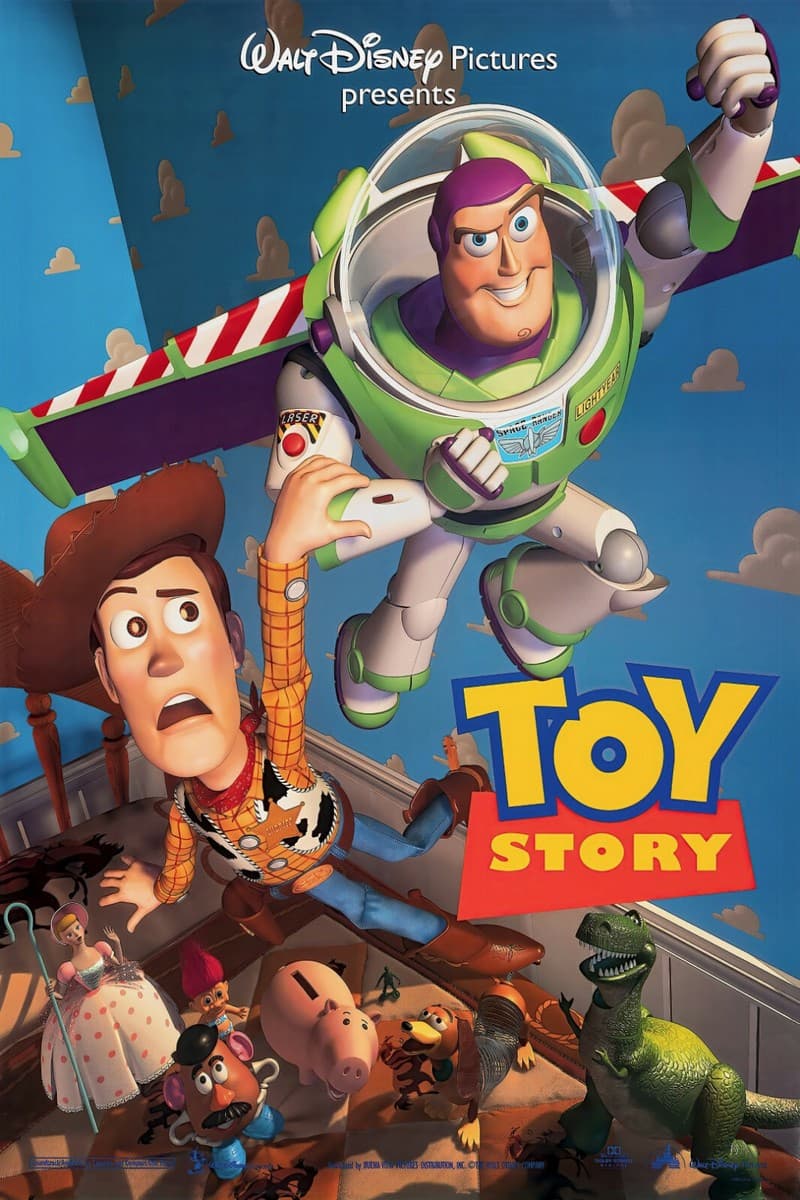
1995 // VHS
Toy Story
A pull‑string cowboy, a deluded space ranger and a small, very particular war over being loved.
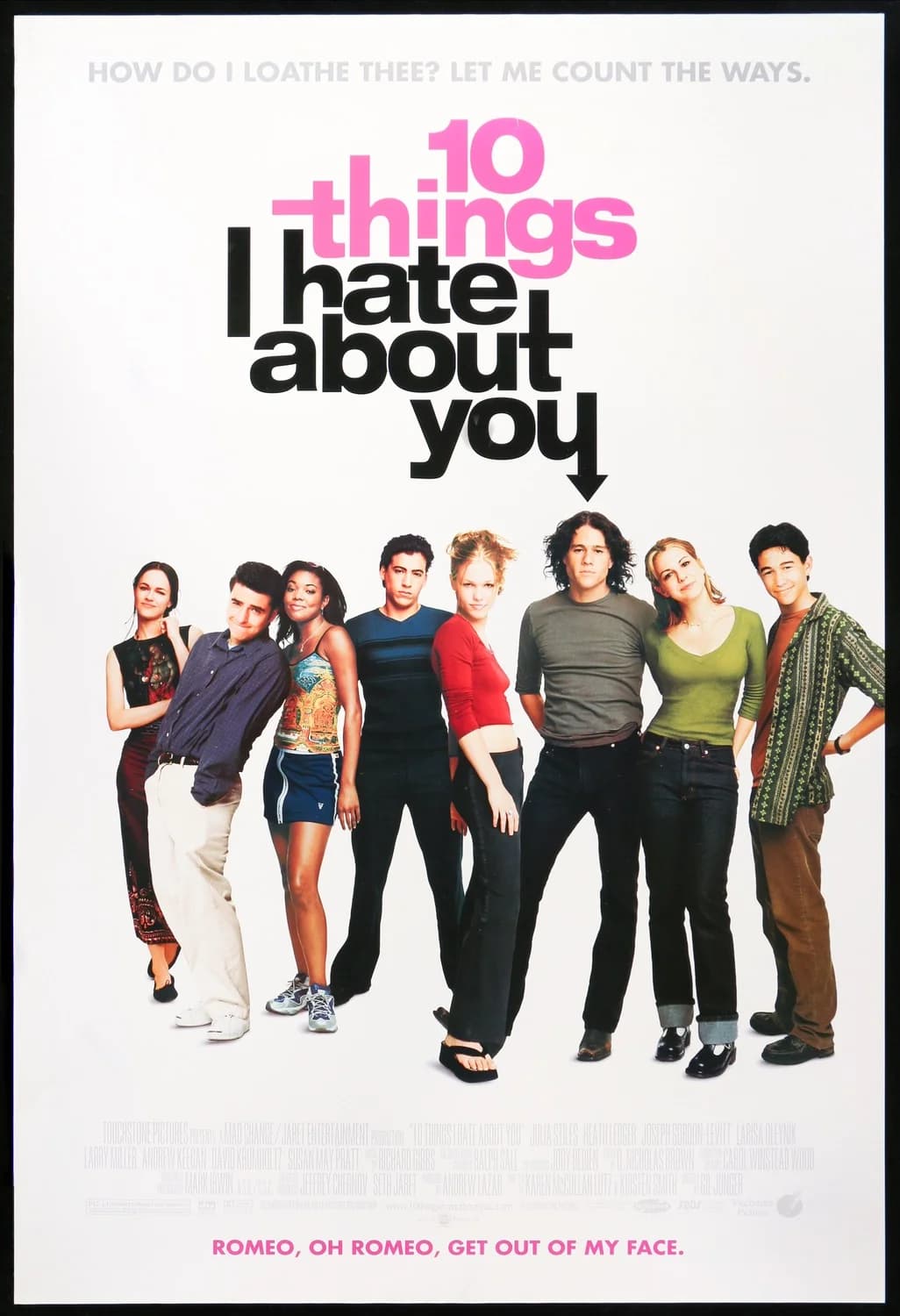
1999 // VHS
10 Things I Hate About You
Sibling rules, a rooftop serenade and one very stubborn Kat — Shakespeare in a school corridor.
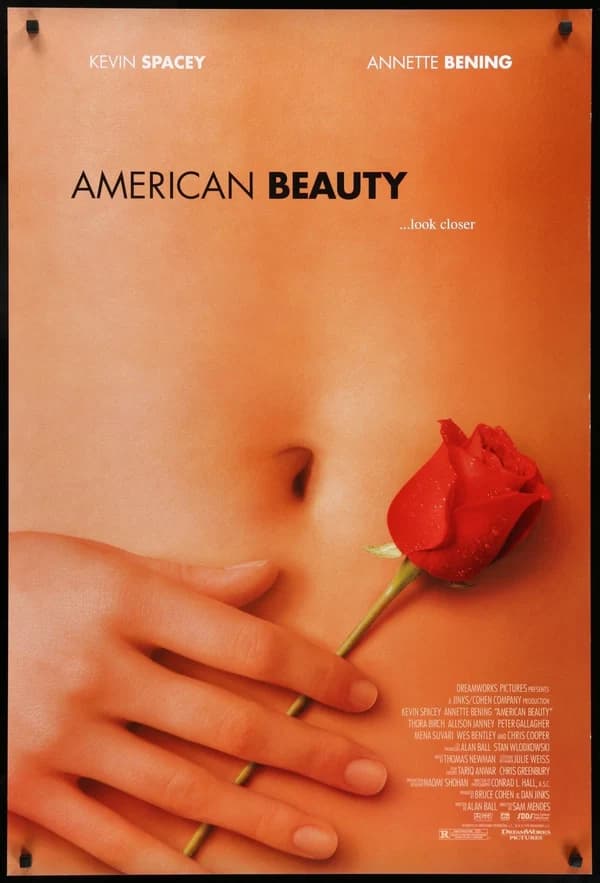
1999 // VHS
American Beauty
Lester Burnham, suburban rot and a midlife argument that still stings.