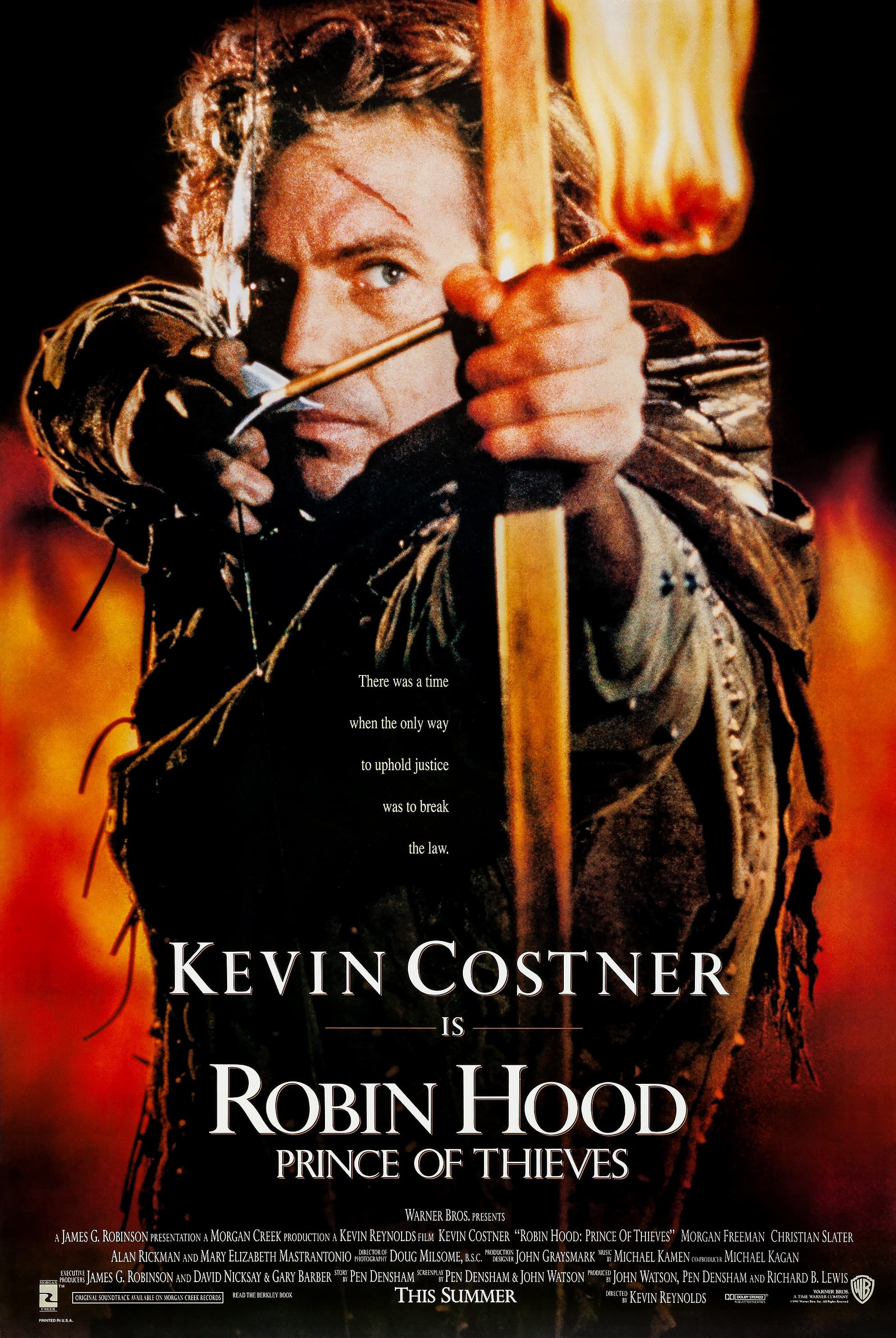
Robin Hood: Prince of Thieves
A revenge tale with a bow, a ragtag family and a very particular Sheriff.
// The setup
PLAYBACK STARTED
Robin Hood: Prince of Thieves is the sort of late‑summer medieval romp that insists on big feelings and even bigger gestures. It’s Kevin Reynolds’ 1991 take on the legend, centred on a returned crusader whose hunt for personal justice spins into something much broader: resistance, loyalty and the making of a found family.
THE MOVIE
Robin of Locksley (Robin Hood) is still the reason this movie works
The movie kicks off with Robin of Locksley coming home from the Third Crusade to find his world ripped apart: his father is dead and their land has been taken. That personal blow — the seed of revenge and private justice — is what turns a familiar folktale into something with sharper teeth.
What keeps the picture moving is Robin’s early choice to become an outlaw: he takes from the Sheriff and his cronies, not for sport, but to push back against the Sheriff’s bid for local power and to protect the people left under his thumb. It’s a simple through‑line that the film keeps returning to.
Kevin Reynolds directs the whole thing across a 143‑minute, big‑budget adventure, with Kevin Costner in the lead and a supporting cast that includes Morgan Freeman, Mary Elizabeth Mastrantonio, Alan Rickman and a cameo from Sean Connery. The film plays like a summer event — loud, earnest and determined to be emotionally direct.
THE SETUP
The idea that sets Robin Hood: Prince of Thieves in motion
At the centre is a tidy origin: a returned soldier discovers family tragedy, and that grief becomes the engine. That personal wrong turns into a wider campaign when Robin becomes an outlaw, robbing the corrupt to undercut the Sheriff’s control.
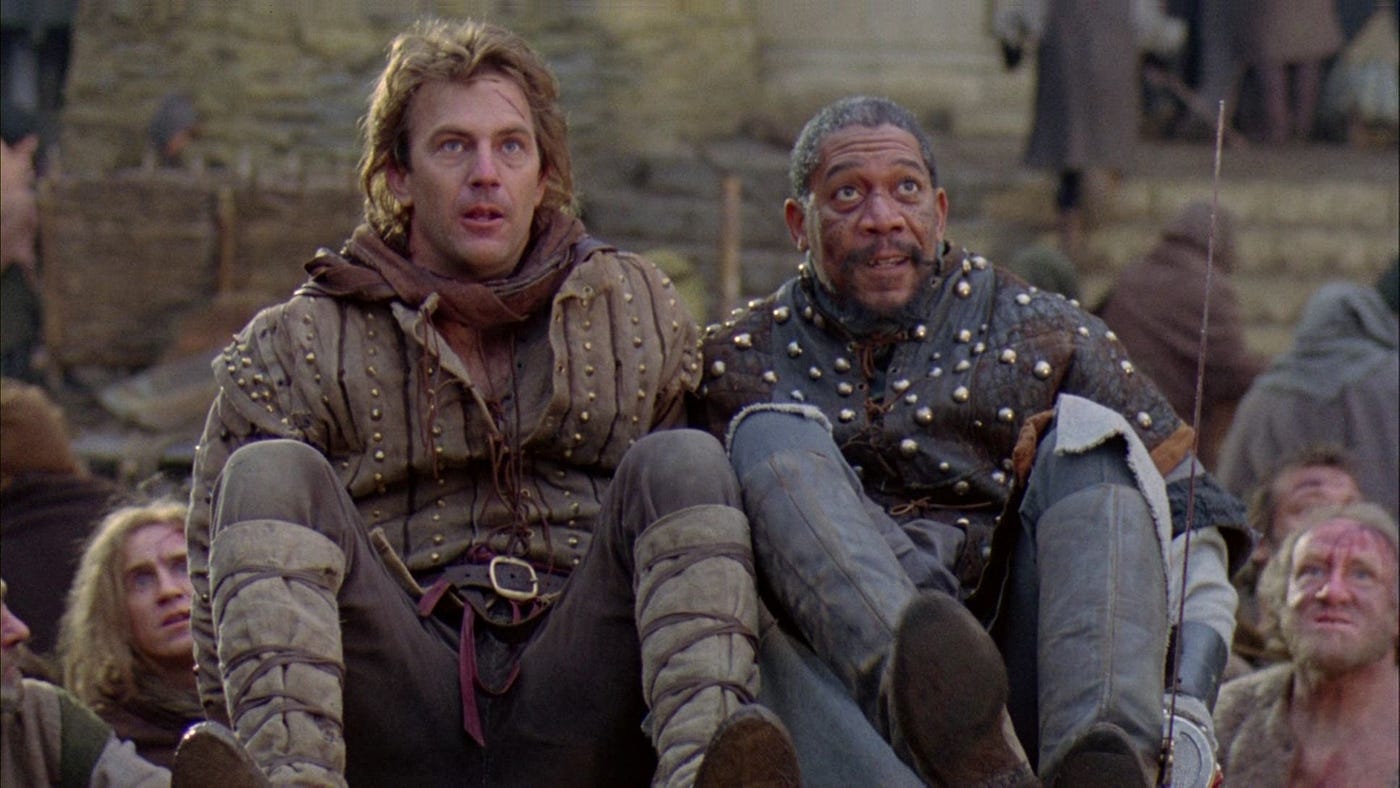
He doesn’t do it alone. Azeem — an escaped prisoner who becomes Robin’s companion — arrives as an outsider with practical skills and a different point of view, which helps turn Robin’s private hunt for justice into a collective project.
The screenplay is structured around that origin/revenge arc and an escalating clash with the Sheriff that leads to direct confrontations and a final personal duel. It’s deliberately straightforward: personal loss, gathering allies, open conflict.
Pen Densham and John Watson are credited as screenwriters, with Densham’s story treatment introducing some of the film’s distinctive additions to the legend; the script’s choices keep the revenge tone front and centre.
THE CHARACTER
Why Robin of Locksley (Robin Hood) matters
Robin of Locksley is memorable because his motives are blunt and human: he’s avenging his father, trying to reclaim what was taken and looking after the people squeezed by the Sheriff. That clarity gives the film a steady moral compass.
His arc is less an abstract heroic quest and more a soldier trying to find a place after war. Turning grief into action makes him someone people — and the film’s other characters — can rally behind.
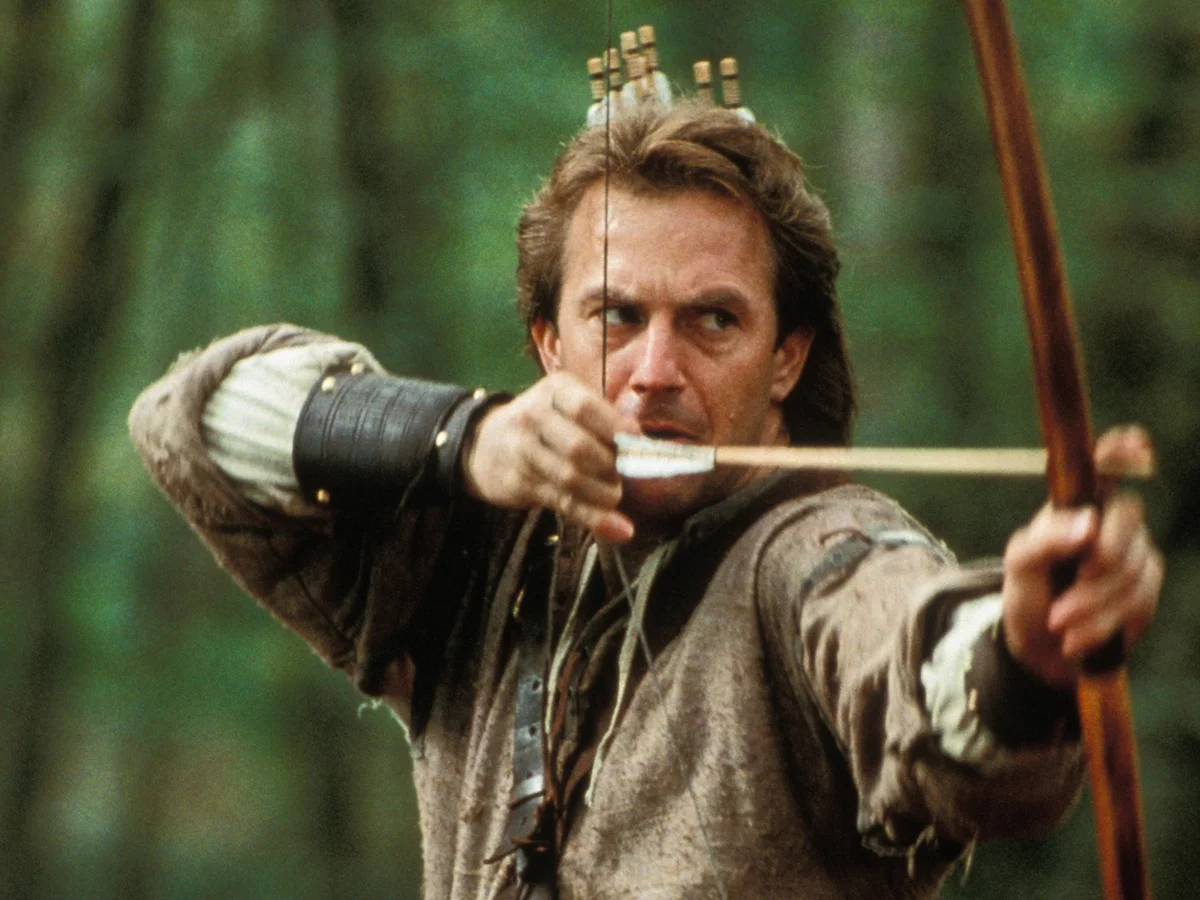
Azeem’s arrival reframes the story. As an outsider and a skilled fighter, he doesn’t just help Robin practically; his loyalty grows after he is rescued, and that cross‑cultural friendship gives Robin’s mission a different, warmer dimension.
There’s also a physical note: Costner trained with the stunt and trainer team and performed many of the film’s physical sequences, including equestrian work, which helps sell the idea that this man is living the life he’s chosen.
THE PERFORMANCE
Why Alan Rickman's performance matters
Contemporary reaction singled Alan Rickman’s Sheriff of Nottingham out as the film’s most memorable performance. That’s a useful, precise fact: his presence consistently drew attention when the film first came out.
The part also brought concrete recognition: Rickman won the BAFTA Award for Best Actor in a Supporting Role for his portrayal of the Sheriff. That award is a tidy piece of evidence for the role’s impact.
Within the film’s shape, the Sheriff functions as the concentrated face of local tyranny — the personal threat that turns Robin’s loss into a broader political fight.
If you’re watching the film again, the Sheriff scenes are the ones that tend to grip an audience’s attention; they provide the antagonistic backbone for Robin’s campaign.
UNDER THE SURFACE
Robin Hood: Prince of Thieves has more on its mind than the plot suggests
On the surface it’s an adventure, but underneath the film spins a handful of simple, steady ideas: revenge and personal justice start the story and keep it urgent.
Alongside that comes resistance to local tyranny and a concern with wealth inequality: Robin’s thefts are tactical strikes against a system that concentrates power in the Sheriff’s hands.
Loyalty matters here too. The film is fond of people who choose each other — a found family formed not by blood but by shared purpose and mutual shelter.
Finally, the return from war is writ through Robin’s experience; coming back to a broken home sends him out into the forest and into an unfamiliar life, which the film treats as both practical and emotional reintegration.
THE FILMMAKING
How Robin Hood: Prince of Thieves was put together
Look at the credits and you’ll find some familiar behind‑the‑scenes names: Doug Milsome served as director of photography, Peter Boyle handled editing, and John Graysmark is the production designer. It’s a team built to deliver a big, tangible period adventure.
One practical choice that shows up in the finished film is the production’s reuse of paving stones and set material for the Sheriff’s castle. That’s the sort of production shorthand that gives sets a lived‑in weight.
Those behind‑the‑camera credits help explain why the film feels like a proper studio spectacle rather than a glossy pastiche: the crew were assembling solid, tangible environments for the actors to inhabit.
Taken together, the credited crafts point to a film whose identity rests on conventional, hands‑on filmmaking choices — the kind that aim to make the medieval world feel functional and immediate.
PRACTICAL EFFECTS
The effects work that gives Robin Hood: Prince of Thieves its physical personality
A lot of the film’s energy comes from real, physical participation: Costner trained with the stunt coordinator and his trainer and performed numerous physical sequences and sword work, while both he and Morgan Freeman did extensive equestrian work.
That commitment matters in scenes where the action depends on bodies moving through space; the physical investment keeps many sequences feeling grounded.
On the set side, the production built extensive practical sets at Shepperton Studios for the town of Nottingham and leaned on existing medieval structures for exterior authenticity. Those choices give the film an anchored, tactile look.
It’s a movie that privileges actual movement and built environments — the sort of old‑school filmmaking that connects actors, armour and streets in the same frame.
PURE 80S
Robin Hood: Prince of Thieves could not belong to any other decade
This is early‑1990s studio filmmaking wearing a medieval costume: it’s clearly a large, studio‑backed adventure that aimed to mix prestige casting with the kind of summer release ambition studios loved at the time.
That production logic shapes the film’s personality — big names, big stakes, and a runtime that lets the story breathe between action set pieces and quieter turns.
It’s not a small, revisionist take; it’s a blockbuster approach applied to an old legend, which was exactly the kind of gamble studios were willing to make around 1990–1991.
Seen this way, the film is very much a product of its moment: a mainstream attempt to be both crowd‑pleasing and weighty, on a scale only a major studio would attempt.
WATCHING IT NOW
What has aged — and what hasn't
One thing that continues to land is the idea of a found family. The loyalty between Robin and his band — people who opt in because they believe in something — still reads clearly and honestly to a modern eye.
Azeem’s role as a cross‑cultural companion also remains a useful piece of the film’s texture: his outsider perspective and growing loyalty give the story an emotional dimension beyond mere adventure.
Where the film’s age shows up is less in story than in scale and tone: it’s unabashedly earnest and late‑studio‑era in its approach, which will thrill some viewers and feel overblown to others.
There’s also the curious fact that another Robin Hood film from 1991 was developed and released around the same time, which colours how audiences compared and remembered this particular take.
THE LEGACY
Why Robin Hood: Prince of Thieves still matters
Alan Rickman’s Sheriff of Nottingham earned the film a durable piece of recognition: his portrayal won the 1992 BAFTA for Best Actor in a Supporting Role, which is a concrete marker of the performance’s standing at the time.
The film’s signature pop moment — the original song '(Everything I Do) I Do It for You' by Michael Kamen, Bryan Adams and Robert John 'Mutt' Lange — received major awards attention, including Academy and Golden Globe nominations, and won a Grammy in a film‑related category.
Beyond awards, the film has lived on through home‑video: extended and alternate cuts circulated on DVD and the movie has been reissued on Blu‑ray, giving audiences multiple ways to revisit different versions of the story.
Between a high‑profile supporting turn, a massively successful song and a continued home‑video presence, the film’s afterlife rests on a few durable, tangible things rather than vague nostalgia alone.
THE VERDICT
Does Robin Hood: Prince of Thieves still hold up?
Yes — for certain viewers. If you respond to a straightforward revenge story that blossoms into collective resistance, and you don’t mind the film’s unabashed earnestness, it still delivers. The opening beat — Robin returning from the Crusade to a personal catastrophe — gives the whole picture a clear, human spine.
The movie’s structural commitments are honest: Robin becomes an outlaw to redistribute wealth and to undermine the Sheriff’s power; that mission keeps scenes purposeful rather than merely decorative. Azeem’s presence as an outsider who becomes a loyal companion reframes the tale as much more than a one‑man vendetta.
The screenplay’s deliberate additions — notably placing Robin’s wartime return at the story’s centre and making the Sheriff directly responsible for his father’s death — push the film toward a revenge‑focused tone. If that tone appeals, the film pays off in emotional clarity and set‑piece momentum.
If you’re watching purely for cinematic innovation, this isn’t the place. But for a big, human, occasionally clumsy medieval adventure with a vivid antagonist and a recognisable emotional arc, it’s still worth the evening. Think of it as comfort food with a sword: familiar, loud and built around a clear reason to care.
Share this movie
// Keep watching
More movies from the 90s
If Robin Hood: Prince of Thieves is your kind of movie, there's plenty more on the shelves worth rewinding.
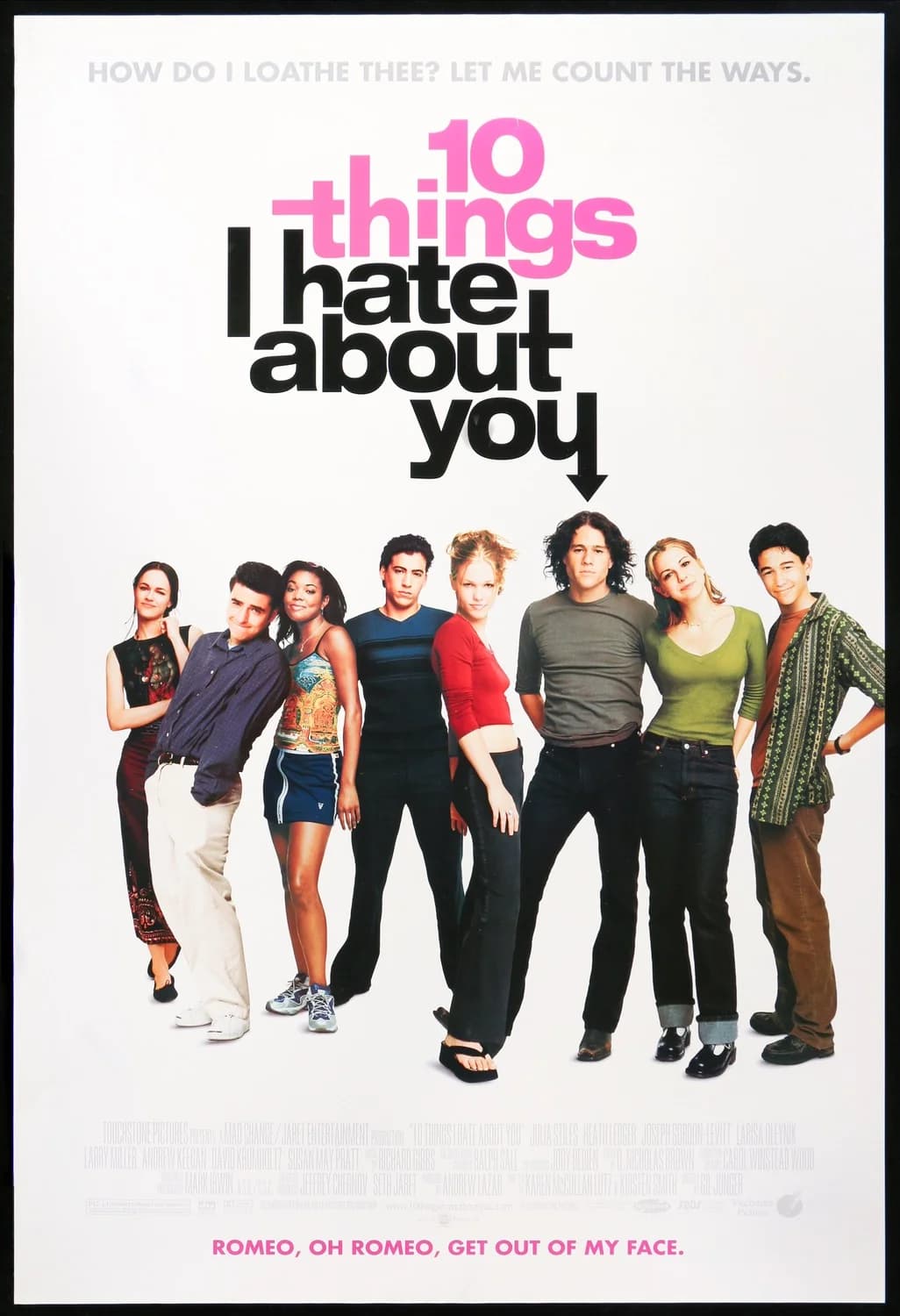
1999 // VHS
10 Things I Hate About You
Sibling rules, a rooftop serenade and one very stubborn Kat — Shakespeare in a school corridor.
1999 // VHS
American Beauty
Lester Burnham, suburban rot and a midlife argument that still stings.
1999 // VHS
Any Given Sunday
Al Pacino's coach anchors the chaos of a film about football turned into product — loud, messy and oddly persuasive.