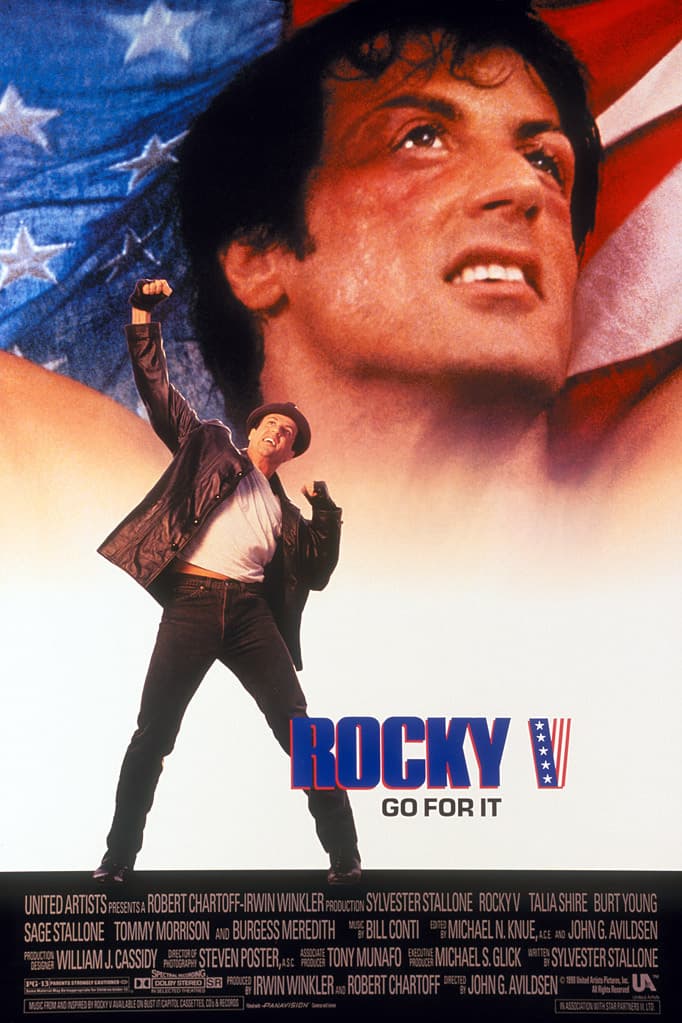
Rocky V
A battered champion, a betrayed protégé and a return to the streets that made him.
// The setup
PLAYBACK STARTED
Rocky V doesn’t try to out-spectacle the earlier films. It drags Rocky back to where he began — exhausted, wounded and suddenly ordinary — and asks whether the man who once fought the world can rebuild a life when everything else has fallen away. Directed by John G. Avildsen and anchored by Sylvester Stallone’s Rocky Balboa, it’s a strange, stubborn entry in the series that’s still worth revisiting for what it tries to do rather than what it does flawlessly.
THE MOVIE
Robert 'Rocky' Balboa is still the reason this movie works
Rocky V throws you straight back into the aftermath of the Drago fight: our hero has been put through the wringer and he knows it. That opening — a man who has been beaten asking himself what’s left — sets the film’s tone more effectively than any dramatics about belts or payday.
What follows is embarrassingly human: Rocky discovers that the money he thought secure has evaporated, that his family’s estate is gone and that they must return to South Philadelphia. It’s a sober, workaday reset that replaces spectacle with scrimping and stubbornness.
Under all of that is a simple engine: loyalty. Rocky wants to protect his family, to honour the memory of his old trainer and to put them back together again. John G. Avildsen, who returned to direct after the original, lets that basic human stubbornness steer the film rather than the franchise fireworks.
THE SETUP
The idea that sets Rocky V in motion
The picture is quietly structural rather than flashy: it begins after Rocky’s defeat in Russia and follows him home, physically and financially diminished. That moment — a champion who has lost more than a fight — becomes the film’s starting pistol.
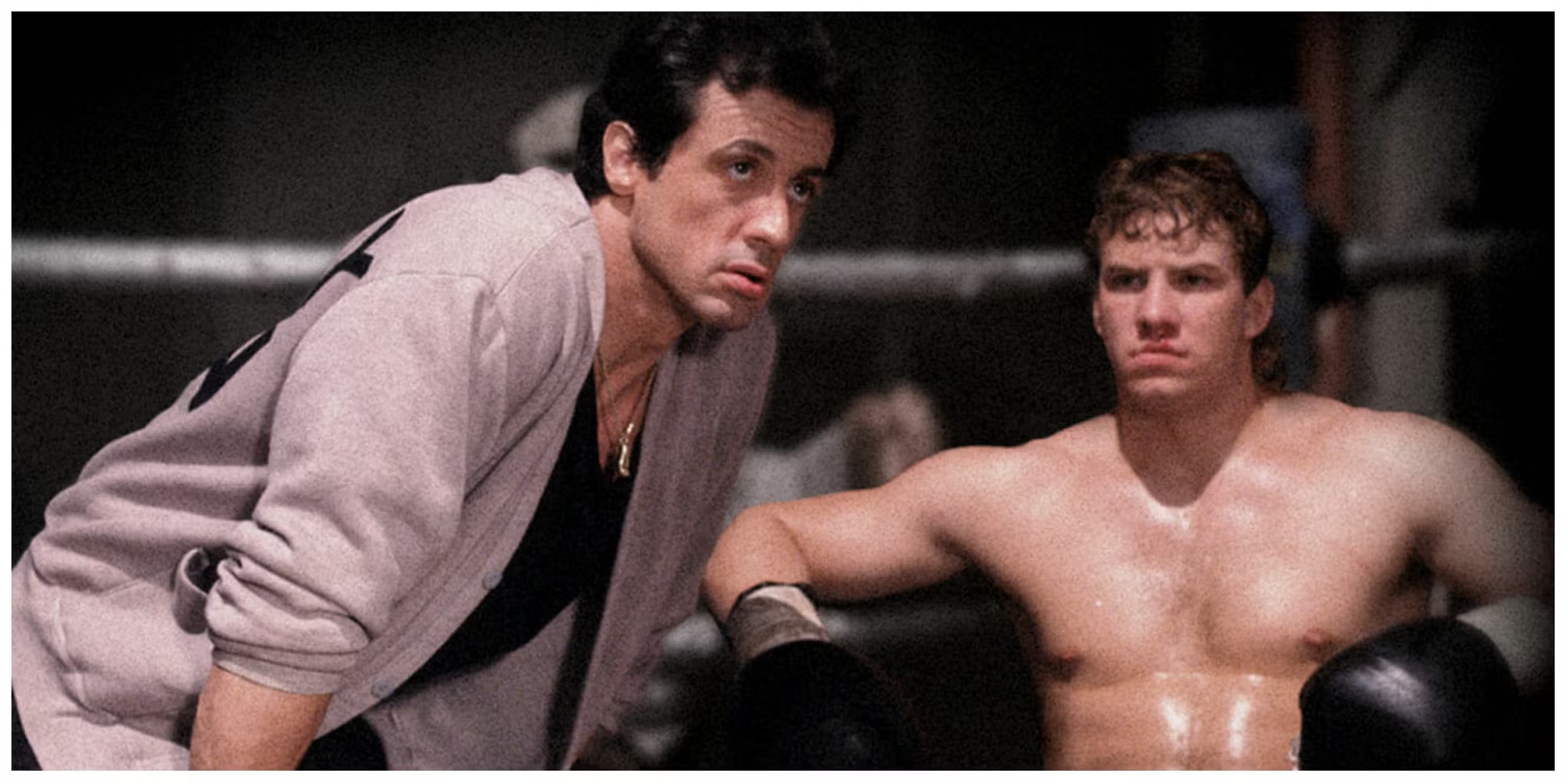
The practical consequences are blunt. Rocky and his family learn their fortune has vanished because of bad investments and unpaid taxes, forcing a return to the neighbourhood that made him. It’s a clever move: taking a man used to arenas and public adulation and putting him back into a life that needs ordinary effort.
Rocky’s route back is to reopen his late trainer Mickey’s gym. There he meets Tommy Gunn, a raw fighter with promise, and takes him on as a protégé. The setup makes the central conflict inevitable: a teacher bringing a pupil into the ring of the world.
The final piece of that idea is the medical twist. Tests reveal Rocky has suffered brain damage and must retire. So the film becomes less about Rocky proving he can still fight and more about him trying to rebuild a role for himself when boxing is no longer an option.
THE CHARACTER
Why Robert 'Rocky' Balboa matters
Rocky here is less the unbeatable everyman and more a stubborn caretaker. The film gives him ordinary losses — money, health, status — and asks him to find dignity in the repair work that follows.
He is motivated by the very things that always defined him: loyalty to his family and to the memory of his trainer. Those loyalties push him to reopen Mickey’s gym and try to do the right thing for the next generation, even when he’s been told he can’t lace up his own gloves again.
That paternal impulse makes Rocky a conduit for the film’s bigger questions: what does a fighter do when he can no longer fight? And how does a father protect his son when the world offers corruption and quick success instead of craftsmanship?
Because this is a mid-series Rocky, the character’s baggage is part of the interest — he isn’t a blank slate. The choices he makes here are grounded in a lifetime of being who he is, which keeps the story honest even when the plot takes him into melodrama.
THE PERFORMANCE
Why Sylvester Stallone's performance matters
Contemporary reviewers noticed something practical about Stallone’s effort: when the film wobbles, his presence is the thing that keeps it steady. The Los Angeles Times specifically said he ‘holds the film together,’ which is a useful shorthand for what he brings here.
That isn’t a claim that every beat works — more that the movie’s emotional through-line needs a recognisable centre and Stallone provides it. When the story turns from public spectacle to private struggle, it needs a familiar face willing to wear the weariness.
The same review also singled out the supporting performances by Talia Shire and Burt Young for their energy, which matters because this Rocky trades in small, lived-in exchanges rather than big set-piece heroics.
Put simply: the picture depends on a lead who can move between stubbornness and tenderness, and contemporary coverage made clear Stallone was the linchpin.
UNDER THE SURFACE
Rocky V has more on its mind than the plot suggests
On the surface the film is a personal story about a trainer and his promising pupil. Beneath that it’s wrestling with the personal costs of fame and the way sport becomes commodified — the idea that success can be packaged and sold until the people involved feel expendable.
Return-to-roots is more than nostalgia here; it’s a moral corrective. Rocky’s fall from wealth and his return to South Philly force a re-evaluation of values: technique, loyalty and community over flash and exploitation.
The mentor–protégé relationship is where the themes concentrate. Tommy Gunn’s rise under Rocky’s wing and his later seduction by a promoter turns the movie into a study of betrayal — not just personal, but the betrayal that happens when business interests treat people as instruments.
There’s also a darker current about health and decline. Rocky’s enforced retirement after medical tests and the family tensions that follow give the film a sober undertow: ageing, vulnerability and the hard arithmetic of protecting those you love.
THE FILMMAKING
How Rocky V was put together
There’s a deliberate return-to-form behind the camera as well as on screen: John G. Avildsen, who directed the original Rocky, came back to steer the fifth instalment. That continuity matters because it keeps the film’s priorities grounded in the kind of intimate, character-led storytelling he favours.
Production was rooted in Philadelphia with principal photography running from mid-January into early May 1990. Shooting where the story lives helps the movie feel honest about its working-class setting rather than tacked-on.
The result is not a flashy studio exercise but a project that lives or dies by its scenes of small daily life and the performances the camera trusts to carry them.
In short: the filmmaking choices underline the film’s intention to step away from spectacle and back towards the domestic and the local.
PRACTICAL EFFECTS
The effects work that gives Rocky V its physical personality
Rocky V leans on real-world production choices rather than trickery. For instance, a major arena fight was staged at the Philadelphia Civic Center and shot over several days with a very large crowd of extras — the kind of practical staging that gives a bout a lived-in sense of scale.
The physicality of the fights carried genuine risk. Two stunt performers later filed lawsuits alleging significant injuries sustained during filming, which underlines the production’s reliance on real stunts rather than dropping into obvious CGI or shortcuts.
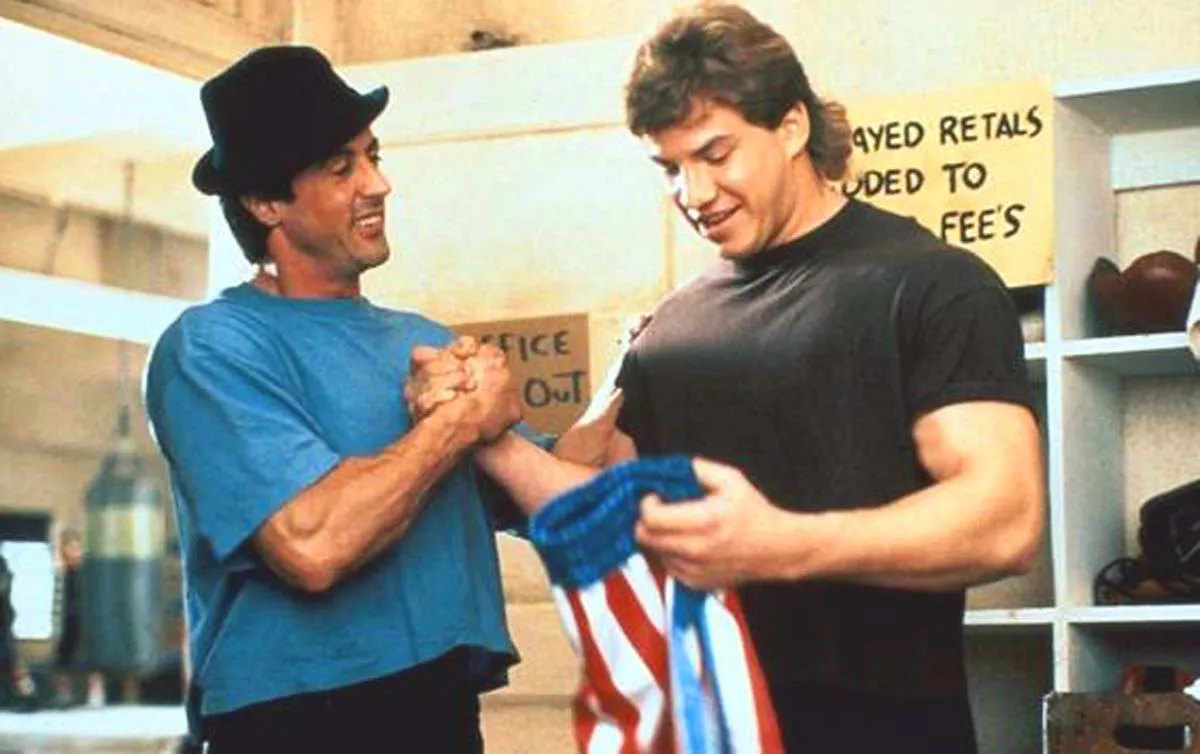
Another pragmatic choice was casting a real professional boxer, Tommy Morrison, in the role of Tommy Gunn. That decision brings a degree of authenticity to the in-ring movement and makes the fights read more like earned athletic contests.
Taken together, those decisions make the boxing in Rocky V feel tactile and immediate — even when the script pushes the story into melodrama, the physical sequences keep one foot in reality.
PURE 80S
Rocky V could not belong to any other decade
The film arrives at a moment when studio franchises commanded big budgets and even bigger paydays: contemporary reports put the production cost above $30 million and noted that Stallone’s fee was unusually large, a reminder of the era’s blockbuster economics.
But interestingly Rocky V deliberately dials back the spectacle that had swelled through the 1980s. Instead of chasing ever-larger opponents and grander set pieces, this instalment returns to a domestic, debt-era story — a movie that feels more preoccupied with bills than belt ceremonies.
That choice reads like a reaction to the late-80s culture of excess: the film’s concern with financial ruin and the commodification of sport ties it to its moment, when the fallout from big-money scandals was still fresh in the public mind.
So while the budget and salaries tell one story about the decade, the movie’s temperament tells another. It’s a late-80s/early-90s franchise picture that wants to remind you what made the series human in the first place.
WATCHING IT NOW
What has aged — and what hasn't
Part of Rocky V’s modern reputation is that Stallone himself later said he regretted aspects of how the film handled Rocky’s mid-career arc. That admission helps explain why the movie has always split audiences: it was ambitious in scope but not entirely satisfied with its own choices.
What survives best is the domestic thread — the family and father–son conflict. Those scenes have a blunt, messy truth: they don’t rely on spectacle, and their conflicts are still recognisable to anyone who’s had to balance pride, protection and a child’s rebelliousness.
Where the film feels dated is its uneven negotiation between franchise expectations and a quieter, more personal story. That tension was part of its initial problem and it still makes the movie an awkward, fascinating watch rather than a seamless success.
Finally, Rocky V’s place in the series — as the direct predecessor to Rocky Balboa (2006) — gives it an odd afterlife. Even if some choices misfired, they became part of a longer arc that the later films would respond to.
THE LEGACY
Why Rocky V still matters
Rocky V underperformed compared to its predecessor and, importantly, that underperformance is part of its story: it’s often cited as one of the reasons Stallone returned to the character years later, reshaping where the franchise would go.
The film’s initial critical reception was mixed-to-negative and it attracted several Golden Raspberry nominations, but that negative chapter is part of why it remains talked about — not as a footnote, but as a messy pivot point in the series.
There’s also a fan-side curiosity: director John G. Avildsen circulated a workprint or alternate cut online in the early 2000s, which gave commentators and fans something to debate and compare to the theatrical release.
Finally, the movie’s role in the long arc of Rocky — as the story that forces the character into humility and confrontation — means it matters as a connective tissue. You don’t have the later returns without this stumble.
THE VERDICT
Does Rocky V still hold up?
Yes — but with big caveats. Rocky V is not the knockout many hoped for, and it openly trades the franchise’s arena-sized spectacle for a smaller, more domestic and sometimes clumsy drama. If you come expecting another Rocky IV you’ll be disappointed; if you come willing to sit with a wounded man trying to do honest work, there’s real material here.
The film’s key ingredients explain both its strengths and its frustrations: Rocky returns from the Drago fight altered, discovers financial ruin, is diagnosed with brain damage and must retire, then tries to rebuild by reopening Mickey’s gym and training Tommy Gunn. That sequence of losses and pragmatic responses gives the film a rare gravity for a boxing picture.
The mentor–protégé arc — Tommy’s rapid rise and his seduction by promoter George Washington Duke — supplies the personal betrayal that gives the climax emotional bite. And Adrian’s insistence on Rocky’s retirement after the medical tests keeps the stakes terrifically human; this isn’t about glory so much as survival and responsibility.
Put simply: watch Rocky V if you’re interested in character over spectacle and the uneasy middle chapters of a life. It’s flawed, sometimes awkward, and unevenly executed, but it rewards a viewer who wants to see what happens when a defeated champion has to learn how to be a husband, a father and a teacher all over again.
Share this movie
// Keep watching
More movies from the 90s
If Rocky V is your kind of movie, there's plenty more on the shelves worth rewinding.
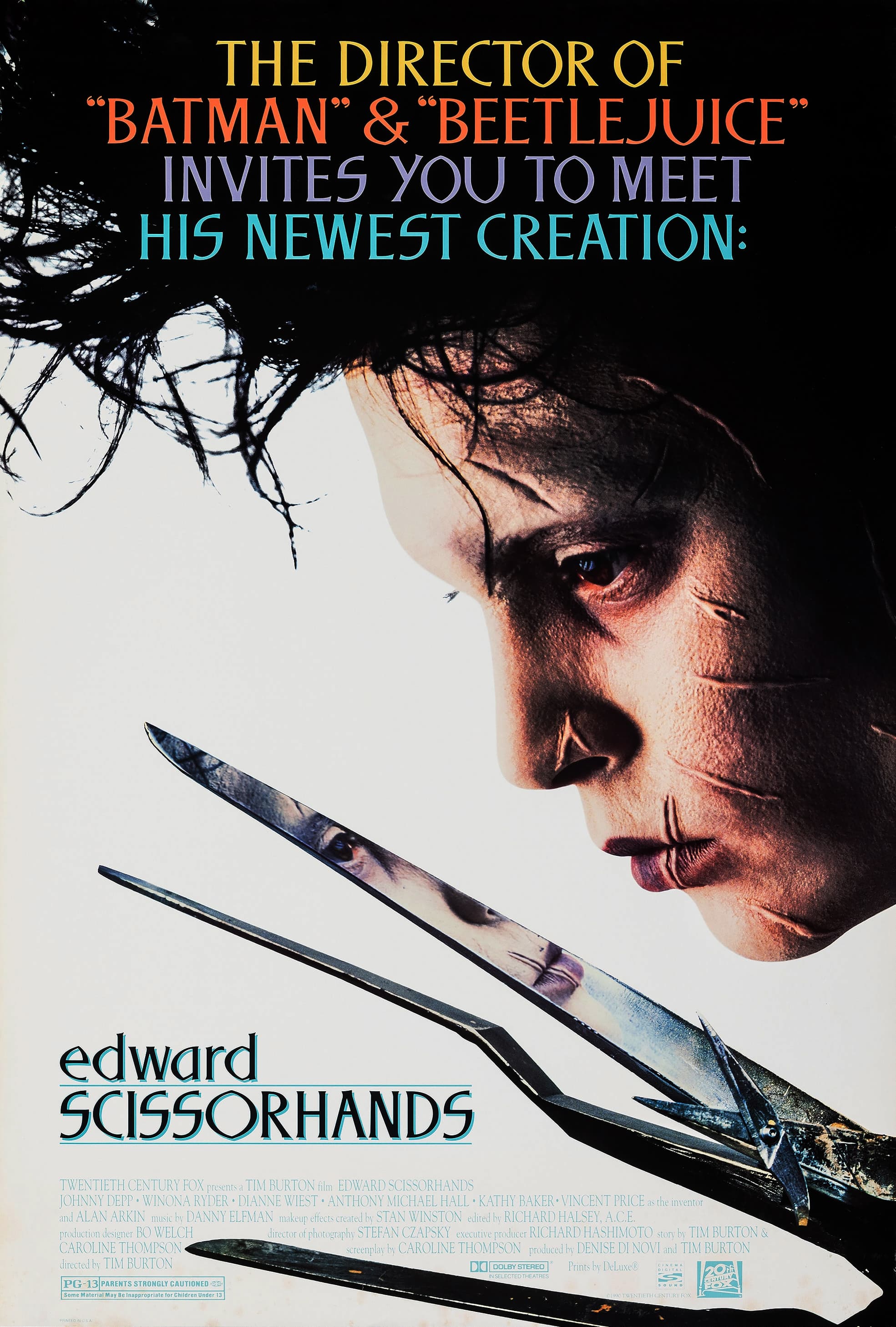
1990 // VHS
Edward Scissorhands
A fairy tale about a man who can’t quite touch the world — and the neighbourhood that can’t quite handle him.
1990 // VHS
Ghost
A murder mystery disguised as a love story — with a man who won’t stop watching over the person he loves.
1990 // VHS
Total Recall
Memory, muscle and a very faulty holiday package — with Mars on the itinerary.