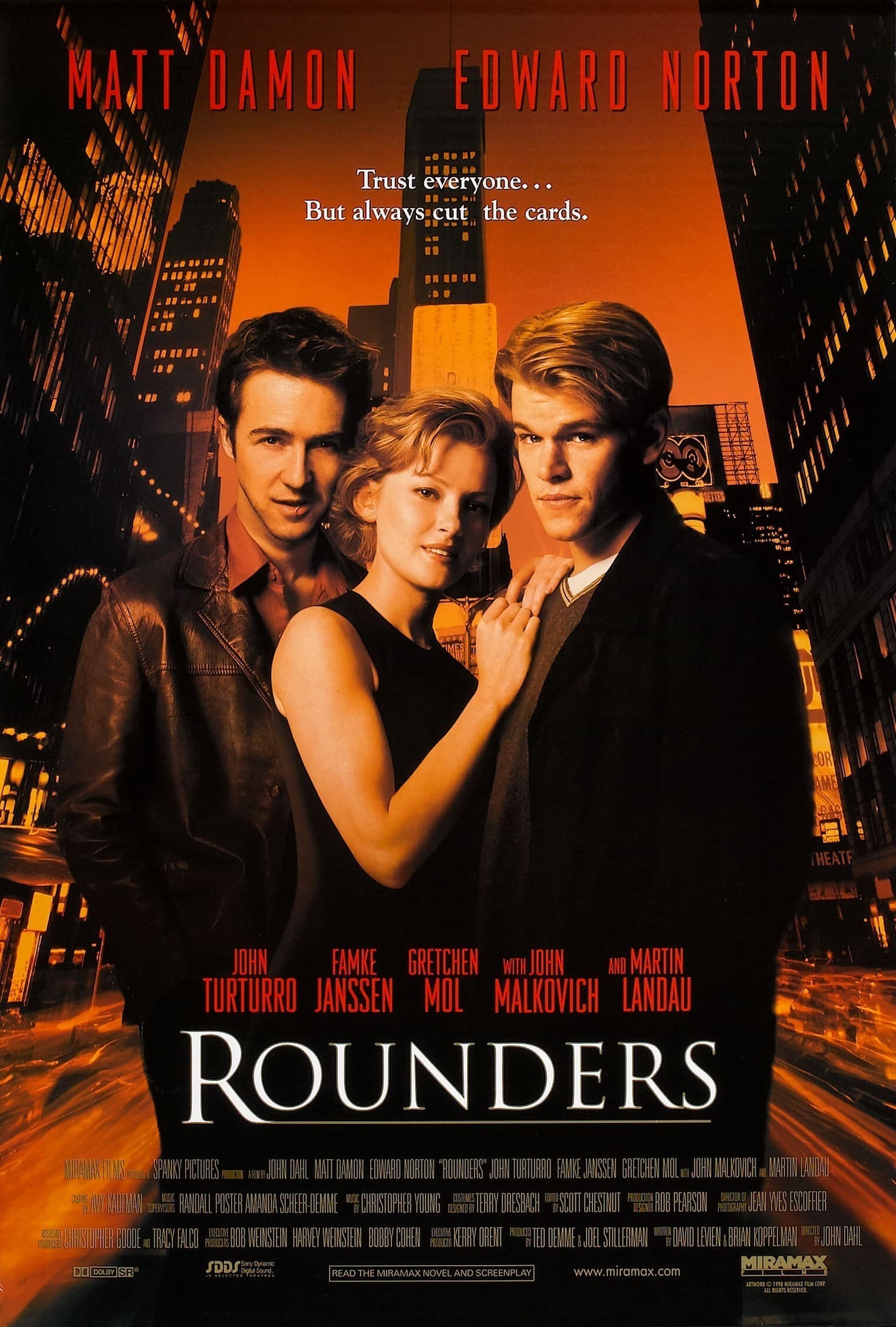
Rounders
A law student's double life, an impossible friend, and a game that keeps calling him back.
// The setup
PLAYBACK STARTED
Rounders still feels like a movie about identity pretending to be a movie about poker. Under John Dahl’s steady hand the cards are never the point; they’re the way we see a man arguing with himself. Revisit it and you’ll find a sharp, sometimes scrappy drama that knows how to make small-room tension feel enormous.
THE MOVIE
Mike McDermott is still the reason this movie works
What keeps people talking about Rounders isn’t a single scene or a memorable line; it’s the central tug-of-war inside Mike McDermott. He’s a New York law student who has tried to leave the underground poker life behind, and the movie is mostly about that promise to himself and how easily it frays.
The film’s engine is straightforward: when Lester 'Worm' Murphy is released from prison, old loyalties and old trouble come with him. Worm’s return is the practical excuse for dragging Mike back into illegal, high‑stakes games — but it’s also the human pressure test for Mike’s attempt at a straight life.
That tension — wanting a legitimate future while still being pulled toward a risky subcultural identity — is what Rounders trades on. John Dahl directs the piece with a focus on those small, combustible moral choices, and Matt Damon’s Mike sits in the middle of them, trying to decide who he wants to be.
THE SETUP
The idea that sets Rounders in motion
Rounders chooses friction over spectacle. The film stages stakes and conflict at the poker table rather than in car chases or shoot‑outs, so most of the action comes from how hands are played and how people read one another.
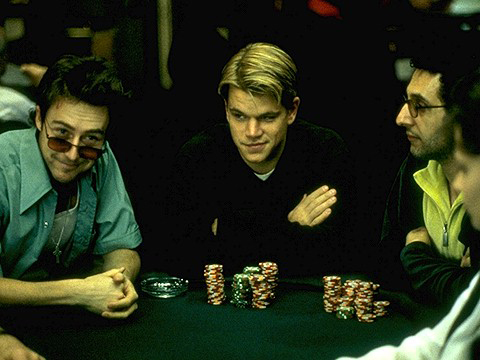
That choice keeps the movie intimate. A single bet can feel like a challenge to a man’s plan for his life, because the cards are the job for people like Mike — they are identity as much as income.
There’s also a clear external danger embedded early on: Mike’s earlier, large loss to a connected Russian gambler creates a real debt and a tangible antagonist in Teddy KGB. It’s the kind of unpaid score that makes the poker world feel dangerous and consequential, rather than a game played for thrills.
Those pieces — poker as primary action and the lingering debt to Teddy — give the story its forward motion without ever needing explosive set pieces.
THE CHARACTER
Why Mike McDermott matters
Mike matters because he’s believable as someone trying to be two people at once. On the one hand he’s a law student aiming for a conventional future; on the other he’s a former underground player whose sense of self is threaded through cards and the communities that surround them.
That split is the movie’s human friction. Mike isn’t an abstract ‘gambler’ — he’s a guy making an ordinary-sounding promise to change, and then negotiating the price of that change when old friends and old debts appear.
Lester 'Worm' Murphy exists to complicate that bargain. Worm is both catalyst and antagonist: compulsive and morally flexible, he pulls Mike into situations that test loyalty and make the straight life harder to keep.
Even the supporting relationships help define Mike. Jo, his girlfriend, is the straight-life alternative; her presence keeps the stakes personal and reminds the audience that Mike’s choices matter outside the poker rooms.
THE PERFORMANCE
Why Matt Damon's performance matters
Contemporary notices singled out Matt Damon as the film’s central, likable anchor, and that matters because Rounders asks you to spend a lot of time inside Mike’s head. The part needs a lead you can follow and care about.
Because the film relies heavily on voice‑over and poker sequences to carry perspective and tension, the lead performance acts as a kind of stabiliser: someone for the viewer to trust while the dicey world of underground gambling does its work.
Damon’s casting gives the narrative a readable centre. You don’t need to agree with every decision Mike makes to understand why he makes them.
Put bluntly: a movie that balances character drama with niche subcultural material needs a believable centre, and contemporary reviews pointed to Damon as providing it.
UNDER THE SURFACE
Rounders has more on its mind than the plot suggests
Underneath the card tables the film is arguing about reinvention versus addiction. Mike wants to be someone else — a professional, respectable — but the poker world offers a ready-made identity that’s hard to walk away from.
Friendship and loyalty complicate that personal striving. Worm’s loyalty to Mike is messy; it’s the sort of friendship where helping a mate can also be self‑destructive, and the movie leans into that difficult blur.
The script also enjoys the old gambler’s argument: how much is skill and how much is luck? Rounders stages that debate through repeated hands and table dynamics so that you’re constantly watching choices, tells and probabilities rather than waiting for a plot shock.
Finally, it’s a picture about subcultural identity — people who belong to a world where reputation, risk and reading others matter more than a conventional résumé. The film treats that world with attention, not caricature.
PURE 80S
Rounders could not belong to any other decade
Rounders arrives at the tail end of the 1990s and fits neatly into that decade’s taste for grounded dramas about insiders — people who exist inside unforgiving microcosms rather than broad, blockbuster worlds.
Reviewers and later critics have placed it alongside other late‑90s films that took subcultural detail seriously and wrapped those details in neo‑noir moods and moral choices.
That timing helps explain the film’s approach: a compact, somewhat dour drama that privileges character and atmosphere over spectacle, which was a recognisable strand of cinema as the millennium turned.
In short, its late‑90s sensibility is less about fashion and more about a storytelling preference: small, morally complicated dramas about people with a code of their own.
WATCHING IT NOW
What has aged — and what hasn't
If you watch Rounders as a poker primer you’ll spot the age. Modern commentators note that the film’s dense poker jargon and some simplified takes on tournament play feel dated to serious players.
That technical drift doesn’t erase the movie’s interpersonal clarity. The friendship between Mike and Worm, and Mike’s struggle between a straight life and the pull of the table, still reads plainly for viewers today.
Also worth noting: the film’s structure leans on voice‑over and repeated poker hands to communicate perspective and tension. That technique makes the stakes clear even when the finer points of play have moved on.
So, for present‑day audiences: expect an occasional poker detail that won’t match current tournament realities, but also expect the core human conflicts to land.
THE LEGACY
Why Rounders still matters
Rounders built a steady following after its theatrical run and became a touchstone within the poker community. Players and journalists often point to it when recalling the late‑90s and early‑2000s surge of interest in poker.
The film gets credit in many poker conversations for helping nudge public curiosity toward the game before the major boom of the early 2000s. Professionals and oral histories repeatedly reference Rounders when describing that cultural shift.
It also had a modest afterlife on home formats: the film was reissued on Blu‑ray as part of Miramax catalog releases, which helped new viewers discover it long after 1998.
All of which means Rounders endures not as a mainstream blockbuster memory but as a persistent cultural reference for people interested in poker and compact, character‑driven gambling dramas.
THE VERDICT
Does Rounders still hold up?
Yes — for a particular kind of viewer. If you want a fast primer on modern poker or a technicolour adrenaline rush, this isn’t that film. But if you want a tight character drama where the game reveals who people are, Rounders still does the job.
The movie is built around Mike McDermott’s split life: a law student trying to keep a straight future while old friends and an unpaid debt to a dangerous opponent pull him back into play. Those conflicts remain easy to follow because the film uses poker hands as its dramatic engine rather than relying on spectacle.
Lester 'Worm' Murphy’s return is the plot’s practical detonator, forcing choices that expose loyalties and compromises. Likewise, the debt to Teddy KGB gives the stakes real teeth — it’s not just pride on the line but safety and consequence.
So should you watch it now? If you enjoy character-led crime dramas about people who live by a code and occasionally self-sabotage, Rounders is worth the table. It’s less about teaching you to win and more about showing why some people can’t walk away — and that, in the end, is what the film remembers best.
Share this movie
// Keep watching
More movies from the 90s
If Rounders is your kind of movie, there's plenty more on the shelves worth rewinding.
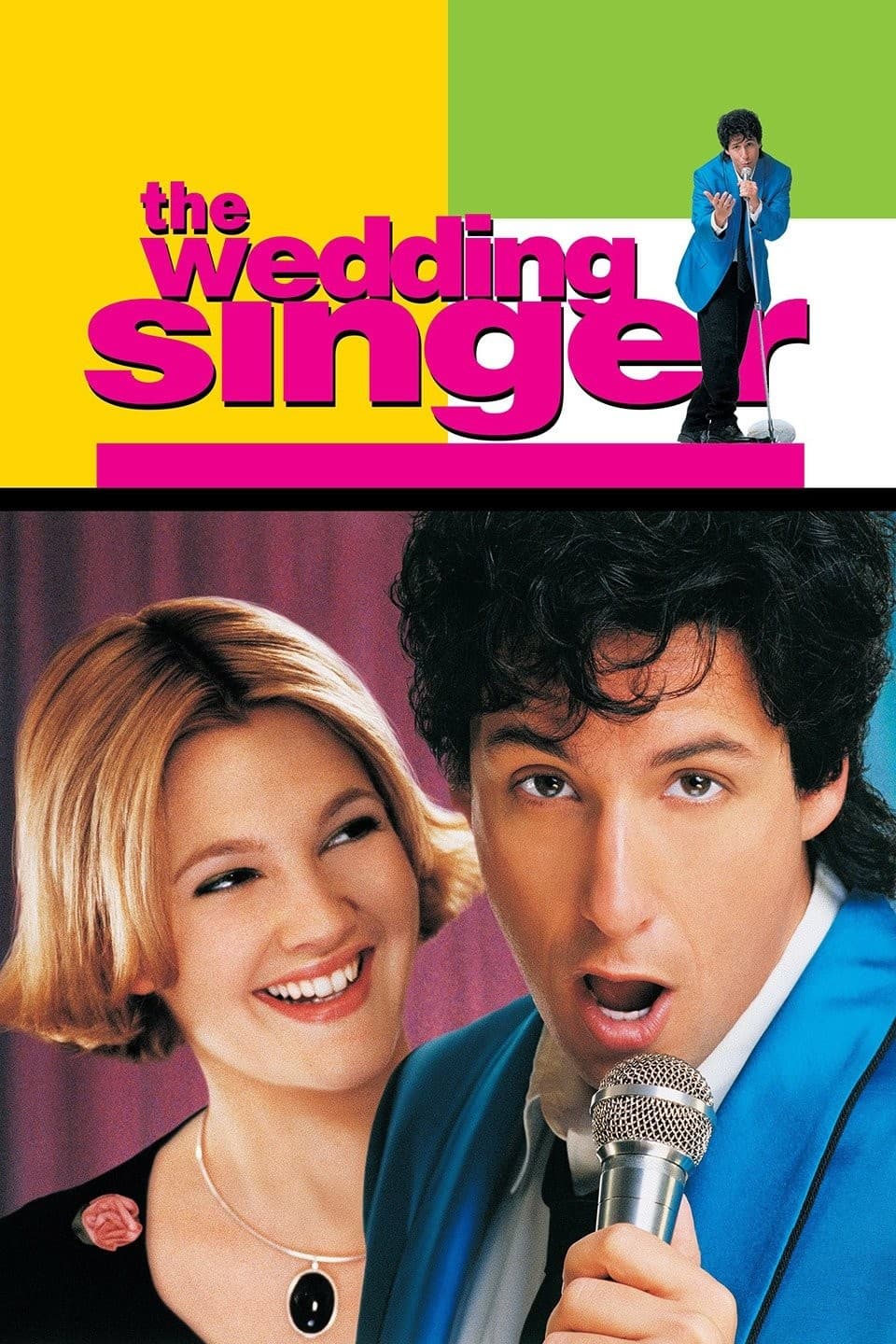
1998 // VHS
The Wedding Singer
A love story wrapped in 1980s pop — and carried by one very earnest wedding crooner.
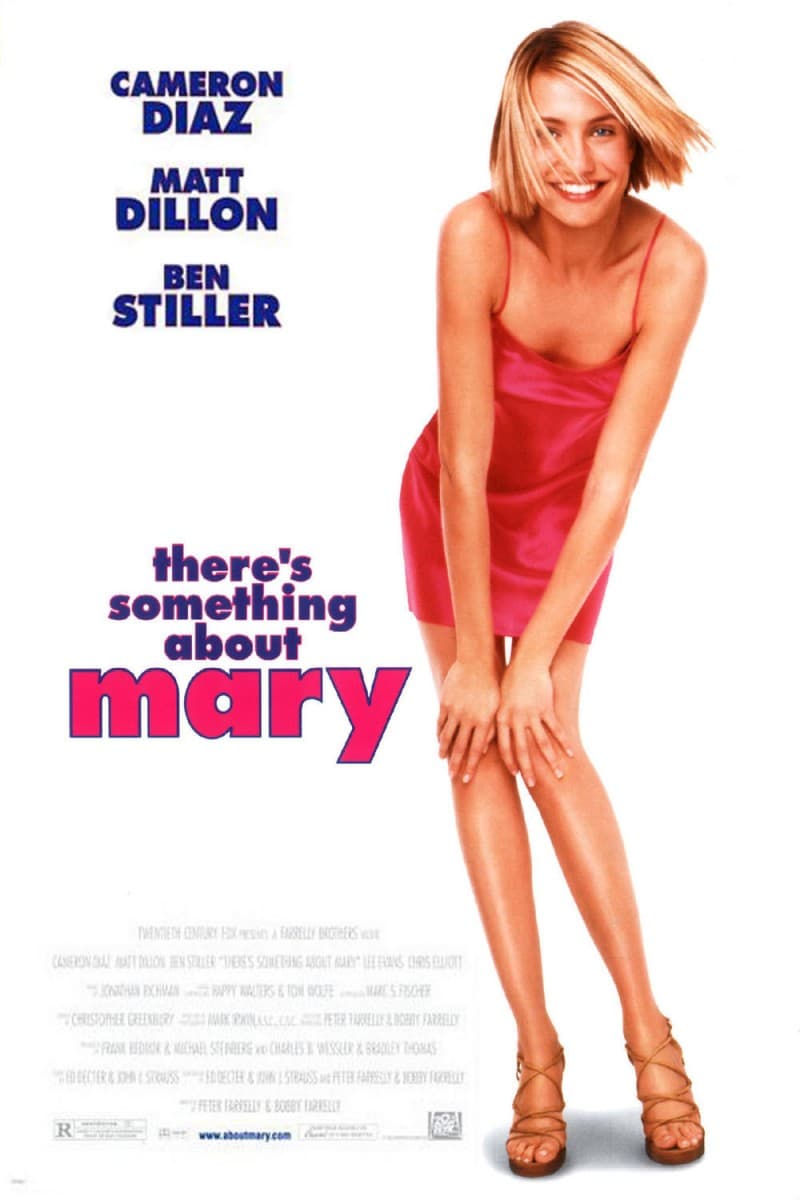
1998 // VHS
There's Something About Mary
Romantic obsession, awkward masculinity and a hair‑gel gag you can't unsee.
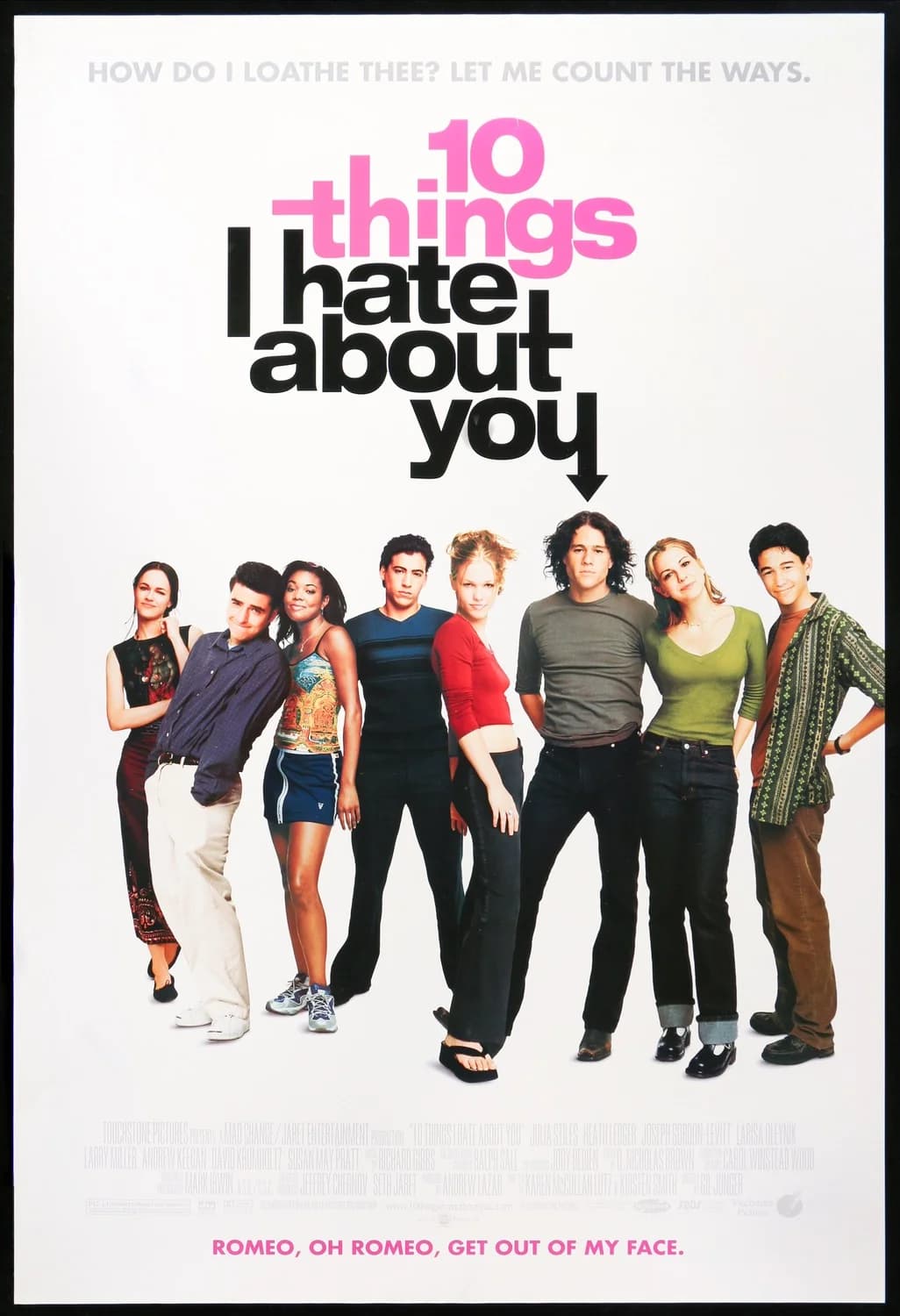
1999 // VHS
10 Things I Hate About You
Sibling rules, a rooftop serenade and one very stubborn Kat — Shakespeare in a school corridor.