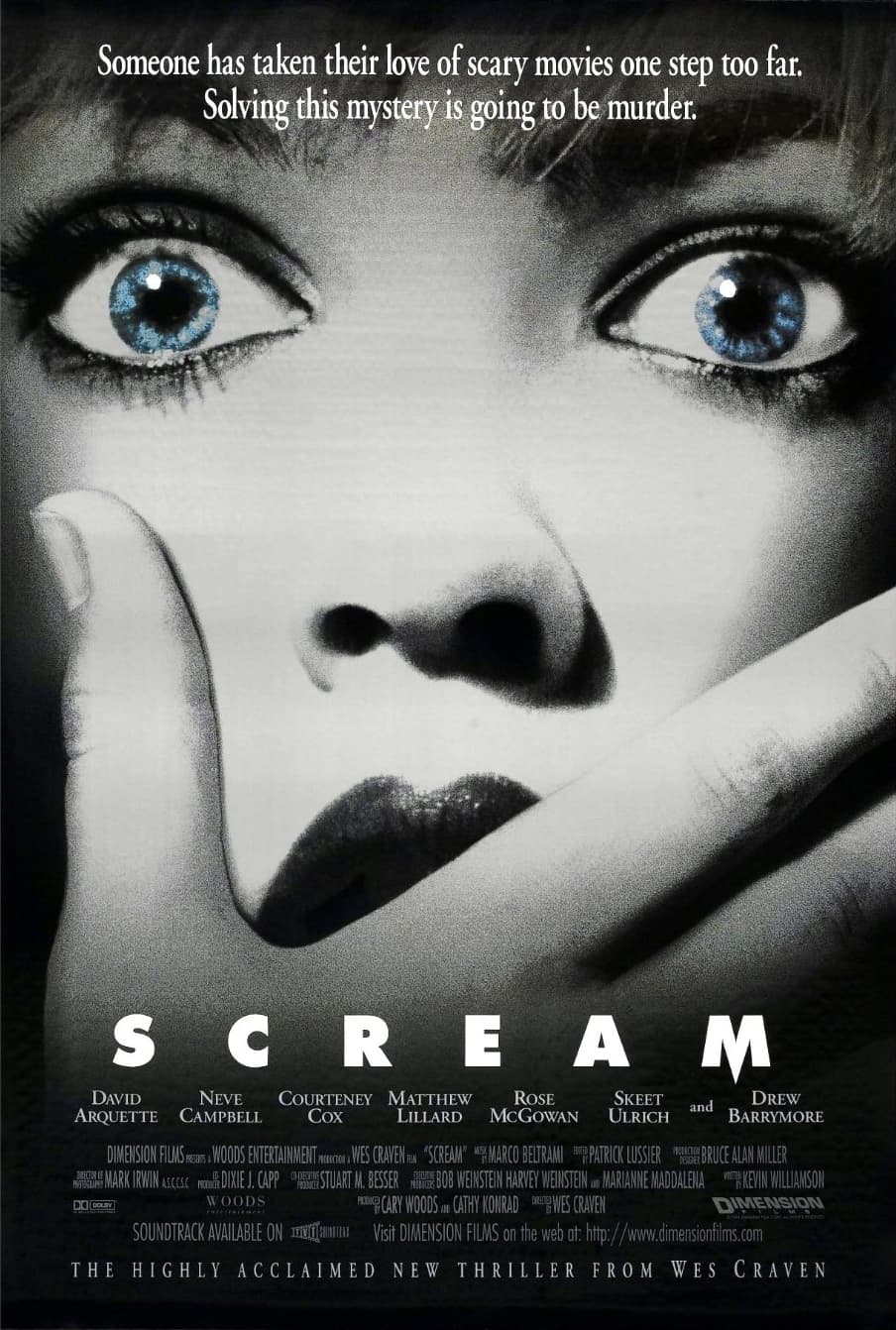
Scream
A slasher that knows its own rules — and still makes Sidney Prescott fight them.
// The setup
PLAYBACK STARTED
Scream begins with a phone call and doesn't waste a second convincing you this is a horror film that thinks about horror films. Wes Craven and a sharp young cast turned a small-town murder mystery into something that was funny, clever and properly scary all at once. If you remember the opening sequence — you know exactly why you should watch it again.
THE MOVIE
Sidney Prescott is still the reason this movie works
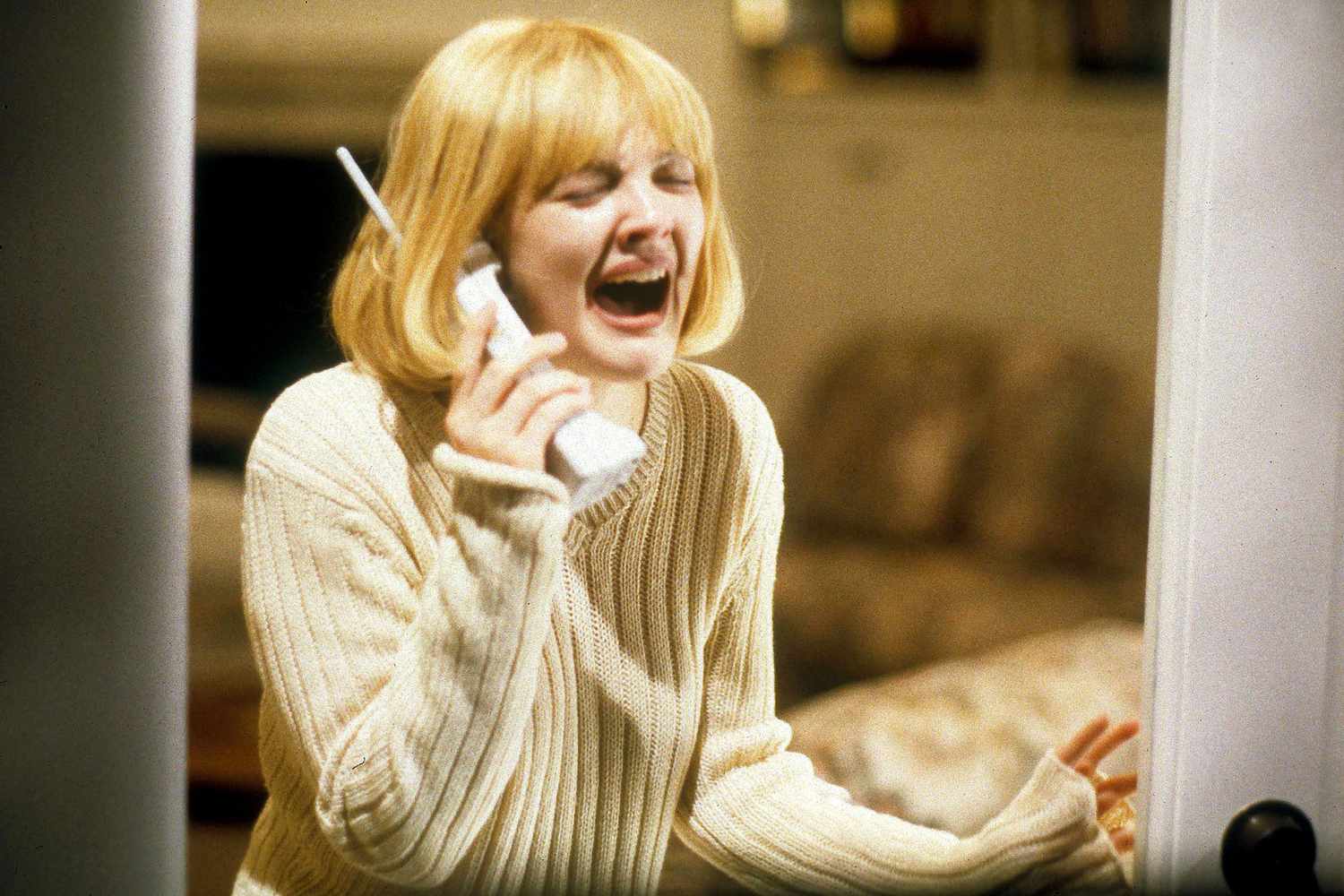
Scream opens with a pre-credits sequence in which teenager Casey Becker is taunted on the phone and then murdered — a brutal little gut-punch that immediately tells you two things: this film will be playful about its genre and it will not be sentimental about its victims. That opening is the engine; it establishes danger and gives the whole town of Woodsboro a reason to be on edge.
From that moment the small California community becomes the focus of a police investigation and intense media attention, which the film uses to turn ordinary suburban life into a landscape for suspicion. The story keeps redirecting who we trust; your mates, your teachers and even the local news can be folded into a murder mystery.
At the centre of it is Sidney Prescott — Neve Campbell's character — who is coping with the approaching anniversary of her mother's murder and quickly becomes a target of the new killer. Wes Craven directs all of this with a clear appetite for both scares and smart commentary, and the result is a horror movie that talks about horror movies while making you care about one woman surviving them.
THE SETUP
The idea that sets Scream in motion
The set-up is satisfyingly simple and smart: after the initial killings the sleepy town of Woodsboro becomes the scene of a police inquiry and relentless media scrutiny. That pressure creates atmosphere without needing a dozen jump scares.
Sidney Prescott is established early on as the central figure. She's living with the fact her mother's murder still hangs over her and, almost immediately, she finds herself in the killer's sights again. The personal stakes are held in place by that family history.
Scream doesn't play fair in the way a straight whodunnit might; instead the plot keeps redirecting suspicion among Sidney's friends, family and the community. The film dresses a classic slasher in a whodunit's clothes — you get jumpy set-pieces and an actual mystery to solve.
That mixture is why the premise works: it's both a slasher's immediate threat and a game of pointing fingers. You care about survival and you want to know who did it.
THE CHARACTER
Why Sidney Prescott matters
Sidney Prescott is the film's anchor. Neve Campbell plays her, and the screenplay gives Sidney a history — the unsolved killing of her mother — that makes her more than a generic final girl. That past isn't just backstory; it's what she keeps having to live through.
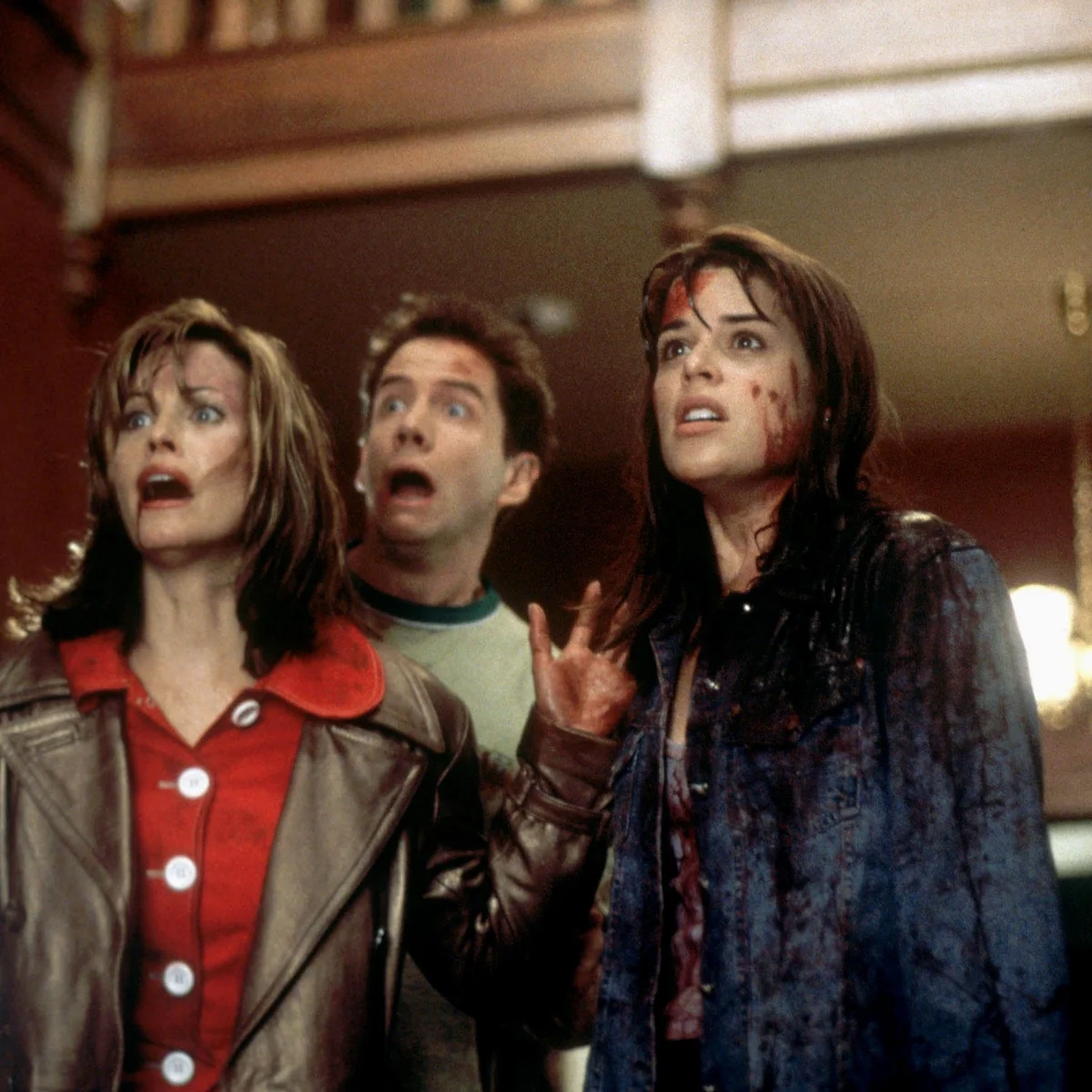
Because Sidney is both traumatised and resourceful, the movie can do two things at once: it puts her through terrifying situations while letting her respond in ways that feel earned. She's the person the entire whodunit revolves around, and her survival feels like more than a plot mechanic.
Sidney's presence also lets the film explore how a community and the media treat someone who has already been hurt. The story's suspicion and intrusions always come back to her, which keeps the movie emotionally centred even as it pokes fun at horror conventions.
Put simply: Sidney matters because the film makes her matter. Without that, the jokes and the genre-chat would feel thinner.
THE PERFORMANCE
Why Neve Campbell's performance matters
Contemporary coverage singled out Neve Campbell as an effective central figure and praised the young ensemble, which matters because Scream depends on you accepting Sidney as both vulnerable and capable. The reviews' emphasis on Campbell tells you the film's emotional spine was noticed at the time.
That attention wasn't just about star wattage; it pointed to how the casting allowed the story to keep returning to Sidney without losing dramatic credibility. When the plot moves through suspicion and fear, the audience already has a person to care about.
So even if you came for the meta jokes or the opener, having a clearly drawn central character gives those elements weight. The performance provides the movie's human anchor.
Which is why critics pointing to Campbell in contemporary reviews is worth remembering: Scream isn't just clever, it's built around someone you can follow.
UNDER THE SURFACE
Scream has more on its mind than the plot suggests
On the surface Scream is a slasher with a clever whodunnit twist. Underneath, it’s playing a game about genre itself — a self-aware, meta commentary that talks back to horror movies and the rules they teach characters to follow.
The film also turns a critical eye on media exploitation. As Woodsboro becomes a headline and a spectacle, the movie asks who benefits when violence is turned into entertainment and news copy.
Finally, there's a steady sense of suburban vulnerability. The picture makes a comfortable town feel exposed; ordinary neighbourhoods and familiar people are suddenly potential threats, which is where the film finds much of its tension.
Those themes — meta-commentary, media attention and suburban unease — give Scream more to chew on than a straightforward slasher, and they help the scares land with a little extra bite.
THE FILMMAKING
How Scream was put together
Behind the film's clever surface are practical production choices that keep it moving: Mark Irwin is credited as director of photography, Patrick Lussier as editor and Bruce Alan Miller as production designer. Those roles make the movie feel consistently put together rather than scattershot.
Naming the crew doesn't explain everything the film does, but it reminds you Scream was a crafted effort — camera, cutting and sets all had people shaping the experience so the script's jokes and shocks could land cleanly.
Wes Craven's direction ties the pieces together; the filmmaker's willingness to allow humour and horror to coexist is the glue that keeps the movie from tipping too far into either camp.
All of which makes Scream feel like a deliberate, controlled exercise — clever without being sloppy.
PURE 80S
Scream could not belong to any other decade
Scream's journey from Kevin Williamson's script sale into Miramax/Dimension's hands is very much a 1990s story: it illustrates how independent-leaning genre material could find backing and distribution that turned into something much bigger. That financing and studio landscape mattered to the film's existence.
Released on December 20, 1996, Scream helped revive mainstream interest in the slasher subgenre at a time when studios were willing to gamble on mid-budget, high-concept horror. Its self-referential, postmodern approach felt of-the-moment and helped reset how studios thought about horror.
In other words, the movie sits neatly in the 1990s because of how it was sold, distributed and received — not because of any nostalgic costume detail. Its timing and business path are as much part of its identity as the filmmakers or the script.
That combination — the market opening for smart genre scripts plus a film that played with those expectations — is why Scream belongs to the decade it arrived in.
WATCHING IT NOW
What has aged — and what hasn't
Scream is, in part, a teen movie: its concerns about friendships, flirtation and high-school dynamics still read clearly, which helps younger viewers follow the stakes. That teen element keeps the film accessible to a modern audience.
The opening murder — Casey Becker's sequence — remains a textbook piece of shock-and-awe filmmaking and continues to be the moment people point to when talking about the film. It's succinct, ruthless and still effective at grabbing attention.
The story's structure — a slasher that is also a whodunit — still plays well. The repeated redirections of suspicion among friends and neighbours make the mystery feel engaging rather than routine.
Finally, the existence of an immediate sequel and later franchise entries is evidence that the film set up characters and dilemmas that could be returned to; for modern viewers that continuity offers a route to keep watching if they want more.
THE LEGACY
Why Scream still matters
Scream's commercial and cultural success directly launched a multi-film franchise and related adaptations, which is one plain reason the 1996 film keeps being brought up — it created a narrative that continued on screen and off.
Beyond that, the film is widely credited in retrospective conversations with revitalising the slasher subgenre and popularising a self-aware, postmodern approach to horror. That shift meant subsequent films could be clever about genre in ways Scream made feel commercially viable.
The characters from the original — from Sidney Prescott and Casey Becker to Billy Loomis and Stu Macher — remain the reference points for a lot of the franchise storytelling that followed. They are the faces the later entries kept returning to.
Put simply: Scream matters because it produced both a continuing story and a new way of talking about horror that other films picked up.
THE VERDICT
Does Scream still hold up?
Yes — and here's why, in plain terms. The opening sequence (Casey Becker's murder) still functions as a perfect calling card: it announces the film's willingness to shock and then gives everything that follows a genuine sense of danger. That matters more than nostalgia.
Woodsboro's panic and the way the police and media swarm the case keep the story grounded. The film interrogates how televised news and tabloid attention behave after violent crimes, and that angle gives the plot a contemporary edge beyond jump scares.
Central to the film is Sidney Prescott: Neve Campbell's character is coping with the anniversary of her mother's murder while becoming the new target. Because Sidney is positioned as traumatised but resourceful, the movie's emotional stakes remain persuasive and not merely decorative.
Scream also wears its meta-sense proudly — characters explicitly use horror-'rules' (Randy's explanations) to make sense of events — while the plot keeps redirecting suspicion among friends so the whodunit element stays gripping. If you like a horror that can be clever without losing the fear, this one still earns the ticket.
// Featured in
More about Scream
Share this movie
// Keep watching
More movies from the 90s
If Scream is your kind of movie, there's plenty more on the shelves worth rewinding.
1999 // VHS
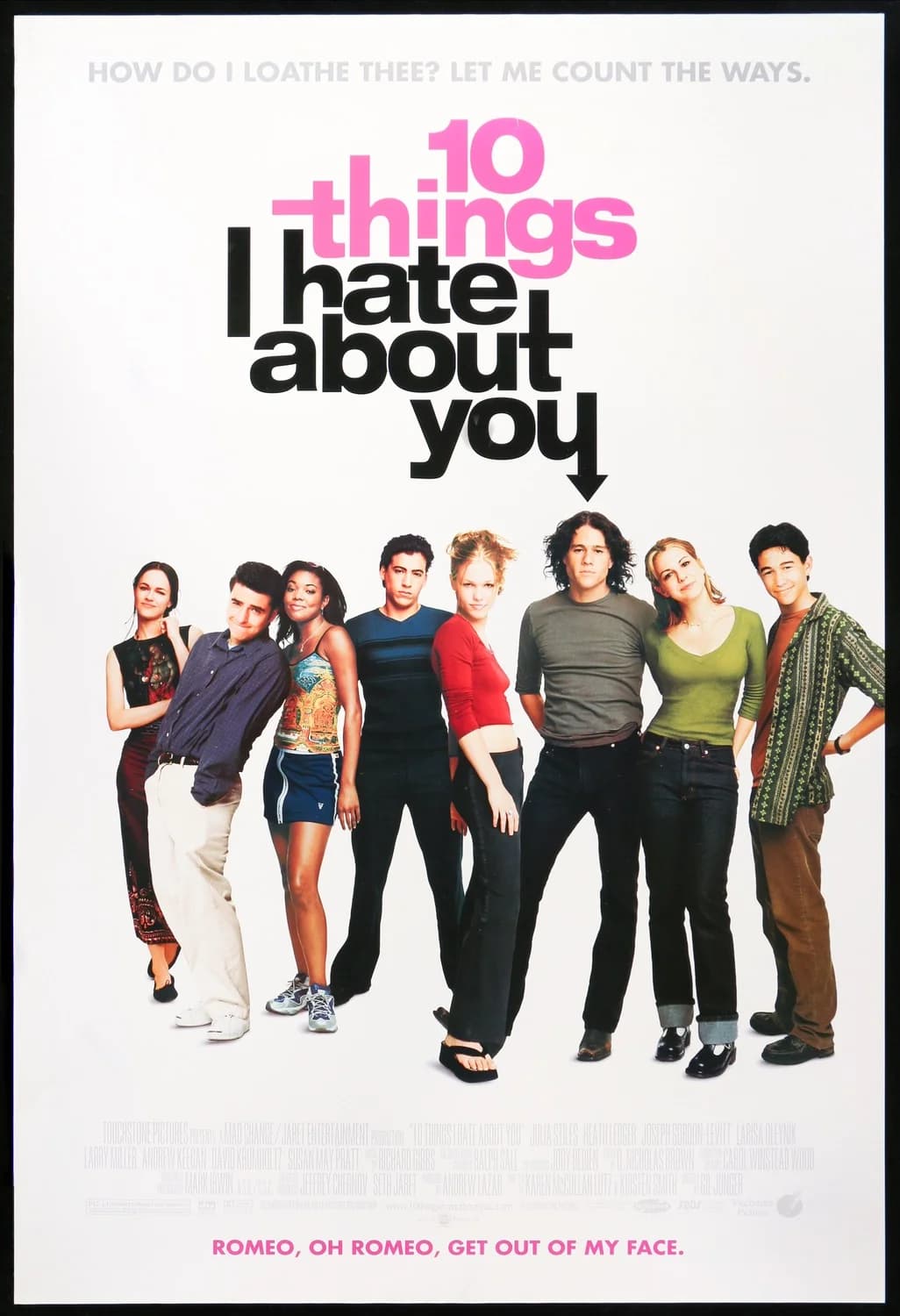
10 Things I Hate About You
Sibling rules, a rooftop serenade and one very stubborn Kat — Shakespeare in a school corridor.
1999 // VHS
American Beauty
Lester Burnham, suburban rot and a midlife argument that still stings.
1999 // VHS
Any Given Sunday
Al Pacino's coach anchors the chaos of a film about football turned into product — loud, messy and oddly persuasive.