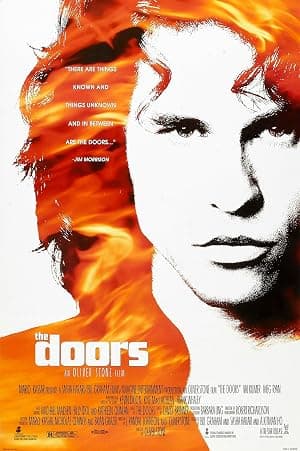
The Doors
Transcendence, tantrums and the theatre of Jim Morrison.
// The setup
PLAYBACK STARTED
Oliver Stone’s The Doors is less a straight biography and more a loud, hallucinatory attempt to put Jim Morrison on screen — full stop. It stitches concert recreations to Morrison’s inner visions and leans into the days when celebrity and self-destruction were practically the same headline. If you’re coming back to it, or wondering whether it’s worth a first watch, the performance at the centre of the film is the quickest way in.
THE MOVIE
Jim Morrison is still the reason this movie works
There’s a simple dramatic promise at the heart of The Doors: take a man who built an entire public persona out of poetry and spectacle, then show what happens when that persona meets real fame. Oliver Stone frames Jim Morrison as someone whose charisma and self-made mythology drive both his art and his undoing.
Stone refuses a cozy, linear life story. Instead the film keeps snapping us back to performances — staged, sweaty concerts cut into hallucinatory sequences that try to give Morrison’s inner life a visible shape. It’s cinema as electric show, and it gives the movie a pulse that’s hard to ignore.
Everything else hangs off that pulse: Val Kilmer as the visible centre, the film’s almost ritualised concert moments, and the recurring idea that celebrity and self-destruction are braided together. Whether you love the movie or not, that gamble is what still gets people talking.
THE SETUP
The idea that sets The Doors in motion
The film maps Morrison’s arc from a UCLA film student into the spotlight: band forms, songs are written and the myth grows until his final days in Paris. That’s the spine — not a scene-by-scene life lesson, but a trajectory from apprenticeship to excess.
Stone spends a surprising amount of screen time on the workshop of fame: rehearsals, songwriting and the small, practical ways Morrison’s poems translate into rock songs. Those dramatised creative moments stop the film from feeling like a string of famous headlines.
Because the movie favours the mechanics of music-making, it also lets the other members of the band exist as working collaborators rather than just background ornaments. You get the sense of an engine — words, keys, guitar — all trying to carry a single combustible figure.
So the setup works because the movie isn’t content to show dates and disasters. It shows process: how performance grows out of private lines and how those lines become public property.
THE CHARACTER
Why Jim Morrison matters
Morrison in this film is less an ordinary biopic subject and more a project of self-construction. The movie constantly reminds you he’s not just a singer — he’s someone who shapes his own legend, performs that legend and then measures himself against it.
That’s central to why the character sticks. The camera is often listening for the contradictions: the poet’s hunger for transcendence, the actor’s hunger for an audience, and the way those hungers collide and combust.
Val Kilmer sits in the middle of that messy business as the man playing Morrison, and part of the film’s strategy is musical: the production separated original Doors instrumentals from Morrison’s vocals and blended Kilmer’s recorded performances into the final mixes. That choice ties the character to the sound in a literal way.
Put simply: Morrison matters here because the film treats persona as material. The bookish, mythmaking, self-destructive elements aren’t optional biography — they’re the dramatic engine.
THE PERFORMANCE
Why Val Kilmer's performance matters
Contemporary reaction homed in on Kilmer for good reason: critics repeatedly singled out his portrayal as the film’s most striking dramatic element. That attention isn’t incidental — Kilmer’s work anchors the film whenever it tips toward spectacle.
Part of that anchoring comes from a technical decision: the production separated the Doors’ instrumental masters and blended Kilmer’s recorded vocals into the mixes for the concert sequences. So what you’re watching is not a pure lip-sync exercise but a constructed vocal presence designed to stand alongside the band’s sound.
Because those vocal tracks were integrated into the film’s soundtrack, Kilmer’s staged performances gain a degree of musical legitimacy. The film gives him enough tools to make Morrison feel like a fully realised stage animal rather than a pasted-on impersonation.
That’s also why praise for Kilmer and for the film’s technical design often arrived together: the casting and the sound choices were part of the same gamble — make Morrison performable and make the performance feel real.
UNDER THE SURFACE
The Doors has more on its mind than the plot suggests
On the surface the film charts a career. Underneath, it’s chiefly occupied with fame and self-destruction — showing again and again how celebrity becomes both stage and trap for Morrison.
It’s also a film about mythmaking: how an artist deliberately constructs an identity and then performs it until the public can’t tell the person from the persona. That performance becomes part of the work itself.
There’s a restlessness in the film between poetry and popular music. Morrison’s poems are treated as raw material: sometimes elevated, sometimes edited down to fuel a hit single. The movie enjoys putting those two registers against each other.
And finally, the movie is a version of 1960s spectacle. It does not only recreate a decade; it dramatises the theatre of counterculture — the big shows, the theatrical excess — as both exhilarating and dangerous.
THE FILMMAKING
How The Doors was put together
Stone leaned on production design and location work to make the songs feel like events. The film recreated multiple 1960s Los Angeles venues and staged concert sequences at real locations, even using the Pulgas Water Temple for an important outdoor scene.
Those choices matter because they treat concerts as constructed theatre rather than background set pieces. Staging the shows carefully gives the film a physical logic: the performances aren’t just loud; they’re designed moments that change the story.
On the crew side, the movie assembled technical heavyweights — Robert Richardson is credited as director of photography, David Brenner and Joe Hutshing as editors, and Barbara Ling as production designer. That combination helps explain the film’s dense production values.
Put together, the filmmaking choices underline the movie’s central idea: this is a film about performance, so every procedural choice pushes it toward that theatrical centre.
PRACTICAL EFFECTS
The effects work that gives The Doors its physical personality
Stone didn’t rely on one neat trick to sell the music; he staged concert reenactments with large numbers of extras and full live concert lighting to make those sequences feel like actual events.
To capture the performances, the production used on-set mobile multi-track recording. That approach let the team preserve the physical movement and vocal nuances of the staged shows for later mixing.
Crucially, the sound team separated original Doors instrumental masters from Jim Morrison’s original vocal tracks and blended in Val Kilmer’s recorded vocals for several sequences. That technical decision makes the on-screen singing feel integrated rather than merely mimed.
Those practical techniques — bodies, lights, real recordings — are the film’s way of grounding surreal moments in something tactile.
PURE 80S
The Doors could not belong to any other decade
Although released in early 1991, The Doors slots neatly into Stone’s early-1990s phase, a period where he pushed formal experimentation and sonic intensity in his films. It feels of a moment when directors were happy to make big, sensory statements about larger-than-life figures.
The movie also arrived at a moment of renewed public interest in the band and in Morrison’s mythology. Its release helped drive a commercial revival of The Doors’ recorded work and refreshed the conversation around Morrison as a cultural figure.
Those two things together — an auteur’s loud, experimental impulse and a broader appetite for revisiting 1960s rock legends — explain why the film landed where it did in the early 1990s.
In short: the movie is a product of its moment not because it imitates fashions, but because it shares the decade’s appetite for spectacle and myth re-evaluation.
THE LEGACY
Why The Doors still matters
At the time of its release the film helped reignite commercial interest in The Doors’ catalogue and played a role in the band’s early-1990s revival. For a new generation the movie reopened the Morrison conversation.
Critical reaction was mixed in ways that have kept the film interesting. Reviewers praised Kilmer and the film’s production values while also taking issue with historical liberties and some choices in Morrison’s portrayal — a split that keeps the film in argument, not museum stasis.
The movie’s other legacy is more institutional: it’s frequently referenced in surveys of Stone’s work as the director’s first big project of the 1990s and for the stylistic directions he refined afterward.
Taken together, these strands explain why the film remains discussed: it touched the music, provoked debate about biography and became a visible marker in a major director’s career.
THE VERDICT
Does The Doors still hold up?
Yes — with a proviso. The Doors works best when you let it be the show it wants to be: a film of staged concerts and fevered interior sequences that treats Morrison’s persona as material. If you want a sober, line-by-line biography, this isn’t it.
The movie’s recurring device — concert recreations intercut with surreal visions of Morrison’s inner life — still has power. Those sequences give the film its forward motion and make the music feel like narrative, not merely background.
Val Kilmer’s presence is central to whether you’ll buy the whole thing. Contemporary and later commentary singled out his portrayal as the film’s standout element, and the production’s decision to blend Kilmer’s recorded vocals with the Doors’ instrumental masters helps sell the onstage moments.
So watch it for the performance and for Stone’s willingness to dramatise mythmaking, fame and self-destruction. Watch it knowing the movie chooses theatrical truth over documentary precision — and that choice is exactly what will either charm you or drive you mad.
Share this movie
// Keep watching
More movies from the 90s
If The Doors is your kind of movie, there's plenty more on the shelves worth rewinding.
1999 // VHS
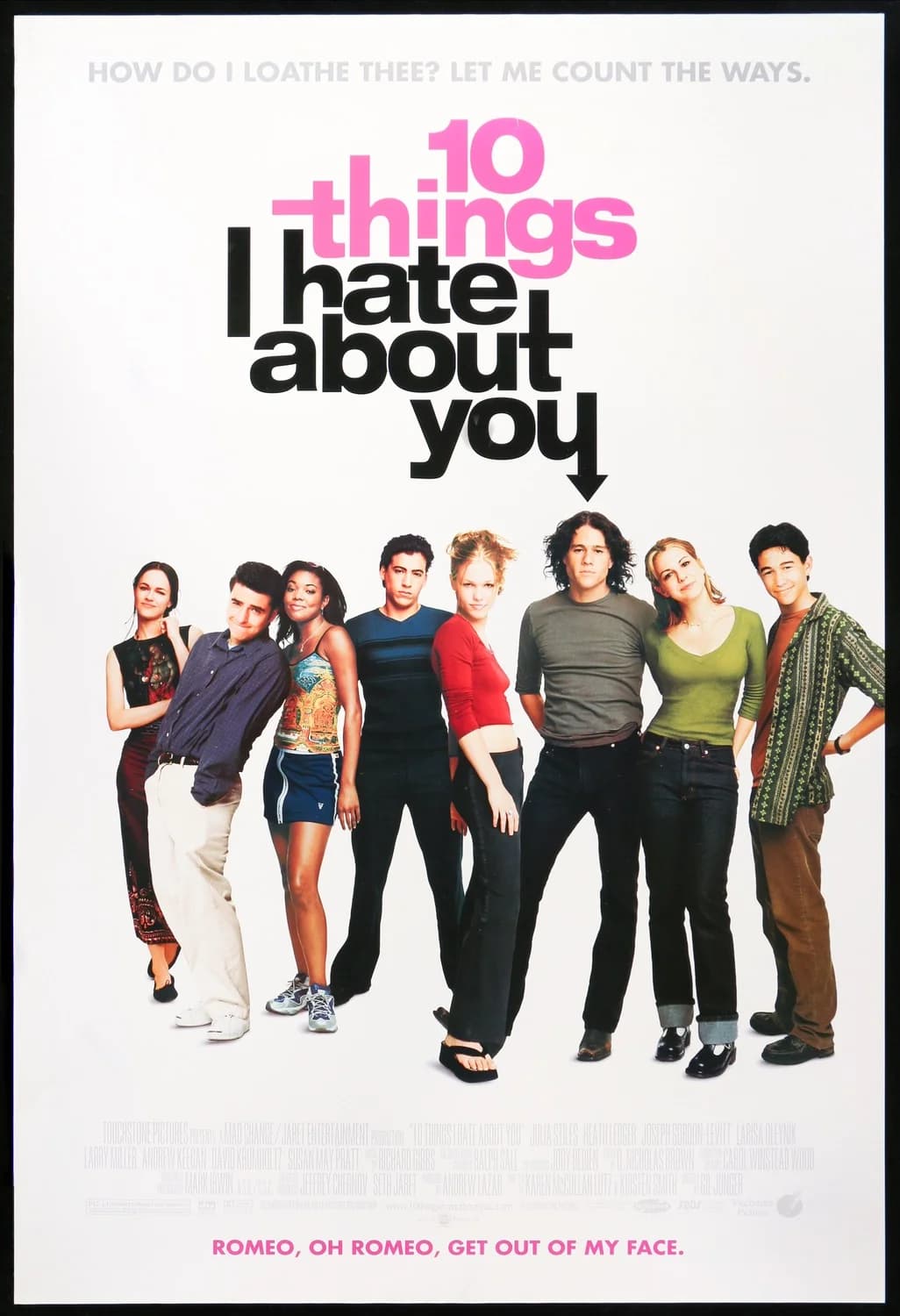
10 Things I Hate About You
Sibling rules, a rooftop serenade and one very stubborn Kat — Shakespeare in a school corridor.
1999 // VHS
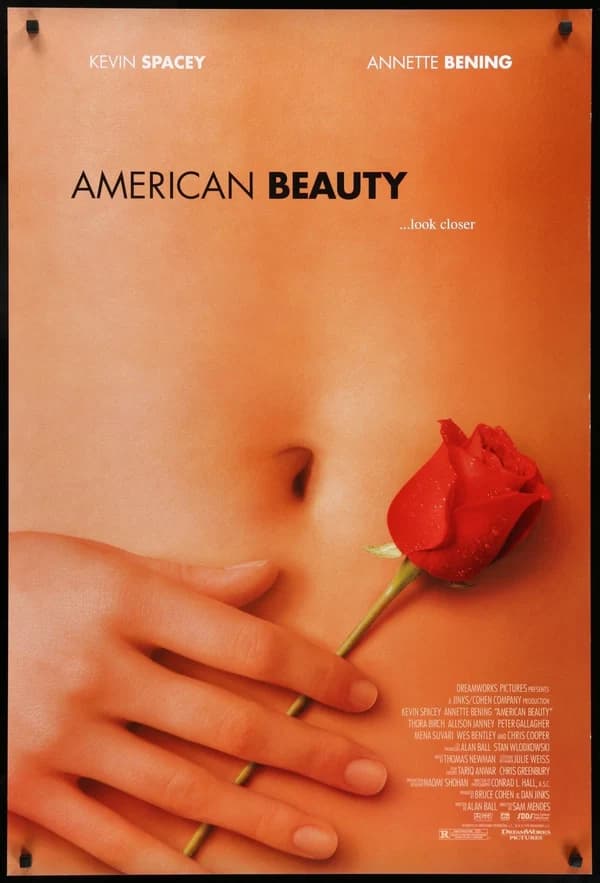
American Beauty
Lester Burnham, suburban rot and a midlife argument that still stings.
1999 // VHS
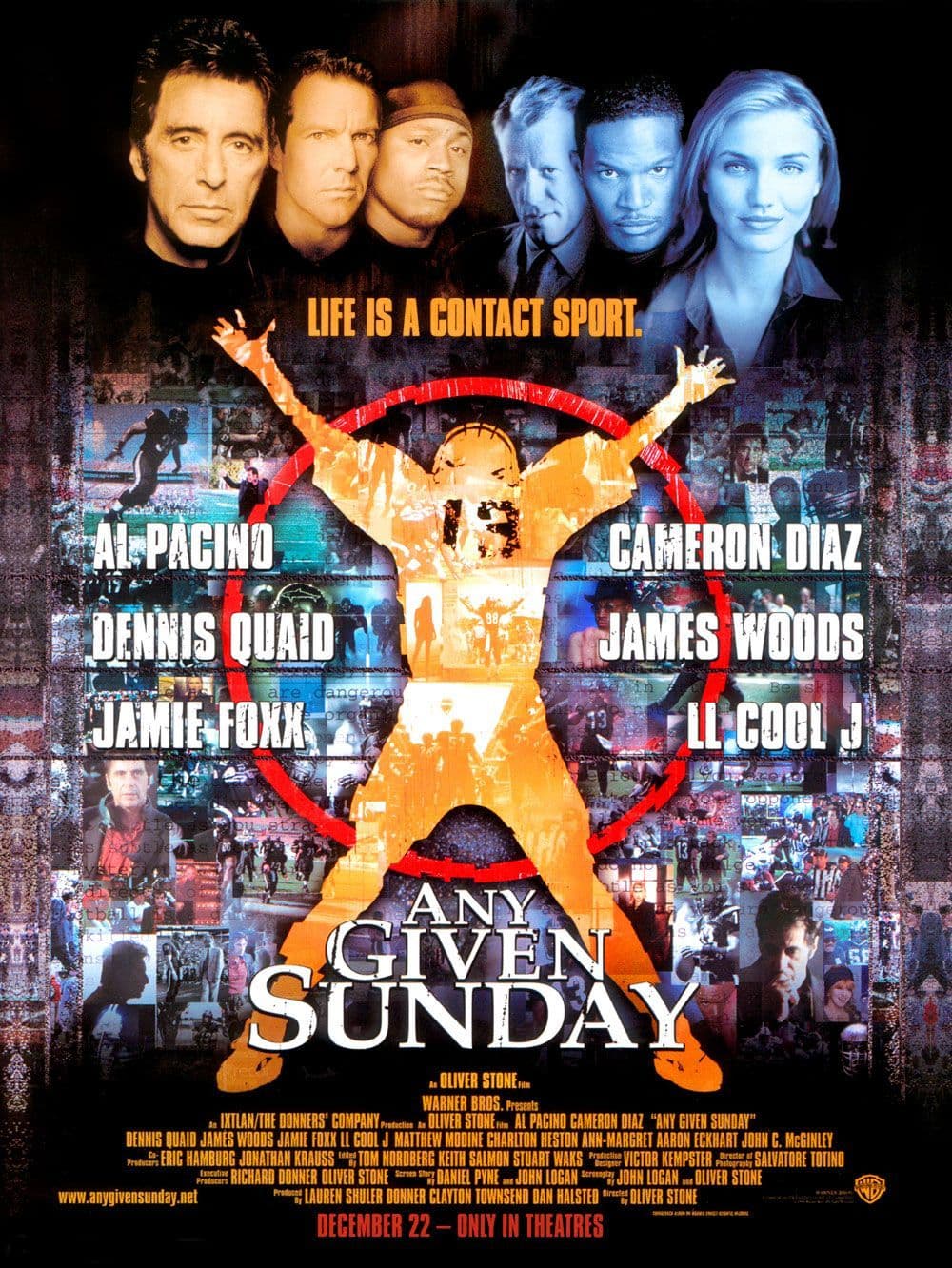
Any Given Sunday
Al Pacino's coach anchors the chaos of a film about football turned into product — loud, messy and oddly persuasive.