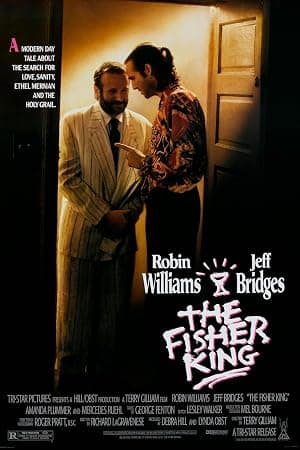
The Fisher King
A messy, tender Grail quest about guilt, friendship and the peculiar power of one damaged man.
// The setup
PLAYBACK STARTED
Terry Gilliam's The Fisher King doesn't announce itself like a museum piece. It arrives as a bruised New York fable—equal parts streetwise and mythic—hinging on an odd, too-big heart called Parry. Revisit it for the strange chemistry between a disgraced radio host and the homeless scholar who becomes his accidental cure.
THE MOVIE
Parry (sometimes referenced as Sagan/Parry) is still the reason this movie works
People keep talking about The Fisher King because it gives us something rare: a Hollywood movie that lets heartbreak be strange. It centres on two bruised people—Jack Lucas, a radio shock‑jock whose flippant line is linked to a mass shooting, and Parry, a formerly erudite man turned homeless and convinced he’s on a Grail quest.
Terry Gilliam directs the whole thing with one foot in gritty New York and the other in fairy‑tale oddness. The film is a cocktail of fantasy, comedy and drama that uses mythic ideas—redemption, atonement and grief—as the engine for a very human story about responsibility and friendship.
And yes: Robin Williams plays Parry and Jeff Bridges plays Jack Lucas. Their pairing is the movie’s beating heart; the film runs long enough (137 minutes) to let that relationship squirm, threaten and eventually stitch itself together.
THE SETUP
The idea that sets The Fisher King in motion
The movie begins with an inciting moral hiccup: Jack Lucas, once a top radio shock‑jock, is linked—by an offhand on‑air remark—to a caller who returns to a public place with a shotgun and kills people. That moment becomes the gravity well for Jack's guilt and descent.
His attempt at atonement doesn't look like a court of law. Instead Jack hooks up with Parry, a man who used to be a professor and who, after a horrific personal trauma, now lives on the streets and believes he is on a modern Grail quest. Parry is obsessed with a woman called Lydia.
What actually drives the story is simple and sympathetic: Jack tries to help Parry reconnect with life and with Lydia. The Grail hunt functions as both a literal plot device and a symbolic path to healing for both men.
THE CHARACTER
Why Parry (sometimes referenced as Sagan/Parry) matters
Parry exists in two registers at once: he’s a tragic backstory (a former academic shattered by violence) and a living, breathy fantasy (a man on a Grail quest who collects meaning the hard way). That tension is what keeps him interesting.
Crucially, Parry is not just a problem for Jack to fix. The film frames their relationship as mutual healing: Jack needs someone to redirect his guilt into care, and Parry needs a bridge back toward ordinary human connection—most obviously through his awkward devotion to Lydia.
Robin Williams plays Parry, and the screenplay leans on that character as the engine for the film’s large theme: friendship that repairs rather than simply rescues.
THE PERFORMANCE
Why Robin Williams's performance matters
Contemporary reviewers made a point of praising the central performances, arguing that both leads give the film its emotional teeth. That matters because The Fisher King trades constantly between comedy and serious grief—without convincing actors the tonal shifts would feel hollow.
Saying critics singled out Williams and Jeff Bridges doesn't pin a label on their choices; it simply underlines that the movie depends on its actors to make improbable moments feel earned.
In short: the acting was recognised at the time as a key part of why the film moved people.
UNDER THE SURFACE
The Fisher King has more on its mind than the plot suggests
On paper it’s a story about redemption and atonement: a fallen radio host seeking to make things right. But under the surface the film stitches together a few different ideas—guilt and responsibility, trauma and grief, and how friendship can be the slow medicine for both.
Gilliam and Richard LaGravenese rework Arthurian myth into a modern Grail quest. The symbolism isn’t just window‑dressing; it’s a way of dramatizing how people invent quests to cope—how meaning can be a scaffold for survival.
There’s also an urban note to the movie: it takes place among visible social fractures, with Parry’s homelessness and Jack’s celebrity guilt side by side. The film uses those contrasts to remind us that compassion is not tidy.
THE FILMMAKING
How The Fisher King was put together
The film’s production design leans deliberately into exaggeration: Mel Bourne built theatrical versions of New York locations so sequences like the Grand Central ballroom can feel both familiar and dreamlike.
Lesley Walker’s editing is important, too—the cuts allow the film to lurch between grim city reality and sudden fantasy without losing emotional momentum.
Those choices sit comfortably inside Terry Gilliam’s sensibility: the director brings a taste for surreal, imagined worlds and uses it to make Parry’s inner life visible rather than merely reported.
Credits matter here—Roger Pratt as director of photography and Mel Bourne’s production design give the film an expressive physicality that serves the story’s tonal flips.
PRACTICAL EFFECTS
The effects work that gives The Fisher King its physical personality
A surprising amount of the movie’s magic is physical rather than digital: the Red Knight’s armour was a foam‑latex creation, and the helmet’s flame was a practical rig operated by a stunt coordinator.
Large‑scale crowd choreography and careful night shoots in Grand Central gave the ballroom sequence its scale—hundreds, at times over a thousand, background performers were used to sell that moment.
Even the Knight’s horses were real Percheron geldings, temporarily coloured on set with vegetable‑based paints under specialist supervision. These are the sorts of choices that let the film’s fantasies feel tactile.
PURE 80S
The Fisher King could not belong to any other decade
Although released in 1991, The Fisher King’s origins sit in the late 1980s: Richard LaGravenese conceived and sold the script then, and the project moved through different producers and studios before landing at TriStar.
That late‑80s development matters because the film combines the era’s appetite for high‑concept premises with an emerging 1990s willingness to mix genre and psychological realism.
Put simply: it’s a product of the moment when filmmakers stopped treating fantasy and serious character drama as mutually exclusive—and Gilliam was one of the directors who pushed that blending into mainstream pictures.
WATCHING IT NOW
What has aged — and what hasn't
What still works is the centre: the relationship between Jack and Parry. The film’s interest in mutual healing—two damaged people helping each other—holds up because that exchange is written and staged as a real push and pull, not a tidy cure.
Some peripheral elements feel of their moment, but scenes that hinge on character—Parry’s Grail obsession, Jack’s public guilt—remain resonant. The presence of memorable supporting figures, such as the homeless cabaret singer, adds texture without stealing focus.
In practice, the combination of grief, responsibility and the odd fantasy conceit still gives the film a distinct emotional charge for modern viewers.
THE LEGACY
Why The Fisher King still matters
Part of the film’s afterlife is plain and concrete: Mercedes Ruehl won the Academy Award for Best Supporting Actress, and the picture collected festival honours including Venice’s Silver Lion and Toronto’s People's Choice Award.
It earned five Academy Award nominations across major categories and has seen restored home releases; there’s also a director‑approved Criterion Collection edition, which keeps it available for new audiences to discover.
But the film’s quieter legacy is tonal: it showed how mainstream cinema could marry a messy, adult story about guilt and healing with fantasy flourishes—and have those risks rewarded.
THE VERDICT
Does The Fisher King still hold up?
Yes—if you’re coming for a film that mixes big feelings with strange, theatrical flourishes. The core story is straightforward: Jack, consumed by remorse after a caller’s deadly act, tries to atone by helping Parry, whose Grail quest and grief structure the film’s emotional work.
What helps it survive is the screenplay’s structure: realist New York exteriors alternate with Parry’s interior fantasies (the Red Knight apparitions and the Grand Central ballroom vision) so you always know you’re inside someone’s need to believe. That framing turns melodrama into something specific and peculiar.
Contemporary critics praised the leads and the movie won serious awards—details that underline the film’s quality. If you’re curious about a 1991 movie willing to make messiness and compassion the same thing, The Fisher King is still worth a watch.
Final thought: it’s a film that trusts a damaged man called Parry to hold the centre, and that faith keeps it strangely, stubbornly alive.
Share this movie
// Keep watching
More movies from the 90s
If The Fisher King is your kind of movie, there's plenty more on the shelves worth rewinding.
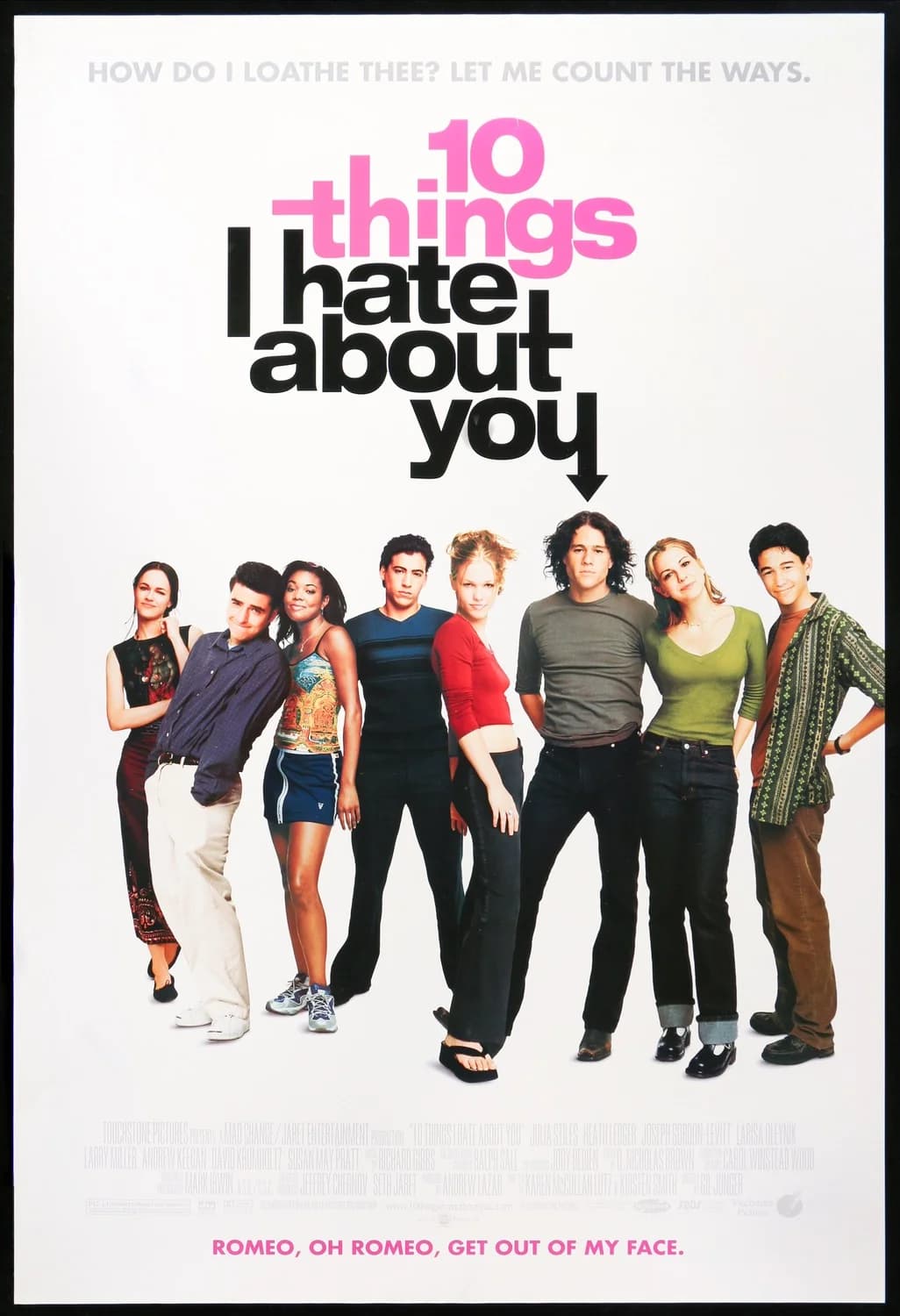
1999 // VHS
10 Things I Hate About You
Sibling rules, a rooftop serenade and one very stubborn Kat — Shakespeare in a school corridor.
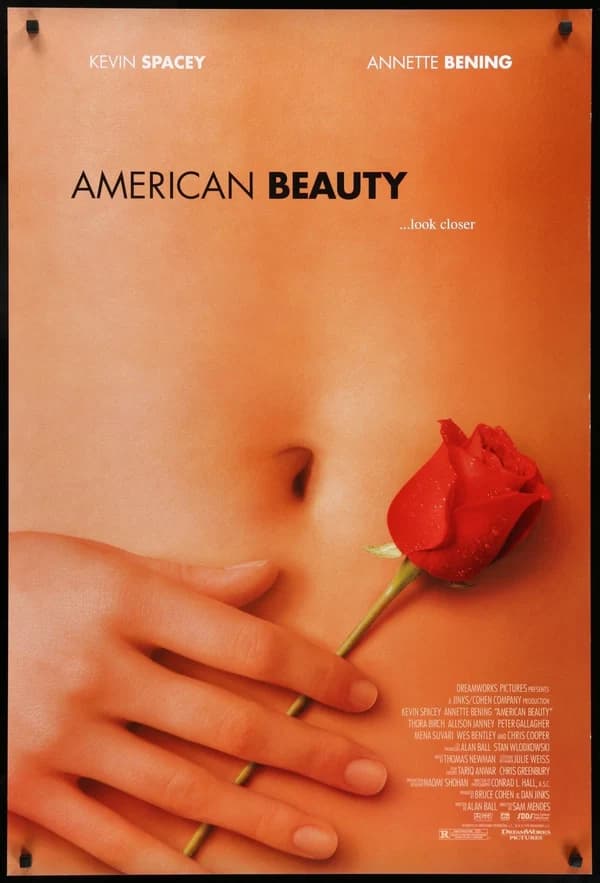
1999 // VHS
American Beauty
Lester Burnham, suburban rot and a midlife argument that still stings.
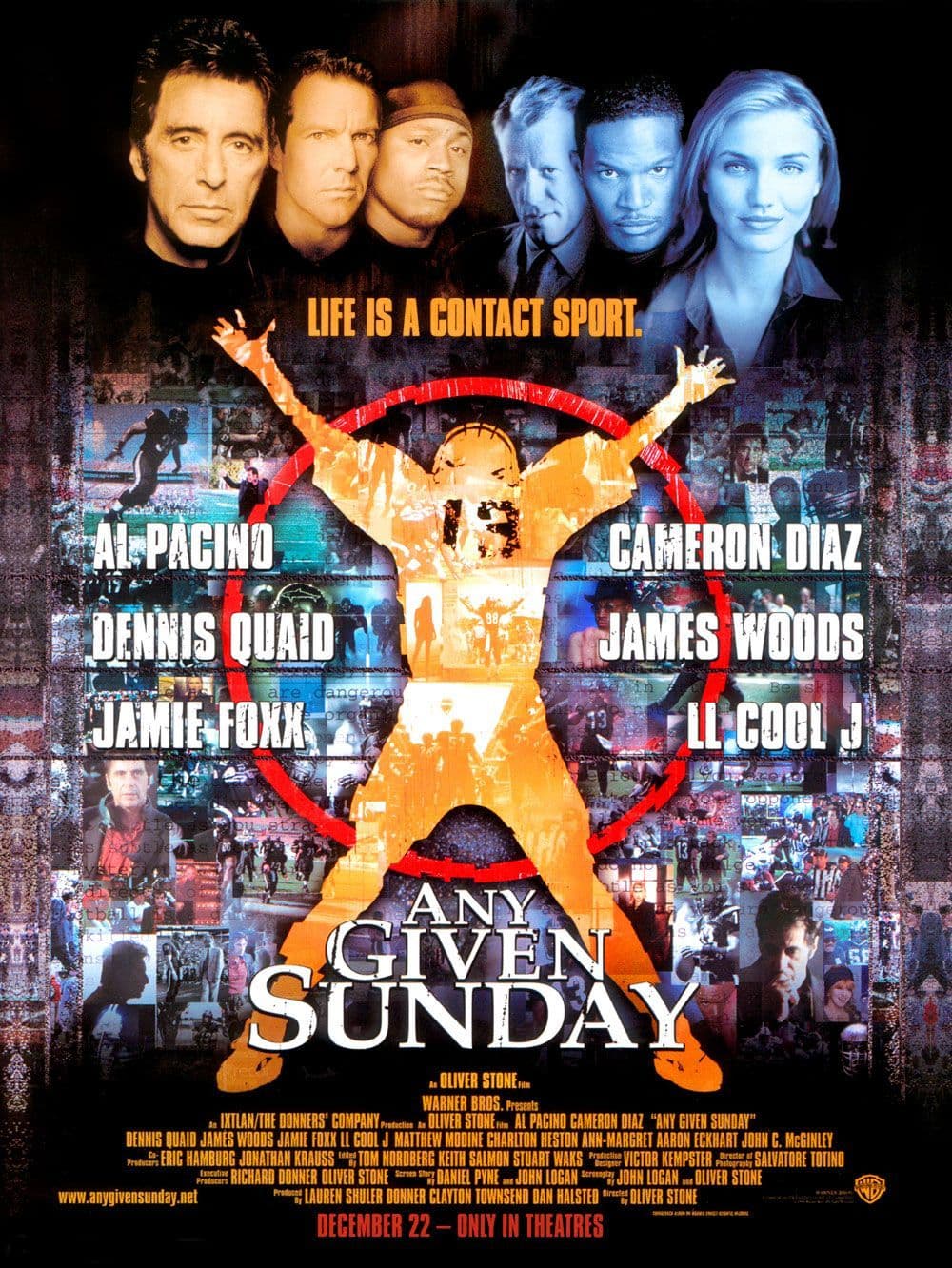
1999 // VHS
Any Given Sunday
Al Pacino's coach anchors the chaos of a film about football turned into product — loud, messy and oddly persuasive.